
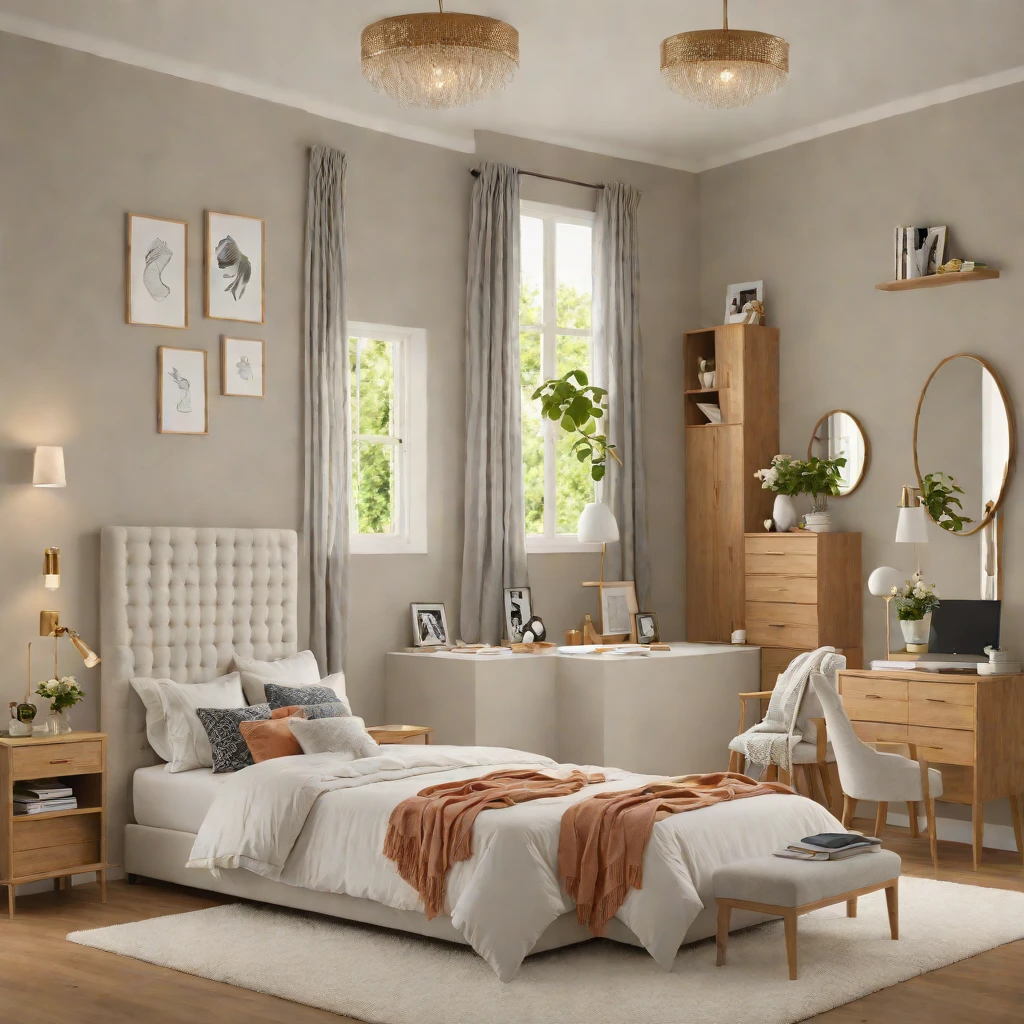
A bedroom makeover is one of the most rewarding design projects you can undertake, because no room in your home has a greater daily impact on your wellbeing than the one where you sleep. Yet for many people, the prospect is paralyzing: too many decisions, too many options, too much risk of spending time and money and ending up with a room that still does not feel right. A successful modern bedroom makeover is not about following trends or spending a fortune. It is about working through a clear sequence of decisions, understanding how each element affects the others, and building a room that functions beautifully for your specific life in your specific space. This guide walks you through the entire process from first assessment to final styling, with specific advice at every stage so you can undertake your modern bedroom makeover with clarity, confidence, and genuine excitement about the result.
1. Start With a Ruthless Edit Before Anything New Enters the Room
The single most transformative thing you can do before spending a single dollar on your bedroom makeover is to remove everything that does not belong. Take out furniture that serves no useful function, accessories that you do not genuinely love, artwork that you have stopped seeing, textiles that are worn or that no longer reflect your taste, and anything that lives in the bedroom simply because it has nowhere else to go. This editing process is not destructive. It is revelatory.
When the room is stripped back to its essential bones, you can see its actual proportions, its true light quality, and its architectural strengths and weaknesses without distraction. You can see what the floor actually looks like, how the windows relate to the bed position, and whether the layout you have been living with is truly the best one available. The room often changes character dramatically in the editing phase, and what remains frequently needs less supplementing than you assumed before the process began.
2. Assess Your Room’s Architecture Honestly
Before choosing a single paint color or ordering a piece of furniture, spend time genuinely understanding the room you are working with. Note the ceiling height and whether the proportions feel balanced or awkward. Identify where the natural light enters and at what times of day each part of the room is brightest. Locate all existing electrical points, light switches, and outlets, because these will constrain and inform every furniture placement decision.
Measure the room precisely, including the height from floor to ceiling, the width and height of every window and door opening, and the exact position of every architectural feature. Armed with these measurements, draw a simple floor plan to scale, even a rough hand-drawn version is sufficient, and begin testing furniture arrangements on paper before anything is moved or purchased. This step alone prevents the most common and most expensive makeover mistakes.
3. Establish Your Layout Around the Bed First
The bed is the largest and most important piece of furniture in the bedroom, and every other element in the room should be planned in relationship to it. The most functional bed position in most rooms is against the central section of the longest wall, away from the door, with enough space on both sides to move freely. Ideally, there should be a minimum of 24 inches of clear floor space on each side of the bed and 36 inches at the foot.
In smaller rooms, resist the temptation to push the bed into a corner to gain floor space. This makes getting in and out of one side inconvenient and creates an asymmetry that feels cramped rather than cozy. A bed positioned centrally, even in a small room, creates a more functional and more visually balanced result. Once the bed position is confirmed, every other piece of furniture can be planned in relation to it.
4. Choose Your Color Palette Before Purchasing Anything
The color palette should be one of the first definitive decisions in a bedroom makeover, made before any furniture or textiles are purchased, because it affects everything that follows. Begin with the wall color, because walls cover the largest surface area and have the greatest influence on the room’s atmosphere. Then establish the tone of your bedding and major textiles, the finish of your furniture, and the metal tones in your hardware and lighting.
For a modern bedroom, the most successful palettes tend toward warmth and tonal coherence rather than high contrast. A palette of warm white walls, natural oak furniture, warm linen bedding, and brushed brass hardware creates a room that feels simultaneously fresh and grounded, contemporary and genuinely restful. Test your chosen wall color in large swatches under both natural and artificial light before committing. Paint samples applied at A3 size directly to the wall give a far more accurate reading than small chips.
5. Invest Disproportionately in Your Bed and Bedding
In the hierarchy of bedroom makeover investment, the bed and its dressing deserve the largest proportion of your budget. You spend roughly one-third of your life in bed, and the quality of your sleep is directly affected by the quality of what you sleep on and under. A well-made bed frame in solid wood or quality steel, dressed with high-quality linen or percale cotton bedding, transforms the room’s atmosphere more completely than any other single investment.
Choose a mattress before choosing a bed frame, because the mattress depth affects how the bed sits proportionally in the room and what headboard height is appropriate. A mattress that is too thick on a high platform bed creates an ungainly profile that disrupts the visual balance of the room. A well-proportioned bed in a quality material, dressed in generously sized bedding that drapes beautifully to the floor, is the visual centerpiece around which everything else in the room orbits.
6. Plan Your Storage Comprehensively Before Choosing Furniture
Storage is the unglamorous backbone of a beautiful bedroom. A room that lacks adequate storage will perpetually feel cluttered regardless of how beautiful its individual elements are, because the excess will always find its way onto surfaces and into corners. Before choosing any storage furniture, inventory everything that needs to be accommodated: clothes, shoes, bags, accessories, bedding, and personal items, and calculate the storage volume you actually require.
In a modern bedroom makeover, the most elegant storage solutions are those that disappear into the architecture of the room. Built-in wardrobes with flat-panel doors painted the same color as the walls create seamless walls of storage that read as part of the room’s structure rather than its furniture. If built-ins are not feasible, choose freestanding wardrobes with simple, unadorned profiles that do not compete visually with the bed.
7. Upgrade Your Lighting Comprehensively
Lighting is the element most consistently underinvested in during bedroom makeovers, and it is one of the elements with the highest return on investment. A bedroom that relies solely on a central overhead light will always feel flat and institutional regardless of how beautifully everything else is designed. The goal is a minimum of three layers of light: ambient (overhead), task (bedside reading), and accent (creating atmosphere).
Install dimmer switches on every light circuit in the bedroom. This single upgrade, often overlooked in favor of new fixtures, is the most transformative lighting change you can make because it allows the room to shift between the practical demands of morning and the restful needs of evening. Choose all bulbs in a warm white tone (2700K to 3000K) for a consistent, flattering quality of light throughout.
8. Select a Rug That Defines the Bedroom Zone
A rug in a bedroom serves several functions simultaneously: it defines the sleeping zone visually, adds warmth and acoustic softness underfoot, anchors the furniture arrangement, and introduces texture and color to the lower plane of the room. In a modern bedroom makeover, choose a rug that is significantly larger than most people expect: the rug should extend at least 18 to 24 inches beyond each side of the bed, and the foot of the bed should sit fully on the rug.
A rug that is too small for the furniture arrangement is one of the most common and most visible mistakes in bedroom design. It makes the furniture look as if it is floating awkwardly rather than anchored intentionally. When in doubt, go to the next size up. A large low-pile wool rug in a warm natural tone is the most versatile choice for a modern bedroom, complementing virtually any palette and providing a beautifully practical surface underfoot.
9. Refresh Your Window Treatments as Part of the Makeover
Window treatments are a frequently overlooked but critically important element of a bedroom makeover. Curtains that are too short, too narrow, or in the wrong material can undermine an otherwise beautifully designed room. In a modern bedroom, floor-length curtains hung as close to the ceiling as possible, falling to within a half-inch of the floor, create a sense of height and generosity that transforms the perceived scale of the room.
Choose a fabric that works with your palette while performing the practical functions you need. For a bedroom that requires both privacy and light control, layer sheer linen panels with a lined, heavier fabric in the same color family. Mount curtain rods wider than the window opening on both sides, ideally extending 12 to 18 inches beyond the frame on each side, so the curtains can be pulled fully clear of the glass during the day, maximizing natural light.
10. Curate Your Accessories Last, Not First
In a bedroom makeover, accessories should be chosen last, after the major structural elements of color, furniture, lighting, and textiles are in place. Accessories in a modern bedroom should be limited, meaningful, and intentionally placed rather than accumulated. A small collection of objects on the dresser, one or two pieces of art on the walls, a single plant of appropriate scale, and a carefully chosen light source on each nightstand is typically all you need.
For each accessory, apply a simple test: does it serve a function, does it add genuine visual beauty, and does it belong to the palette and material language of the room? If it fails any of these tests, it does not belong in the room regardless of how much you paid for it or how much you liked it in a different context. Ruthless curation of accessories is what separates a styled room from a decorated one.
11. Address the Ceiling as Part of the Makeover
The ceiling is the one surface in a bedroom that most people never think to address, and yet it contributes significantly to the room’s atmosphere, particularly in the hours before sleep when it is the primary visual field. A freshly painted ceiling in a clean warm white or a very slightly tinted version of the wall color completes the room’s color story and prevents the stark contrast of a pure white ceiling against colored walls.
If the room has good height, consider adding a simple ceiling rose or a decorative molding detail at the perimeter for an architectural richness that even a coat of paint alone cannot provide. The correct pendant light, centered in the room and hung at the right height, turns the ceiling into a positive design element rather than an afterthought.
12. Final Styling: Dressing the Room for Daily Beauty
The final step of a bedroom makeover is styling: the art of arranging what you have chosen into its most beautiful configuration. Make the bed with full attention to the arrangement of layers and pillows. Angle the nightstand accessories slightly rather than placing them in rigid parallel. Stack books on the bedside with intention. Position the throw so it appears casually placed rather than symmetrically folded.
Step back and photograph the room. The camera has a useful quality of revealing what the eye, accustomed to the familiarity of the space, sometimes misses. Look at the photograph and identify whether the room feels balanced, whether the surfaces are comfortably curated, and whether the overall effect reads as the room you imagined. Small adjustments at this stage, a lamp moved 6 inches, a cushion removed, a plant repositioned, can make a surprising difference to the final result.
Pro Tips for Getting It Right
- Set a room budget before you start and allocate it by priority: Without a budget framework, bedroom makeovers expand to fill whatever financial space is available. Decide your total budget, then allocate proportionally: roughly 40 percent on the bed and mattress, 20 percent on furniture, 15 percent on lighting, 15 percent on window treatments, and 10 percent on accessories. This structure prevents overspending on low-impact items at the expense of high-impact ones.
- Buy the best curtain rods your budget allows: Curtain rods are visible every day and directly affect how your curtains hang and function. A cheap rod that bows under the weight of fabric or that does not have smooth-running rings makes the room feel unfinished regardless of how beautiful the curtains are. This is one of the few places where quality in a supporting element pays significant visual dividends.
- Do not match everything too precisely: A modern bedroom should feel curated and personal, not like a showroom. Slightly varying the tone of your wood finishes, mixing your metal hardware between two complementary tones, and choosing a rug that echoes rather than exactly matches the bedding palette creates a layered, collected quality that identical matching never achieves.
- Treat scent and sound as part of the room design: A beautiful room experienced in silence with no olfactory dimension is only half the experience. A quality candle, a diffuser, or a room spray in a signature scent, along with a carefully considered speaker placement for music or ambient sound, completes the sensory environment of the room in a way that no visual element alone can achieve.
A modern bedroom makeover is ultimately a clarifying exercise: a process of understanding what you genuinely need, what genuinely restores you, and how design can serve those needs in the most beautiful and functional way possible. The steps in this guide are a framework for making those decisions with intention and confidence rather than reaction and impulse.
The room you are capable of creating is almost certainly more beautiful than the one you currently inhabit. Every bedroom, regardless of its size, its architecture, or its starting condition, has the capacity to become a genuine sanctuary. The only requirement is the willingness to approach it with care, to invest in the elements that matter most, and to trust that the small, considered decisions add up to something truly worth coming home to.




No Comments