
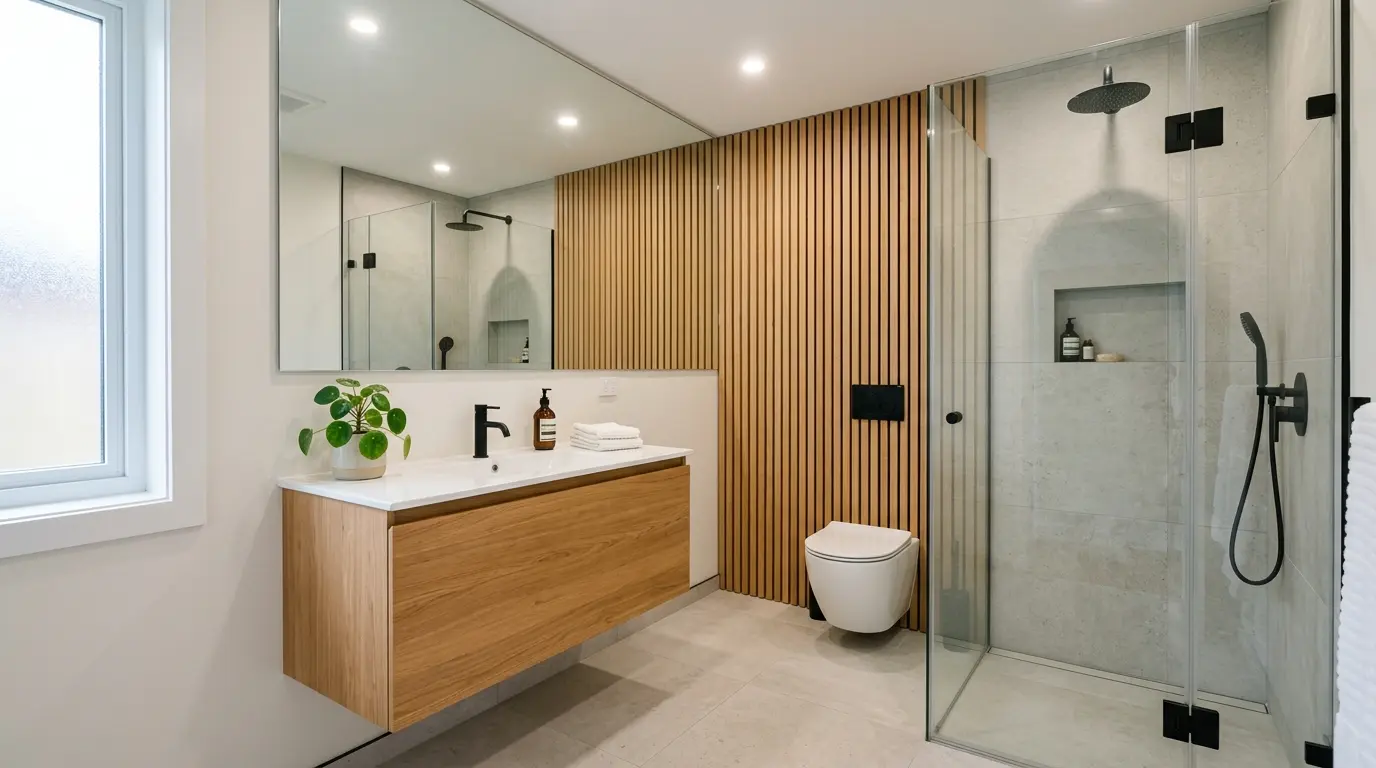
A small bathroom is not a design compromise — it is a design challenge, and the most beautifully resolved spaces in the world of interior design are often the smallest ones. When every square foot must work twice as hard, creativity sharpens and intention deepens. The result, when done well, is a bathroom that feels not cramped and apologetic, but precise and considered — like a beautifully appointed ship’s cabin or a boutique hotel en suite where nothing is wasted and everything delights.
If you are working with a compact bathroom, the key is to stop thinking about what you do not have and start thinking strategically about what you can do. Small bathroom ideas have evolved dramatically, and today’s best solutions use smart layout planning, optical illusions, intelligent storage, and carefully chosen materials to make tight spaces feel genuinely luxurious. This guide covers twenty of the most effective strategies — from the structural to the decorative — that designers actually use when transforming small bathrooms into something special.
1. Install a Floating Vanity to Free Up Visual Floor Space
Perhaps no single change transforms the perception of a small bathroom more dramatically than replacing a floor-mounted vanity cabinet with a wall-mounted floating vanity. By lifting the cabinet off the floor and revealing a continuous run of tile beneath, the eye reads the floor as larger — the room suddenly feels airier and less cluttered. A floating vanity mounted at around 18 inches from the floor hits a visual sweet spot: enough space to see the floor clearly without the bathroom feeling like a hotel hallway. Choose a compact floating vanity in white lacquer, matte grey, or warm walnut veneer with an integrated basin to reduce clutter on the countertop. Wall-mounted faucets reinforce the clean, space-saving aesthetic and make wiping down the counter effortless.
2. Use Large-Format Tiles to Reduce Grout Lines and Expand the Room
In a small bathroom, the more grout lines you see, the more the eye has to work — and the more the space fragments visually. Large-format porcelain tiles (24×24 or 24×48 inches) reduce the number of grout lines dramatically, allowing the floor and walls to read as continuous surfaces that extend the perceived size of the room. Choose a tile in a pale, light-reflective tone — soft white, warm cream, or pale greige — to maximize brightness. Continuing the same large-format tile from the floor up the shower walls in a seamless transition amplifies the effect significantly. Pair with a color-matched grout and frameless glass shower screen for a bathroom that looks twice its actual square footage. This single design decision is the most impactful investment you can make in a compact bathroom renovation.
3. Replace a Shower Curtain with a Frameless Glass Screen
A shower curtain, however beautiful its pattern, creates a physical and visual barrier that bisects a small bathroom and emphasizes its limited size. Replacing it with a frameless glass shower screen or enclosure removes that interruption entirely, allowing your eye to travel through the full depth of the bathroom in one unbroken sweep. The entire floor becomes visible at once, which is one of the most powerful optical tools available in small bathroom design. Even a single fixed glass panel rather than a full enclosure can achieve this effect. For maximum space efficiency, consider a hinged frameless glass panel with a chrome or matte black edge detail — both are readily available and installation is simpler than a full frameless enclosure. The investment pays off immediately in how much larger the room feels.
4. Go Vertical with Wall Storage and Shelving
In a small bathroom, the floor plan is limited but the vertical plane is entirely underused. Drawing the eye upward with tall, slim open shelving or a floor-to-ceiling cabinet beside the toilet accomplishes two things at once: it adds substantial storage and it makes the ceiling feel higher by creating a strong vertical line. A narrow ladder shelf in matte black steel or natural oak beside the toilet is an elegant, widely available solution that adds personality alongside practicality. Style the shelves with a mix of function and beauty — neatly folded white towels, glass apothecary jars, a trailing pothos or trailing string of pearls. Keeping items organized rather than randomly stacked on shelves is essential; visual clutter in a small bathroom reads louder than in a larger space.
5. Choose a Pedestal Sink or Slimline Basin for Tight Layouts
When floor space is genuinely at a premium — say, under 40 square feet — even a compact floating vanity may feel like too much bulk. A wall-mounted slimline basin or a classic pedestal sink removes the vanity cabinet entirely, opening the room dramatically. The trade-off is counter and storage space, which must be compensated for with clever wall storage and a well-planned medicine cabinet. A recessed medicine cabinet with a mirrored door above the sink conceals a surprising amount of storage — cotton rounds, medications, daily skincare — while reflecting light and functioning as the room’s primary mirror. For style, a white ceramic round pedestal sink adds a sculptural quality that is simultaneously timeless and charming, particularly well-suited to vintage-inspired or transitional bathroom designs.
6. Maximize Mirrors to Multiply Light and Space
Mirrors are the single most cost-effective tool for making a small bathroom feel larger, and the key is to go bigger than you think you should. An oversized mirror — one that spans most or all of the wall above your vanity — reflects the room back on itself, creating the impression of doubled depth and width. A full-width frameless mirror or an oversized round mirror in a warm brass or matte black frame works brilliantly in bathrooms under 60 square feet. For maximum light reflection, position the mirror opposite or adjacent to a window. Mirrored tiles used as a backsplash are another option — smoked glass or antiqued mirror tiles in a small section create depth and a touch of glamour without the starkness of a full mirror wall. Clean lines and a clear vision of the entire room make all the difference.
7. Opt for a Corner Shower to Reclaim Awkward Space
An awkwardly shaped small bathroom — particularly one with a quirky corner — often has more shower potential than is immediately obvious. A corner shower enclosure, either in a quarter-circle or angular format, fits neatly into a corner that would otherwise become dead space occupied by a poorly positioned cabinet. Frameless glass corner showers are the most space-efficient visually, as they disappear into the room rather than drawing attention to themselves. For the shower interior, choose a small-format mosaic tile or a simple 4×8 subway tile in white or pale grey — in a tight shower space, the tile scale matters less than in larger showers, and smaller tiles add practical traction to the floor. A recessed shower niche eliminates the need for a separate caddy, keeping the interior clean and uncluttered.
8. Use a Wet Room Layout to Eliminate Barriers Entirely
The wet room concept — where the entire bathroom floor is waterproofed and the shower has no step, no tray, and minimal enclosure — is one of the most sophisticated solutions for very small bathrooms. Eliminating the shower tray removes a visual break in the floor, and the continuous tile from the entrance to the back wall makes the room read as one unified, spacious plane. Wet rooms require professional waterproofing of the full floor and lower walls, but the investment is worthwhile in both aesthetics and functionality. Choose a large-format slip-resistant porcelain tile throughout, with a linear drain set flush against one wall to minimize visual interruption. This layout suits modern, minimalist bathroom design particularly well and is increasingly popular in new-build apartment renovations where every millimeter counts.
9. Paint or Tile the Ceiling in a Continuous Color
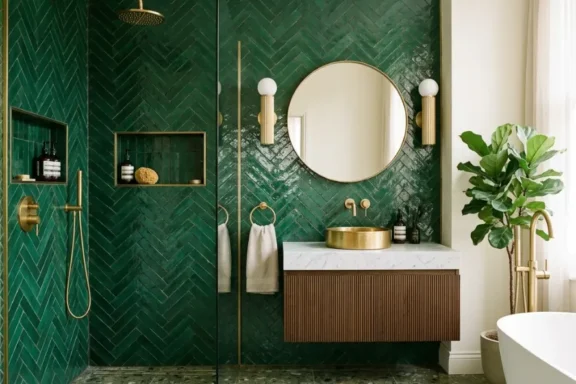
One of the most counterintuitive but genuinely effective small bathroom ideas is to bring the wall color or tile all the way up onto the ceiling. Rather than making the space feel more enclosed, this technique creates what designers call an envelope effect — the room feels intentional and immersive, like a jewel box rather than a confined box. A sage green, dusty blue, or terracotta painted or tiled ceiling meeting walls of the same tone wraps the room in warmth and depth. Keep fixtures and accessories in white or light metallics — polished chrome or matte brass — so they read as accents against the continuous color rather than fighting it. This approach requires confidence, but when executed well it produces some of the most memorable small bathrooms in design publications.
10. Install Recessed Storage to Avoid Protruding Cabinets
Every inch a storage unit protrudes into a small bathroom is an inch of visual and physical space lost. Recessed storage — built into the wall cavity between studs — keeps surfaces flush and the room feeling open. Recessed shower niches for shampoo and soap are the most common application, but the principle extends further: recessed medicine cabinets, recessed towel hooks, and even a recessed toilet roll holder all contribute to a bathroom that feels clean and organized rather than crowded. A recessed niche tiled in a contrasting material, such as a small mosaic or a richly colored full tile, also becomes a decorative feature — a small gallery within the shower that adds visual interest without consuming any floor space. Plan recessed elements during the renovation phase; retrofitting is possible but more disruptive.
11. Choose Light Colors to Open the Space Visually
Light color palettes are a reliable tool in small bathroom design not because dark rooms cannot be beautiful — they can — but because light and white surfaces reflect rather than absorb the available light, making a space feel genuinely more open. Soft white, warm ivory, pale blush, and light greige are all excellent choices for wall and floor tile in a compact bathroom. The secret to preventing a light bathroom from feeling clinical or sterile is to layer in warmth through materials: a warm brass mirror frame, a jute or cotton bath mat, a timber-toned floating vanity, and real plants all anchor the softness of the palette. Natural light, even from a frosted privacy window, should be maximized rather than covered. Replace heavy window treatments with a simple frosted glass panel or a slim privacy film to let light flood in throughout the day.
12. Use a Pocket Door or Barn Door to Recover Floor Space
A standard hinged door swinging into a small bathroom claims a surprisingly significant arc of usable space — often an area where a towel hook, a small cabinet, or a trash bin could otherwise comfortably live. A pocket door, which slides into the wall cavity, eliminates that swing entirely and immediately recovers that space. If a pocket door is not structurally possible, a wall-mounted barn door on a sliding track is a stylish alternative that keeps the floor clear, though it does require clear wall space beside the door opening. In both cases, the floor-to-ceiling visual of a door that does not interrupt the room creates a more open, less segmented feeling. A slim oak or painted MDF barn door with matte black hardware adds warmth and a design detail that elevates the entire bathroom entry.
13. Add Personality Through Hardware and Fixtures
In a small bathroom where tile and layout choices must prioritize function and spatial generosity, hardware and fixtures become the primary vehicles for personality and style. Unlacquered brass, antique bronze, or matte black tapware and accessories can shift a plain white bathroom from forgettable to distinctly designed with minimal investment. Swap the builder-grade chrome towel bar for a set of warm brass robe hooks and a matching towel ring, and the bathroom immediately reads as considered rather than default. Choose fixtures that share a finish and a general aesthetic language — mixing too many metal tones in a small space creates visual noise. A beautifully made cross-handle faucet in aged brass above a simple white ceramic basin is, in itself, a design statement that costs a fraction of re-tiling and delivers an outsized impact.
14. Incorporate Natural Materials for Warmth and Texture
Natural materials — timber, rattan, stone, linen — solve one of the most common small bathroom problems: the feeling that the space is cold, clinical, or impersonal. Introducing even a few tactile, organic elements softens the hardness of tile and porcelain and makes the bathroom feel genuinely habitable. A small rattan stool beside the bath or shower serves as both a surface and a piece of furniture that immediately warms the room. A wooden bath tray across the tub, a woven laundry basket, or a bamboo toothbrush holder all contribute to this layered, lived-in quality. Even a small trailing houseplant — a pothos, heartleaf philodendron, or air plant — on a floating shelf introduces life and color in a way that no manufactured accessory can match. These details cost little but their cumulative effect is enormous.
15. Consider a Japanese Soaking Tub for Deep Relaxation in Small Footprints
If you want a bathtub in a small bathroom but a standard 60-inch alcove bath simply will not fit, a Japanese soaking tub offers an elegant alternative. These deep, compact soaking vessels — typically 28 to 45 inches long but 22 to 28 inches deep — require far less floor space than a conventional tub while delivering a bathing experience that is arguably more luxurious. The deep immersion provides full-body soaking even in the shortest formats. Freestanding Japanese soaking tubs in stone resin, cast iron, or matte acrylic are available in a range of compact footprints and look extraordinary when combined with a simple wooden bath stool and a wall-mounted hand shower. This choice works particularly well in Japandi-inspired bathroom designs where minimalism, natural materials, and quiet luxury are the guiding principles.
Pro Tips for Getting It Right
- Draw it to scale before you buy anything: The most costly small bathroom mistakes happen when products are purchased before dimensions are confirmed. Create a simple scale floor plan and test every fixture position — particularly the door swing, toilet clearance (minimum 15 inches from centerline to wall), and shower access — before committing to anything.
- Mount your towel bar on the door: The back of the bathroom door is the most overlooked storage surface in a small bathroom. A mounted towel bar or a set of robe hooks on the door back keeps towels off the walls entirely, freeing wall space for a mirror, shelf, or simply breathing room.
- Keep grout colors tight and consistent: In a small bathroom, a grout color that contrasts sharply with the tile creates a grid that emphasizes the finite edges of the room. A tone-matched grout in similar value to the tile body allows surfaces to read as continuous and expansive rather than tiled and bounded.
- Avoid too many different materials: Each new material — a different tile, a wood finish, a stone feature — is a visual event the eye must process. In a small bathroom, three or fewer distinct materials create a cohesive, restful space; five or more can feel cluttered and overwhelming regardless of how good each individual element is.
- Upgrade the lighting in layers: Many small bathrooms rely on a single overhead light that creates flat, unflattering illumination. Adding a wall-mounted vanity light at eye level beside or above the mirror eliminates shadows, improves daily grooming functionality, and makes the bathroom feel more intentionally designed and spa-like.
Small Space, Big Possibilities
A small bathroom is not a limitation — it is a concentrated opportunity to make every design choice count. Across these twenty ideas, a consistent pattern emerges: the most effective small bathroom solutions are those that reduce visual interruption, maximize light, exploit vertical space, and choose materials that work together rather than competing for attention. None of these principles require an enormous budget. Some of the most beautiful small bathrooms in the world have been transformed with a floating vanity, an oversized mirror, a change in tile orientation, and the removal of a shower curtain.
Start with the change that will make the biggest difference in your specific bathroom — whether that is the layout, the storage, or the surface materials — and build from there. Every small bathroom has the bones of something beautiful. Your job, and the genuine pleasure of the process, is finding out what that something is. Design that fits your life perfectly is always worth the effort, no matter the size of the room.



No Comments