
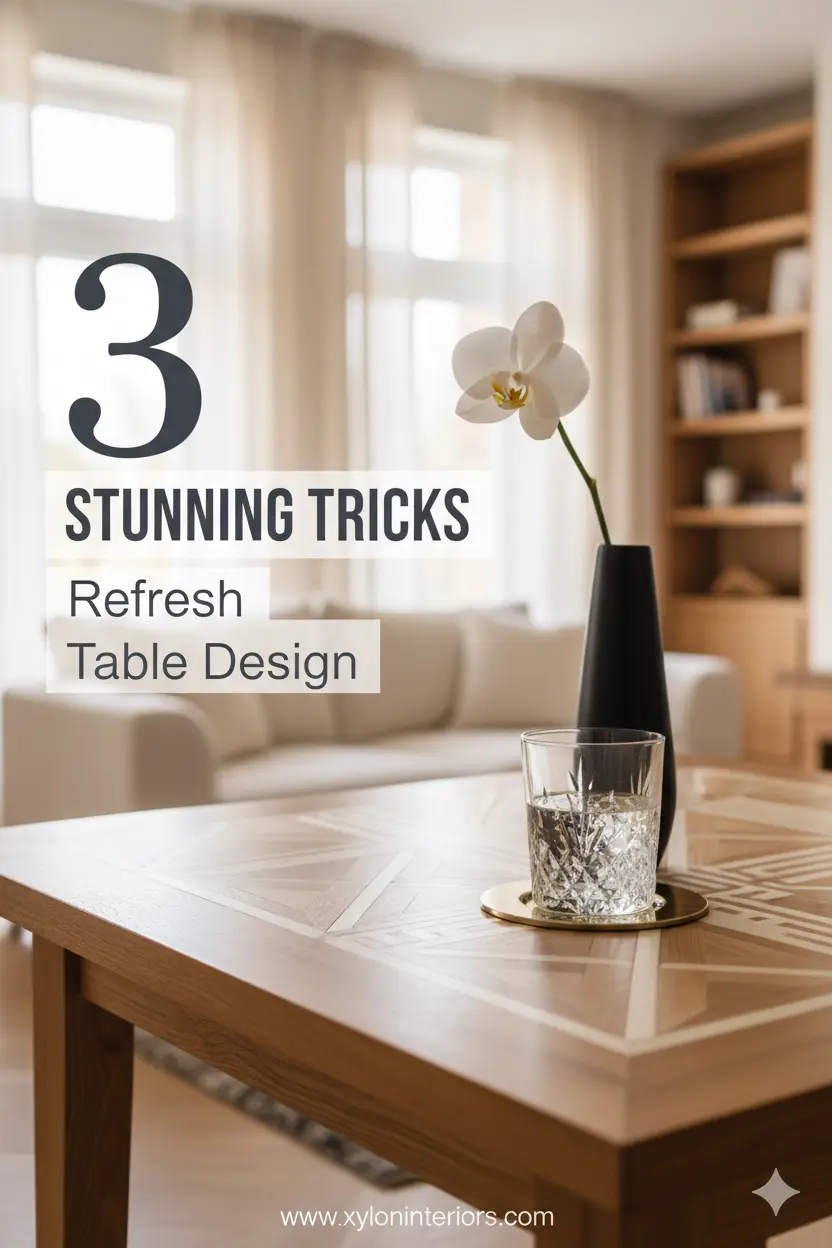
Ever glance at your dining table and feel nothing? No spark, no personality, just a flat surface doing the bare minimum. You are not alone. Tables work hard—coffee mornings, homework marathons, game nights—and all that activity shows after a while. A dull top can make the entire room feel tired. The good news is that you do not have to shop for new furniture to bring back the magic. With a handful of well-planned Mosaic Table Top Ideas, you can turn the piece you already own into a conversation starter and do it on a realistic budget.
Below you will find three creative tricks I lean on when clients ask for maximum impact with minimum fuss. Each approach is renter-friendly, can be scaled to different rooms, and does not require pro-level tools. Let’s start with a quick road map so you can pick the route that fits your life best.
At a Glance: The Three Refresh Tricks
- Splash of Scale & Color: Use larger and smaller tiles together to fake depth and movement.
- Texture Story: Combine glass, stone, and even thrift-shop china for a one-of-a-kind surface.
- Edge Play: Redraw the outline of the table or create an inlay border that frames everyday meals like art.
Ready to dive into the how-to? Pull up a chair—preferably the one you plan to makeover.
Trick 1: Splash of Scale & Color
Why scale matters
Most store-bought mosaic sheets come in uniform sizes. They are easy to lay but can look flat. Mixing tile sizes tricks the eye into seeing movement, which instantly modernizes a tired tabletop. An oversized square in the center surrounded by smaller rectangles, for example, reads like a rug pattern and pulls the room together.
Choosing a color rhythm
Color is where you set the mood. Want a cozy vibe in the kitchen? Warm terracotta and buttery creams feel like fresh bread. Prefer a breezy patio look? Sea glass blues with white grout mimic beach house style.
Quote: “Color should greet you like a friendly wave, not a surprise party,” says Elena Hayes, a homeowner who updated her oak dining table in an afternoon with leftover teal tiles.
Hands-on how-to
- Mock it up: Tape a sheet of craft paper to the table and sketch blocks where large tiles will sit. Fill the gaps with small tile sheets to see proportions.
- Peel-and-stick for renters: Many home centers now carry peel-and-stick mosaic sheets. Trim with scissors, press down firmly, and seal edges with clear silicone. No commitment.
- Grout game: Light grout emphasizes pattern. Dark grout hides future coffee spills—choose based on how you live, not just on catalog photos.
Budget checkpoint
Buy sample tiles or off-cut boxes—often half price—then build your design around what you find. Because the table top is a contained area, you rarely need full cartons.
Trick 2: Texture Story
Mixing materials without chaos
Texture invites touch. A tabletop that blends matte stone, shiny glass, and a few chipped porcelain saucers rescued from a flea market draws people in. The secret is to repeat each texture at least three times so it looks intentional.
Breaking plates safely
Wear goggles and wrap the plate in an old towel before tapping it with a hammer. The towel stops shards from flying. Sort pieces by size so you are not scrambling mid-project. Edges can be softened with a quick rub on a sheet of coarse sandpaper.
Layout options
- Radial: Fan shaped pieces from the center out. Perfect for round coffee tables in the living room.
- River: Pour small pebbles across the center like a stream and fill the banks with larger tiles. Lovely on a patio buffet.
- Patchwork: Treat each place setting as its own mini scene. Great for long farm tables where guests sit side by side.
Quote: “I used bits of my grandmother’s china in the mix. Every meal feels like she’s still part of dinner,” shares Jordan, a renter who fixed a scratched Craigslist find for under thirty dollars.
Adhesive tips
Use a thin-set mortar for outdoor or high-heat spots like a coffee bar next to a toaster. Indoors, a strong craft cement works. Always back-butter thicker pieces so they sit level with thinner ones.
Sealing for real life
Once grout cures, brush on a penetrating sealer. It takes 10 minutes and stops red wine from staining porous stone. Keep the leftover bottle; one coat every year keeps the surface family-proof.
Trick 3: Edge Play
Why the border changes everything
If color and texture are the dress, the edge is the hem. A clean or creative border gives the table a finished look and protects tile edges from chipping.
Ideas to try
- Tapered wood frame: Add a slim pine surround, stain to match existing furniture, and drop the mosaic slightly below the frame height. Drinks stay put.
- Tile runner: Instead of covering the entire surface, lay a band of mosaic down the center. Paint or oil the exposed wood on each side. Less tile, more statement.
- Iridescent pencil tiles: These thin, rounded strips create a jewel-like edge on a nightstand or bedroom vanity.
Adapting to unusual shapes
Oval dining table giving you geometry nightmares? Create a cardboard template of the top, build the mosaic on mesh in sections, then transfer it. The flexible mesh hugs gentle curves so you do not have to cut each tile to perfection.
Protective topcoat—yes or no?
If the table doubles as a kids’ craft zone, a poured clear resin can level the surface and lock in small pieces. In a formal dining room, skip resin so the texture stays tactile.
A Quick Word on Maintenance
- Use felt pads under lamps or vases to avoid scratching glass tiles.
- Wipe spills quickly with a damp microfiber cloth. Mild dish soap is enough—skip bleach.
- Inspect grout lines every spring. A five-minute touch-up prevents water from sneaking underneath.
Looking for More Inspiration?
Homes evolve, and so will your taste. When you feel the itch for another project, browse design galleries at Xylon Interior where real-life spaces show how a simple tweak can change the whole mood.
Wrapping Up
Your table has been the silent witness to birthday candles, Sunday puzzles, and late-night snacks. It deserves a fresh look that matches the stories it holds. Whether you splash color, layer textures, or frame the edge, the Mosaic Table Top Ideas above prove you do not need a massive budget or a carpenter’s workshop to see big change. Pick one trick, gather supplies over a weekend, and start small. Even a narrow tile runner down the center will lift the whole room. Give yourself permission to experiment—the beauty of mosaic is that every piece, like every moment shared at the table, finds its perfect spot.
You have got this. And when friends ask where you bought your new table, feel free to smile and say, “Actually, I made it my own.”




No Comments