
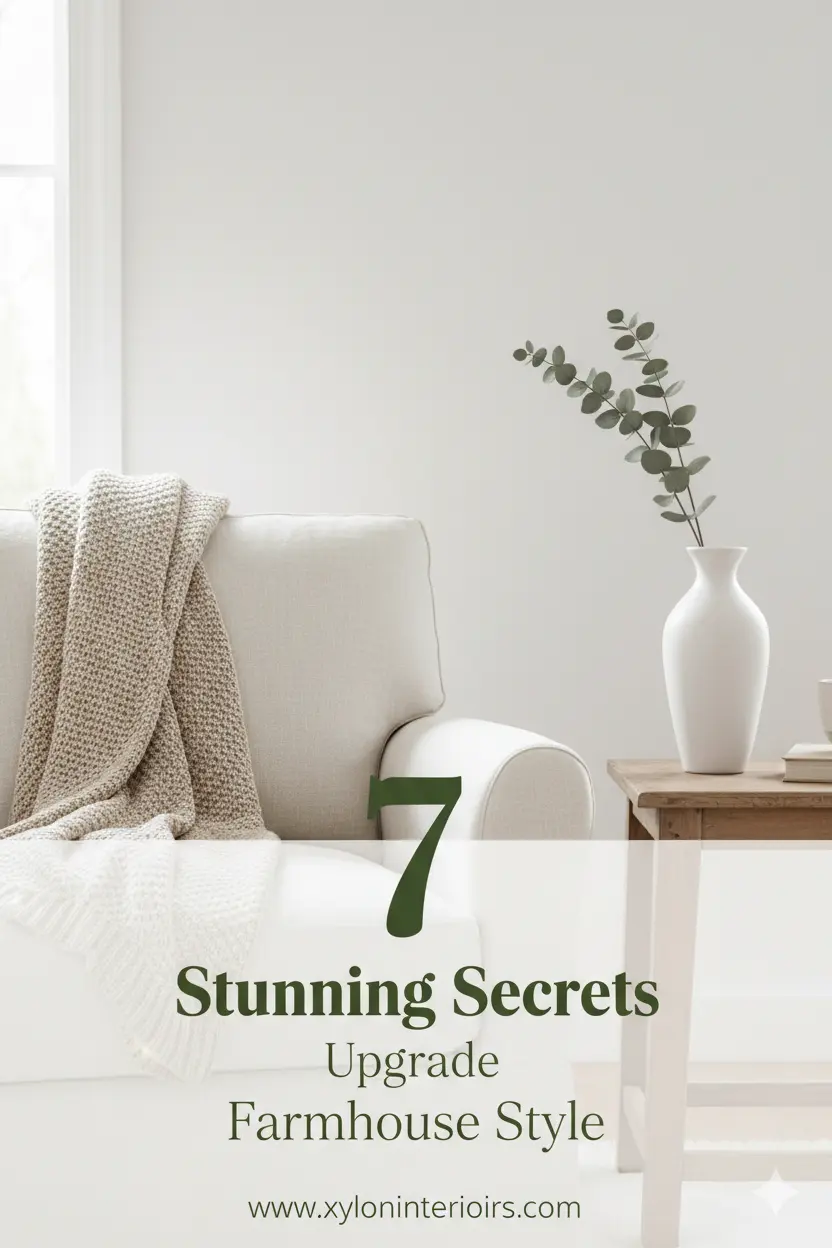
Somehow the new sofa showed up, the shiplap went on, and you still walk into the living room thinking, “Why doesn’t this feel like the pictures I save on my phone?” A Farmhouse Living Room Makeover can stall out at the almost-there stage. The good news is that a few well-targeted tweaks bring the warmth, charm, and lived-in ease most of us imagine when we say “farmhouse.” Below you will find seven secrets I lean on when clients ask me to rescue a space that looks okay but doesn’t yet feel like home.
A Quick Peek at the Seven Secrets
- Choose a warmer, muddy white—not bright gallery white.
- Mix rugged textures with one polished piece for balance.
- Let the sofa set the mood, then build around it.
- Use touches of black metal as quiet punctuation marks.
- Edit wall art to one story-driven moment instead of clutter.
- Bring in something alive, even if it is a grocery-store plant.
- Layer lighting so evenings feel like golden hour.
Secret 1: Warm, Muddy Whites Beat Bright Whites Every Time
Farmhouse rooms often start with paint because paint is affordable and forgiving. Many homeowners grab a bright, cool white thinking it will look clean. In reality, cool whites bounce blue daylight and can make reclaimed wood look dusty. A warm, slightly muddy white—think creamy milk rather than copy paper—softens old pine floors, galvanized planters, and woven baskets.
Practical tip
Move three paint cards around the room on a cloudy afternoon. The one that still looks inviting without sunlight is your winner. Brands name these colors all sorts of things—Antique White, Alabaster, Swiss Coffee. Ignore the names, trust the undertone.
“The walls should feel like they have been here for decades, even if you painted them yesterday.” – A mentor who grew up on a dairy farm in Ohio
Budget-friendly twist: If you rent, use large peel-and-stick paint swatches. They go up and come down without losing the security deposit.
Secret 2: Combine Rugged Textures With One Polished Piece
Too many rough surfaces can leave a room feeling straight from the barn instead of farm-house. Introduce one refined item—a glass lamp base, a brass picture frame, a linen curtain panel—to keep things intentional.
Real-world pairing ideas
- Chunky jute rug + slim metal side table.
- Weathered coffee table + crisp white ceramic bowl.
- Nubby throw pillows + smooth leather ottoman.
The contrast highlights both sides, giving the room depth that photographs beautifully.
Secret 3: Let the Sofa Carry the Story
In most living rooms the sofa is the visual anchor, so start there. For a Farmhouse Living Room Makeover I look for:
- Simple silhouette—no fussy curves.
- Slipcover or durable woven fabric that can handle coffee spills.
- Neutral color in wheat, stone, or soft charcoal.
If a new sofa is not in the cards
Try a tailored slipcover in drop-cloth cotton. Wash it, dry it hot for a crinkled texture, and suddenly the piece feels intentionally casual.
Secret 4: Black Metal Is Your Friend, Use It Sparingly
Farmhouse rooms risk becoming beige on beige. Small touches of black metal act like eyeliner on a face—they define and sharpen. Think thin-profile curtain rods, forged-look cabinet pulls, or a vintage-style fan on the console.
Why it works: The matte black references old ironwork found on real farm equipment yet feels modern enough to keep the room from drifting into theme-park territory.
Secret 5: Curate, Don’t Crowd, the Walls
A common mistake is covering every inch with signs, arrows, and too many words. Instead, choose one story to tell. Maybe it’s your grandmother’s grain-sack artwork framed beside a single family photo. Or an oversized landscape print that reminds you of open pasture.
How to edit a gallery wall
- Lay everything on the floor first.
- Remove two items for every one you add back.
- Hang pieces at eye level. If you have to crane your neck, it’s too high.
“The negative space is where the eye rests. Rest is part of good design.” – Old studio note scribbled on a sketchpad at Xylon Interior
Secret 6: Something Alive Belongs in Every Farmhouse Room
The style was born on working land. You feel that connection when greenery lives in the space. A fiddle-leaf fig makes a statement, but a bunch of eucalyptus in a mason jar works just as well and costs less than a latté.
Keeping it alive
If real plants frighten you, start with a pothos. They survive dim corners and signal thirst by wilting. Travel a lot? High-quality faux stems have come a long way. Pop them in a vintage pitcher and layer real soil or moss on top for authenticity.
Secret 7: Light the Room Like Late Afternoon
Overhead can lighting alone kills cozy vibes. Aim for at least three sources—overhead, task, and accent. Place warm white bulbs (2700K or lower) in table lamps, floor lamps, and even sconces plugged in with cord covers.
Renter-friendly lighting moves
- Plug-in swing-arm sconces above the sofa, no hardwiring needed.
- Battery-powered puck lights inside cabinets with glass doors for soft glow.
- Smart bulbs so you can dim without installing a switch.
This layered approach makes evening Netflix sessions feel like a slow summer sunset rather than a dentist’s office.
Wrapping Up With a Breath of Fresh Air
Upgrading to a genuine farmhouse feel isn’t about hauling in more stuff; it’s about making intentional choices that respect comfort and history. Start small. Swap the cool white for creamy paint, move a black metal lamp into the mix, or bring home a leafy plant. Each step reshapes the room without straining the budget or the weekend schedule. Remember, homes evolve just like the families inside them. Give yourself permission to experiment, live with the change for a week, then tweak again. The farmhouse charm you’re after is really lived-in comfort—and that arrives one thoughtful decision at a time.





No Comments