

You know that feeling when you walk into someone’s living room and it just feels good, even if you can’t quite explain why? It is not always about pricey furniture or a huge remodel. Most of the time, it is a handful of small, thoughtful choices that make a space feel calm, welcoming, and “lived in” in the best possible way.
If your living room currently feels a little tired, cluttered, or just “off,” you are not alone. Real life brings toys, mail piles, mismatched furniture, and hand‑me‑down pieces that do not always play nicely together. The good news is, you do not need a full makeover or a big budget to make your living room instantly feel better.
We are going to walk through 17 real-world ideas that work in normal homes. Lots of renter-friendly tweaks, budget-conscious changes, and simple styling tricks. We will even use Dollar Tree cheap spring centerpieces to bring a fresh, seasonal touch without spending much.
“A cozy living room isn’t the one with the most decor. It’s the one where you can sit down, exhale, and not worry about anything you see.”
Quick Overview: 17 Ideas That Really Make A Difference
Here is a quick rundown of the living room ideas we will go through. We will dig into each one in detail next:
- 1. Clear the visual noise before you add anything new
- 2. Re-think your seating layout for actual daily life
- 3. Add a simple spring centerpiece using Dollar Tree finds
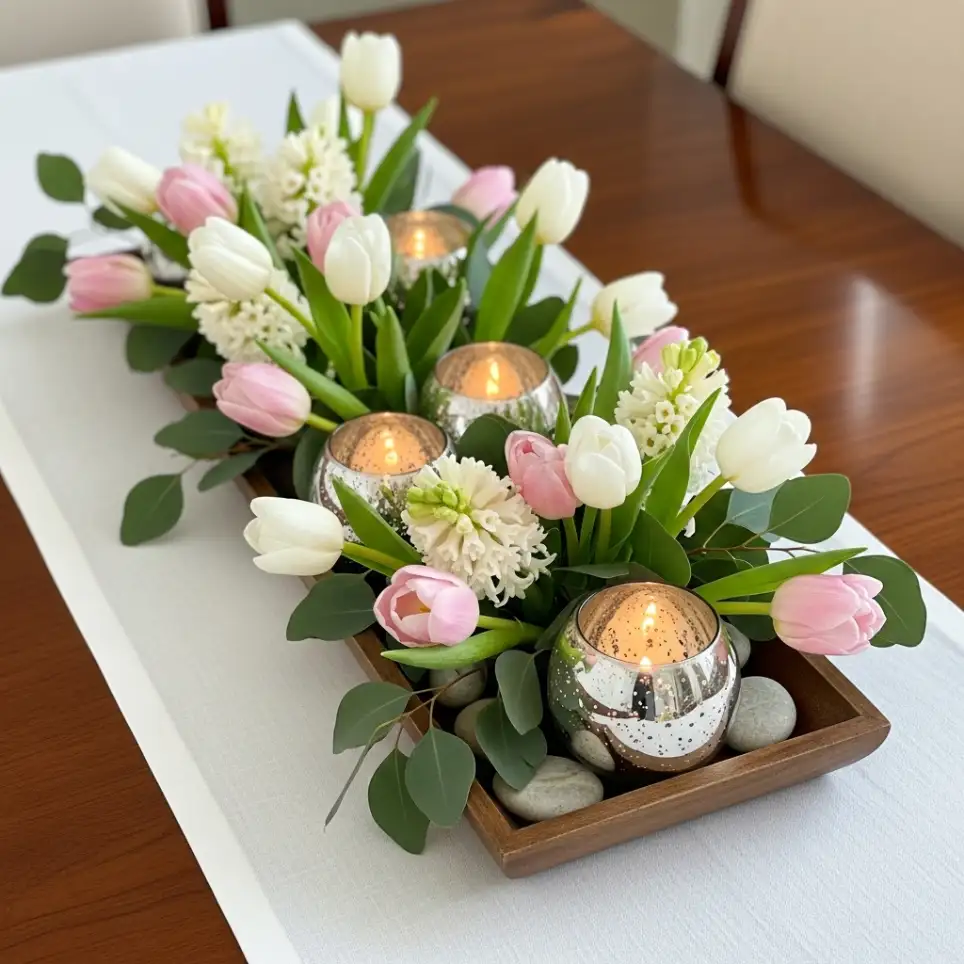
- 4. Layer light: overhead, lamps, and candles
- 5. Use textiles to soften everything (pillows, throws, rugs)
- 6. Create one strong focal point instead of five competing ones
- 7. Tame the cords and electronics clutter
- 8. Make a “landing zone” for real-life mess
- 9. Use vertical space to lift the eye
- 10. Style your coffee table with purpose, not perfection
- 11. Bring in real (or very realistic) greenery
- 12. Warm up the room with natural textures
- 13. Curate your wall art so it tells a story
- 14. Add softness underfoot, even over old flooring
- 15. Choose a simple, repeatable color story
- 16. Add personality with one unexpected piece
- 17. Set the mood: scent, sound, and small rituals
Let’s walk through these one by one so you can start making small, realistic changes that actually feel good in your everyday life.
1. Clear The Visual Noise Before You Add Anything New
If you do nothing else, do this. Most living rooms feel “off” not because they need more decor, but because there is too much going on visually.
Do a 15‑Minute Pull-Out Session
Instead of a huge cleaning day, try this quick reset:
- Grab a laundry basket or storage bin.
- Walk around the room and remove anything that feels like clutter:
- Old magazines and mail
- Extra throw pillows you never use
- Decor you don’t really love anymore
- Random toys or gadgets that belong elsewhere
- Put the basket in another room for now. You can sort it later.
Once those extra items are out, sit back on your sofa and look at the room again. Often it will already feel lighter without spending a penny. This is the perfect base before you start adding things like spring centerpieces or new pillows.
“Edit first, decorate second.”
2. Re‑Think Your Seating Layout For Real Life
Most of us place our sofa and chairs where they “fit” on the day we move in and never revisit it. But your layout has a huge impact on how cozy or awkward your living room feels.
Ask How You Actually Use The Room
Think about what really happens in your living room:
- Do you watch TV most nights?
- Do you host friends often?
- Is it mostly a kids’ play zone?
- Is it also your home office?
Now, try to shape seating around that. A few layout tweaks that instantly help:
- Pull furniture off the walls. Even moving the sofa 6–8 inches forward can make the room feel more intentional and less like a waiting room.
- Angle a chair. One chair slightly angled toward the sofa makes conversation easier and breaks that “everything is in a straight line” feeling.
- Make sure there’s a reachable surface. Every main seat should have a place to set down a drink within arm’s reach. This can be:
- A side table
- A sturdy ottoman with a tray
- Even a tucked-in nesting table
You don’t need new furniture. Just rearranging what you already have can make the whole room feel like it finally “works.”
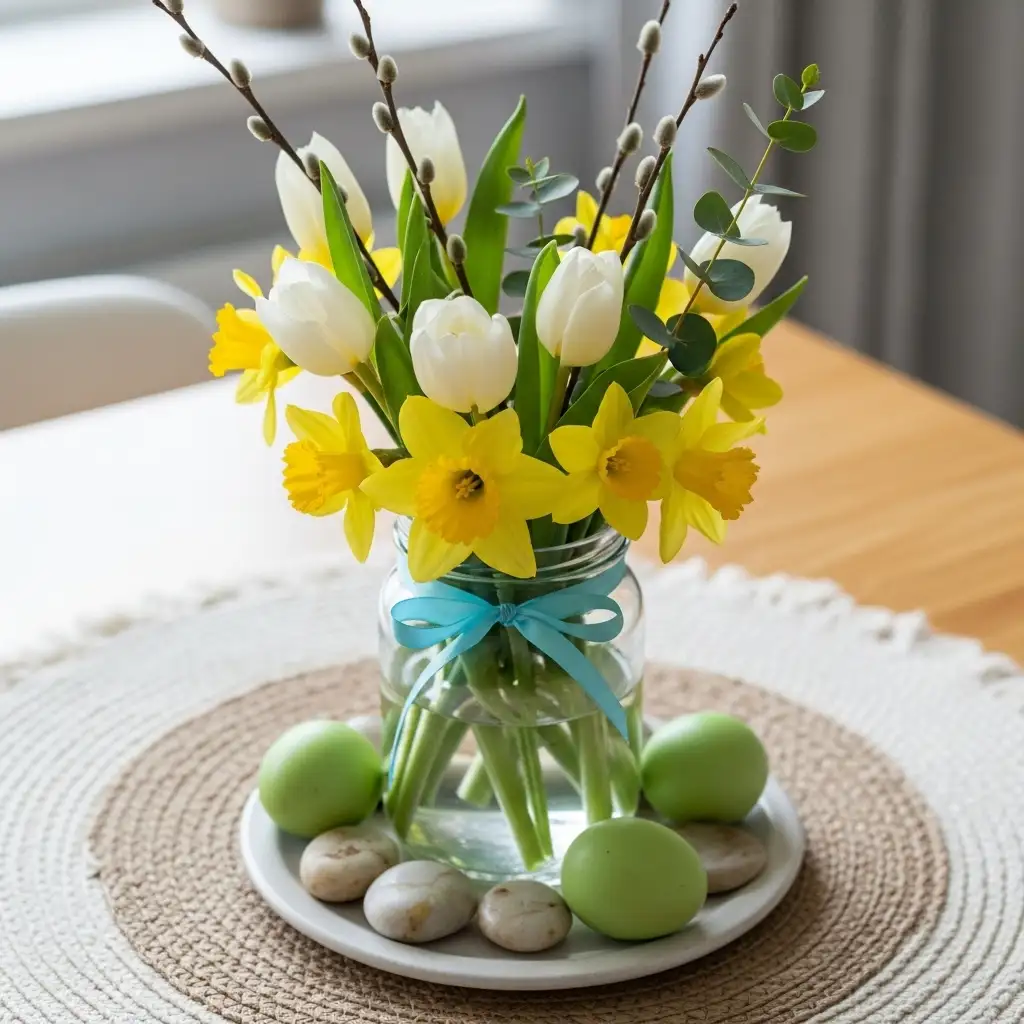
3. Add A Simple Spring Centerpiece Using Dollar Tree Finds
One of the easiest ways to freshen a living room is with a small seasonal moment on your coffee table or console. You don’t need to spend much at all. This is where Dollar Tree cheap spring centerpieces are a secret weapon.
Why Centerpieces Work In Living Rooms
Most people think of centerpieces for dining tables, but a simple arrangement in the living room can:
- Act as a soft focal point
- Make the room feel “done” even if nothing else changed
- Bring in seasonal color and texture in a small, low-risk way
Easy Dollar Tree Cheap Spring Centerpieces You Can Try
Here are a few ideas that look pulled together but cost very little. All of them are living-room friendly and renter-approved.
Idea 1: Soft Greenery + Neutral Books
- Pick up:
- 1 simple glass vase
- 2–3 stems of faux eucalyptus or soft greenery
- 1–2 white or light-colored faux flowers
- At home, stack two neutral books on your coffee table.
- Place the vase on top of the books or slightly off to one side.
This feels light and airy for spring and instantly softens a darker coffee table.
Idea 2: Tray With Little Spring Moments
- Grab a basic plastic or metal tray from Dollar Tree.
- Add:
- One small faux plant or mini bouquet
- A candle in a glass holder
- A small decorative item, like a ceramic bird or bunny for spring
Grouping decor on a tray keeps your coffee table from feeling cluttered and makes it easy to move everything when you need the surface clear.
Idea 3: Simple Glass Jars & Branches
- Use 2–3 clear glass jars or bottles from Dollar Tree.
- Fill them with:
- Real cut branches from your yard, or
- Faux branches/florals in soft spring colors
- Line them in a row on your TV console, mantle, or sideboard.
This gives you a “designer” look with almost no effort. The repetition makes it look intentional instead of random.
You can rotate these Dollar Tree cheap spring centerpieces seasonally by swapping the florals and accents, but keep the same vases and trays. That way you get a fresh feel multiple times a year without constantly buying new decor.
4. Layer Light: Overhead, Lamps, And Candles
Lighting is one of the main reasons a living room can feel flat, harsh, or oddly gloomy. You want a few different types of light so the room feels flexible and cozy at different times of day.
The Three Layers Of Light
- Overhead lighting for general brightness
- Task lighting like table or floor lamps for reading
- Accent lighting like candles or fairy lights for mood
Realistic Upgrades You Can Make
- Swap old bulbs for warm white bulbs (often labeled 2700K–3000K).
- Add a floor lamp near the sofa if you only have overhead light.
- Use battery-operated candles on your TV stand or shelves for a soft evening glow.
- Try a small plug-in wall sconce if you can’t hardwire anything.
Even one or two new light sources can make your living room instantly feel warmer and more inviting, especially at night.
5. Use Textiles To Soften Everything
Pillows, throws, and rugs are your best friends when you want cozy without commitment. They also distract the eye from anything you are not ready to replace yet, like an old sofa or less-than-ideal flooring.
Make Your Sofa Feel Intentional
- Choose 2–3 main pillow colors that play nicely together.
- Use a mix of textures instead of lots of busy prints. For example:
- Cotton or linen pillows
- One chunky knit pillow
- A simple stripe or small pattern
- Add one soft throw blanket casually draped over the arm or back of the sofa.
You do not need a mountain of pillows. Too many and it feels like you are fighting them every time you sit down. Aim for comfortable, not staged.
Let A Rug Pull Things Together
If your seating feels like it is floating or disconnected, a rug will change that instantly:
- Ideally, front legs of your sofa and main chairs sit on the rug.
- Choose a size that anchors the seating area, even if you layer it over carpet.
- For small spaces, one larger rug usually feels better than several tiny ones.
Rugs also soften sound, which makes a room feel calmer without you even realizing why.
6. Create One Strong Focal Point
Many living rooms unintentionally have several “main” things fighting for attention. The TV, a large window, a bold gallery wall, a big fireplace. When everything screams, nothing truly stands out.
Choose Your Priority
Ask yourself: if someone walked in for the first time, what do you want them to notice first?
- The fireplace?
- A big window view?
- A beautiful piece of art or mirror?
Once you decide, support that one area and calm the others down.
Simple Ways To Emphasize A Focal Point
- Over the sofa: One larger piece of art or a large mirror instead of many tiny pieces.
- Around the TV: Use a low, simple media console and keep decor minimal nearby.
- On the mantle: Choose 3–5 items with some height variation rather than a crowded shelf.
Let that main focal point breathe. It will instantly give the whole room a calmer, more pulled-together feel.
7. Tame The Cords And Electronics Clutter
Cords, remotes, game controllers, routers, and random chargers can quietly ruin the look of a living room. You don’t really notice it until you hide them, and then suddenly the room feels calmer.
Quick Cord Fixes
- Use simple cord clips to run cables along the back of furniture instead of across the floor.
- Bundle extra cord length and tuck it in a small basket or behind the TV.
- If your router is in the living room, hide it in a ventilated box or behind decor on your console.
Control The Remote Chaos
- Keep remotes in a shallow basket or decorative box on your coffee table.
- If you have kids, add game controllers to the same basket so everything has a clear home.
This is not about perfection. It is about removing the constant little “visual interruptions” that make a room feel messy even when it is technically clean.
8. Make A “Landing Zone” For Real-Life Mess
Real homes get messy. Instead of fighting that, plan for it. Create one or two spots where the clutter of everyday life is allowed to land.
Where To Put A Landing Zone
- Next to the main entrance to the room
- Beside the sofa where everyone drops their stuff
- Near the staircase if that is where bags and jackets pile up
How To Make It Look Intentional
- Add a basket for:
- Blankets
- Kids’ toys
- Pet toys
- Use a tray for keys, mail, and wallet on a side table.
- Consider a small storage ottoman that hides clutter completely.
When everyday items have a “home,” they stop feeling like clutter and start feeling like part of the system.

9. Use Vertical Space To Lift The Eye
If everything in your living room sits low and flat, the room can feel smaller and a bit heavy. Using vertical space helps the whole room feel taller and more open.
Simple Vertical Tricks
- Hang curtains higher. If possible, mount curtain rods closer to the ceiling rather than right above the window. Let the panels just kiss the floor.
- Add a taller floor lamp. Place it behind a chair or near the sofa.
- Use tall branches. Put tall faux or real branches in a vase on the floor next to a console or in a corner.
- Choose one taller piece of art or mirror. This pulls the eye upward and opens things up visually.
You do not need to fill every inch of vertical space. Just a few well-placed items is enough to change the room’s feel.
10. Style Your Coffee Table With Purpose, Not Perfection
A coffee table is prime real estate. When it works well, the whole living room feels thought-out. When it is a dumping ground, it drags everything down.
The Simple Coffee Table Formula
You can style a coffee table without it feeling like a magazine spread. Try this formula:
- Something tall: A vase, candle, or small lamp
- Something low and flat: A book, tray, or stack of magazines you actually read
- Something natural: A plant, flowers, or bowl of seasonal elements
This is a perfect place to use those Dollar Tree cheap spring centerpieces you created earlier. A small tray with a candle and faux florals, plus a couple of pretty books, is often enough.
Leave Room For Real Life
Make sure at least half of the coffee table is clear for:
- Drinks and snacks
- Board games
- Laptop or homework
A pretty coffee table that no one can actually use will always feel slightly annoying. You want a balance of beauty and function.
11. Bring In Greenery, Real Or Faux
Plants can calm a space faster than almost anything else. Even one or two small plants make a bigger difference than a lot of random decor pieces.
Where To Use Greenery
- On the coffee table as part of your centerpiece
- On a side table near the sofa
- On the TV console to soften electronics
- In a corner as a tall floor plant
Real vs Faux
- Real plants are wonderful if you have decent light and can remember to water.
- Good quality faux plants are perfectly fine, especially in darker rooms.
You can also use a mix. For example, one real plant by the window and some faux greenery in your spring centerpieces. The eye reads them all as life and color.
12. Warm Up The Room With Natural Textures
If your living room feels a bit cold or stark, try bringing in natural textures. These don’t shout for attention, but they quietly make the room feel more grounded and cozy.
Easy Ways To Add Texture
- Woven baskets for blankets or toys
- A jute or sisal rug layered with a softer rug
- A wood tray on the coffee table
- Linen or cotton pillow covers
- A wood bowl filled with seasonal items (pinecones, faux eggs, small florals)
If your furniture is mostly smooth surfaces like leather, metal, or glass, these textures will balance things out nicely.
13. Curate Your Wall Art So It Tells A Story
Walls full of decor can be just as overwhelming as empty ones. You want your wall art to feel intentional and personal, not like random pieces hung wherever there was space.
Start With The Big Wall
The wall behind your sofa or the wall opposite your main seating area usually has the biggest impact. You can:
- Hang one large piece that you really love.
- Create a simple gallery wall with 4–6 pieces in similar frames.
- Use a large mirror to bounce light around.
Make It Personal
Mix in items that mean something to you:
- Framed family photos in black and white
- Art from travels or weekend markets
- A framed handwritten recipe or note from a loved one
A living room feels better when it quietly tells your story, not just the story of what was on sale.
14. Add Softness Underfoot, Even Over Old Flooring
If you have worn carpet, dated tile, or scratched wood, it can be frustrating. You might not be ready to replace it, but you can soften it.
Layer Rugs Over What You Have
- Place a large rug over older carpet to create a defined, fresh seating zone.
- Use a rug over tile or wood to warm things up, especially where feet land most.
- In open concept spaces, use rugs to visually separate the living area from dining or entry areas.
Try to choose a rug with colors that work with the existing floor, not fight it. If your floor is darker, a lighter rug creates a nice contrast and opens things up.
15. Choose A Simple, Repeatable Color Story
When you have every color of the rainbow in your living room, it can feel busy and hard to pull together. Picking a small color palette makes decorating so much easier.
Pick Your Living Room’s “Team Colors”
You don’t need a strict set of rules, just a guide. Try:
- 1–2 main neutrals (white, cream, tan, gray, or black)
- 1–2 accent colors you really like (blue, green, terracotta, blush, mustard)
Then repeat those colors in:
- Pillows and throws
- Rugs and art
- Spring centerpieces and small decor
For example, you might have a neutral sofa, a beige rug, and then repeat soft green and pale blue in pillows, a vase, and your Dollar Tree cheap spring centerpieces. Suddenly everything connects.
16. Add Personality With One Unexpected Piece
Sometimes a living room feels “nice” but a little bland. One interesting item can shake that up in a good way.
Ideas For That One Special Piece
- A vintage chair with interesting lines
- A quirky side table from a thrift store
- A bold patterned ottoman or pouf
- An oversized piece of art with color
- A unique lamp or sculptural floor lamp
You do not need to go wild. Just one thing that makes you smile when you walk in is enough. Let that piece be the star and keep other decor a bit calmer.
17. Set The Mood: Scent, Sound, And Small Rituals
A living room that feels good isn’t only about what you see. It is also about what you smell and hear, and the little routines you build there.
Layer In Scent Gently
- Use a lightly scented candle on your coffee table.
- Try a diffuser with a soft scent like citrus, eucalyptus, or vanilla.
- A small vase of fresh herbs like eucalyptus or rosemary can add subtle fragrance.
Think About Sound
- Keep a small speaker on a shelf for background music.
- Play soft playlists in the evening to signal “wind-down time.”
- If your space echoes, add more textiles (rugs, curtains, pillows) to soften it.
Create A Tiny Living Room Ritual
Pick one small thing you do in that room most days:
- Light a candle when you sit down after work.
- Open the curtains fully every morning to let the light in.
- Do a 5‑minute “reset” at night: fold the throw, stack remotes in their tray, fluff pillows once.
These micro-habits aren’t about perfection. They just teach your brain: “This room is where I can relax.”
Bringing It All Together
When you look at all 17 ideas together, you might feel like it is a lot. You do not need to do everything at once. In fact, it is better if you don’t.
Start small:
- Day 1: Pull out visual clutter with a laundry basket and sit with the empty space.
- Day 2: Rearrange your seating slightly and add one extra light source.
- Day 3: Create one of those Dollar Tree cheap spring centerpieces and style your coffee table with purpose.
Then keep going at your own pace. Add a rug when you can. Swap pillow covers. Hang that one piece of art you love. Adjust as real life changes. Your living room does not have to look like anyone else’s, and it definitely does not have to be “finished” to feel good.
If you ever feel stuck, look for quiet, grounded ideas that fit the way you live. Places like Xylon Interior can be helpful for exploring fresh inspiration, simple tips, and down-to-earth solutions that match real homes instead of showrooms.
“A home is built slowly, in layers. Every small choice you make is part of the story.”
Your living room does not need a huge budget or a major overhaul to instantly feel better. It just needs a few thoughtful shifts, a bit of editing, and maybe a small spring centerpiece on the coffee table reminding you that seasons change and rooms can too.






No Comments