
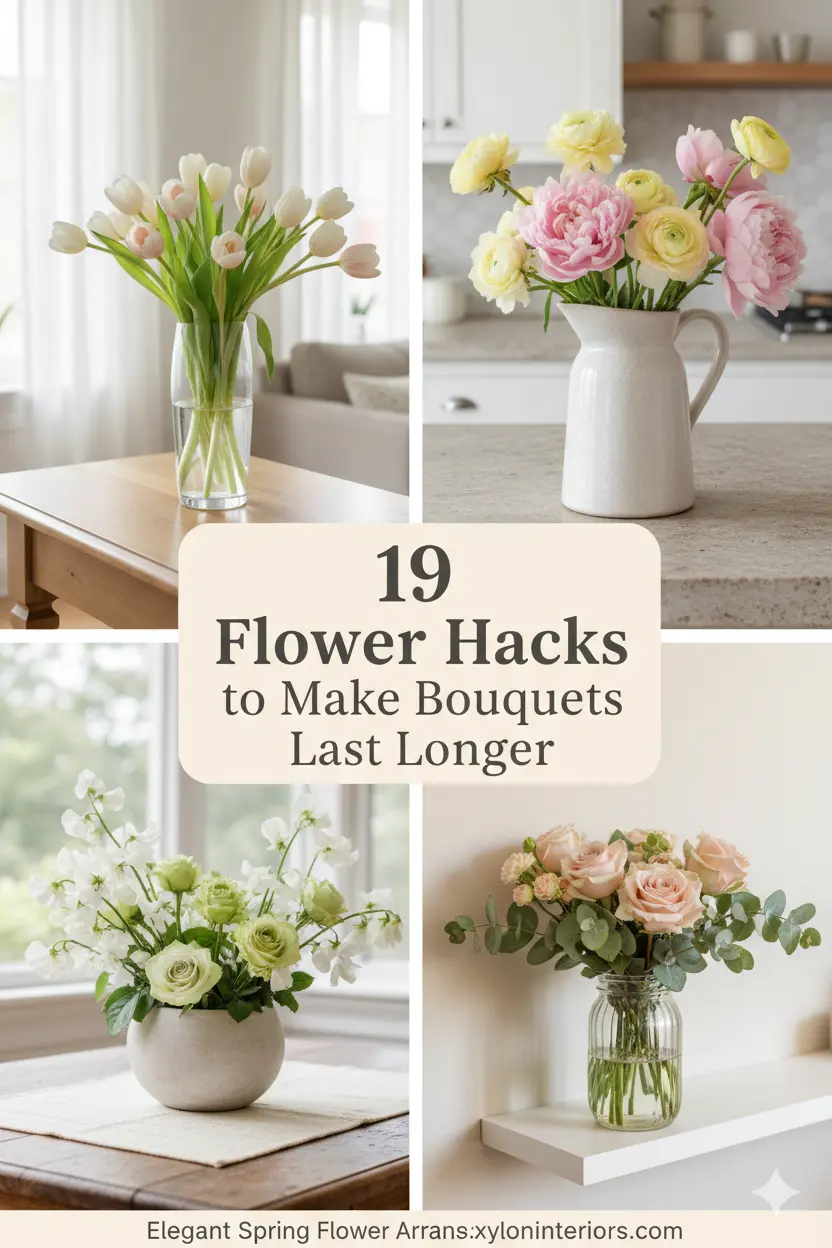
Fresh flowers are one of those small luxuries that make a home feel cared for. You bring home a bouquet, set it in the living room, and suddenly the whole place feels brighter and more pulled together. The problem is, a few days later the water looks cloudy, the petals droop, and your “elegant spring flower arrangements” start to look more like a science experiment.
If you’ve ever felt annoyed that a pretty bouquet seems to collapse overnight, you’re not alone. Flowers cost money, they’re often tied to memories or celebrations, and it is disappointing when they fade too quickly. The good news is, there are lots of simple, practical tricks you can use to stretch those blooms a few extra days and sometimes more than a week.
In this guide, we will walk through 19 tried-and-tested flower hacks that help your bouquets stay fresh longer. These ideas work for everything from a grocery store bunch on your kitchen counter to the refined, elegant spring flower arrangements you might place on a dining table for guests.
Fresh flowers don’t have to be fleeting. A little care turns a three‑day bouquet into a ten‑day mood lift.
Quick Overview: 19 Flower Hacks That Actually Help
Before we dig into the details, here is a snapshot of the main ideas we will explore. Think of this as your cheat sheet:
- Hack 1: Start with the right vase and real cleaning
- Hack 2: Trim stems the right way and at the right time
- Hack 3: Strip leaves below the waterline
- Hack 4: Use fresh, cool water and change it often
- Hack 5: Use flower food properly (or make a simple homemade version)
- Hack 6: Keep flowers away from heat, sun, and appliances
- Hack 7: Avoid placing flowers near fruit bowls
- Hack 8: Condition your flowers before arranging
- Hack 9: Support weak stems with clever tricks
- Hack 10: Use tape grids or frogs for longer-lasting structure
- Hack 11: Group flowers by personality and lifespan
- Hack 12: Refresh cuts every couple of days
- Hack 13: Remove fading stems early
- Hack 14: Adjust water level by flower type
- Hack 15: Let spring flowers rest in the right room
- Hack 16: Give tulips and daffodils special treatment
- Hack 17: Revive wilting blooms when possible
- Hack 18: Turn tired bouquets into mini arrangements
- Hack 19: Style your home so flowers live where they last longest
We will also touch on how these hacks fit into different parts of your home, from an entryway console to a bedroom nightstand, so your flowers last longer and look like they belong in the space.
Hack 1: Start with the Right Vase and Real Cleaning
The life of your bouquet starts before the flowers even touch water. A dirty vase is one of the fastest ways to shorten the life of your arrangement.
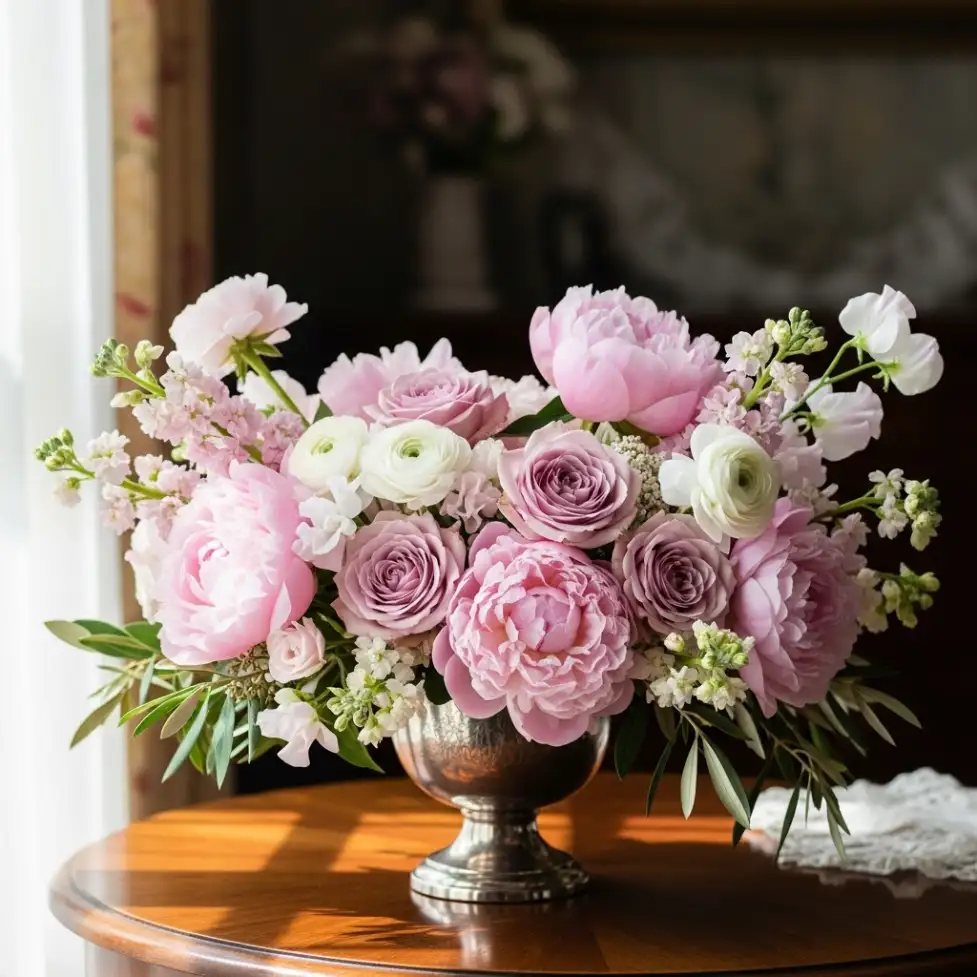
Choose the Right Vase Shape
For most elegant spring flower arrangements in living rooms or entryways, you want a vase that:
- Is tall enough to support the stems without crowding them
- Has a neck that is not too tight, so stems are not crushed
- Has enough weight so it will not tip on a busy kitchen island or coffee table
Tall, narrow vases are great for tulips and daffodils. Short, wide vases work well for low, full centerpieces on a dining table where you want to see over the blooms.
Deep Cleaning Matters
Even if a vase looks clean, old bacteria can linger. Before you arrange flowers:
- Wash the vase in hot, soapy water
- Use a bottle brush or an old toothbrush to scrub inside curves and near the bottom
- Rinse thoroughly so no soap remains
If the vase has cloudy buildup, soak it in a mix of white vinegar and warm water for 15 to 20 minutes, then scrub. A clean vase gives your flowers a fresh start and slows bacterial growth that clogs stems.
Hack 2: Trim Stems the Right Way and at the Right Time
How you cut the stems may sound like a small detail, but it has a huge impact. Flowers drink through the cut end of the stem. If that opening is crushed or dried out, water cannot move up properly.
Use a Sharp Tool
Skip dull scissors meant for paper. Instead use:
- Sharp kitchen shears
- A clean knife
- Garden clippers
A sharp cut keeps the stem walls open so the flower can absorb more water.
Cut at an Angle
Trim stems at about a 45-degree angle. This:
- Increases the surface area for water intake
- Prevents the stem from sitting flat at the bottom of the vase, where it can seal itself off
Cut Right Before They Go in Water
If flowers sit out of water for a while, the end of the stem seals over. Get into the habit of:
- Unwrapping your bouquet when you get home
- Trimming 1 to 2 cm off the ends
- Placing them in water immediately
This simple habit can easily give you a few more days of life from most bouquets.
Hack 3: Strip Leaves Below the Waterline
Leaves sitting in water break down quickly and invite bacteria. That murky smell you sometimes get from old arrangements usually comes from rotting foliage.
Before you place your flowers in the vase:
- Remove any leaves that will sit below the waterline
- Clean up extra foliage that makes the lower stems too crowded
This step makes your elegant spring flower arrangements look tidier and keeps the water cleaner. It is especially important for living room or dining room arrangements, where the vase water is visible and part of the overall look.
Hack 4: Use Fresh, Cool Water and Change It Often
Water quality is one of the biggest factors in how long a bouquet lasts. If you only adopt two habits from this article, do this: keep the vase clean and the water fresh.
Start with Cool, Not Ice Cold, Water
Most cut flowers like cool, not hot, water. Warm water can speed them up and make them open quickly, then fade. Very cold water can shock more delicate blooms.
Use tap water at cool room temperature. If your water is very hard, you can let it sit for a little while so some minerals settle, but for most homes regular tap water is fine.
Change the Water Every 1–2 Days
It sounds fussy, but you get used to it. When you are making coffee in the morning or cleaning the kitchen at night, check your bouquets:
- Pour out old water
- Rinse the vase quickly
- Fill with fresh water and flower food if you have it
The result is clearer water, fewer foul smells, and flowers that stay upright and vibrant longer in every room.
Hack 5: Use Flower Food Properly (Or Make a Simple Homemade Version)
Those tiny packets that come with store-bought bouquets are more useful than they look, but most people do not use them correctly.
How to Use Flower Food Packets
- Follow the packet’s directions for how much water to use
- Mix the powder into the water until fully dissolved before adding flowers
- When you change the water, add another portion of food if you have extra packets
Flower food usually includes a bit of sugar for energy, something to keep bacteria down, and ingredients to help the stems drink better.
Simple Homemade Flower Food
If you do not have a packet, you can mix a basic version using ingredients you probably already have. In a 1-liter vase of water, you can add:
- 1 teaspoon sugar
- 1 teaspoon white vinegar or lemon juice
- A tiny drop of regular, unscented household bleach (about 1/4 teaspoon)
The sugar feeds the flowers. The acid and bleach slow bacteria. Use a light hand with the bleach. Too much can damage the flowers.
You do not need to do this for every bouquet, but it helps a lot with spring flowers in warmer rooms like kitchens and sunny living spaces, where bacteria grow faster.
Hack 6: Keep Flowers Away from Heat, Sun, and Appliances
Where you place your arrangement matters almost as much as how you cut the stems. Flowers age faster in warm spots.
Ideal Spots
Try to place your bouquets:
- Out of direct sunlight
- Away from radiators, fireplaces, heating vents, or space heaters
- Not right above or next to your oven or stovetop
In a kitchen, for example, a bouquet will last longer on a sideboard or open shelf away from the stove than on a windowsill above the sink where the sun and steam hit it all day.
Watch Out for Electronics
Televisions, large lamps, and other electronics throw off more heat than we realize. If you love having flowers on your media console, keep them toward the edge or in a cool corner, not right against the back of a warm TV.
Hack 7: Avoid Placing Flowers Near Fruit Bowls
This one surprises people. Many fruits, especially apples, bananas, and pears, give off ethylene gas as they ripen. That gas speeds up the aging of flowers.
If you like to keep a fruit bowl on your kitchen island, do not crowd your bouquet right next to it. Instead:
- Place flowers on the dining table or a nearby console
- Move the fruit to a different counter if the arrangements must stay near the center of the kitchen
It is a small shift, but it can give you an extra few days with spring flowers that are prone to wilting quickly.
Hack 8: Condition Your Flowers Before Arranging
Conditioning sounds fancy, but it just means giving your flowers a chance to drink and recover before you style them. It makes a huge difference for elegant spring flower arrangements where you expect guests or want the bouquet to perform for a dinner or weekend.
How to Condition Flowers at Home
- Unwrap your bouquet right after you bring it home.
- Remove any torn leaves or petals.
- Trim the stems at an angle.
- Place them in a tall bucket or vase of cool water in a cool room.
- Let them sit for at least 1–2 hours, or even overnight if you can.
After they have had a good drink, you can arrange them in their final vase. This is especially helpful in warmer months or if the flowers have had a long trip from the store to your home.
Hack 9: Support Weak Stems with Clever Tricks
Some of the prettiest spring flowers have floppy stems. Tulips, anemones, and some garden roses can bend over after a few days. You can gently help them without forcing a stiff, unnatural look.
Tricks to Help Weak Stems
- Shorten the stems: Cut them a bit shorter and use a lower vase so the bloom does not have to support as much weight.
- Use the vase edge: Let the stem lean slightly against the rim for support.
- Use clear floral tape: You can lightly tape a very weak stem to a stronger one below the waterline to share support. Do this gently so it still looks natural.
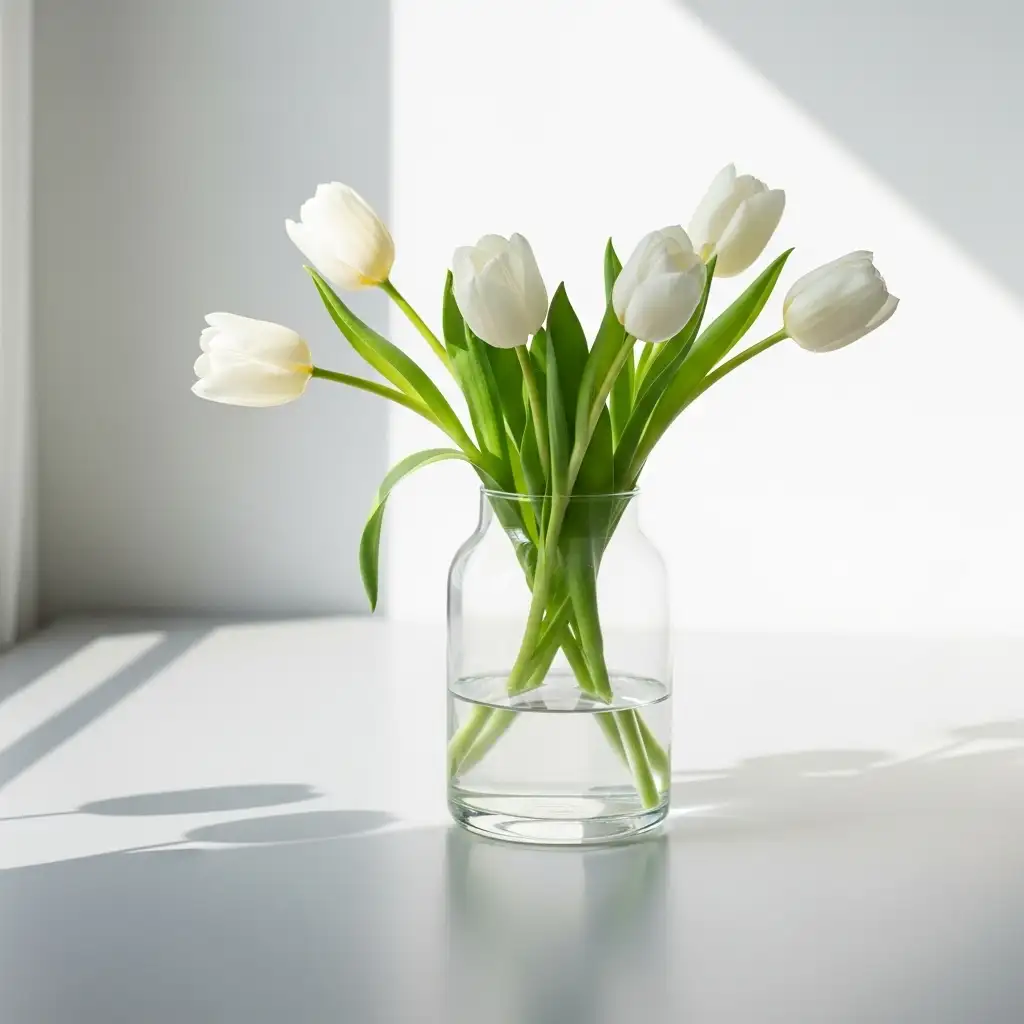
With tulips, a little bend can actually add charm. They keep growing in the vase and naturally curve toward the light. A graceful curve often looks quite elegant on a bedside table or console.
Hack 10: Use Tape Grids or Frogs for Longer-Lasting Structure
One reason arrangements start to look messy is that stems move as they soften. A little structure helps them stay in place and protects fragile stems from being knocked around every time you change the water.
Make a Simple Tape Grid
You do not need special supplies. Clear adhesive tape works. Here is what to do:
- Fill your vase with water first.
- Use strips of clear tape across the top of the vase in a simple crisscross pattern.
- Leave small square openings for each stem.
- Place stems into each opening so they stand where you want them.
This works especially well for lower, wide vases on coffee tables where bumps and movement could shift the flowers.
Flower Frogs or Reusable Grids
If you love arranging flowers regularly, you might eventually try a reusable frog or grid. They sit at the bottom or top of the vase to keep stems in place. It is not necessary, but it is handy if you often create more sculptural or formal pieces.
Hack 11: Group Flowers by Personality and Lifespan
Not all flowers age at the same speed. Some, like carnations, alstroemeria, chrysanthemums, and certain greenery, last a week or more. Others, like some garden roses, tulips, and ranunculus, can be more short lived.
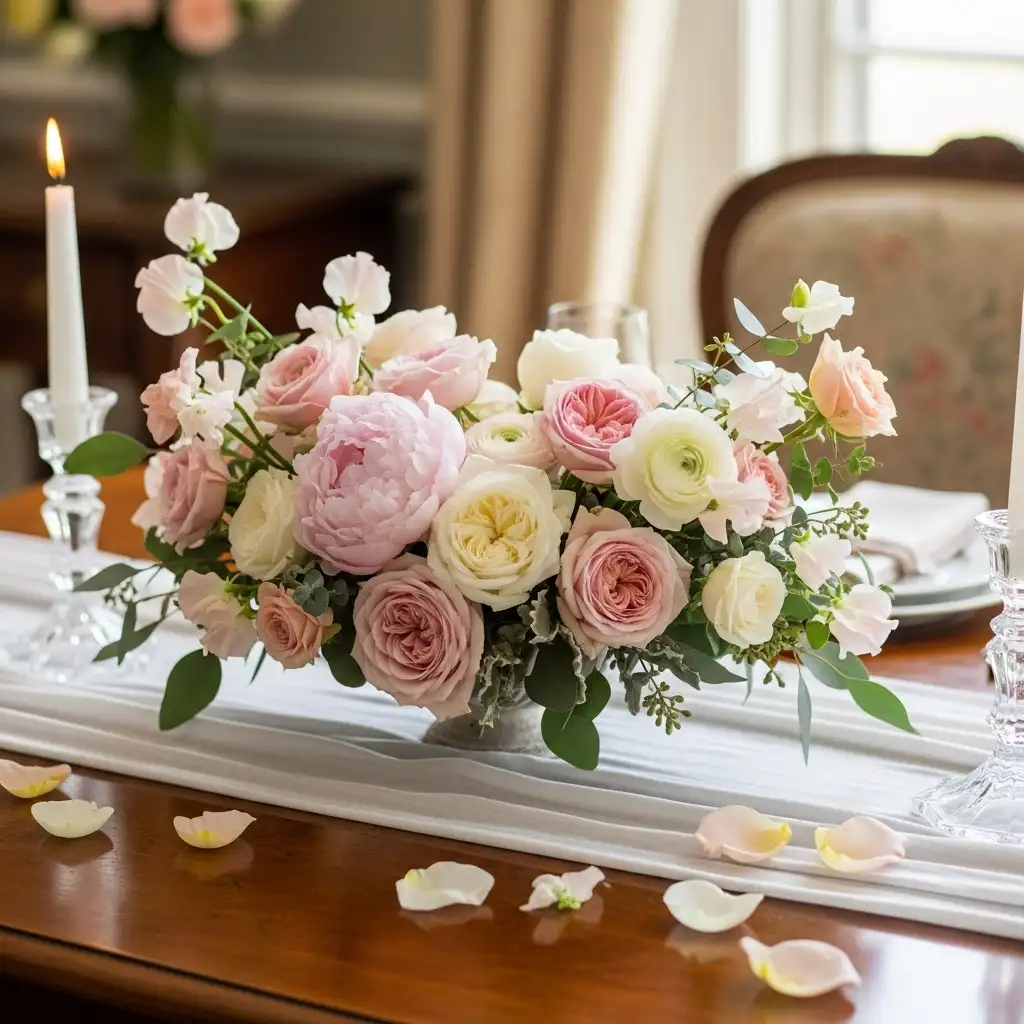
When you create elegant spring flower arrangements around your home, think of building them in layers.
Use Long-Lasting “Workhorses” as a Base
Choose a few sturdy flowers and greens that you know will hold up:
- Eucalyptus
- Ruscus
- Alstroemeria
- Spray roses
- Chrysanthemums
These can stay in the vase for longer, forming the structure of your arrangement on the dining table or console.
Mix in Short-Lived “Stars”
Then add more delicate blooms as the focal points:
- Peonies
- Ranunculus
- Parrot tulips
- Fragrant garden roses
As these fade, you can pull them out and the arrangement will still have enough presence to stay in the room. This approach is budget friendly, because you don’t need to replace the entire bouquet every time.
Hack 12: Refresh Cuts Every Couple of Days
Stems seal over after a few days in water. Giving them a quick trim helps them drink more again, especially when you already need to change the water.
How to Refresh an Arrangement Without Ruining It
- Lift the flowers gently out of the vase as a group, keeping your hand around the stems to hold the shape.
- Pour out the old water and quickly rinse the vase.
- Trim about 1 cm off the bottom of each stem at an angle.
- Refill the vase with fresh water and food.
- Place the group of stems back in as a unit, adjusting only slightly.
You do not have to fully redesign the arrangement every time. A small refresh like this can keep your flowers going for several more days.
Hack 13: Remove Fading Stems Early
One of the simplest hacks is also one of the most overlooked. As soon as a flower looks truly spent, remove it. Do not wait until the whole arrangement is drooping.
Dying stems:
- Drop petals into the water, which then decay
- Encourage mold and bacteria
- Make the whole bouquet look tired even if some blooms are still fresh
If a rose is browning at the edges or a tulip has totally flopped, snip it out. Sometimes the remaining stems look instantly better and you gain two or three more days of use.
Hack 14: Adjust Water Level by Flower Type
Not every stem likes the same amount of water. A full vase is not always the best choice.
Flowers That Prefer Deep Water
Most standard bouquet flowers like:
- Roses
- Carnations
- Chrysanthemums
- Alstroemeria
These do well with a vase filled about two-thirds full, especially in hot rooms like sun-filled kitchens.
Flowers That Manage Better in Shallow Water
Some bulb flowers and more delicate blooms last longer with less water:
- Tulips
- Daffodils
- Hyacinths
Give them just enough to cover a few centimeters of stem. Keep an eye on the level, because they drink quickly. Shallow water helps prevent them from going soft and mushy at the base.
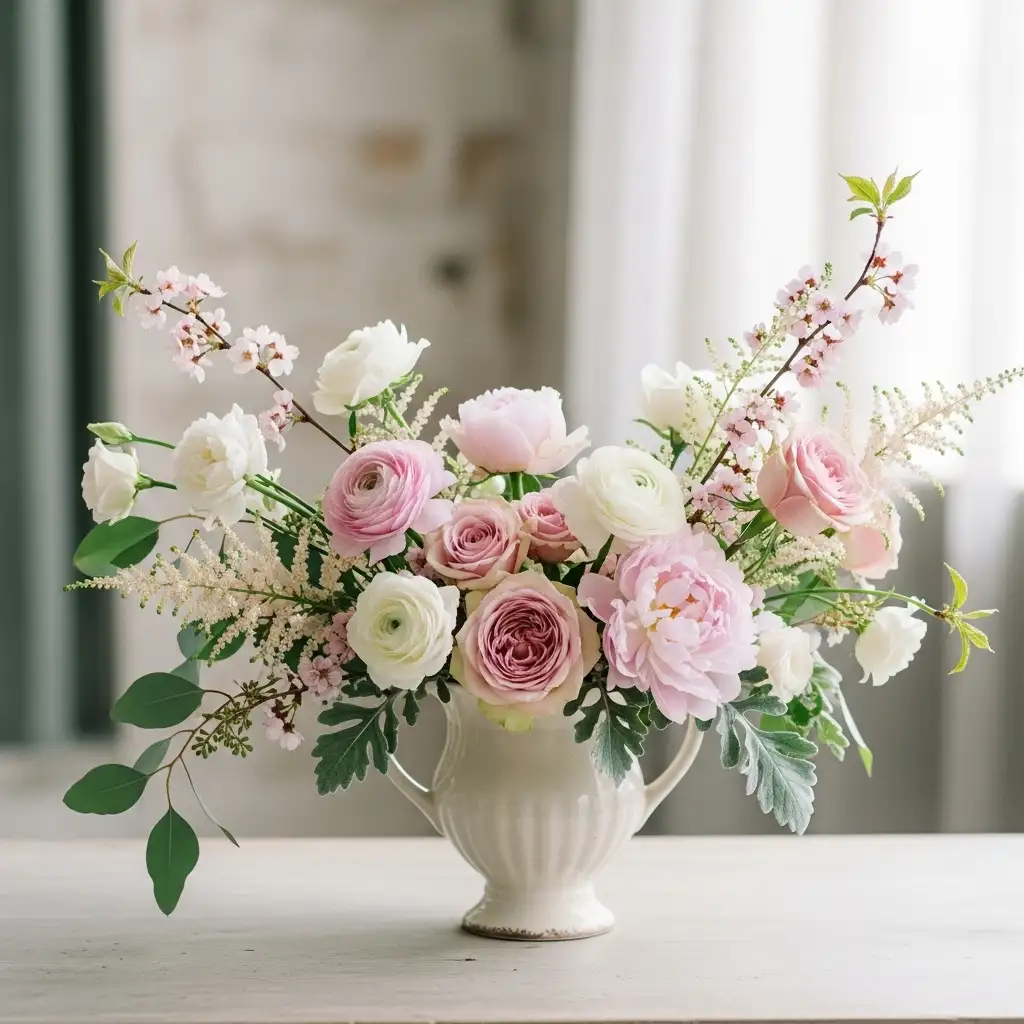
Hack 15: Let Spring Flowers Rest in the Right Room
If you can, keep arrangements in cooler rooms during the heat of the day. You can still style them in the living room or dining room, but a little “night care” helps a lot, especially in warmer climates.
Nighttime Flower Routine
At night or when you are out at work all day, you can:
- Move bouquets from sunny windowsills to a shaded sideboard
- Place bedroom or living room flowers in the coolest room in your home, often a hallway or an internal room
- Keep them away from any open radiators or space heaters in winter
You do not have to do this religiously, but even moving a special arrangement for a day or two during a heat wave can extend its life noticeably.
Hack 16: Give Tulips and Daffodils Special Treatment
Spring favorites like tulips and daffodils need a little extra care, particularly when you mix them together in bouquets.
Tulip Tips
- Wrap floppy tulips loosely in paper and stand them in deep water for a couple of hours to help them straighten.
- Keep them in shallow, cool water and away from direct sun so they do not open and drop petals too quickly.
- Remember they grow in the vase, so trim them again after a few days if they get too tall and heavy.
Daffodils and Mixed Bouquets
Daffodils release a sap that can affect other flowers in the vase. To avoid problems:
- Place freshly cut daffodils in their own vase of water for a few hours first.
- After they have soaked, you can mix them with other spring flowers if you like.
Do not recut the stems of daffodils again before mixing or they will release more sap. Let them keep their “sealed” ends once they are in the shared arrangement.
Hack 17: Revive Wilting Blooms When Possible
Sometimes a flower wilts even when you have done everything right. Before you throw it away, try a simple rescue.
Reviving Roses and Similar Flowers
- Take the flower out of the arrangement.
- Trim the stem at a sharp angle, taking off a couple of centimeters.
- Fill a clean vase or tall glass with warm (not hot) water.
- Submerge as much of the stem as you can, including some of the head if it is very droopy.
- Let it sit somewhere cool for an hour or two.
Often the petals perk back up enough to return the flower to your main arrangement or to use in a small side vase.
Reviving Bent Stems
If a stem has a sharp bend, cut it shorter and either:
- Use it in a compact bedside arrangement in a smaller vase
- Float the bloom in a shallow dish of water on a coffee table, which can look surprisingly chic
It feels good to salvage something beautiful instead of tossing it straight away.
Hack 18: Turn Tired Bouquets into Mini Arrangements
After four or five days, most bouquets have a mix of fresh and fading stems. This is a perfect moment to get creative and stretch their life instead of throwing them out entirely.
How to Rework a Fading Bouquet
- Lay the bouquet on a table and separate the stems.
- Discard anything slimy or badly wilted.
- Group the remaining blooms by type and length.
- Trim each stem freshly.
Then make new mini arrangements for different rooms:
- Short stems: Use in a small jar or bud vase on a bathroom shelf or nightstand.
- Single special blooms: Place one or two stems in slim vases on a windowsill, mantel, or beside the kitchen sink.
- Leftover greenery: Put it into a simple glass on your desk or entryway table for a soft, quiet bit of life.
This not only makes your flowers last longer in practical terms, it also spreads that sense of care throughout your home.
Hack 19: Style Your Home So Flowers Live Where They Last Longest
The last hack is less about the flowers themselves and more about your home layout. When you know where flowers behave best, you naturally put them where they can shine longer.
Living Room and Family Room
For elegant spring flower arrangements in a living room:
- Choose a spot with indirect light, such as a coffee table away from the window or a side table next to the sofa.
- If you have a bright window, place flowers to the side of it, not directly in the path of midday sun.
- Keep them away from loudspeakers or electronics that produce heat or vibration.
Low, full arrangements work beautifully on coffee tables so they do not block conversation or the TV. Taller, sculptural bouquets are lovely on a console behind a sofa or along a wall.
Kitchen and Dining Area
Kitchens are warm and busy, but they are also where many of us spend the most time. To keep bouquets happy there:
- Avoid placing flowers right next to the stove.
- Keep them away from fruit bowls, as mentioned earlier.
- Consider a corner of the counter, an island tray, or a dining table as their main “home.”
On dining tables, narrower arrangements or multiple small vases are easier to move when you set the table, which also means you can pop them into a cooler spot when not in use.
Entryway
Entryways are one of the best places for flowers. They usually have moderate temperatures and less direct sun, and they welcome you every time you walk in the door.
- Choose a sturdy vase that will not tip when you drop your keys or mail.
- Choose long-lasting flowers or greenery that can handle a bit of temperature change near the door.
- Check the water as part of your morning routine before you leave the house.
Even a small arrangement in the entry helps your home feel more intentional and cared for.
Bedroom
In bedrooms, it is usually best to avoid overpowering scents, which can feel too strong at night. Instead:
- Choose mild-scented flowers or mostly greenery with a few blooms.
- Use small vases on nightstands or dressers so you are not balancing a large, fragile arrangement near your alarm clock and water glass.
- Take advantage of the generally cooler, darker environment to keep those flowers fresher for longer.
Even a single stem in a bud vase by the bed can bring the “elegant” feeling of a spring arrangement without overwhelming the space.
Bringing It All Together: Elegant Spring Flower Arrangements That Last
When people talk about elegant spring flower arrangements, they often only focus on color palettes or which flowers “go together.” The real secret is combining style with care. A thoughtful arrangement lives longer and therefore feels more luxurious, because you get to enjoy it for days instead of hours.
Here is how you might put several hacks together in real life:
- You bring home tulips, roses, and some eucalyptus from the grocery store.
- You clean your favorite glass vase, then trim the stems and remove lower leaves.
- You let the flowers condition in cool water in a quiet room while you tidy the kitchen.
- You arrange them using a simple tape grid so the roses stay upright and the tulips can arc slightly.
- You place the vase on your dining table, but away from the fruit bowl and out of direct sun.
- Every other day, you change the water, trim the stems, and remove any fading blooms.
- A week later, you break apart the bouquet, reusing the best stems in little vases around the house.
Instead of one burst of beauty, you get a full week or more of small moments: a glimpse of flowers when you enter your home, a softer corner of the kitchen, something pretty by the bed when you set down your book.
A Gentle Note to End On
It is easy to feel like you need to do all 19 of these hacks perfectly. You absolutely do not. Even one or two changes make a difference. Maybe this week you simply start trimming stems at an angle and changing the water regularly. Next time, you might try conditioning the flowers or moving them away from the fruit bowl.
Home should feel like a place that is on your side, not another to‑do list. Flowers are there to lift you up, not stress you out.
The point is not to turn your home into a showroom. It is to weave a little bit of softness into your everyday life. A vase of tulips on the entryway table, a simple mix of greenery and one or two blooms by the kitchen sink, a small rose next to your bed. Those are the details you notice on the hard days.
If you enjoy thinking about how flowers, furniture, and lighting all work together, you can always explore places like Xylon Interior for more ideas and practical tips on shaping a home that feels both beautiful and livable. But even without anything fancy, the care you take in arranging and looking after a bouquet is already a kind of design.
So the next time you bring home a bundle of spring flowers, give them a bit of extra attention. Clean vase, angled cuts, fresh water, good placement. It doesn’t take much. With a few simple habits, your bouquets will last longer, your rooms will feel calmer, and your home will quietly feel more like the place you want to be.



No Comments