
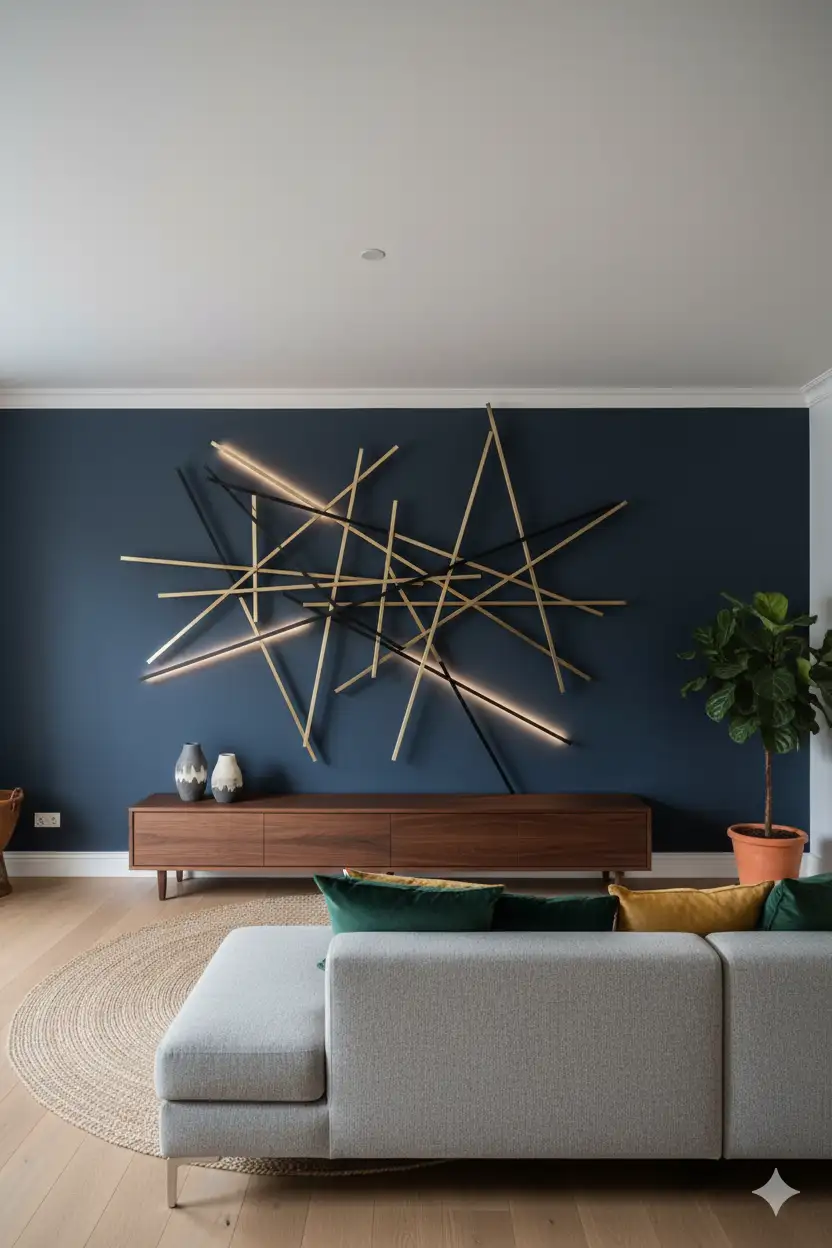
Living room wall decor can change the mood of a space faster than almost anything else, and it doesn’t always require big renovations or expensive materials. Over the years, I’ve noticed that the most effective wall ideas are often simple things people can do in an evening.
This list walks through practical, real-world ideas I’ve used in actual homes, from tiny styling tweaks to easy texture upgrades you can knock out without much planning. Try one, or try a handful, and see what feels right for your space.
1. Using a large-scale artwork to anchor a blank wall
A big piece of art can calm down a wall that feels visually noisy or just empty. When I place a single oversized piece behind a sofa, it creates a focal point without cluttering the room. If you’re choosing one, look at the colors already in your space, sofa fabric, rug tones, or even throw pillows, and see what naturally fits. I often recommend going slightly bigger than you think; small art on a large wall tends to look timid. Hang it so the center sits around eye level, which makes the whole living room feel more balanced.
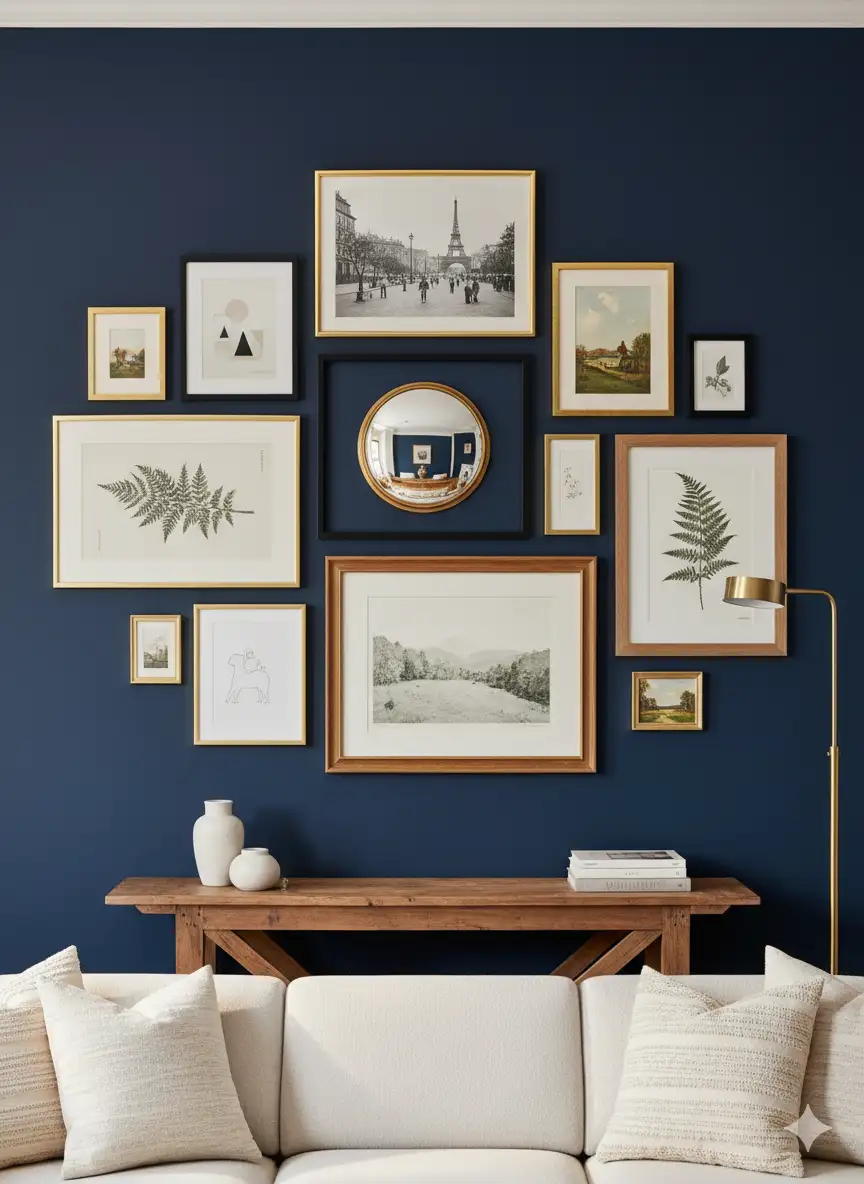
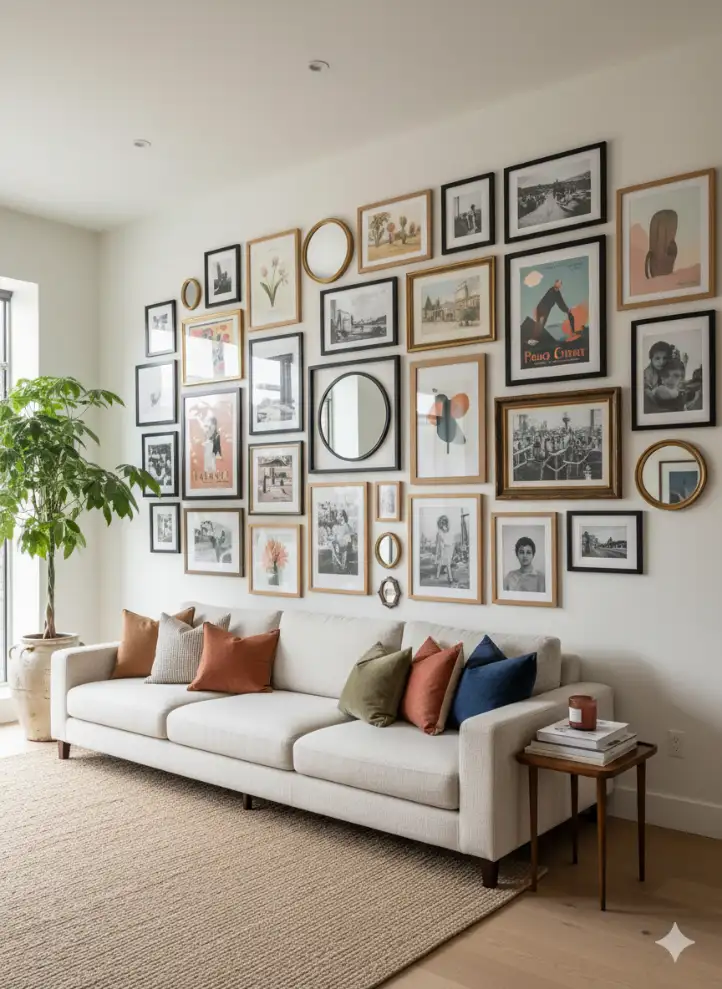
2. Creating a small gallery cluster with mismatched frames

I’ve done this in many living rooms where the homeowners didn’t want a formal gallery wall but still wanted something interesting. Mixing frame sizes and finishes keeps things relaxed and personal. I usually start with one “anchor” piece and build around it, keeping the spacing somewhat consistent. Include a few casual elements, maybe a sketch from a local market or a family piece you’ve always liked. It ends up looking curated but not stiff.
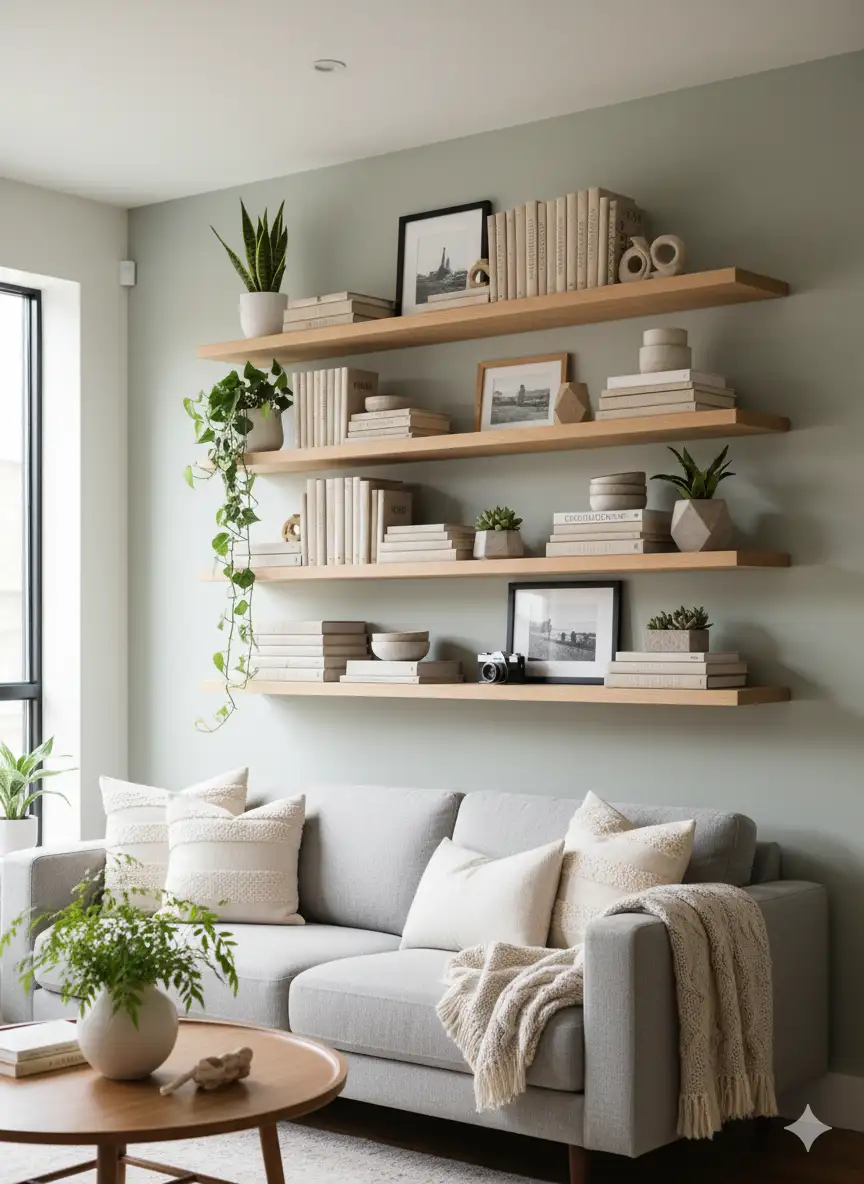
3. Floating shelves for a mix of decor and books
Floating shelves are great when you want wall decor that earns its keep. I suggest sticking to two or three shelves rather than a whole stack; it feels cleaner in a living room. Style them with a mix of everyday things, plants, small bowls, and a couple of books with nice spines. When I’m installing these, I try to keep the items slightly varied in height so the arrangement feels natural instead of staged.
4. Hanging a statement mirror to brighten a dim corner

Mirrors are one of those tricks designers reach for constantly, especially in living rooms that lack natural light. I’ve had good luck placing a round or arched mirror near a window, even if it’s not directly opposite. It spreads light around and makes the space feel a bit more open. A wood or metal frame gives you a chance to echo the finishes already in the room, which ties everything together.
5. Using oversized wall clocks as functional decor

Every so often, I come across a living room where the homeowner wants something decorative but still practical. A big wall clock does the job without feeling fussy. I stay away from overly themed styles and lean toward clean metal or wood faces. If you place it near a seating area, it feels intentional instead of random. It’s one of those pieces that looks like decor but secretly helps the household stay on track.
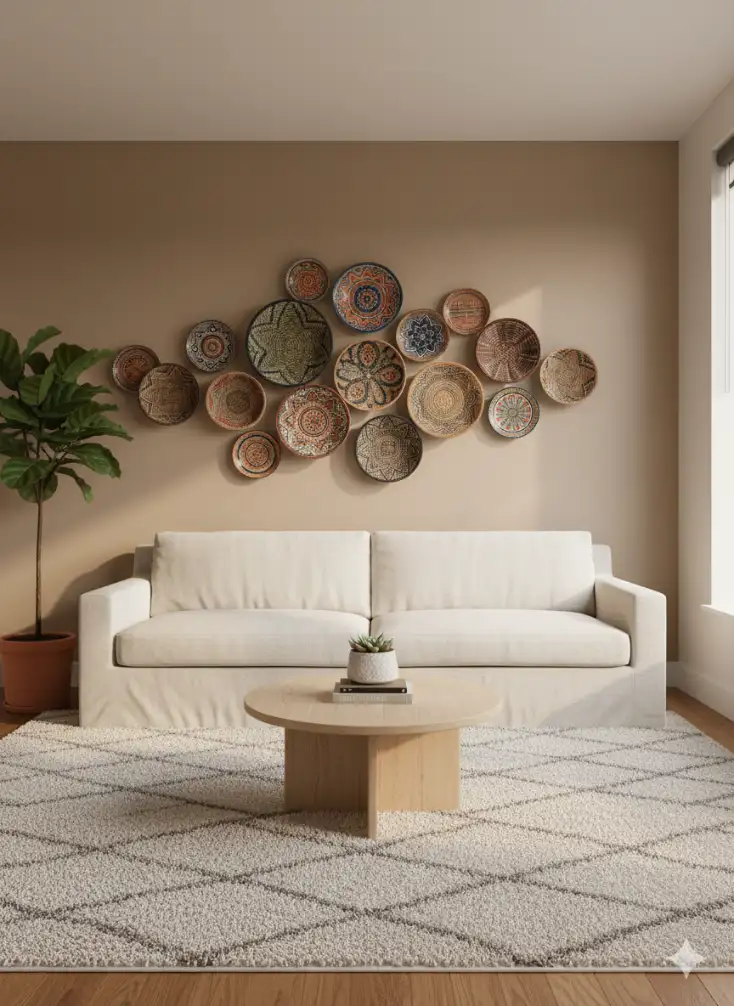
6. Layering wall baskets for soft texture

Wall baskets work well in rooms that feel flat. I’ve hung sets of them above sectionals, fireplaces, or even on awkward side walls that needed something lighter than framed art. The mix of woven textures instantly softens the room. When arranging them, I like a loose cluster rather than a perfect circle – it looks more collected. It’s also an easy way to introduce natural materials without changing any furniture.
7. Styling a narrow picture ledge with rotating prints

Picture ledges are underrated, especially for people who like switching things up. I’ve installed them above the sofas when the homeowners couldn’t commit to a fixed arrangement. You can layer two or three pieces without drilling extra holes, and swapping the prints every season keeps the living room feeling fresh. I tend to keep the frames fairly thin so the ledge doesn’t feel visually heavy.
8. Mounting a sculptural sconce for subtle mood lighting

Wall sconces aren’t just for hallways. A sculptural sconce in the living room adds soft light and doubles as decor. I like using them on asymmetrical walls or next to artwork that needs a little glow. Hardwiring isn’t always necessary – many plug-in options look surprisingly sleek these days. The trick is choosing one with a shape that adds interest even when the light’s off.
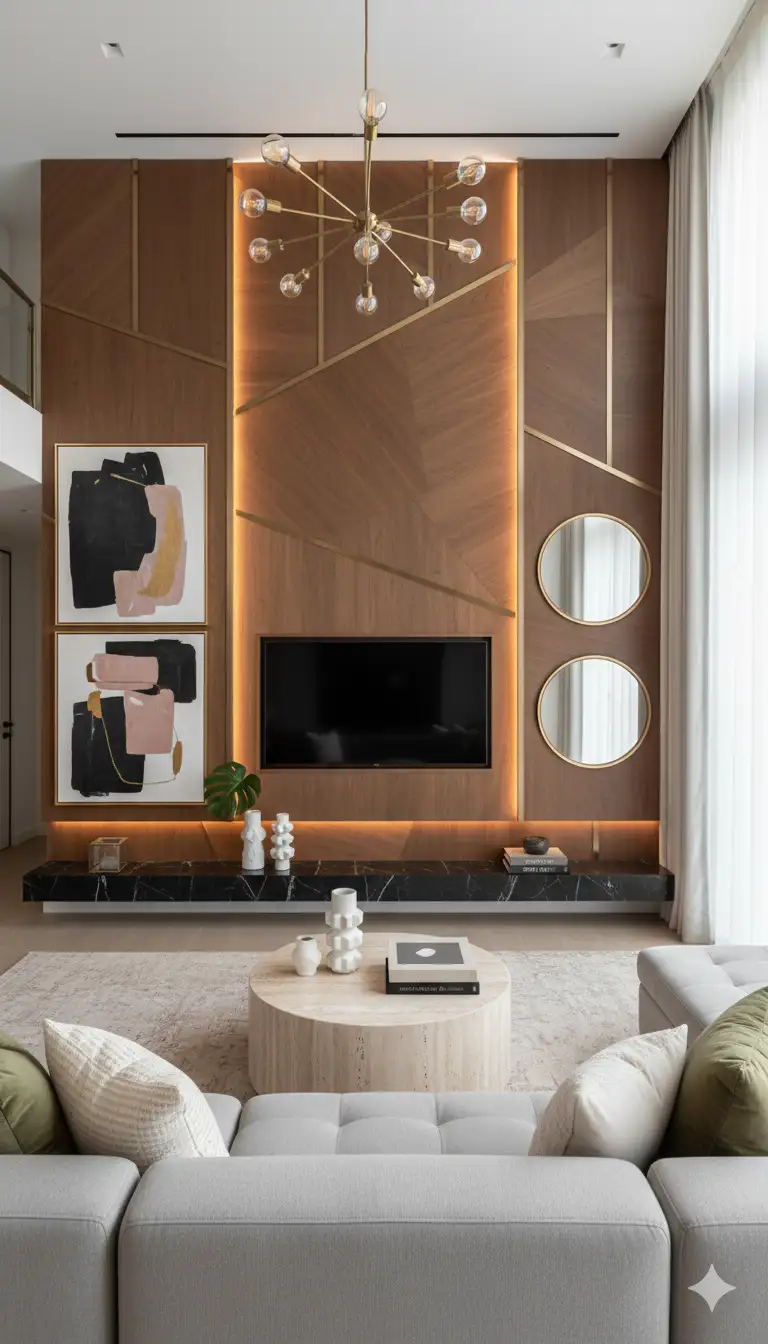
9. Adding wood slat panels for warmth

Wood slats bring in warmth without committing to full paneling. I’ve used them behind media consoles or along small sections of a wall to introduce subtle texture. Oak or walnut usually blends well with most living room furniture. If you keep the slats narrow and evenly spaced, they create a vertical rhythm that makes the wall look finished. It’s a quick DIY project if you’re handy with a level.
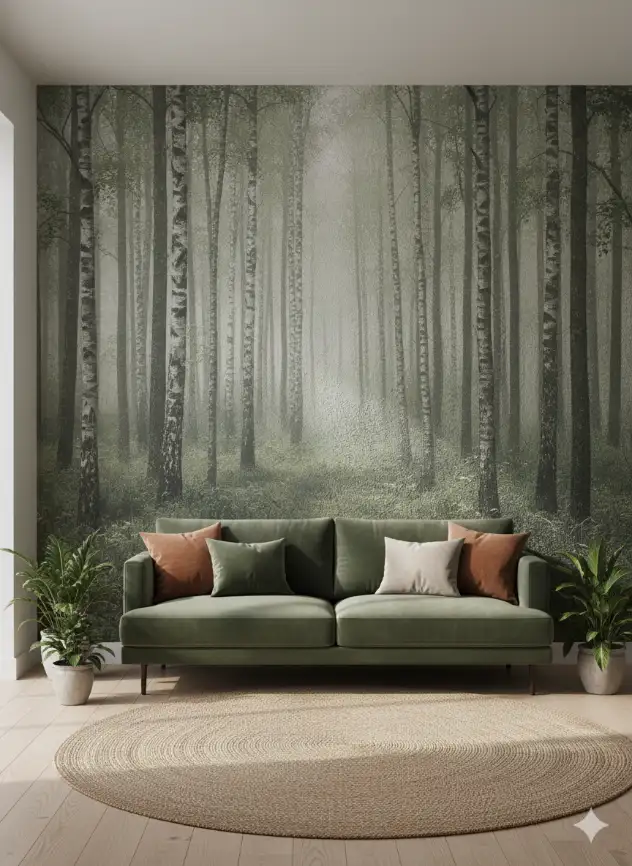
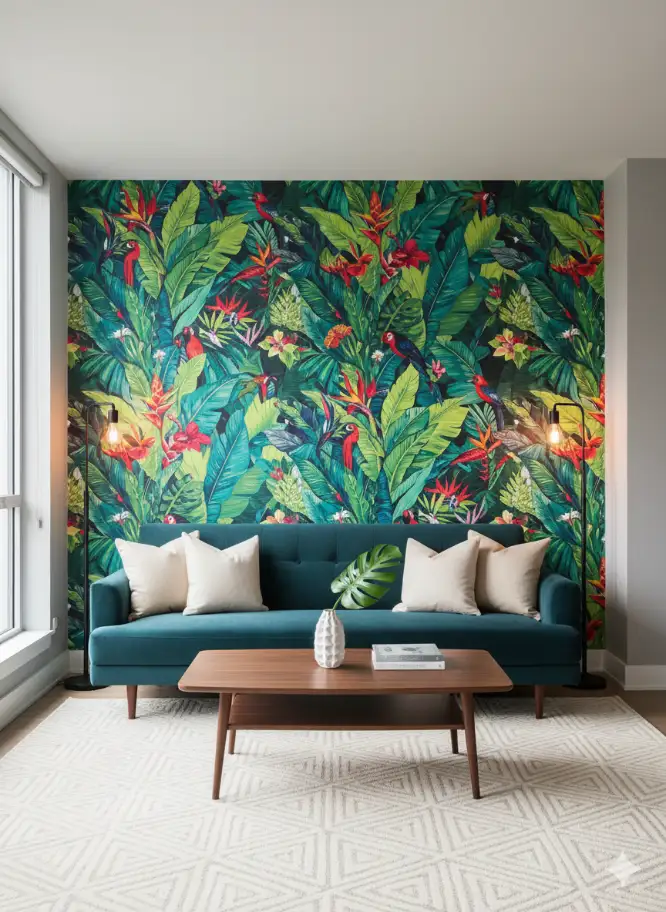
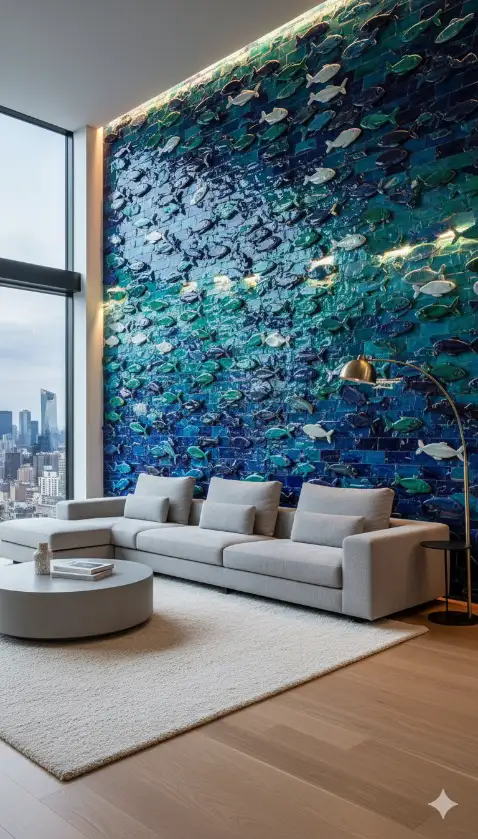
10. Using peel-and-stick wall murals for quick character
I’ve recommended peel-and-stick murals to clients who want personality but rent their homes or change their minds often. These murals have come a long way; they’re not glossy or cheap-looking anymore. A soft landscape or abstract pattern works well in a living room because it sets a mood without overwhelming the furniture. Apply it behind the sofa or on a smaller accent wall to test how you feel living with a bold design.
11. Leaning framed art on top of low furniture

Instead of hanging everything, I sometimes lean a piece on a console or low cabinet. It adds a relaxed feeling to the room and gives you flexibility. If you layer a smaller frame slightly overlapping a larger one, it creates depth without much effort. This trick works especially well if you’re not ready to commit to drilling holes or you’re still refining the overall layout.
12. Installing a single long shelf to draw the eye across

A long, slim shelf can make a wide wall feel more intentional. I often use this trick above a sectional because it balances the length of the sofa. You can place a few curated objects, such as a small vase, a couple of art books, or a simple framed print. Keeping the items minimal helps the shelf read as part of the architecture rather than extra clutter.
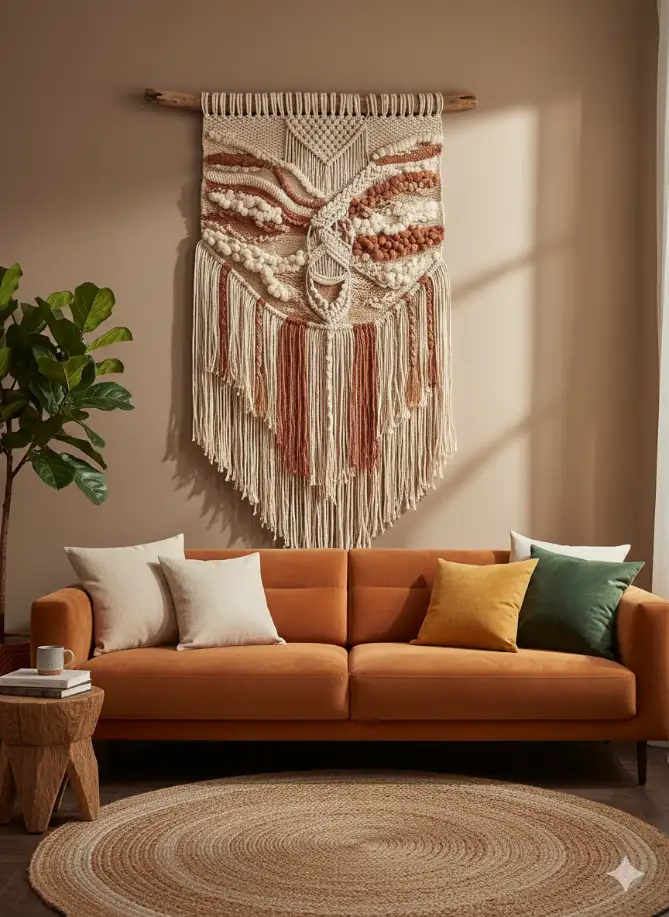
13. Hanging a textile or rug when you want a cozy texture

Textiles on the wall instantly warm up a living room, especially one with a lot of hard surfaces. I’ve hung lightweight rugs, woven textiles, and even vintage fabrics for clients who wanted something softer than framed art. The color doesn’t have to match the sofa exactly; it just needs to complement the room’s overall palette. I usually mount these using a simple wooden rod to keep the look tidy.
14. Using framed maps or architectural sketches for a personal touch

Maps and sketches bring in a subtle nostalgia without feeling theme-y. I’ve framed old city maps, neighborhood blueprints, and even hand-drawn architectural lines for clients who wanted decor with meaning. The trick is choosing simple frames so the drawings remain the focus. These always look good near bookcases or reading corners because they have a quiet, thoughtful feel.
15. Creating symmetry with a pair of tall artworks

When a space needs grounding, a matching pair of vertical pieces works wonders. I use this approach above console tables or fireplaces to bring order to the wall. Tall art adds height, especially if the room lacks high ceilings. Aim for similar colors or complementary styles rather than identical prints; it keeps the arrangement from feeling stiff.
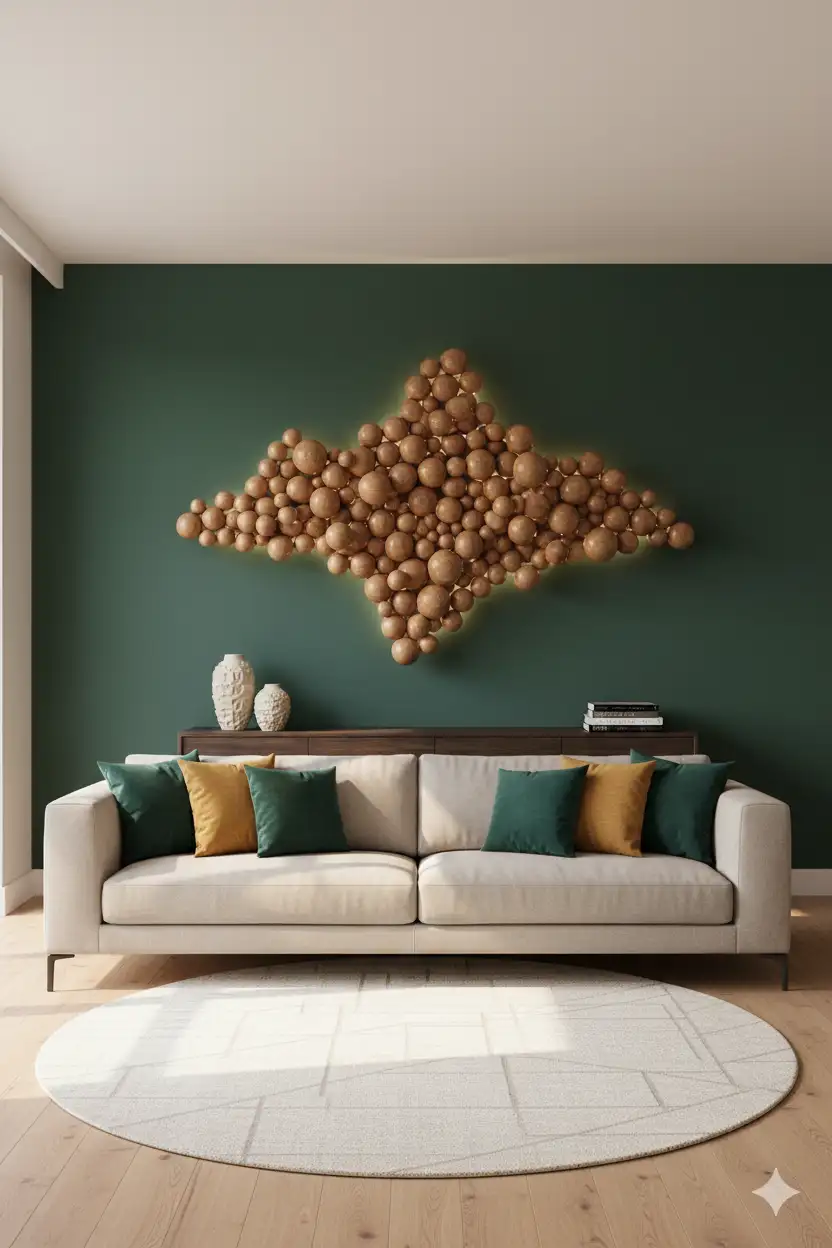
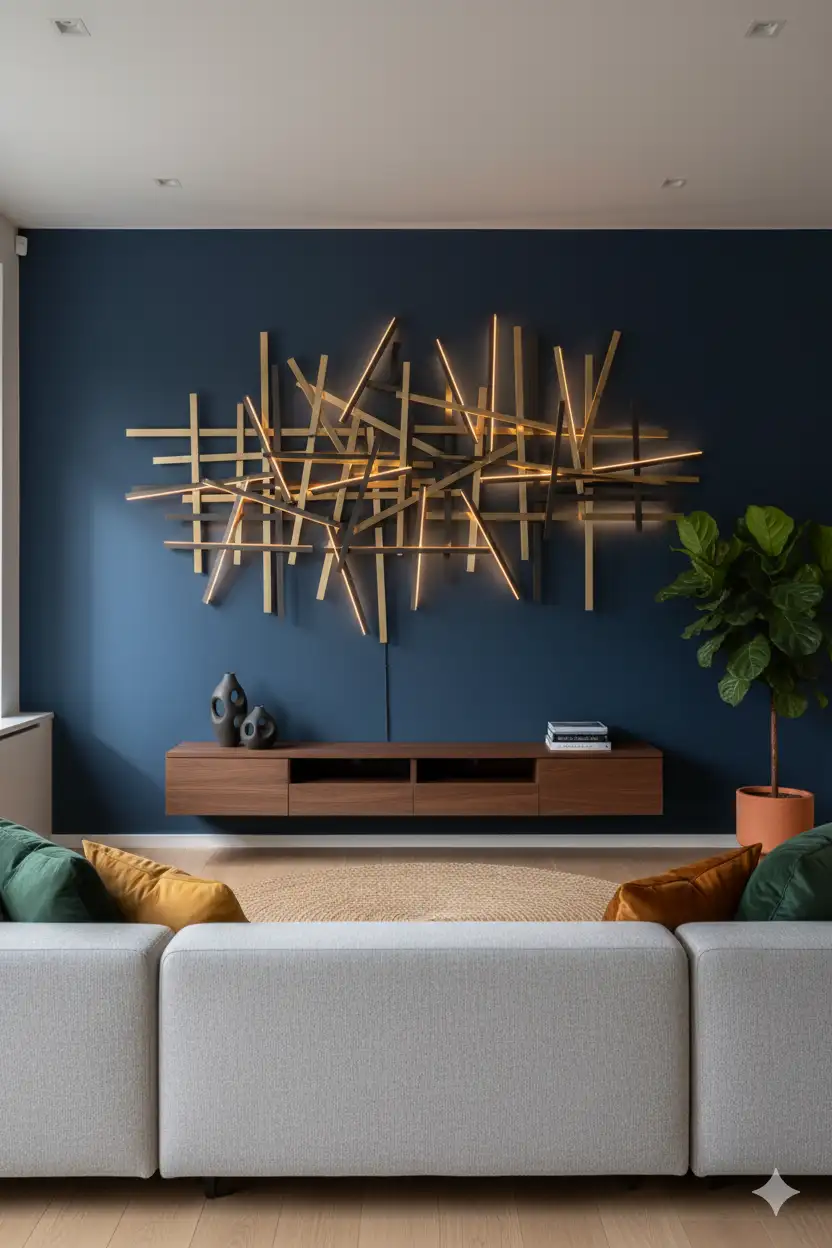
16. Adding metal wall art for a bit of shine
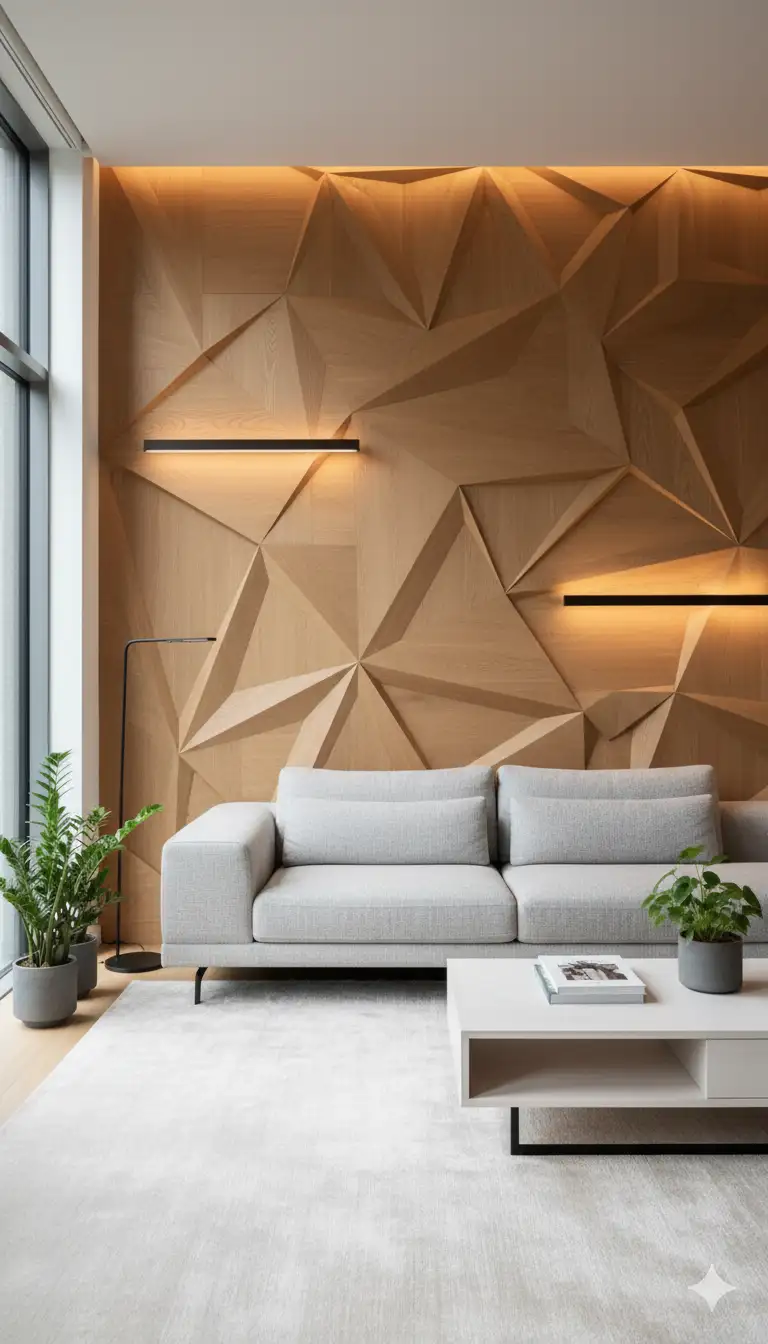
Metal pieces catch the light in a way that framed prints don’t. I’ve used brushed brass, matte black, and even hammered iron, depending on the finishes already in the room. These pieces work well on narrow sections of wall where you want something interesting but not bulky. The key is choosing a shape that feels connected to the rest of your decor, whether that’s curved, geometric, or more organic.
17. Displaying a curated hat collection as decor

This works especially well if you already own hats and don’t know where to store them. I’ve arranged clients’ hats in a loose pattern on the wall, and it always ends up looking more intentional than expected. Straw hats bring in warmth, while darker felt ones create a nice contrast. Hang them with simple hooks so it’s easy to take them down and actually use them.
18. Using wall-mounted planters for greenery
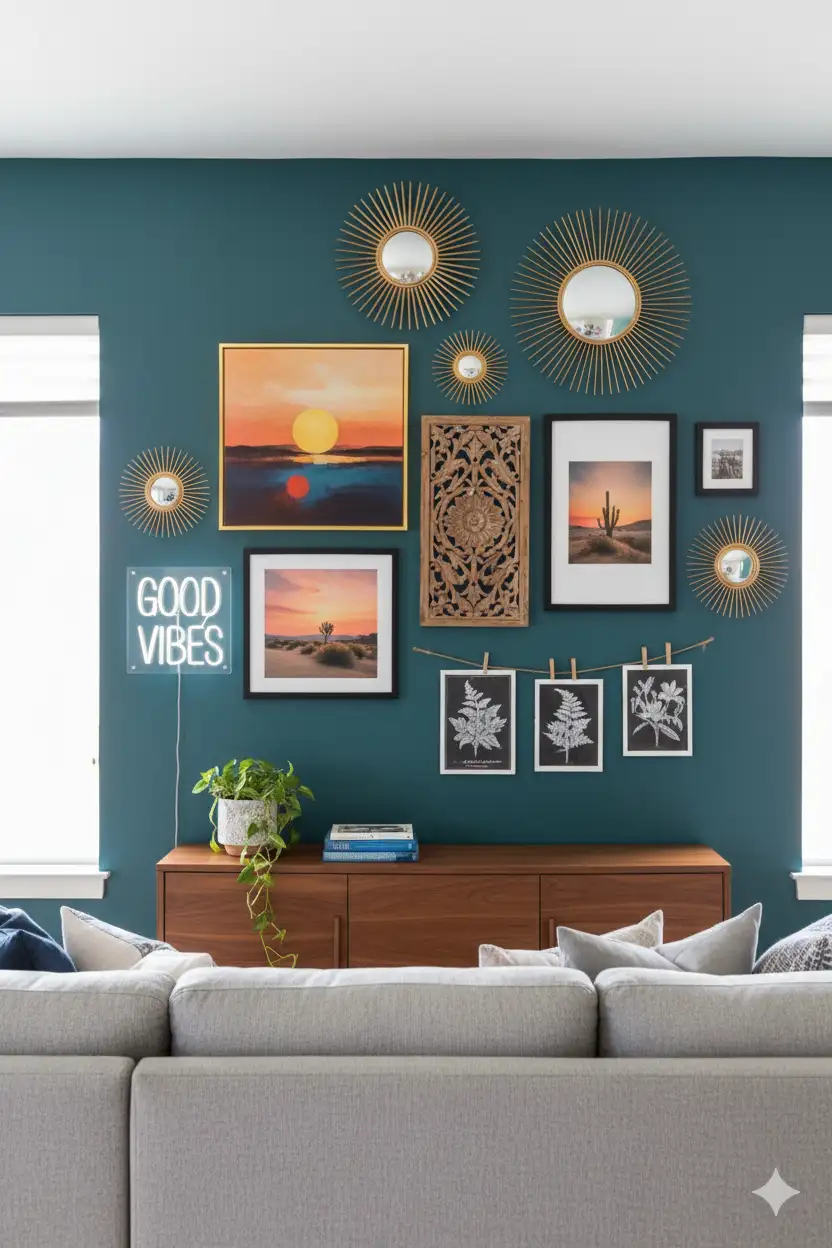
Living rooms can feel a little static without some greenery, and wall-mounted planters free up floor space. I’ve hung them on awkward corners or above low cabinets to add life to the room. Choose plants that trail gently, like pothos or philodendron, so they soften the lines of the wall. A set of two or three is usually enough to keep it from looking crowded.
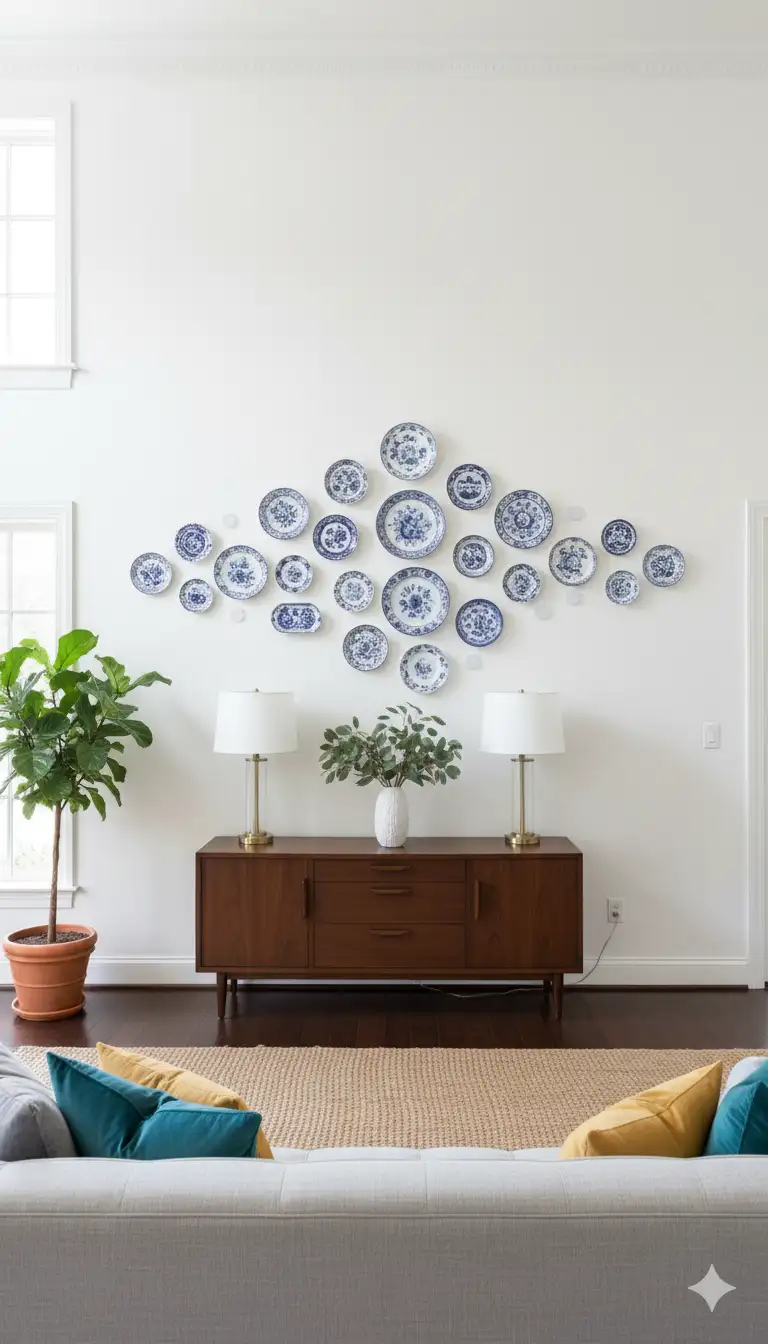
19. Hanging decorative plates in a loose grid
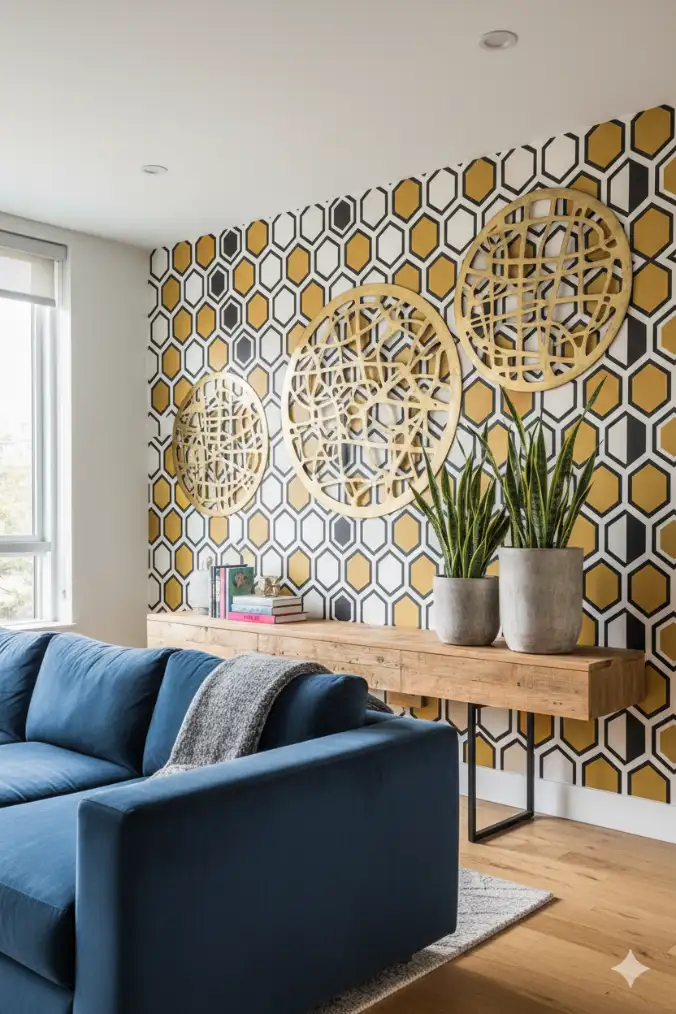
Plates aren’t just for dining rooms – I’ve used them in living rooms where the homeowners wanted something artistic but subtle. Different shapes and patterns keep the wall interesting without overwhelming the space. I usually keep the spacing tighter than people expect, which makes the collection feel cohesive. This works especially well in homes with warm colors or natural materials.
20. Installing picture lights to give art more presence

Picture lights add a museum-like calm to a living room, even if your artwork is simple. I’ve used battery-powered options in rentals, and they look better than most people expect. A soft wash of light makes the art feel more intentional and brings focus to that part of the room. Just make sure the scale of the light matches the width of the artwork so it doesn’t look out of proportion.
21. Creating a wall of mixed natural materials (wood, cane, linen)

Some living rooms feel too polished, and adding natural textures helps break that up. I’ve hung cane panels, framed linen, and small wooden elements on the same wall to create depth without adding color. The secret is keeping the tones somewhat related, light woods together, or darker woods grouped separately. This approach makes the room feel grounded and lived-in.
22. Using chalkboard or blackboard paint for a casual accent area

This one works well in relaxed living rooms or homes where kids like to draw. A chalkboard panel can also serve as a notes or reminders spot without feeling messy. I usually limit it to a smaller section of the wall so it stays visually manageable. A simple wood frame around the painted area helps it look more intentional and less like an unfinished project.
23. Mounting small shelves for collectibles or travel finds

I like using small, shallow shelves when someone has meaningful objects but doesn’t want a cluttered bookcase. These work well in living rooms with little nooks or areas next to a doorway. I usually recommend grouping two or three shelves and keeping the items intentional, maybe a few ceramics or souvenirs that actually mean something. When you keep the spacing consistent, the wall feels organized without being too serious. It’s an easy way to tell a story through decor without overdoing it.
24. Adding beadboard or wainscoting for architectural detail
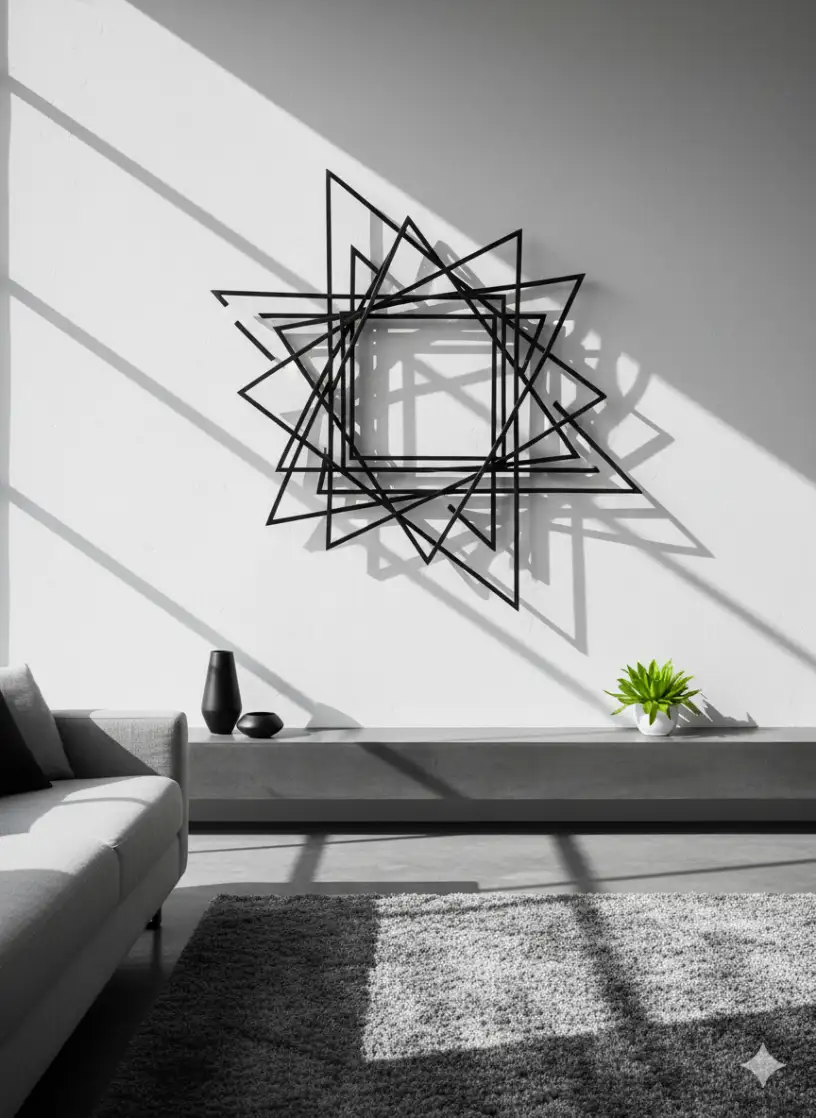
Sometimes a living room needs a bit more structure, and adding beadboard or wainscoting does that nicely. I’ve installed it behind sofas or on partial walls when the room felt bland. Paint it the same color as the main walls for a subtle look or slightly darker for contrast. This instantly gives the space more depth and makes furniture placements feel more considered. A small ledge on top can also serve as a display spot for modest decor.
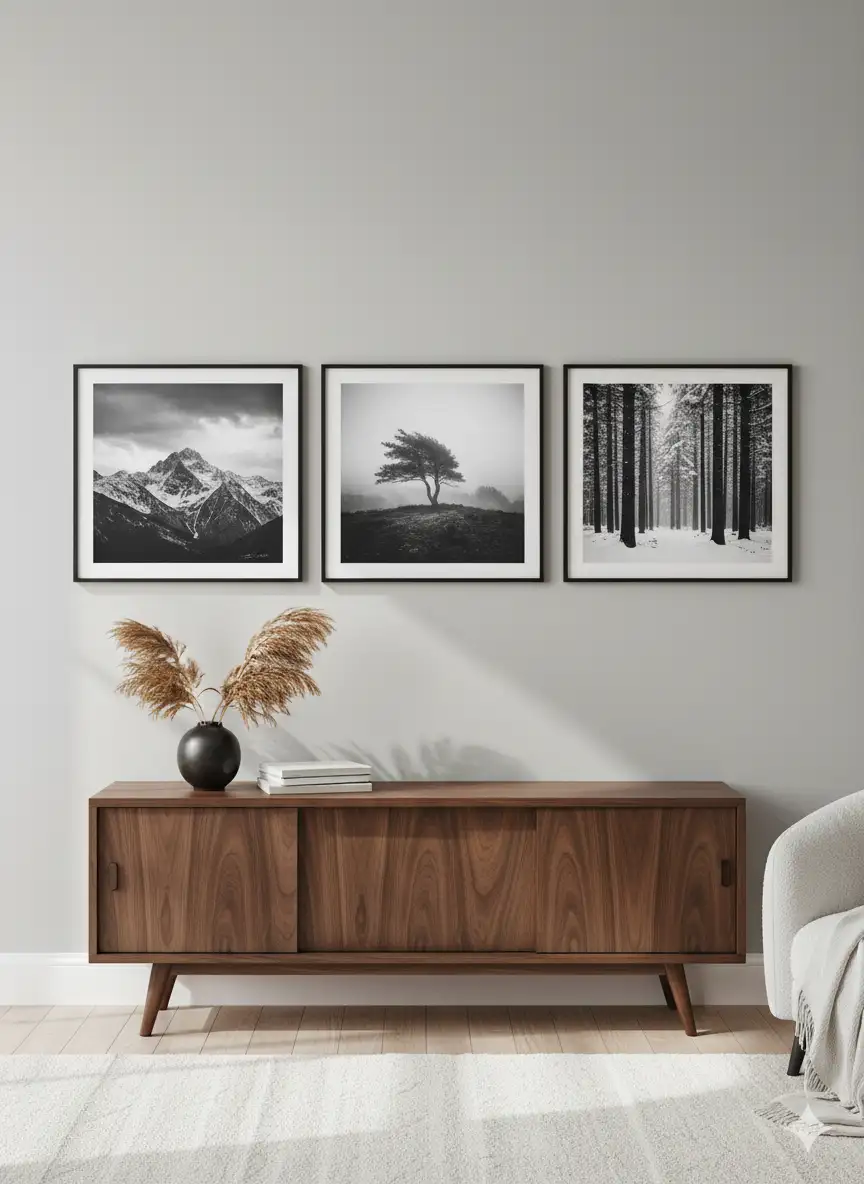
25. Using a monochrome art arrangement for a clean look
When a client wants calm rather than variety, I suggest sticking to one color palette for all the art on a wall. Black-and-white prints are the classic choice, but soft neutrals can look even better in a cozy living room. The frames don’t need to match perfectly, just keep them within the same general tone. This approach lets the eye rest, especially in rooms with colorful rugs or sofas. It’s simple but surprisingly effective.
26. Installing a slim wall-mounted console under art

A narrow console can turn an empty wall into a functional zone without taking up much space. I often use this trick behind a floating TV or below a large artwork to give the wall more presence. The console becomes a place for a small lamp, a plant, or a bowl for keys, depending on the layout. Make sure the depth is minimal so it doesn’t feel intrusive. It’s a nice balance between storage and design.
27. Hanging a contemporary fabric banner or flag

Fabric banners bring in softness without the formality of framed art. I’ve hung them in living rooms that needed something lightweight but still graphic. Look for clean, modern designs or subtle color blocking – they work well above low seating or next to a reading chair. The fabric naturally moves a bit, which keeps the wall from feeling stiff. It’s an easy way to introduce texture without committing to a bulky textile.
28. Creating a color-themed art collection
Sometimes the easiest way to unify a wall is by choosing pieces that share a color story. I’ve done this with blues, earthy reds, and even muted greens, depending on what the room needed. It doesn’t matter if the art styles vary, paintings, sketches, or prints, because the shared palette ties them together. I usually lay everything out on the floor first to see how the colors play together. The end result feels cohesive without being overly coordinated.
29. Using a textured wall sculpture as a focal point
Textured sculptures work well when a flat print just isn’t enough. I’ve used ceramic, plaster, or wood pieces in living rooms that needed a bit more dimension. These pieces catch subtle shadows throughout the day, which adds interest without shouting for attention. Place one above a console or sofa where the texture can really be noticed. Just avoid pairing it with too many other bold items on the same wall.
30. Mounting acoustic panels that also look decorative
I’ve had clients who needed better sound quality but didn’t want their living rooms to look like recording studios. Decorative acoustic panels solve both issues. There are plenty of fabric-wrapped or patterned versions that read more like art than equipment. I usually place them behind a TV or along a longer wall where echoes tend to happen. It’s functional decor that blends in instead of standing out.
31. Adding a decorative wall ladder for blankets

A wall-mounted ladder works nicely in casual living rooms where blankets tend to end up everywhere. The ladder keeps things tidy while acting as a vertical decor element. Choose wood tones that tie in with your coffee table or shelving so it feels integrated. I’ve installed these near reading chairs or next to media consoles, and they always add a welcoming feel. Just keep the blankets lightweight so the ladder doesn’t look overloaded.
32. Using geometric wall decals for a playful edge
Wall decals have improved a lot and no longer look like kids’ room stickers. I’ve used simple geometric ones, circles, arches, and thin lines to add a little personality to plain living room walls. They’re a low-commitment way to test shapes or colors before painting. I usually stick to one area, like the wall behind a desk or a small seating zone, so the room doesn’t feel busy. It’s a surprisingly effective way to break up flat surfaces.
33. Hanging a large round mirror to soften sharp lines

Round mirrors work especially well in living rooms dominated by rectangles, TVs, windows, and bookcases. I’ve used them above fireplaces or on smaller side walls where something softer helps balance the layout. A natural wood frame brings warmth, while black metal gives a modern feel. They also reflect just enough light to brighten the room without acting like a spotlight. It’s one of my go-to fixes for harsh corners.
34. Installing wall hooks styled with plants, bags, or decor
Decorative hooks are underrated, especially in multipurpose living rooms. I’ve used them to display lightweight items like canvas bags, hanging plants, or woven baskets. They’re practical but still visually interesting when styled intentionally. Keep the hooks aligned or spaced evenly so the display looks deliberate rather than random. It’s a good way to add everyday items to the decor without clutter.
35. Creating a small “art pocket” with two narrow pieces
Sometimes a living room has a little slice of wall that’s too small for big art but too noticeable to leave empty. In those cases, I like pairing two narrow pieces vertically. It stretches the wall visually and fills the space without crowding it. These work well near doorways or between windows. The key is choosing pieces that relate to each other, similar tones or themes, so they feel like a mini set.
36. Using oversized typography or letter art

Typography pieces work well when someone wants bold decor that still feels clean. I’ve hung oversized letters, simple word art, and graphic numbers in modern living rooms where the color palette was minimal. Stick to one or two pieces so the wall doesn’t turn into a theme. The strong lines of the lettering can help balance softer furniture or textiles. It’s a fun way to add personality without leaning into trends too hard.
37. Hanging a single dramatic black-and-white photograph

If a client wants something striking but not loud, a large black-and-white photo usually does the job. I like using landscapes or architectural shots because they feel timeless. A simple frame keeps the emphasis on the image, and placing it on a mid-height wall helps ground the room. This works especially well above a console or behind a sofa where you want something impactful without lots of color.
38. Installing a ledge high near the ceiling for plants or pottery
A high ledge can be a nice trick in living rooms with tall ceilings. I’ve added these above doorways or along longer stretches of wall where nothing else made sense. They create a soft upper border that draws the eye upward. Place lightweight items like small pottery pieces or trailing plants up there. It gives the room a collected feel without taking up any usable space.
39. Using framed fabric samples or wallpaper leftovers

I’ve often framed leftover wallpaper scraps or interesting fabric pieces when the homeowner liked the pattern but didn’t want to commit to a whole wall. This works nicely in living rooms because it adds texture without adding bulk. Pick simple frames so the material stands out. Arrange two or three in a row for a quiet but thoughtful display. It’s also a good way to use materials you already have.
40. Hanging a woven or macramé piece for softness

Macramé and woven hangings bring a relaxed vibe to a living room, especially one that leans toward natural textures. I usually place these above sofas or on side walls where something softer helps offset larger furniture. The subtle texture breaks up the flatness of painted walls. Choose one with a simple pattern so it doesn’t overwhelm the space. It’s especially helpful in rooms with lots of hard surfaces.
41. Creating a vertical arrangement to emphasize height

Vertical groupings work well in living rooms that feel squat or wide. I’ve used them near tall bookcases or next to doorways to visually stretch the room. A set of three small pieces stacked vertically can make a bigger impact than one medium piece. Keep the spacing even so the eye naturally moves upward. It’s a small trick, but it makes the wall feel more intentional.
42. Using vintage signs or reclaimed wood pieces
Vintage signs bring personality without feeling overly decorative. I’ve used old shop letters, reclaimed boards, and small signage pieces in more relaxed living rooms. Their worn texture adds character, especially if the rest of the room feels new or polished. Just don’t use too many at once – one or two is usually enough. They look great above a bar cart or reading nook.
43. Mounting a low-profile wall light for nighttime ambiance

A slim, understated wall light can make a living room feel much warmer at night. I’ve installed these near sofas or reading corners when a floor lamp felt too bulky. The soft glow gives the wall a gentle highlight without drawing attention to the fixture itself. Plug-in versions make this an easy, no-commitment upgrade. It’s amazing how much cozier the room feels with just one more layer of light.
44. Styling a sculptural branch or organic element

Natural elements can make a living room feel calmer. I’ve used sculptural branches in simple wall-mounted brackets to add an organic shape to the room. The lines of the branch create a subtle contrast against flat walls. Keep it minimal, a single branch or two at most, so it reads as art rather than clutter. This works especially well in rooms already using wood, stone, or earthy colors.
45. Layering different frame depths for subtle dimension
 Mixing shallow and deeper frames creates a gentle, three-dimensional effect on the wall. I’ve used this technique when clients wanted a gallery wall that felt more dynamic. The varied depths catch light differently, giving the wall a quiet texture without looking messy. I usually keep the color palette of the frames similar, so the depth is the main difference. It’s a small design detail, but one that makes the wall feel more thoughtful.



No Comments