
Living room wall decor can change the whole feel of a space, even when you don’t touch the furniture. I’ve seen it over and over; once the walls get a little attention, the room finally starts to make sense.
This list pulls together bold, practical ideas I’ve used in real homes when a wall needed personality, texture, or just a bit of grounding. Some are simple fixes, some are larger projects, but all of them are things regular homeowners can actually do.
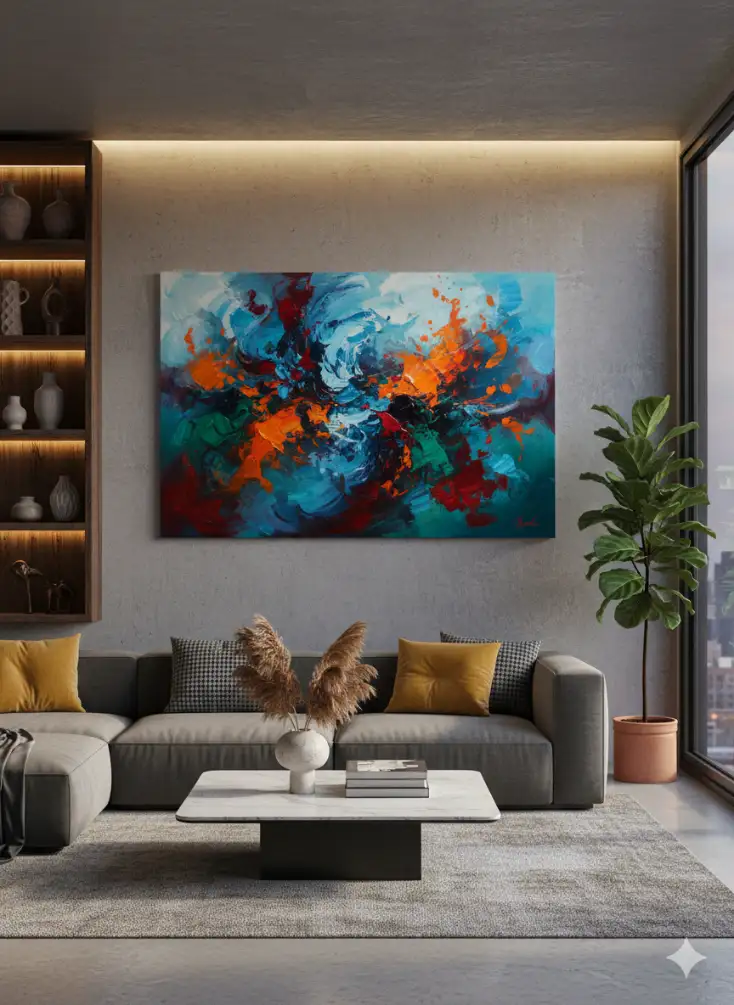
1. Using oversized art when the room feels a bit flat
When I walk into a living room that feels unfinished, even if everything is technically “done,” it’s usually the walls that need scale. One oversized piece of art tends to calm the whole space because your eye stops searching for something to land on. I often use a large abstract or landscape with calm colors when the room already has strong furniture pieces. The trick is not to cram other decor around it, let it breathe, and do the heavy lifting. If the walls feel tall, hang it a little lower than you think; it connects better with the seating area.
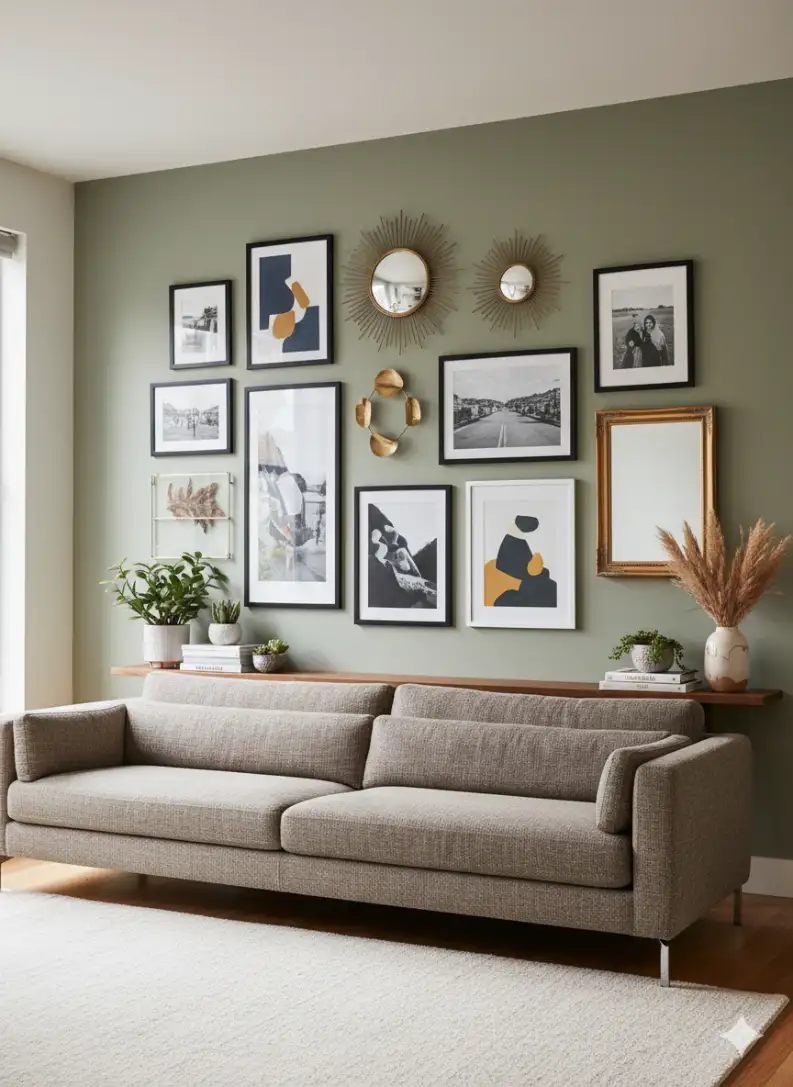
2. A long gallery wall that actually follows the flow of the room

I like building gallery walls that move with the room instead of fighting it. For example, if you have a long sofa or a wall that carries through an open-plan layout, running the gallery along that line makes everything feel intentional. I usually mix frame sizes but keep them within a similar color range so it doesn’t get chaotic. The key is to map it out on the floor first, so you can see how the shapes relate before you commit. Once it’s up, it often becomes the conversational “spine” of the space.
3. Mixing framed prints with small sculptural pieces
Framed art alone can look flat. When that happens, I bring in one or two small sculptural pieces, maybe a carved wood accent or a lightweight ceramic shape, to break up the rectangles. It adds a bit of depth without overwhelming the wall. I’m careful not to overdo it; one sculptural piece every three or four frames is enough. This works especially well over console tables, where the eye is already expecting different textures.
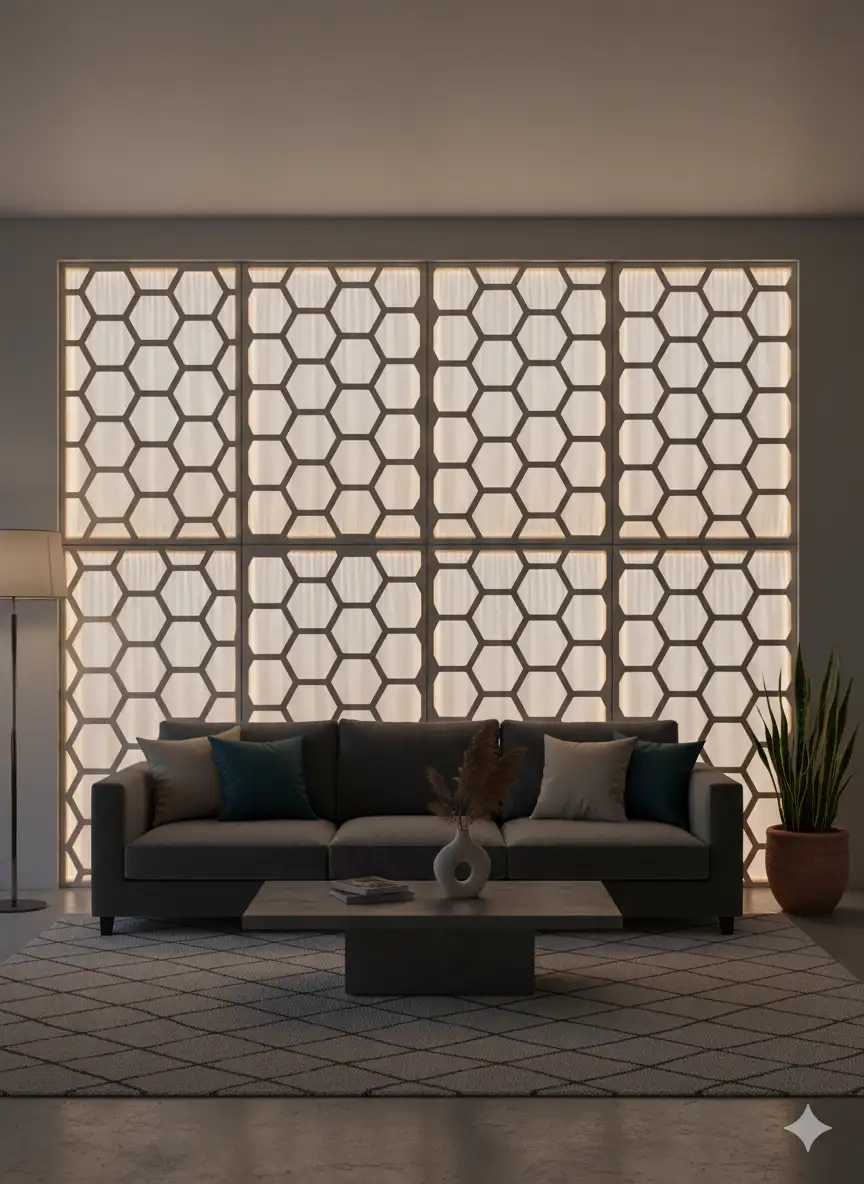
4. Adding wood slat panels for warmth and subtle texture
Wood slat panels are great when the room feels too “hard” or all drywall. I’ve used them behind TVs, behind sofas, or even on an accent wall that needed more life. They add warmth without looking rustic unless you choose a very rough finish. Medium walnut tones are usually the safest if your living room has mixed furniture. Just keep in mind that the spacing matters; narrower slats look more refined, wider ones feel more casual.
5. Using picture ledges when you like to rearrange often
Picture ledges are my go-to for people who can’t commit to one layout. They let you layer frames, swap things out, and even tuck in a plant or small candle. I typically use two ledges stacked with a bit of space between them, but not so far that they feel unrelated. It’s an easy way to mix family photos with small art prints without punching a dozen holes in the wall. Just make sure the ledges are sturdy; cheaper ones can sag with too many frames.
6. Bringing in a large round mirror to soften a very boxy layout
If a living room feels boxy, with lots of straight lines, squared-off furniture, or sharp architecture, a round mirror can break that up nicely. I’ve hung them above fireplaces, above console tables, or on a side wall that needed light. They bounce brightness back into the room, especially in dim corners. I usually recommend a thin black or brass frame so the mirror doesn’t feel too heavy. It’s one of those quick changes that instantly shifts the mood.
7. Filling a narrow wall with vertical stacked artwork
Narrow walls can be tricky because most art sizes don’t fit well. In those cases, stacking two or three pieces vertically works better than trying to force a single awkward frame. I like choosing works that relate in color or theme, but aren’t identical, it keeps things relaxed. This approach is great near doorways or between windows, places homeowners often ignore. When you fill that gap thoughtfully, it ties the room together more than people expect.
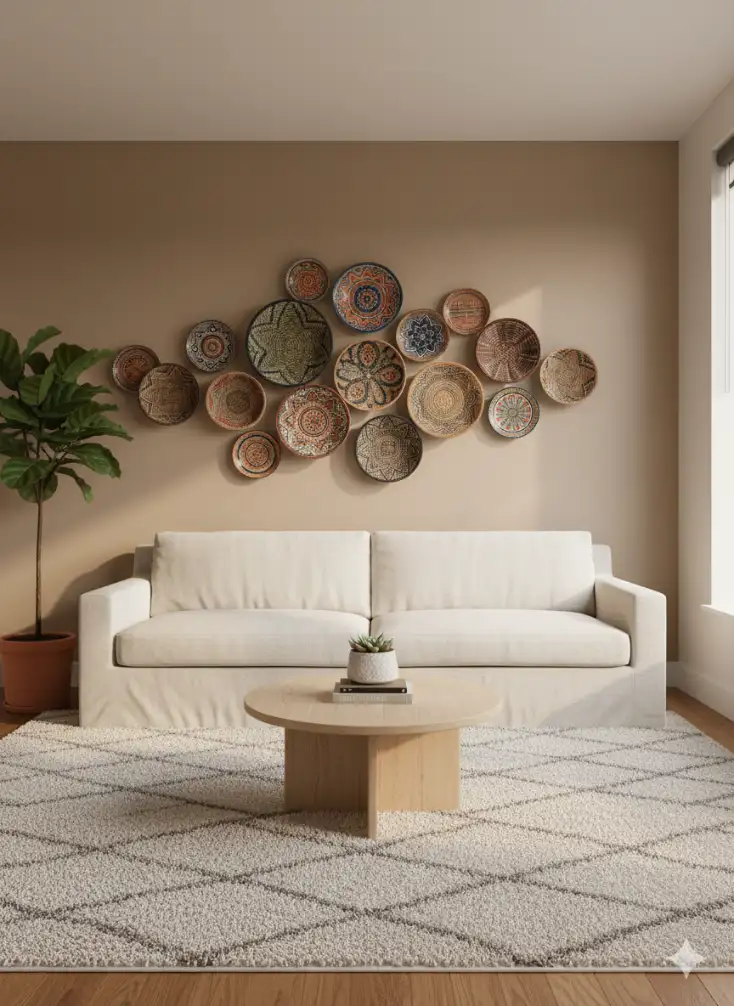
8. Creating a cozy corner with woven baskets as wall decor
Woven baskets bring an earthy, handmade feel that works well in casual living rooms. They’re especially nice in corners or above small reading chairs where you want softer textures. I tend to mix sizes and patterns, but I keep the overall arrangement loose so it doesn’t look overly symmetrical. The natural fibers also help balance rooms that have a lot of metal or glass. Just stick to lightweight pieces so they’re easy to hang.
9. Using fabric wall hangings when the room needs softness

Fabric hangings can calm a room that has too many hard surfaces, stone floors, leather furniture, or heavy wood pieces. I’ve used simple woven textiles, minimalist tapestries, or even handmade pieces from travels. They absorb a little sound, which is a bonus in echo-prone spaces. The trick is choosing something with a gentle movement in the pattern, nothing too busy. They also work well above a sofa when you want something softer than a framed print.
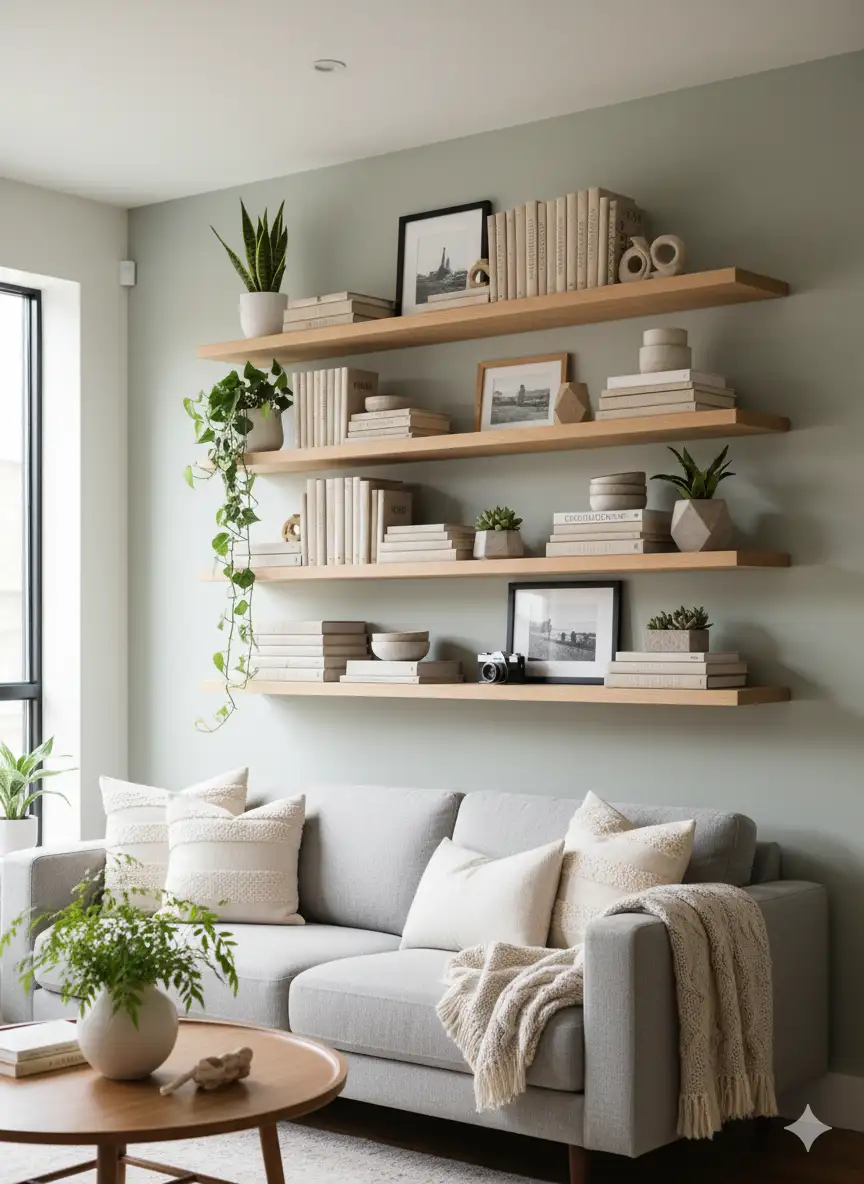
10. Mounting floating shelves for plants and small everyday objects
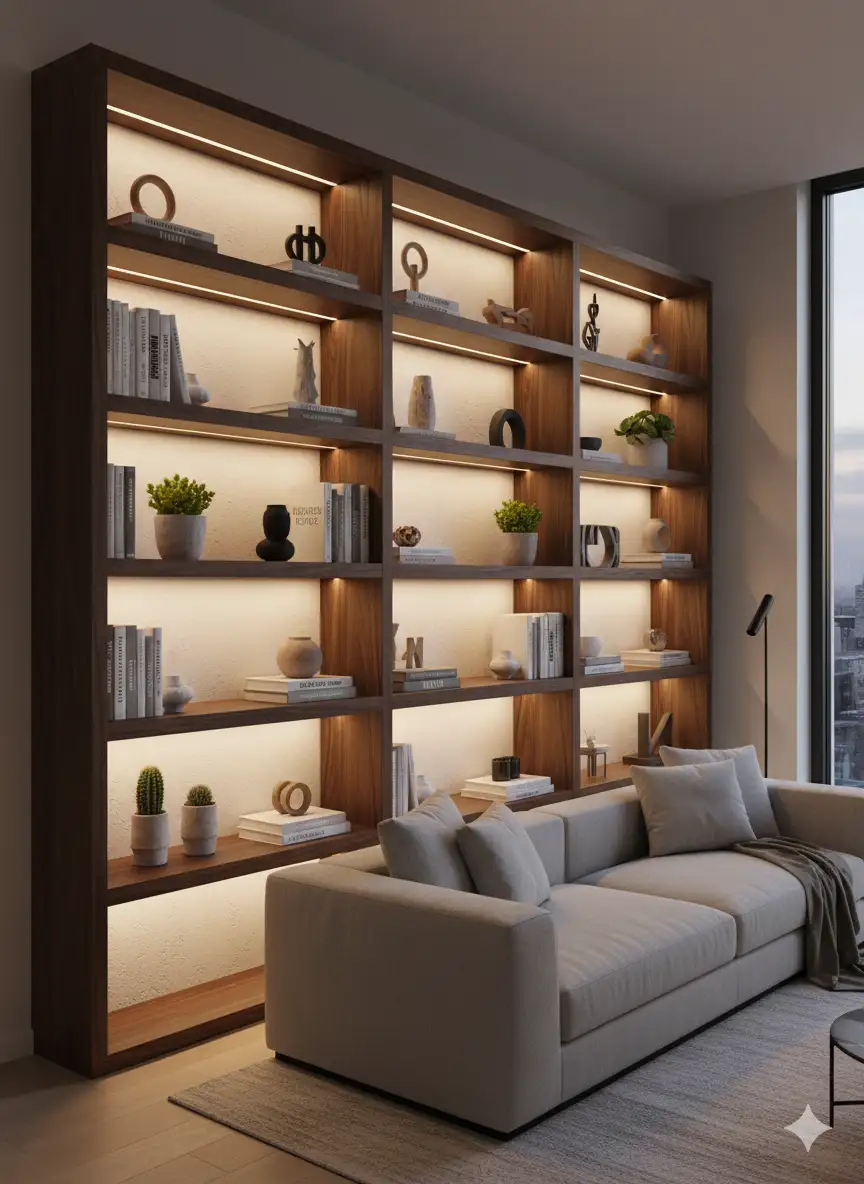
Floating shelves give you room to display everyday items without cluttering tabletops. I’ve installed them above consoles, next to TV units, or in little wall nooks that feel wasted. Plants tend to look fantastic on these because they bring color and life without feeling staged. I also like using a mix of books, candles, and small bowls to keep things grounded. Just avoid crowding the shelf; negative space makes the display feel intentional.
11. Going bold with dark paint behind lighter artwork

When the artwork is light or minimal, a dark wall behind it can completely change its impact. Deep charcoal, navy, or even a muted forest green make the art pop calmly. I often use this approach in rooms with light furniture so the contrast feels balanced. It’s a good way to make a simple piece feel more substantial without buying new art. Just make sure you test the color in both daytime and evening lighting.
12. Hanging a set of simple line drawings for a calm, modern look
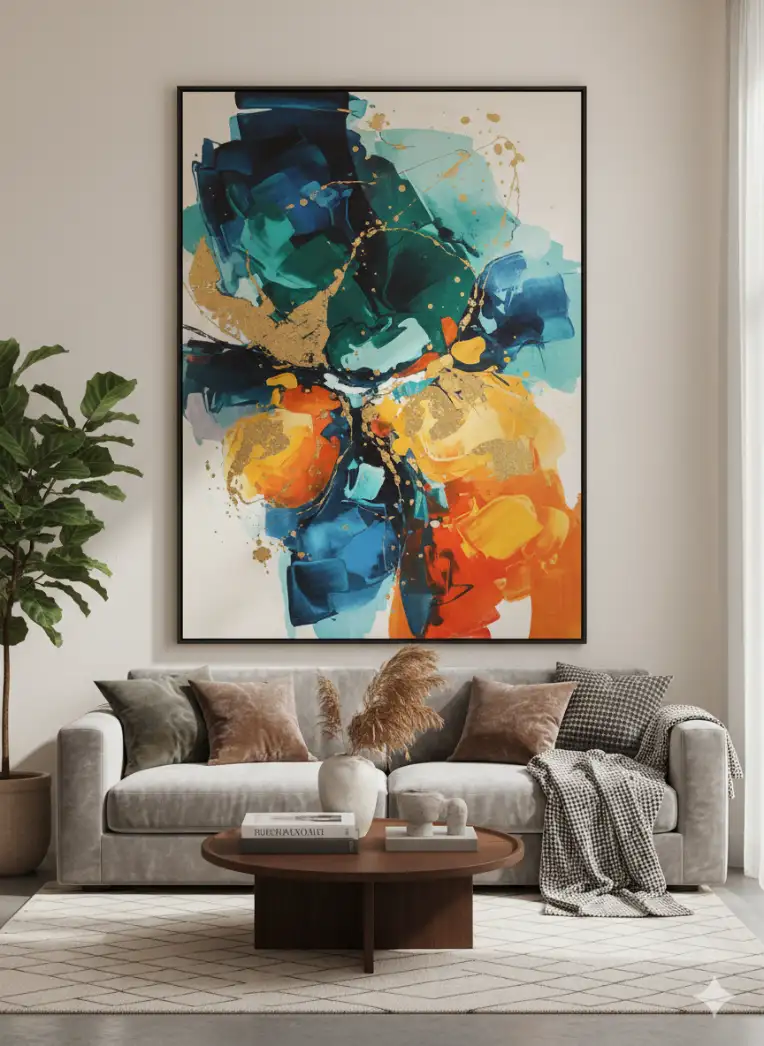
Line drawings have a quiet quality that works well in living rooms where you don’t want the walls to compete with everything else. I usually frame them with thin wood or metal frames so the focus stays on the art. They’re great in pairs or groups of three, especially above a lower piece of furniture. The minimal style adds interest without feeling busy. If you’re unsure about scale, go slightly bigger; small frames tend to get lost.
13. Creating a layered look with two or three leaning frames

Leaning frames give the room a softer, less “decorated” feel. I often do this on a console table or a deep mantel, mixing one large frame with a smaller one in front. It creates depth without committing to a perfect grid on the wall. You can also swap them out seasonally without much effort. The only thing to watch is reflections; glassy frames near windows can catch glare at certain times of day.
14. Adding sconces around art instead of overhead lighting

Sconces can make artwork feel intentional, almost like it belongs in that spot. I usually choose simple, adjustable ones so you can direct the light a bit. They’re great in living rooms where the ceiling lighting isn’t doing much for the walls. This setup also works well in darker corners, where a bit of warm light can bring the space to life. Just avoid sconces that are too ornate unless the rest of the room is equally traditional.
15. Using mixed-metal frames when the room has a lot of wood
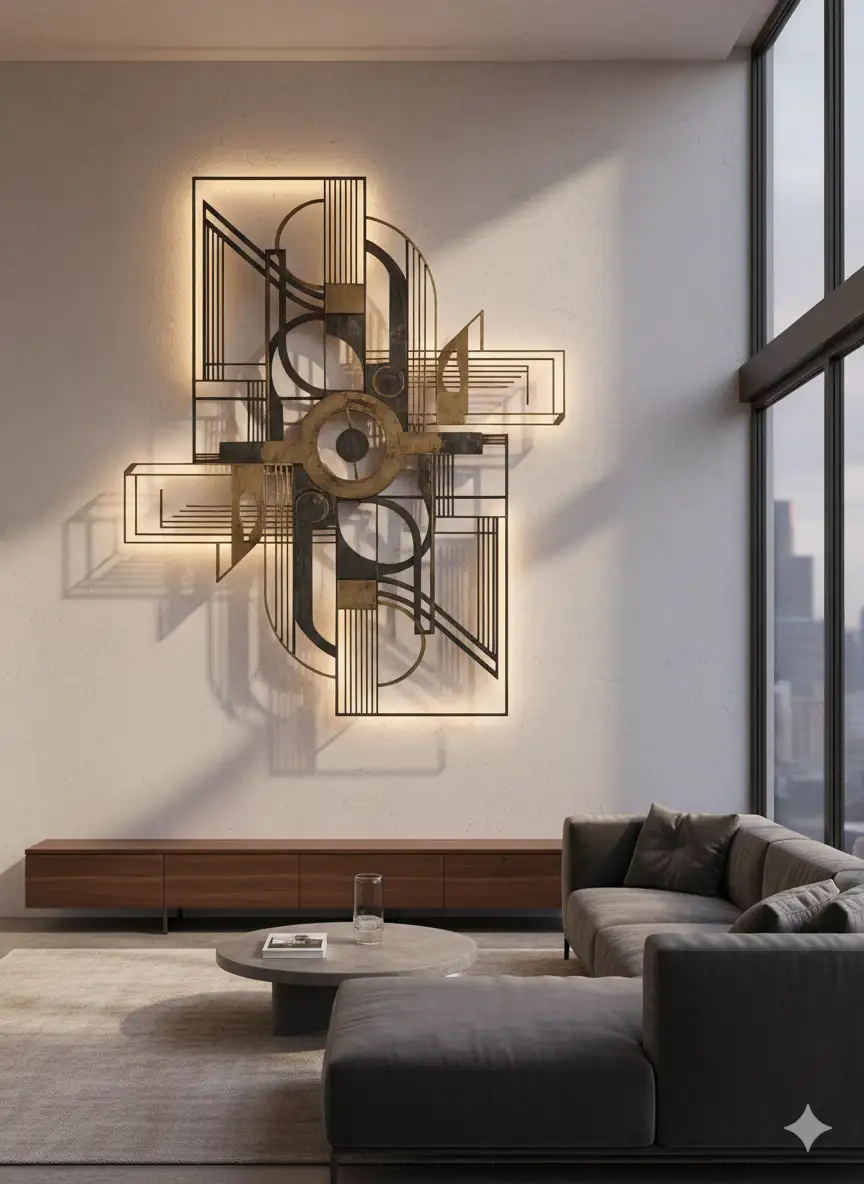
If you’re already working with heavy wood furniture, walnut, oak, or darker stains, metal frames can lighten things visually. I like mixing brass, black steel, and brushed nickel to create small differences without everything matching perfectly. It helps break up the predictability of all-wood surfaces. This approach works well in living rooms with wood floors and wood furniture, where you just need another texture to balance things. Keep the art cohesive so the frames don’t feel chaotic.
16. Building a low, horizontal gallery display above a long sofa
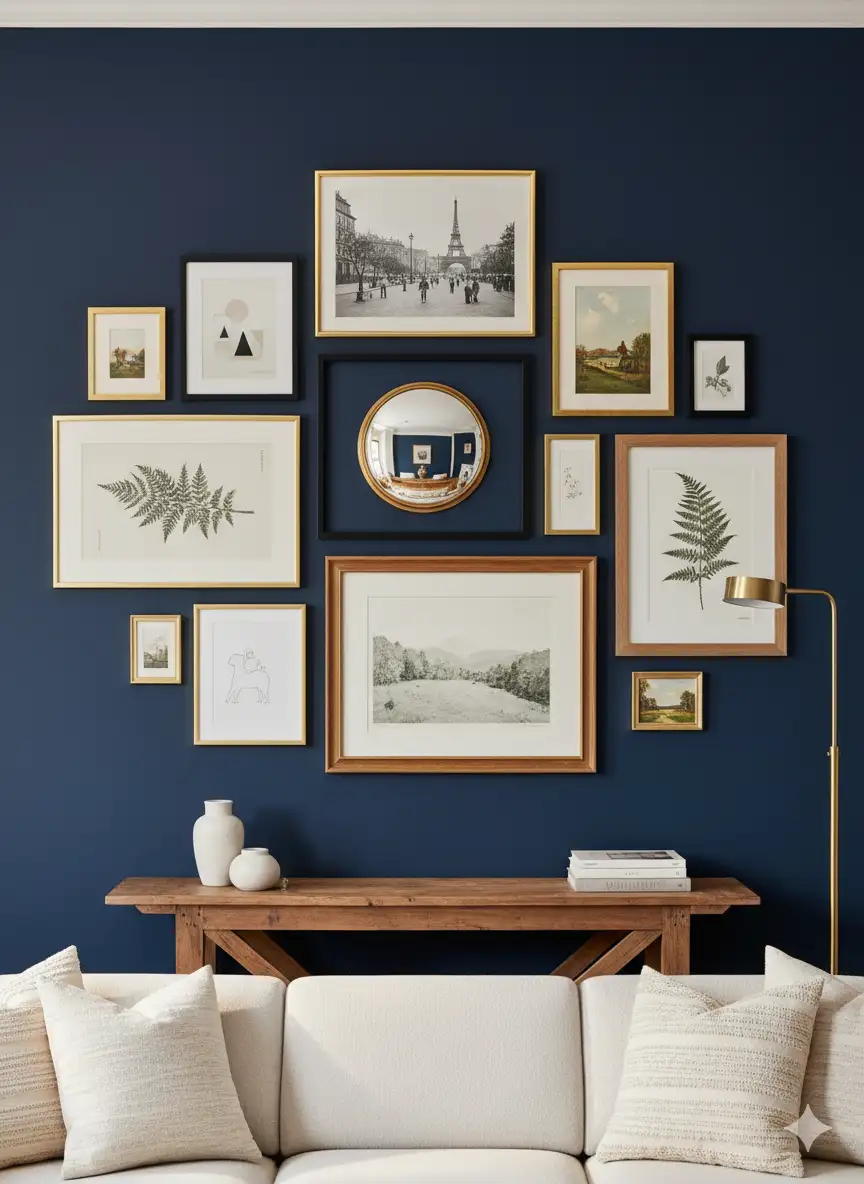
For long sofas, a single centered piece sometimes looks lost. A low, horizontal gallery, four or five pieces in a row, helps match the width of the furniture. I like keeping the bottoms of the frames aligned so the whole thing feels steady. It’s a great way to mix different art styles without creating a cluttered wall. This layout also pulls the eye across the room in a comfortable way.
17. Choosing textured canvas pieces for neutral rooms
If your living room leans neutral and you still want the walls to have character, textured canvases work really well. I’ve used pieces with plaster-like finishes, gentle brush patterns, or raised details. They look subtle during the day and even better at night when the lighting hits the texture. The trick is keeping the palette simple so the texture does the talking. These work especially well above soft furniture like fabric sofas.
18. Using large wall clocks when you need something functional

A large wall clock can be both practical and decorative, especially in family rooms where people actually check the time. I like the cleaner styles, nothing too loud or theme-like, so it feels like part of the design rather than a novelty item. They work well above credenzas or in open-plan living rooms where the wall feels empty, but you don’t want more art. Just make sure the scale matches the wall; clocks too small look out of place.
Xylon Interiors – Redefining the Art of Interior Living
19. Hanging a statement tapestry in rooms with lots of hard surfaces

Tapestries can soften loud, echo-prone rooms more than people realize. I’ve used them in homes with tile floors or very tall ceilings where sound bounces around too much. They add a sense of warmth without feeling heavy like a full gallery wall might. Look for pieces with muted patterns or interesting woven textures to keep things grounded. They also work nicely in boho or eclectic spaces that already mix materials.
20. Mounting a long, slim shelf for books facing outward
This idea works well when you want wall decor but also want something useful. A slim picture-book-style shelf lets you display books with the covers facing out, almost like mini art pieces. I often use this near reading chairs or above low cabinets. It’s a good way to bring in color naturally; book covers tend to have great palettes. Just keep the shelf narrow so it doesn’t protrude too much into the room.
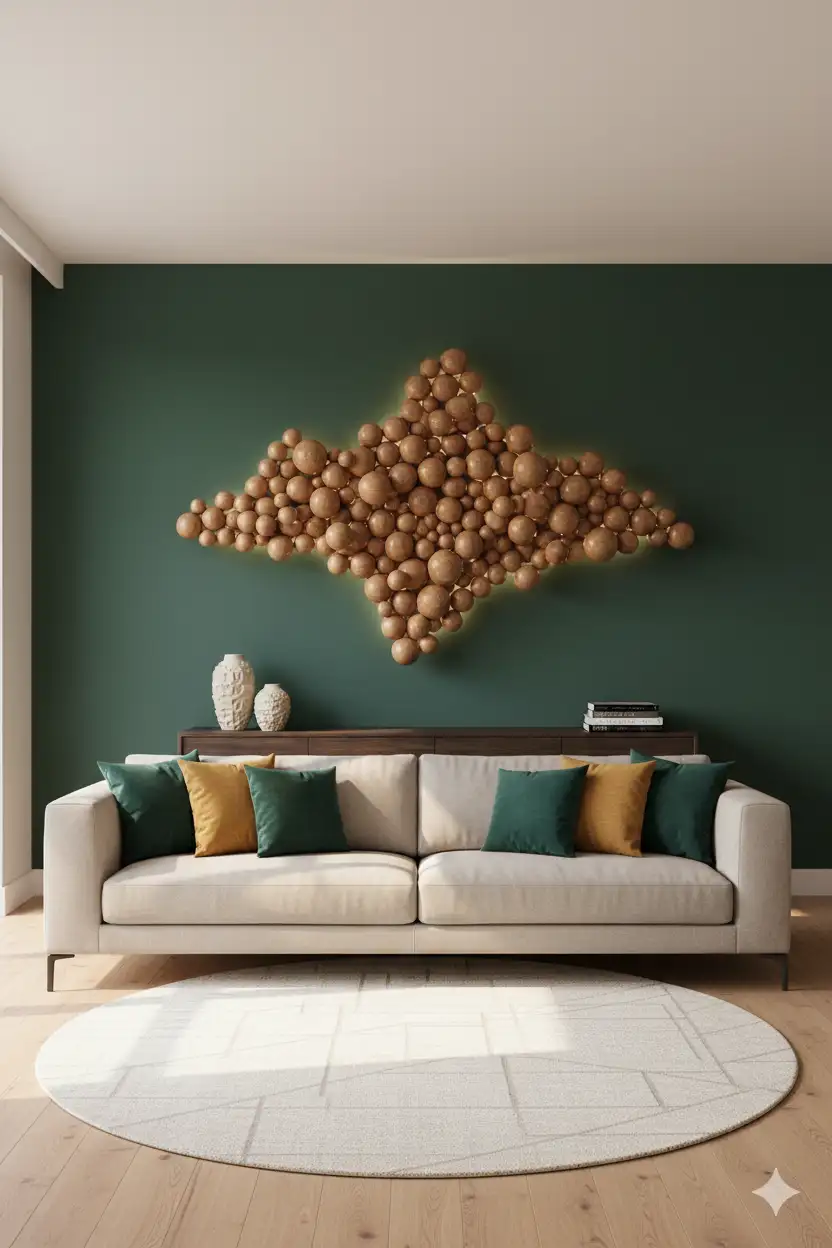
21. Bringing in organic shapes, carved wood, and curved sculptures

When a living room feels too structured or grid-like, I bring in wall pieces with organic shapes. Carved wood, gently curved metal pieces, or even handmade clay forms can break up the rigid lines. They add depth without overwhelming the space, especially if you place them on a wall that doesn’t need a big framed piece. These details help soften the room and make it feel more lived-in. I usually anchor them near plants or round tables so the shapes feel connected.
22. Using peel-and-stick murals when you want something temporary

Peel-and-stick murals are helpful when you want a big visual change without committing to full wallpaper. I’ve used them in rentals, kids’ playrooms, and even living rooms where the homeowner wasn’t ready to make a long-term choice. They come in simple patterns now, not just dramatic scenes, so you can keep things subtle if you want. The installation is much easier than people expect, just take your time around corners. It’s a nice way to test out color or pattern before deciding on something more permanent.
23. Creating a simple grid of black-and-white family photos

Black-and-white photos always feel calmer than full color, especially when you put them in a tight grid. When I do this for clients, I usually stick with identical frames and equal spacing so the grid looks clean. It’s a great way to display family pictures without the mix-and-match style of a gallery wall. The simplicity keeps the room from feeling cluttered. Just measure carefully, the whole arrangement depends on straight lines.
24. Filling a blank space with plants hung at staggered heights

When a wall feels cold or too empty, hanging plants at staggered heights brings instant life to the room. I like using lightweight planters so they’re easy to install and won’t damage the wall. Mixing trailing plants with small, structured ones creates a nice balance. This works especially well near windows where the plants naturally thrive. You just want to be sure the hooks are secure enough to hold the weight once the soil is watered.
25. Adding a sculptural wall lamp that doubles as decor
Some wall lamps are more like functional art pieces, and they can fill space where traditional decor feels too predictable. I like installing these near reading chairs or on side walls where you need light but don’t want to rely only on floor lamps. The shapes, arched arms, and asymmetrical shades add personality without taking up floor space. It’s a subtle way to introduce something unexpected. Just choose a style that complements your furniture so it doesn’t look random.
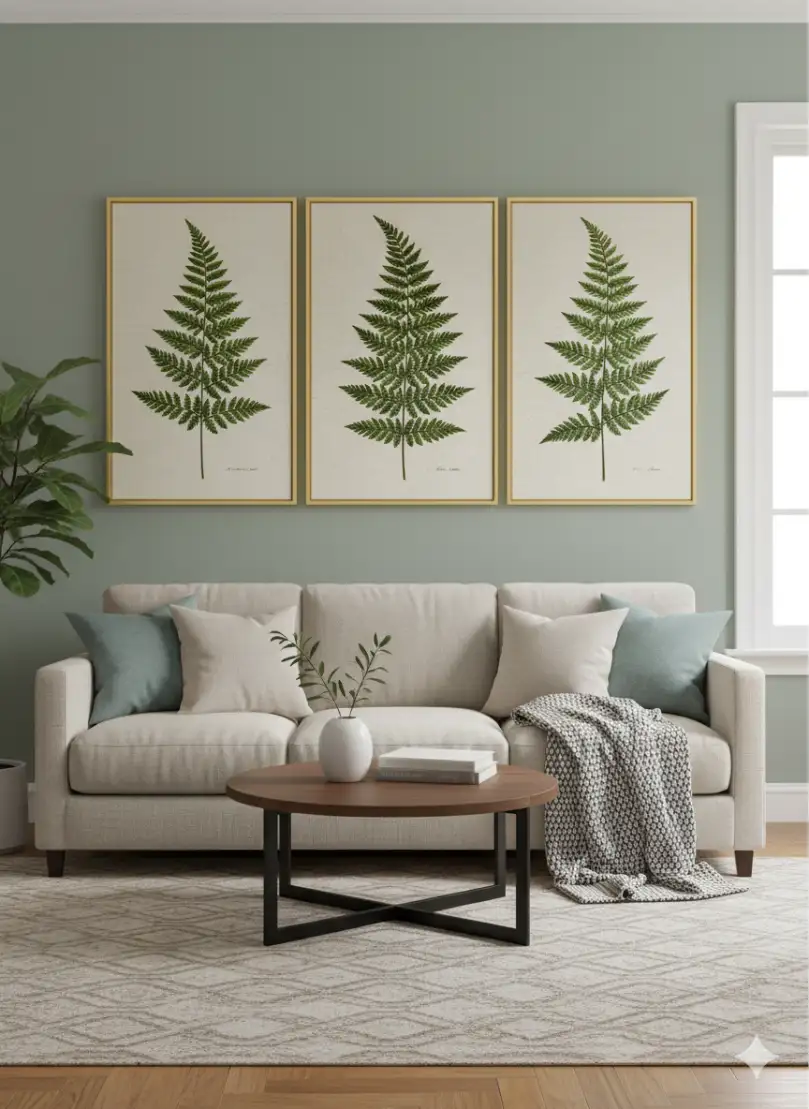
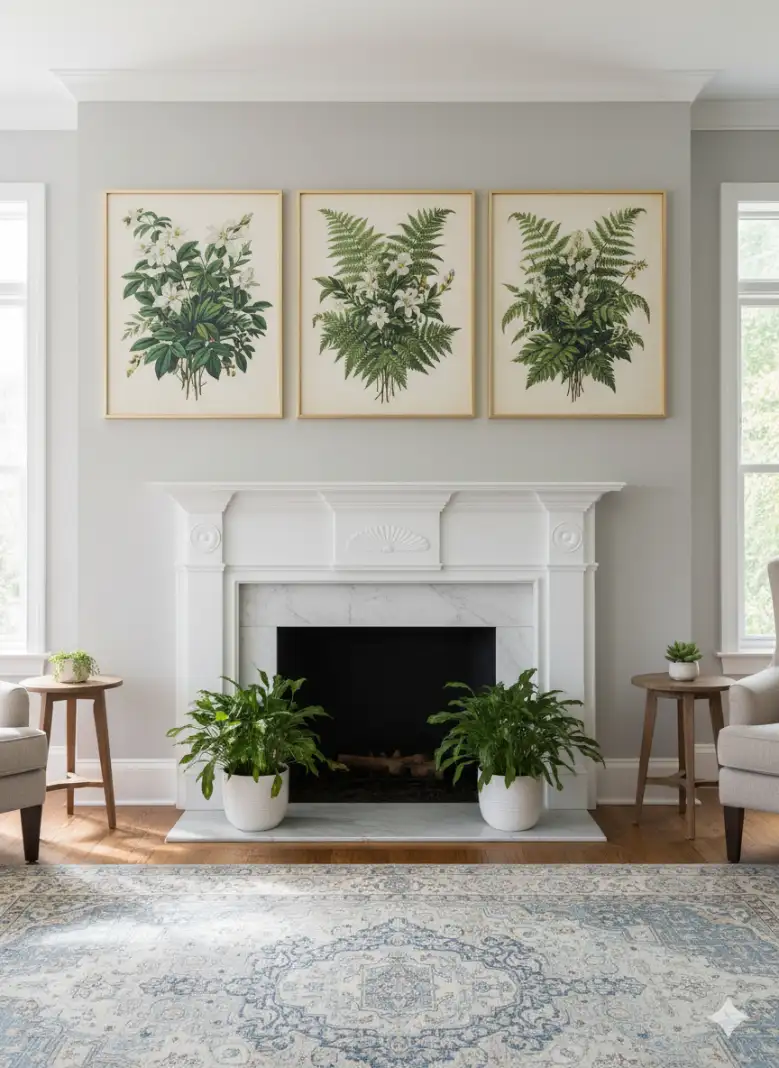
26. Using a series of small, framed botanical sketches

Botanical sketches bring a gentle, natural feeling to a room without being overly “garden themed.” I usually group three to six small frames in a loose arrangement, not too tight and not perfectly symmetrical. They’re nice on walls that don’t need a large focal point, like between windows or near a doorway. The subtle line work adds interest without shouting for attention. A simple wood frame works best to keep them looking classic.
27. Bringing in colored frames when the room itself is very neutral
Suppose you’ve decorated the rest of the living room with soft neutrals. In that case, colored frames can bring in personality without overwhelming the space. I’ve used muted greens, dusty blues, and even terracotta shades to pick up on small accents in the room. They instantly make a wall feel curated rather than accidental. The trick is keeping the artwork itself simple; otherwise, the whole arrangement can get busy. I usually start with two or three colors and see how it feels before adding more.
28. Incorporating wall hooks as both decor and storage

Wall hooks can do more than hold coats. In living rooms, I use them to display hats, lightweight bags, or woven accessories that fit the room’s style. When arranged thoughtfully, they almost become a sculptural element. This works well near entry points or in small spaces where you don’t want bulky storage furniture. Just use hooks that look good on their own so the wall still feels intentional when they’re empty.
29. Placing a large map or vintage chart in casual family rooms

Large maps instantly give a relaxed, lived-in vibe to family spaces. I’ve hung them in play areas, TV rooms, and even more traditional living rooms when the homeowners wanted something meaningful but low-key. The aged paper, muted colors, and simple graphics blend well with many styles. They’re big enough to fill a wall without needing multiple pieces. If the room has kids, they end up studying it more than you’d think.
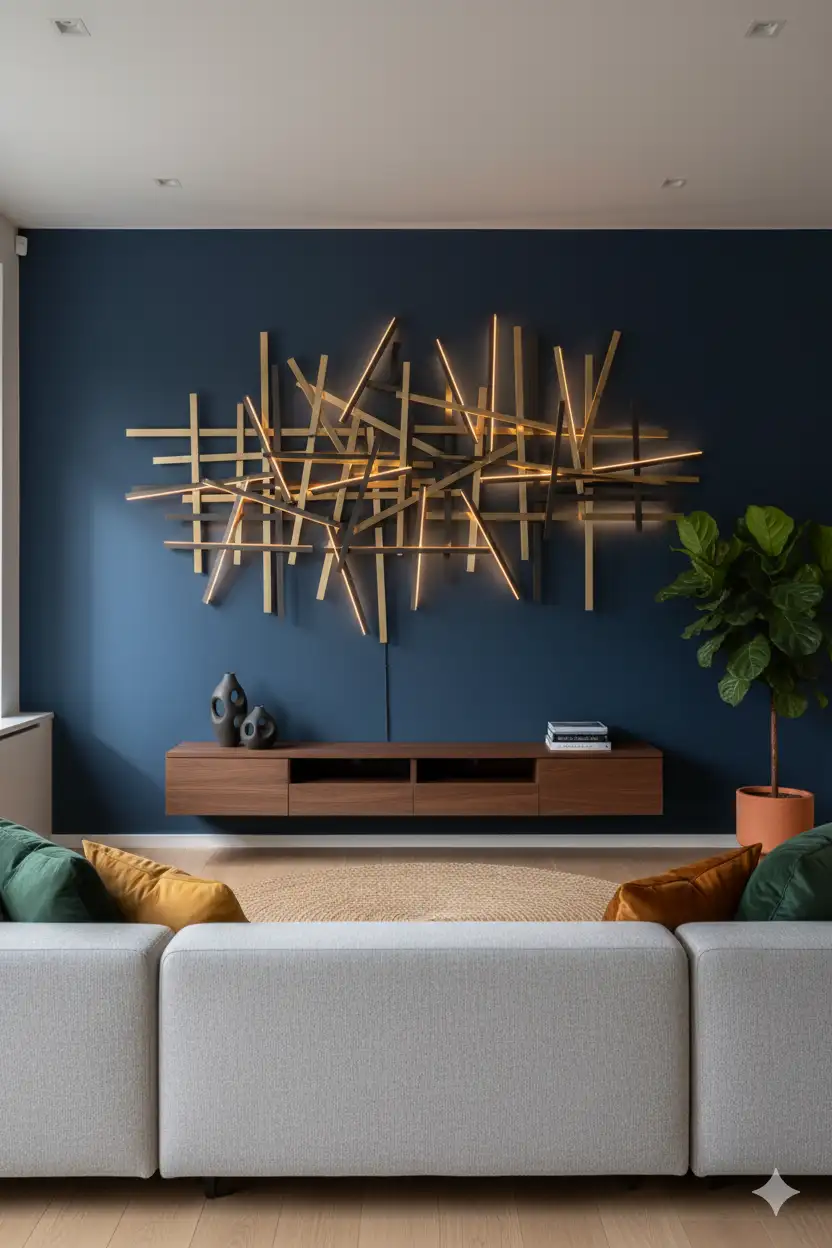
30. Using thin metal wall art in modern spaces
Thin metal wall pieces add structure without feeling heavy or overly industrial. I’ve used them in rooms that needed a break from soft textiles and rounded shapes. They’re especially nice on walls that don’t get much natural light because they catch highlights subtly. Look for designs that feel sculptural rather than sharp or geometric unless that fits your space. These pieces work well near simple furniture with clean lines.
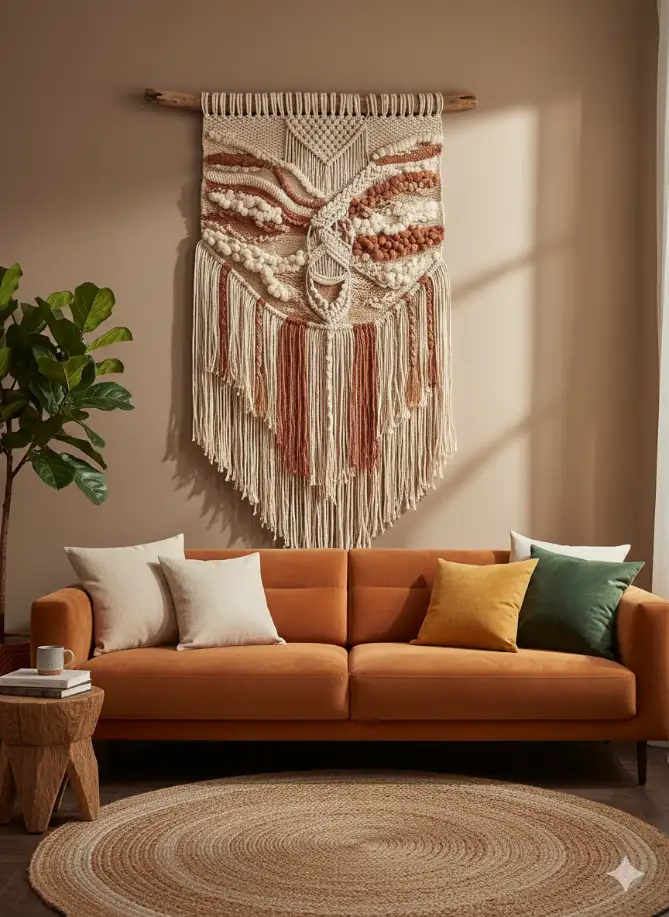
31. Hanging an oversized woven wall piece for an earthy texture

Oversized woven pieces, whether they’re made of wool, cotton, or something chunkier, can warm up a room instantly. They work well behind sofas or in rooms with hardwood floors that need softness. I usually pick something with subtle patterning so it doesn’t overwhelm the space. The texture catches light and shadow in a nice way and gives the room depth without lots of color. They also add a handmade feel that many living rooms benefit from.
32. Creating a diptych or triptych when one piece feels too small

If you’ve ever found a piece of art you love, but it’s just too small for the wall, pairing it with one or two related panels can fix the scale issue. Diptychs and triptychs fill the width without feeling crowded. I often space them 1–2 inches apart so they read as a set but still have breathing room. This approach works especially well over large sofas or long console tables. Just make sure the lines and colors connect between the pieces.
33. Using floating cube shelves for tiny decorative items

Floating cube shelves are helpful when you want to display small objects but don’t want a long, continuous shelf. They add dimension without creating a heavy line across the wall. I use them for handmade ceramics, tiny plants, or meaningful keepsakes. They look best in groups of two or three, staggered slightly so the arrangement feels relaxed. Just avoid overcrowding; one piece per cube usually looks right.
34. Adding plaster or clay relief art for subtle depth
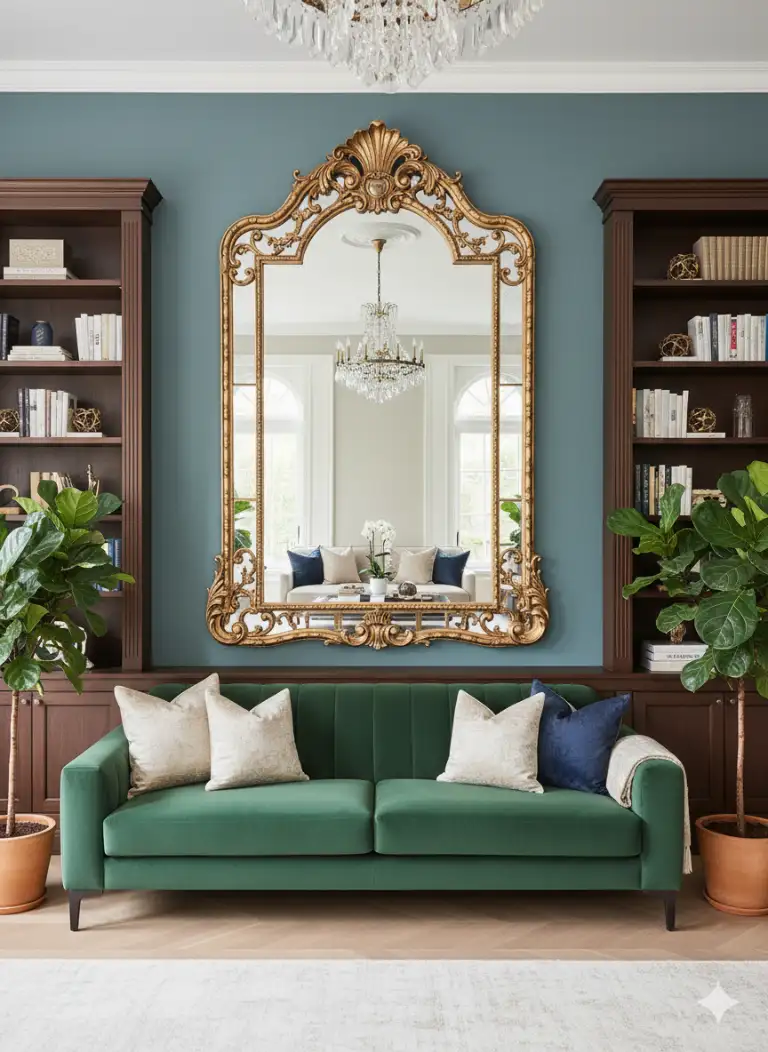
Relief pieces made from plaster or clay bring a quiet, sculptural quality to a living room. They’re great for walls that need interest without a lot of color. The raised texture catches light throughout the day, giving the wall some movement. I often use these in more minimal homes or spaces with lots of natural materials. Just choose pieces with shapes that feel organic so they blend comfortably with the rest of the room.
35. Installing a narrow picture light above a single artwork

A picture light instantly makes one piece of art feel more intentional. I like narrow, simple styles that don’t overpower the artwork. This trick works well when you have one special piece that deserves attention, especially in rooms where the general lighting isn’t great. It adds a soft glow that feels cozy in the evenings. Just position the light so it illuminates the piece evenly without casting harsh shadows.
36. Using tonal art that blends gently with the wall color

Tonal artwork, pieces that are nearly the same shade as the wall, create a calm, layered look. I’ve used this approach in rooms where homeowners wanted something understated but still stylish. It works especially well with warm neutrals, greens, or soft blues. The effect is subtle, almost like the art is part of the architecture. It’s a good option if you prefer texture over bold color.
37. Filling awkward high walls with tall vertical artwork

Tall walls over staircases or living rooms with vaulted ceilings often feel underused. Vertical artwork helps bring the height into proportion with the rest of the room. I like choosing pieces with simple lines so they don’t overwhelm the space. Hanging them slightly lower than you’d expect can help connect them to the furniture below. This idea works well in rooms where regular-sized frames feel lost.
38. Building a small display of heirlooms or travel pieces

I love it when a wall tells a personal story. Grouping meaningful items, small woven pieces from travels, vintage postcards, and small framed textiles, creates a display that feels unique to the homeowner. I usually mix shapes and sizes, but keep the spacing consistent so it doesn’t feel cluttered. These arrangements work best on smaller walls or cozy corners. It’s a nice way to bring personality without buying new decor.
39. Trying layered mirrors when the room lacks natural light
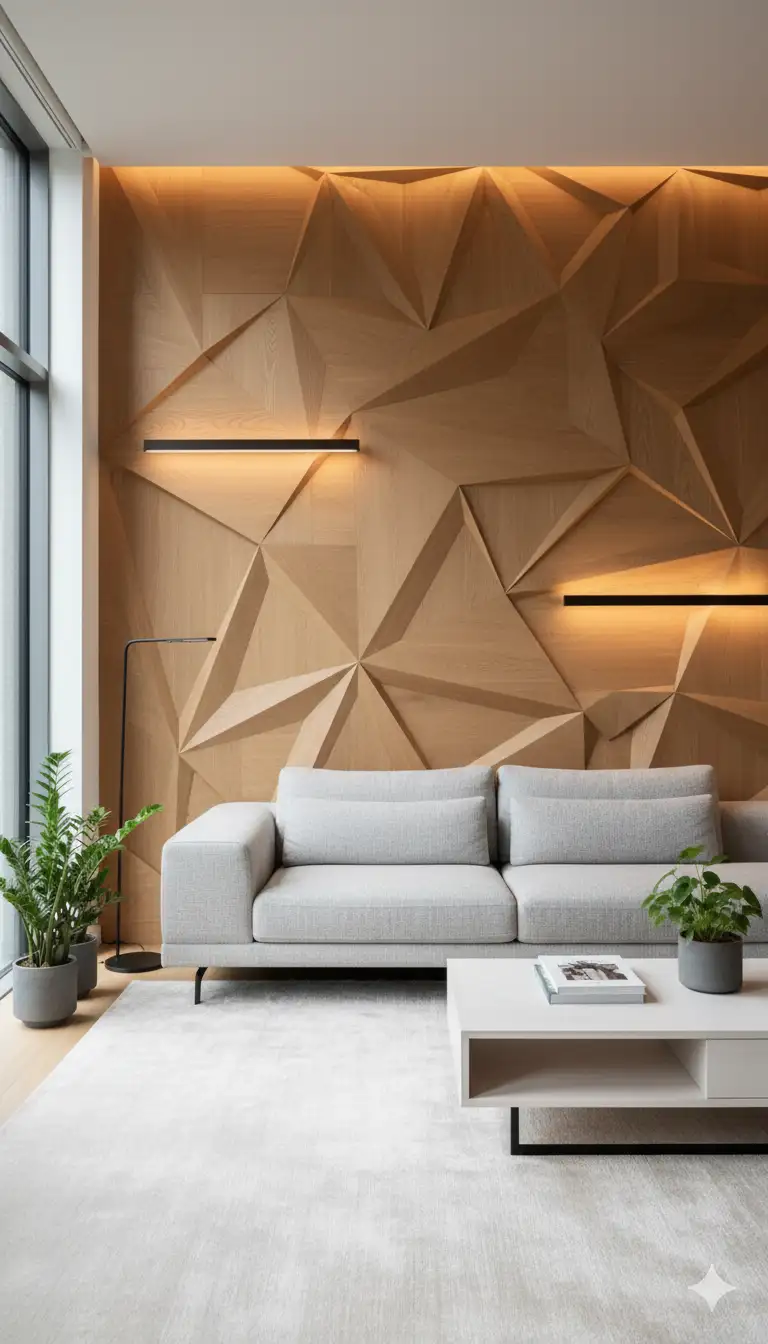
If your living room feels a bit dim, mirrors can help more than people expect. Layering two mirrors, one mounted and one leaning on a nearby console, adds depth and reflects whatever light you do have. I like mixing shapes, such as a round mirror with a rectangular one, for a more relaxed look. They brighten darker corners without needing extra lamps. Just place them where they’ll catch some light rather than a blank, dark wall.
40. Using a chalkboard or writable wall in casual living areas

In family rooms or multipurpose spaces, a chalkboard or writable wall brings some fun without feeling childish. I’ve seen adults use them for reminders, meal plans, or just doodles that change throughout the week. A framed chalkboard is usually enough, but some people prefer a whole painted panel. Darker frames keep it from looking like a classroom. It’s an easy way to make the room feel more lived-in and flexible.
41. Hanging a mix of canvas and framed work for a relaxed feel
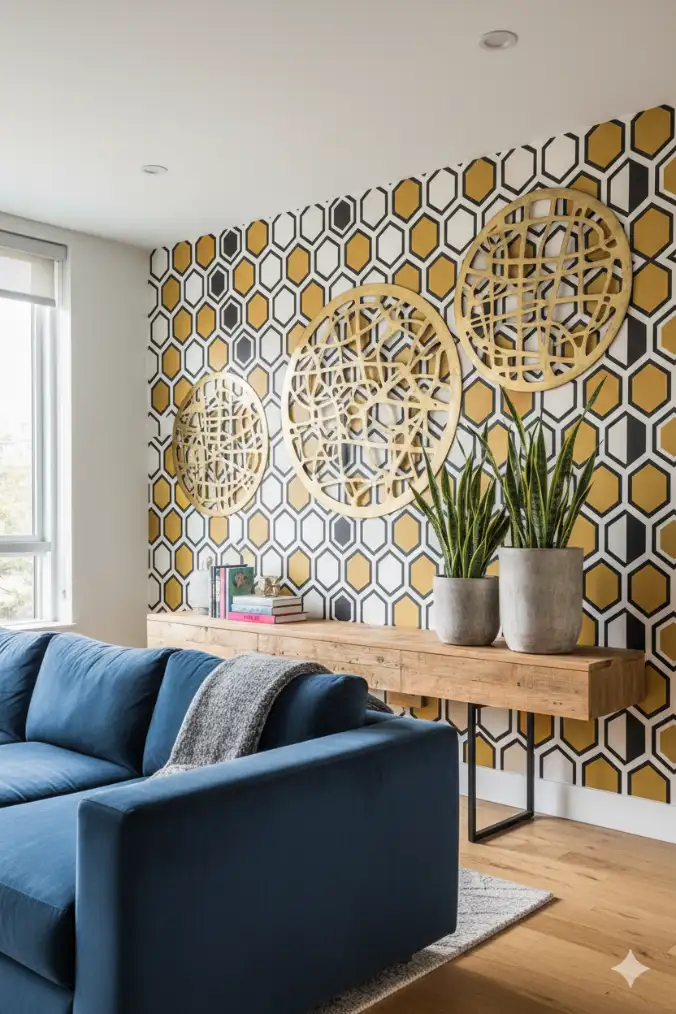
Mixing canvases with framed pieces keeps a wall from feeling too uniform. I like doing this in homes where the decor leans casual but still thoughtful. The difference in depth between the pieces creates subtle shadows that add interest. Just keep the color palette related so the mix doesn’t look random. This approach works well above sofas or credenzas, where you have enough width to play with.
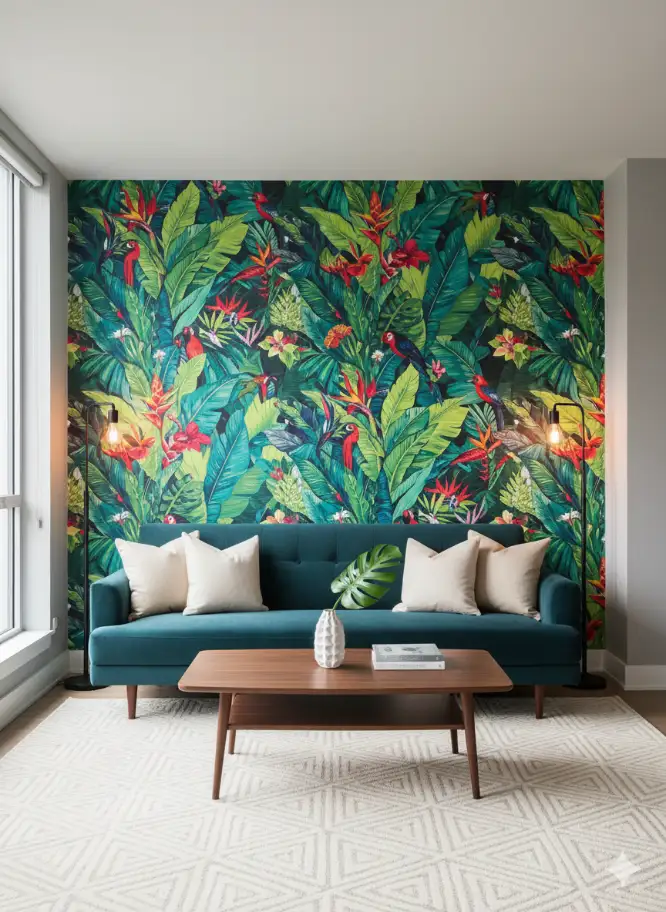
42. Using a bold patterned wallpaper on one main wall

When a living room needs something dramatic but not overwhelming, one wallpapered wall can do the job. I’ve used geometric patterns, soft florals, and even textured wallpapers depending on the room’s style. It’s strong enough to define the space without taking over the entire room. I usually place it behind the main seating area so it anchors the furniture. Testing a sample on the wall first is important; the scale looks different once it’s up.
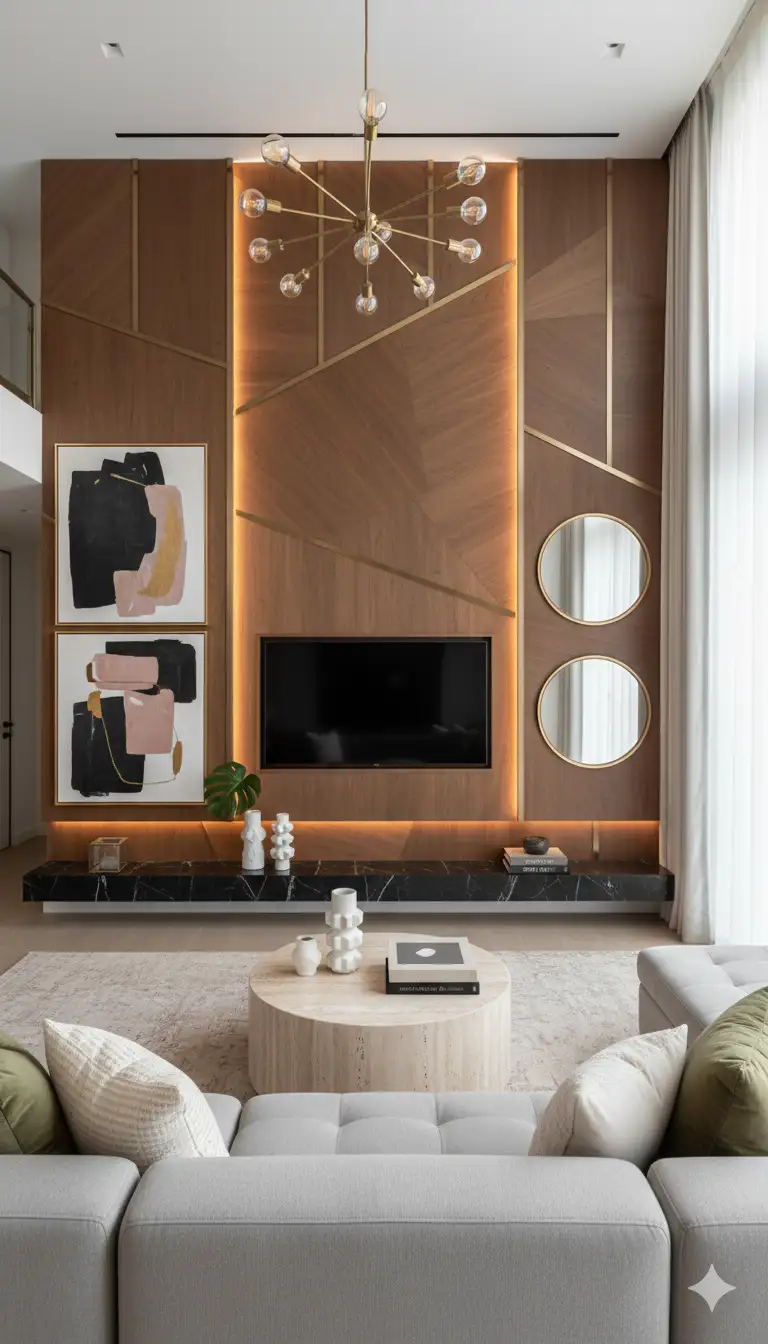
43. Adding architectural molding to create a built-in look

Simple molding can make a flat wall feel more structured and intentional. I’ve added box molding, vertical battens, or narrow trim to create the sense of built-in panels. It’s a subtle change, but it gives artwork or mirrors a nicer backdrop. Paint the molding the same color as the wall for a seamless look. It works well in both modern and traditional homes as long as the proportions feel balanced.
Conclusion
Living room walls don’t need to be filled all at once. Sometimes the best approach is trying one idea, living with it, and seeing how the room responds. Whether you choose something bold or something simple, the goal is to make the space feel comfortable and personal. The right wall decor usually reveals itself once you pay attention to how you actually use the room.



No Comments