

When I talk with homeowners about living room wall decor, the first thing we usually sort out is how the space feels before we decide what should go on the walls. The right pieces can fill out an empty room, soften a stark wall, or make a spot feel more lived-in without adding clutter.
This list pulls together ideas I’ve used in real projects, simple, practical things that can make a bland wall feel more intentional. Nothing complicated or overly “designer,” just useful approaches that work in everyday homes.
1. A Large-Scale Artwork That Anchors the Room

I’ve lost count of how many times a single oversized piece saved a living room that felt scattered. When you pick something large, it doesn’t need to be anything dramatic, just a piece with colors you actually like living with. I usually tell clients to aim for something that takes up at least two-thirds of the sofa width. A simple abstract canvas, a landscape, or even a textile-based piece can do the job. It fills the visual void without the fuss of a gallery wall.
2. A Low, Wide Shelf for Leaning Art

If you’re the type who changes your mind often, a picture ledge works nicely. I’ve installed these in homes where people wanted art but didn’t want to commit to permanent holes. You can lean a mix of frames, a small plant, maybe a ceramic piece. Keep the frames in a loose row so the wall doesn’t look messy. It’s one of the easiest ways to add personality without a lot of effort.
3. A Pair of Tall Sconces on Either Side of the Sofa

Wall lighting can do more for the mood of a living room than people expect. I like pairing slim, simple sconces with warm bulbs to soften the corners of the room. They help balance a sofa that feels visually heavy and also free up table space where lamps would normally go. Just make sure they sit at eye level when you’re standing.
4. A Textured Tapestry for a Softer Look

Sometimes a room needs something with warmth rather than shine or hard edges. A fabric wall hanging or woven tapestry adds a gentle texture that works well in spaces with a lot of wood or leather. I often use neutral textiles if the furniture already has a lot of color. Hang it fairly close to the sofa so it feels connected to the seating area.
5. Floating Shelves Styled With Intention

Floating shelves can look great, but they can also look chaotic if you crowd them. When I install these, I keep the spacing generous and use a mix of books, small bowls, framed art, and something sculptural. Think of them as a rotating display, not long-term storage. The key is leaving enough breathing room so the wall doesn’t feel cramped.
6. A Tall Mirror to Reflect Light

Mirrors work well in smaller living rooms or places that need more brightness. A slim vertical mirror on a narrow wall can make the room feel less boxed in. I avoid heavy frames in tight spaces because they weigh the mirror down visually. If you place it across from a window, the room instantly feels more open.
7. A Console Table With Art Above It
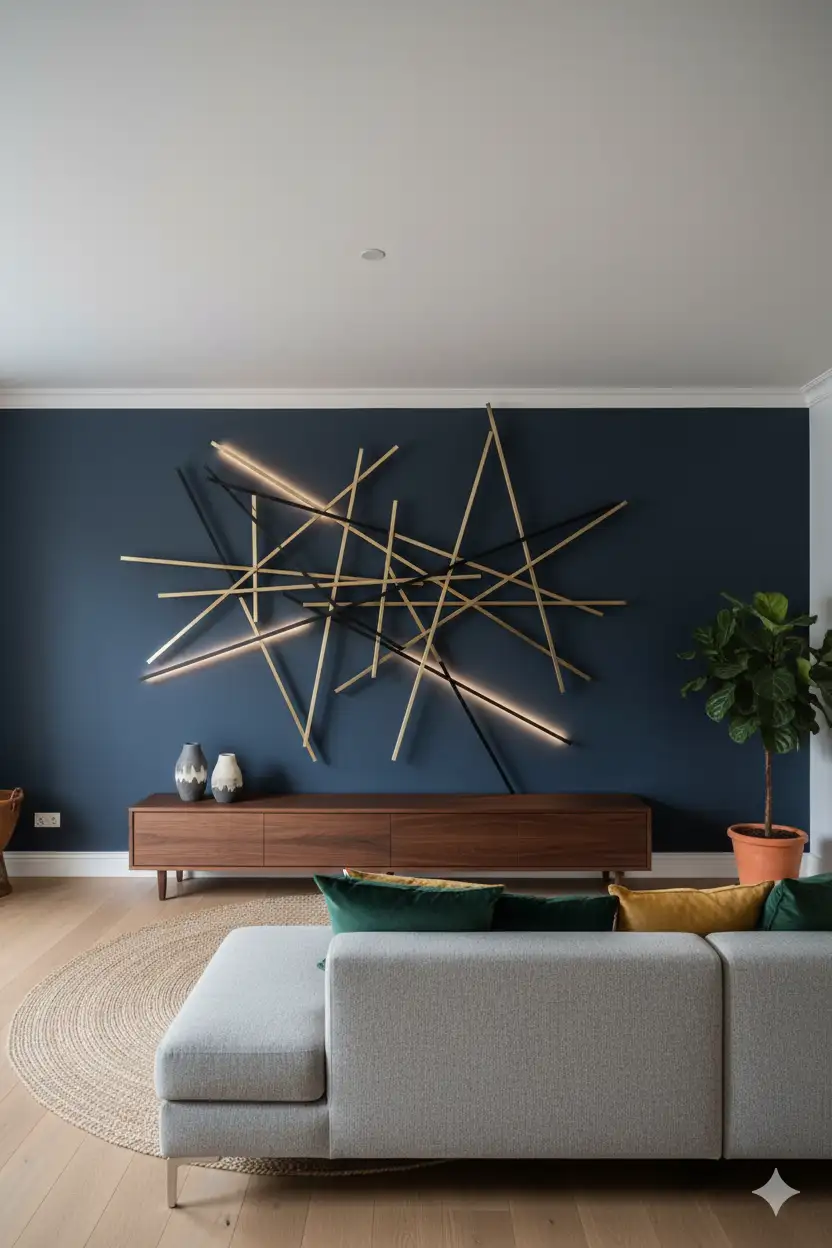
In many homes, the wall opposite the sofa gets ignored. Placing a narrow console there gives you a natural spot for art and a lamp. I recommend one large piece or two medium ones hung low enough to feel connected to the table surface. It creates a casual focal point without dominating the room.
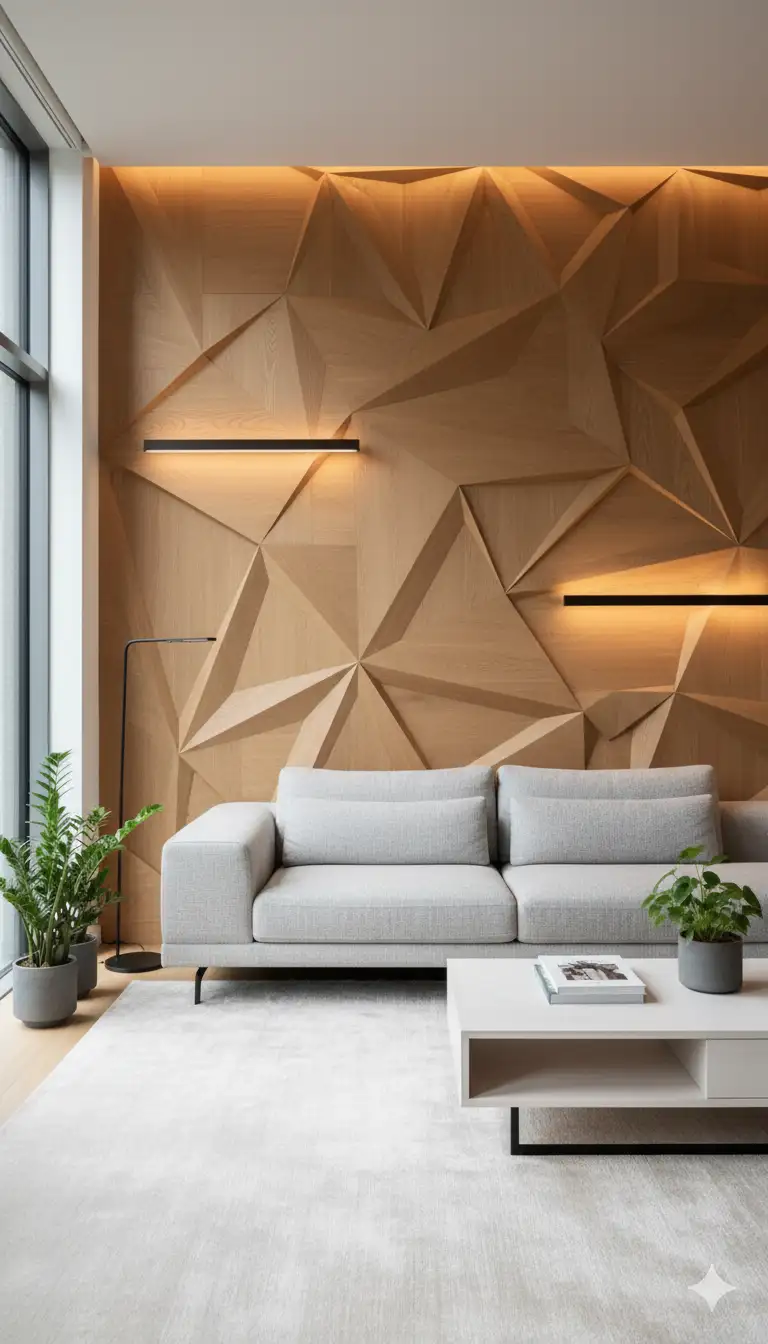
8. Simple Wood Panels for a Subtle Accent

Wood slat panels or narrow vertical boards give a wall some texture without going full “feature wall.” I’ve added these behind TVs or sectional sofas to warm up modern spaces. Choose a wood tone that matches your flooring or furniture so everything feels intentional. Even half a wall of paneling can completely shift the mood of the room.
9. A Group of Small, Meaningful Pieces

If a large artwork feels intimidating, a small collection can be easier. I’ve helped clients frame postcards, kids’ drawings, or vintage finds picked up while traveling. Arrange them in a loose grid or organic layout, but keep the spacing consistent. The wall ends up feeling personal rather than decorative for the sake of decorating.
10. Picture Rail Molding for a Classic Touch
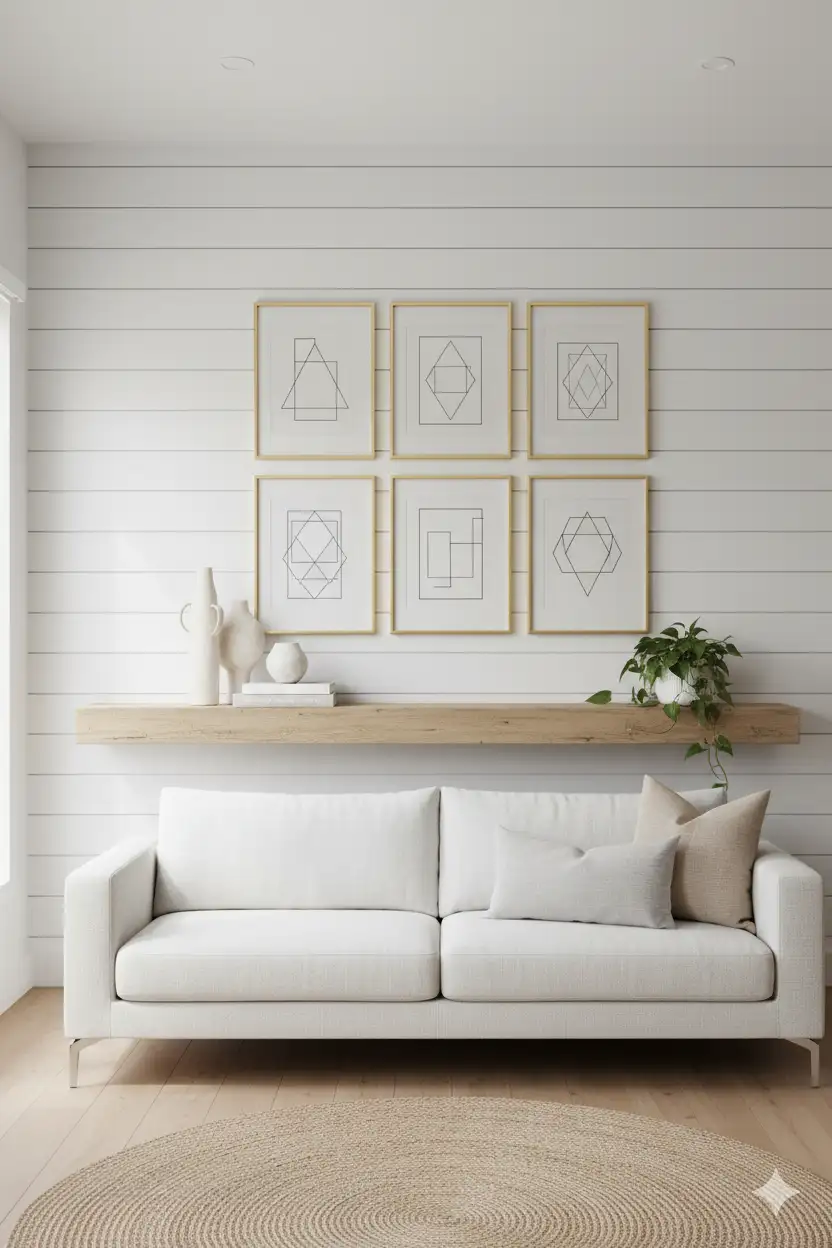
Older homes often have picture rails, and I sometimes add them in new builds when the architecture feels too flat. They let you hang art with cords or hooks, which gives the room a softer, slightly vintage charm. It’s also good if you want flexibility without making lots of holes in the wall.
11. A Statement Clock That’s Actually Useful
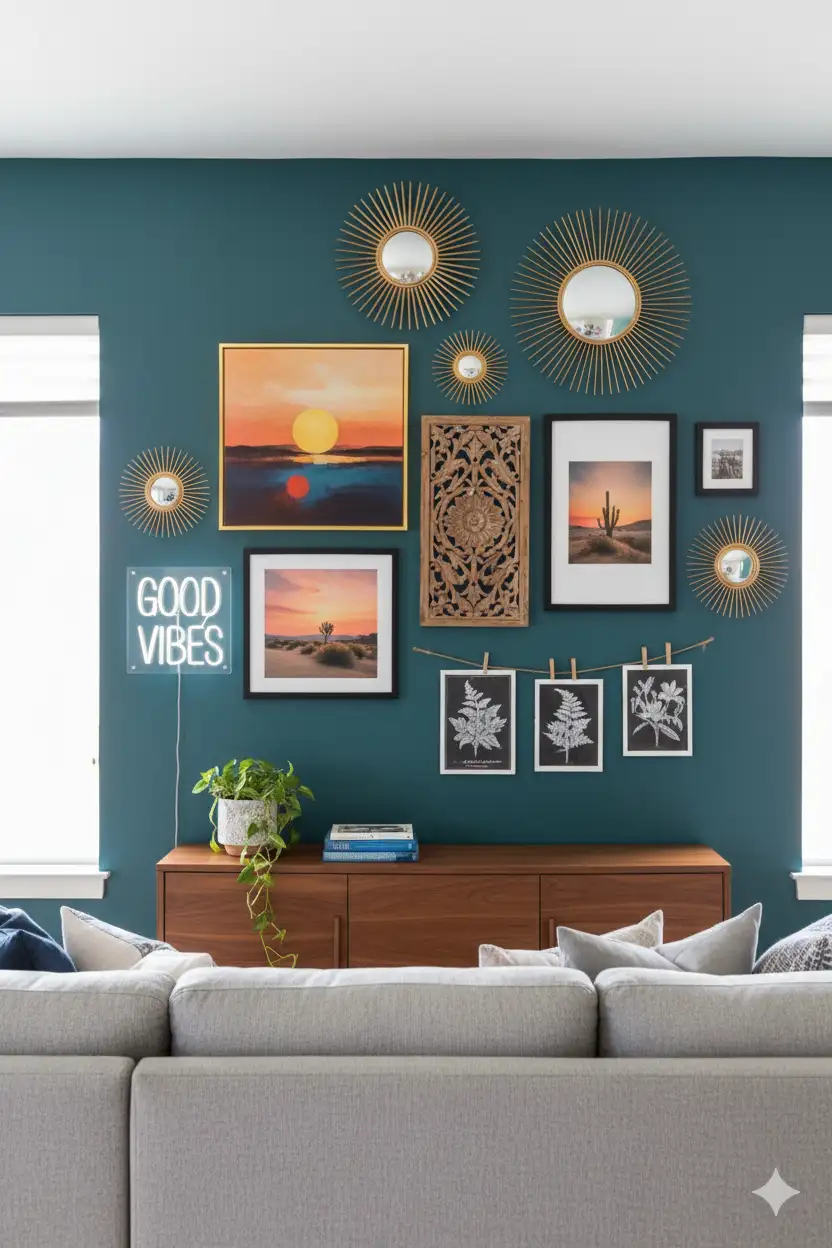
A big wall clock can be more than a functional piece. I’ve installed oversized clocks in open living/kitchen spaces where people wanted something simple and graphic on a large wall. Choose one with clean lines so it reads as decor rather than a gadget. It anchors the space without crowding it.
12. Vertical Plants or a Wall-Mounted Planter
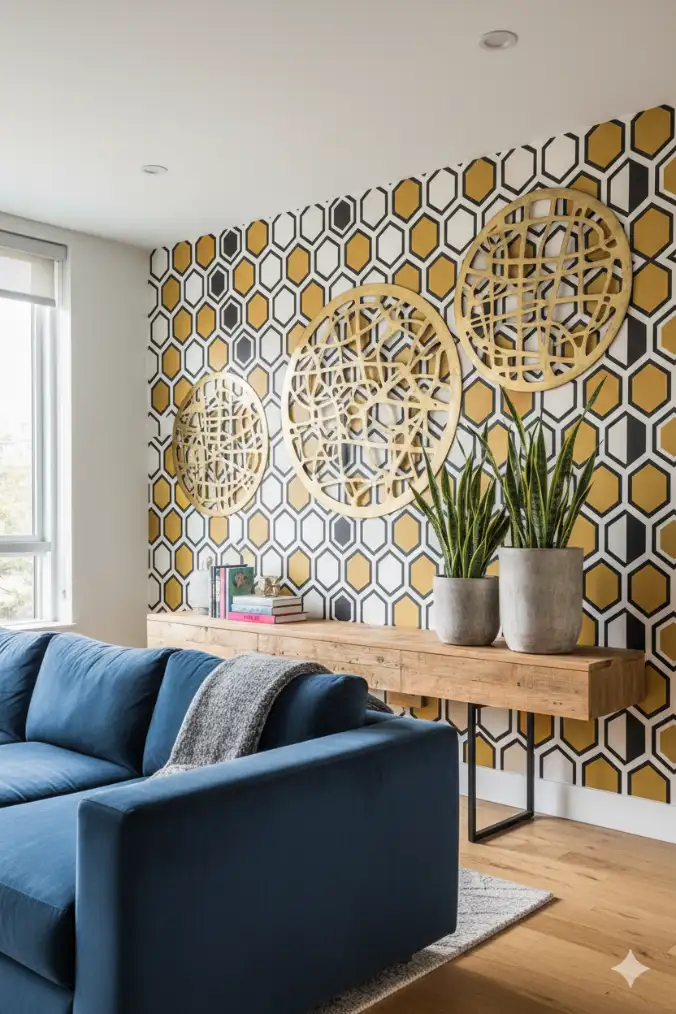
For plant lovers, a wall-mounted planter is a nice way to bring greenery into the living room without filling the floor. I’ve used slim, metal trough-style planters that hold trailing plants. They soften the wall and add a bit of life without feeling like a garden installation. Low-maintenance plants work best here.
13. Layered Framed Prints on a Side Wall

Side walls are tricky; they’re often narrow and overlooked. I like hanging two or three prints in a vertical row so they feel intentional. Black-and-white pieces or soft-toned prints keep things calm. This works especially well when the wall leads toward a hallway or the dining area.
14. A Painted Arch or Soft Color Block
Sometimes a bit of paint is enough. I’ve done subtle arches or rectangular blocks of color behind console tables or side chairs. It creates a zone without adding extra objects. Choose a color that’s already in the room, throw pillows, rug, or curtains, so it ties everything together.
15. A Sculptural Wall Object for Something Different
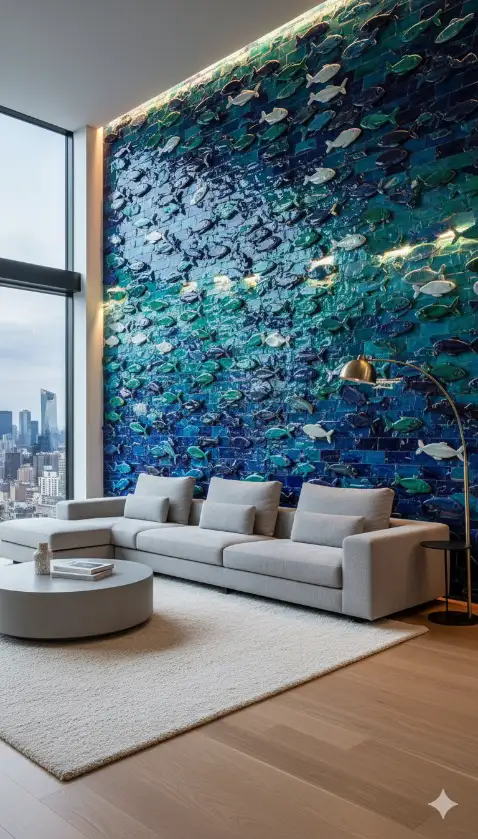
If you want something that isn’t a frame, look for a ceramic piece, carved wood, or a metal sculpture. I once installed a set of three handmade tiles above a sofa, and it added texture without overwhelming the wall. These pieces work best when spaced loosely and placed at eye level.
16. Slim Picture Lights Above Art

If you have art you really love, adding a picture light gives it a nice finishing touch. It doesn’t need to be fancy; a simple metal bar works well. I prefer warm LED versions that cast a gentle glow without creating harsh shadows. It makes the piece feel more intentional and gives the room some ambient light.
17. A Low Wall Cabinet or Storage Niche

In smaller living rooms, I sometimes mount a shallow cabinet that doubles as decor and hidden storage. It can hold remotes, games, or chargers while giving the wall some dimension. Choose a wood tone or painted finish that matches your trim. Keep the top surface clean so it doesn’t turn into another clutter zone.
18. A Large Fabric Pinboard for Everyday Life

Families who want a relaxed, lived-in look often like a big fabric-covered pinboard. You can use linen or a simple canvas material stretched over a frame. It becomes a spot for notes, tickets, or sketches. It’s casual but still looks tidy if you keep the pinned items intentional.
19. A Mix of Round and Oval Frames

Not everything needs to be square. I like breaking up a wall with a few oval frames or even a decorative round piece. It softens the linear look of most living rooms, especially ones with lots of rectangular furniture. Keep the color palette consistent so the shapes stand out without feeling busy.
Xylon Interiors – Redefining the Art of Interior Living
20. A Narrow Book Ledge for a Rotating Collection

If you’re a reader, a slim book ledge along part of a wall can work nicely. I’ve used these to display beautiful covers, art books, or magazines. It feels casual but still organized. Just avoid letting it turn into full-time storage, and rotate the books every now and then.
21. A Set of Three Framed Textures
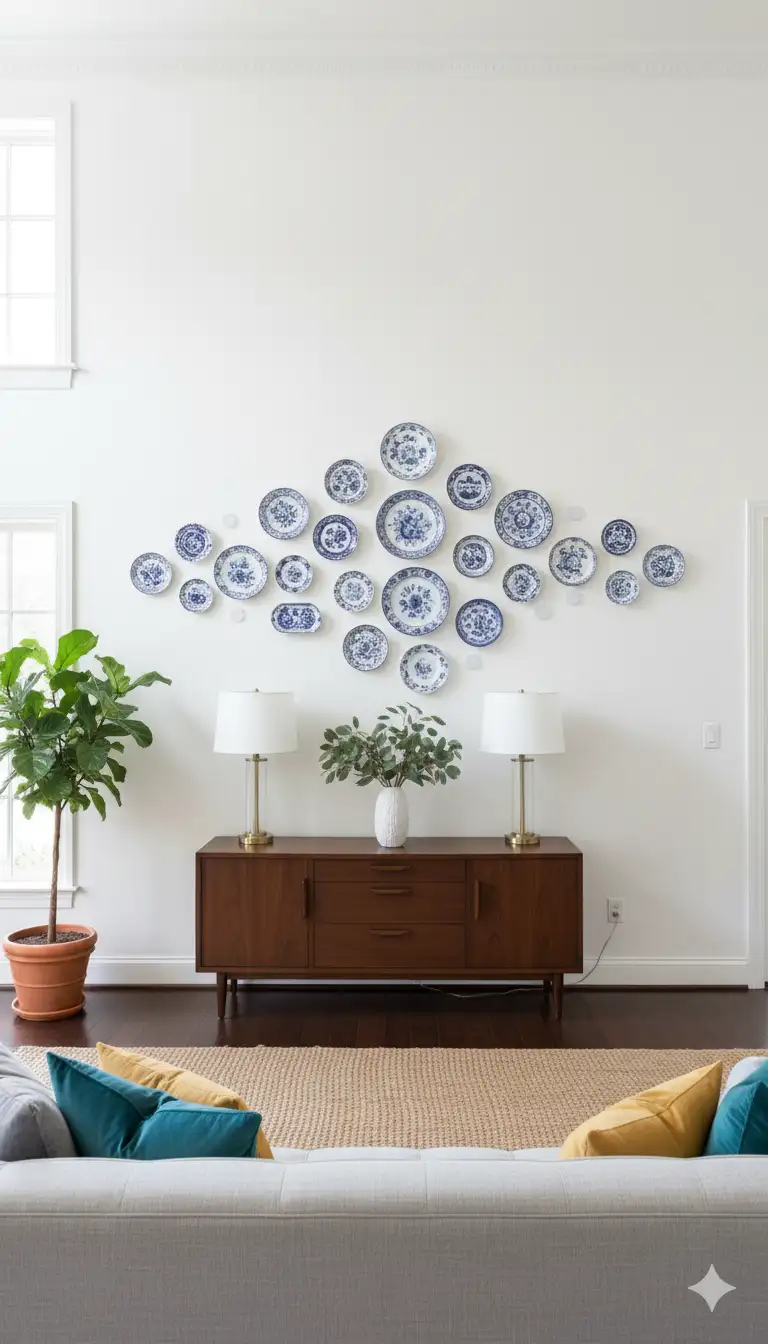
When art feels too busy, framed textures can work, think linen panels, handmade paper, or pressed botanicals. I once framed pieces of leftover wallpaper from a client’s project, and it added just enough pattern without overwhelming the wall. Hang them in a simple row to keep things calm.
22. Built-In Niche Shelves If You’re Renovating

During remodels, I sometimes create recessed shelves instead of adding more furniture. These niches can hold pottery, candles, or smaller decorative pieces. Because they’re built into the wall, they don’t take up space visually. They also help break up large walls in open-concept rooms.
23. A Cozy Reading Corner with Wall Hooks

In homes that lack a natural reading nook, I sometimes create one by placing a chair near a wall and adding a couple of hooks for bags or throws. The wall hooks act as decor while also being practical. It makes the corner feel intentional, even if it’s small.
24. A Chalkboard or Writable Wall for Families

This works surprisingly well in casual living rooms, especially ones connected to the kitchen. A small chalkboard lets people jot down reminders, doodles, or notes. Choose a simple frame so it reads as part of the decor rather than a playroom item.
25. A Low-Maintenance Wall Garden With Faux Greens

If you like the idea of greenery but not the upkeep, a small arrangement of realistic faux greens can work. I’ve used tight clusters of faux succulents or mounted greenery panels to soften blank walls. The key is choosing pieces that look natural up close, not glossy or overly symmetrical.
Conclusion
Wall decor doesn’t have to be complicated or dramatic to change the feel of a living room. Most of the time, it’s about finding pieces that fit your style and arranging them in a way that feels natural. Start with one wall instead of tackling everything at once. Over time, the room will start to feel more like a space that reflects how you actually live.




No Comments