

If you’re planning a kitchen refresh or designing a new home in 2026, there’s no better time to pay special attention to your island. The kitchen island is no longer just a prep surface; it’s becoming the emotional and functional heart of the space. From bold forms to textured finishes to multi-purpose layouts, here are three trending island styles for 2026 homes, along with how to bring them into your space meaningfully.
1. Sculptural & Curved Islands

One of the biggest shifts for 2026 is moving away from strictly rectangle islands into softer, more sculptural forms. According to recent design forecasts, “fluid geometry” is emerging as a top trend.
Why it works
- Curved edges make an island feel more approachable, ideal for a family-friendly home or a social entertaining setup.
- In an open-plan layout (which many modern homes are), a curved island helps define the kitchen zone while still flowing into living/dining spaces.
- It has real visual presence: the island becomes a design statement, not just a functional element.
How to do it
- Instead of a sharp-cornered island, consider rounding one side or designing a half-moon or “kidney” shape.
- Let your countertop follow the curve: a waterfall edge is quite striking.
- Pair with textured base materials, fluting, reeded panels, or wood grain to enhance the sculptural feel.
- Keep seating along the curve to promote interaction; the shape invites people to gather.
Materials & finishes
- Natural stone slabs that follow the curve beautifully.
- Reeded wood paneling on the island base for texture.
- Warm metals (for example, a brass footrail or detailing) to soften the form.
- Keep the palette to warm, natural tones, earthy hues, not too stark or cold.
2. Mixed-Material & Statement Texture Islands

If you want your island to pop, then this second style is your go-to: mixing materials and textures to create an island that is both high-function and show-stopper. One design publication calls it “scene-stealing kitchen islands” that merge style with extended functionality.
Key features
- Texture: Fluted or reeded island fronts, paneled surfaces, even tile accents. These add depth and interest rather than plain flat surfaces.
- Material contrast: Think of combining a marble countertop with a wood or metal base, or a stainless steel top with wood siding. The contrast creates tension and elegance.
- Color emphasis: Rather than hiding the island, designers are using bold finishes – deep greens, rich blues, even metallics. Yet still done in a way that feels sophisticated and not gimmicky.
How to bring it in
- Select a “hero material” for your island top (e.g., dramatic marble) and then match or contrast the base.
- Choose one textured element (e.g., fluted wood) and keep others simpler so the effect isn’t overwhelming.
- If you are in a smaller kitchen, use the island texture or material as the anchor and keep other surfaces calm.
- Consider hidden storage, integrated appliances, or seating built into the island, because the island is pulling double duty.
Practical tips
- Make sure things like overhangs for seating still remain comfortable despite the texture or detailing.
- Choose materials that are durable and easy to maintain. Texture is great, but if it’s difficult to clean, it may become a burden.
- Lighting matters: textured surfaces cast shadows, so thoughtful lighting will enhance the material rather than hide it.
3. Multi-Functional Islands with Eat-In & Social Elements

The third island style isn’t just about how it looks; it’s about what it does. Homes in 2026 are trending toward flexible spaces that serve cooking, dining, homework, and casual entertaining. Designers are calling it “cozy eat-in areas” even in small kitchens.
What this means
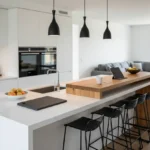
- Your island is no longer just for meal prep; it might include a breakfast bar, banquette seating, integrated workspace, or even a kids’ homework zone.
- It functions both as a kitchen feature and a livable, communal area.
- The layout embraces gathering: stools, benches, wrap-around seating all become part of the design.
How to integrate this style
- When planning, think about seating niches in your island: an extended counter with stools, or one side designated for sitting rather than standing.
- If space allows, incorporate a second level: workshop/desk space on one side, prep on the other.
- Use the island as a transition between the cooking zone and the living/dining zone, especially in open-plan homes.
- Ensure the overhang, foot-space, and ergonomics are right: if people are going to sit there regularly, comfort matters.
Materials & layout advice
- Keep material continuity so the island still looks like one piece, even if it’s doing multiple jobs.
- Choose durable seating surfaces (for example, natural wood or metal bar stools) that complement the island material.
- Incorporate lighting: pendant lamps, integrated under-counter lights, so the sitting area is cozy and usable in the evening.
- Keep clear zones: prep → cook → eat. Having the island perform all three means you must consider how you move around it. Leave walk-through space and try to avoid “traffic jams” during meal time.
Putting It All Together: Choosing What’s Right for You
When you’re browsing these three trending styles, here are a few questions to help choose which fits your home and lifestyle:
- What’s your space like? In a compact kitchen, you might favour the multi-functional eat-in island rather than a massive sculptural one. In a luxury, open-plan home, you might go bold with texture and material.
- How do you use your kitchen? If you cook and entertain often, prioritize seating and social flow. If you prefer a showpiece kitchen, maybe the fluted/mixed-material route.
- What’s your long-term style? Trends are helpful, but imagine living with this island for many years, choosing materials that age well, colours that won’t feel dated.
- Budget & practicality: Sculptural forms and premium materials cost more, so weigh how much you’re willing to invest vs how much you’ll use the extra features.
- Flow and ergonomics: No matter how beautiful the island, if it blocks traffic or makes cooking harder, it defeats the purpose. Keep the kitchen triangle, walkways, and sightlines in mind.
Final Thoughts
2026’s kitchen-island trends show clearly that the island is pivoting from a purely functional piece into a central piece of living. Whether you go for curved sculptural form, mixed materials with bold texture, or an island that invites sitting, chatting, and working, what matters is coherence, comfort, and a reflection of your daily life.
If I were to pick one “must-have” takeaway, your island should feel like it belongs in your life, not just in a magazine. For example, if you often have friends over while you cook, lean on seating and interaction. If you value calm, minimal prep space, then lean into clean forms and tactile finishes.

No Comments