
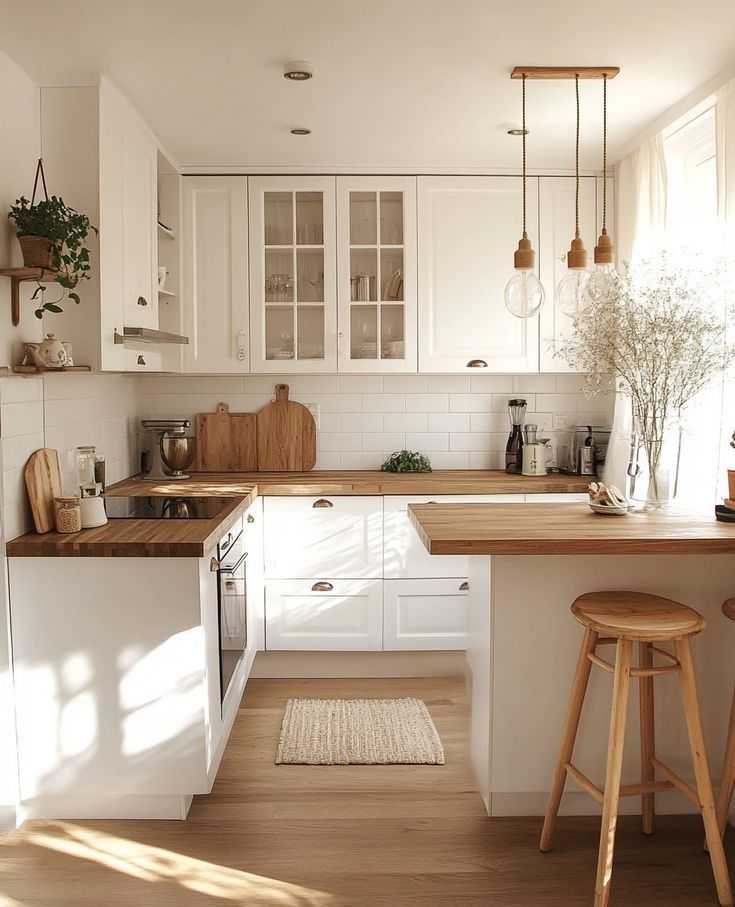
When you walk into a beautifully designed farmhouse kitchen, you don’t just notice the space—you feel it. It’s the warmth in the wood tones, the clarity of the white painted cabinets, and the gathered sunlight bouncing off polished surfaces. As someone who has spent years moving between architectural sketches, interior finishes and textile boards, I can tell you: farmhouse style is far from stagnant. It’s evolving, embracing both nostalgia and fresh creativity. Here are seven trends you’ll be spotting everywhere in farmhouse kitchens—and why they work so well.
1. Textured White Shaker Cabinets
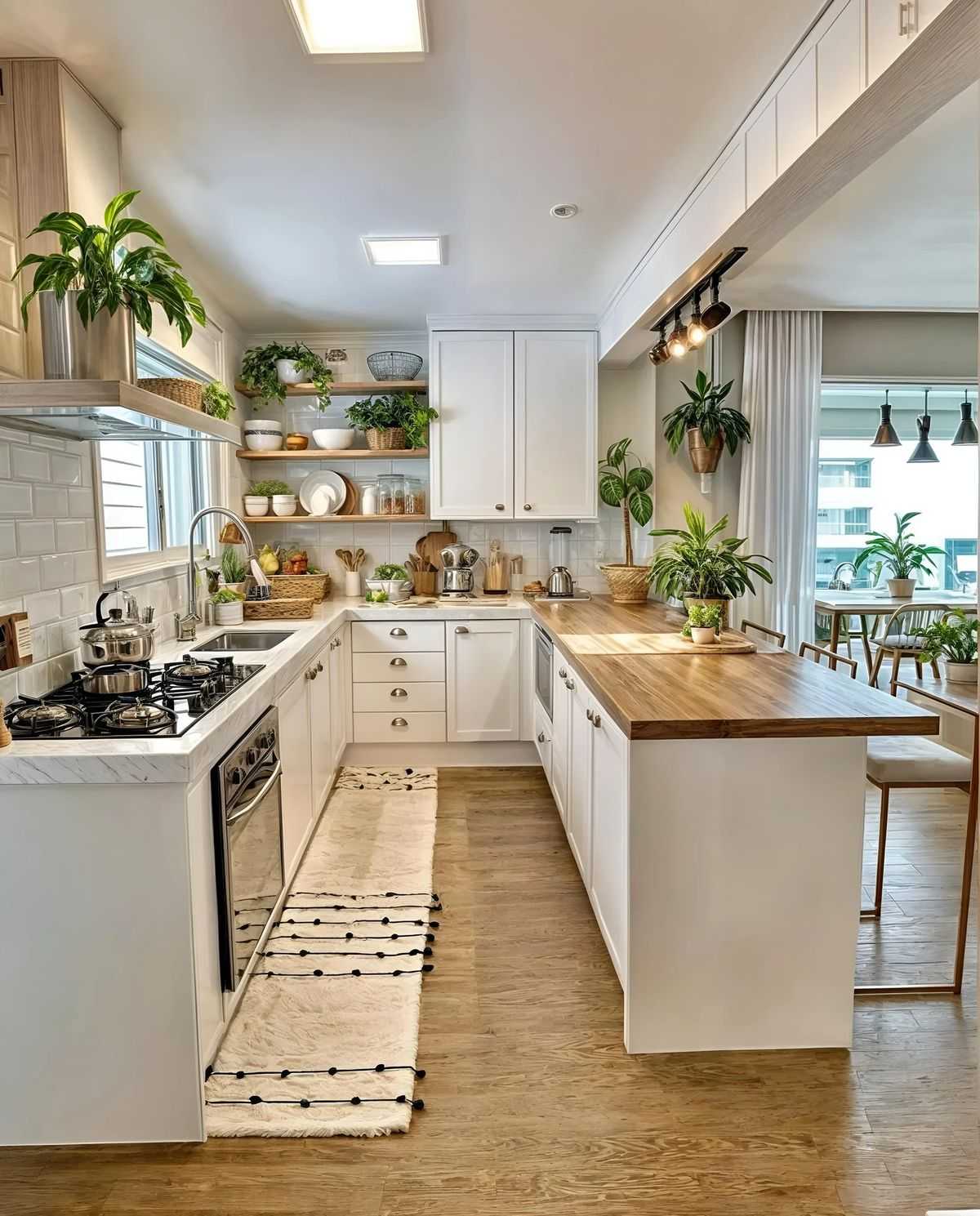
One of the enduring hallmarks of the farmhouse kitchen is white-painted cabinetry. But the trend now leans into texture rather than just color. Rather than flat, smooth surfaces, you’ll find:
- Shaker-style doors with subtle grooves and paneling that cast soft shadows.
- Paint finishes that allow the grain of the wood to show through slightly, giving depth.
- Slightly off-white tones—think warm cream, soft eggshell—rather than harsh bright white.
From an architect’s perspective, white opens up the room, maximizes light reflection, and gives a crisp backdrop for everything else. It’s a blank canvas. As an interior designer, I love that texture adds character: you don’t need loud hardware or bold colors because the cabinet itself whispers design. It’s quiet, but it says, “This space matters.”
What makes this trend go everywhere is its versatility. Whether you’re in a country cottage or a modern loft converted to a farmhouse vibe, textured white cabinetry bridges styles.
2. Open Shelving with Curated Displays
Open shelving used to be reserved for ultra-modern kitchens. Now it’s a staple in farmhouse styles—yet with a twist. Instead of random displays, the current trend is about curated collections:
- A mix of vintage china, woven baskets and ceramic ware in soft tones.
- A couple of pots with fresh herbs, perhaps some cookbooks with worn edges.
- Shelf supports in black iron or subtly aged brass for that touch of industrial.
From a designer’s view, open shelving breaks up the monotony of upper walls. It invites the eye, makes the kitchen feel lived-in and accessible. But the curation is key: if everything is scattered, it becomes clutter. When thoughtfully arranged, open shelves feel personal and refined.
Architecturally, open shelving also reduces the feeling of heaviness. In rooms with high ceilings, it allows light to bounce and visually expands the space.
3. Mixed Metal Finishes
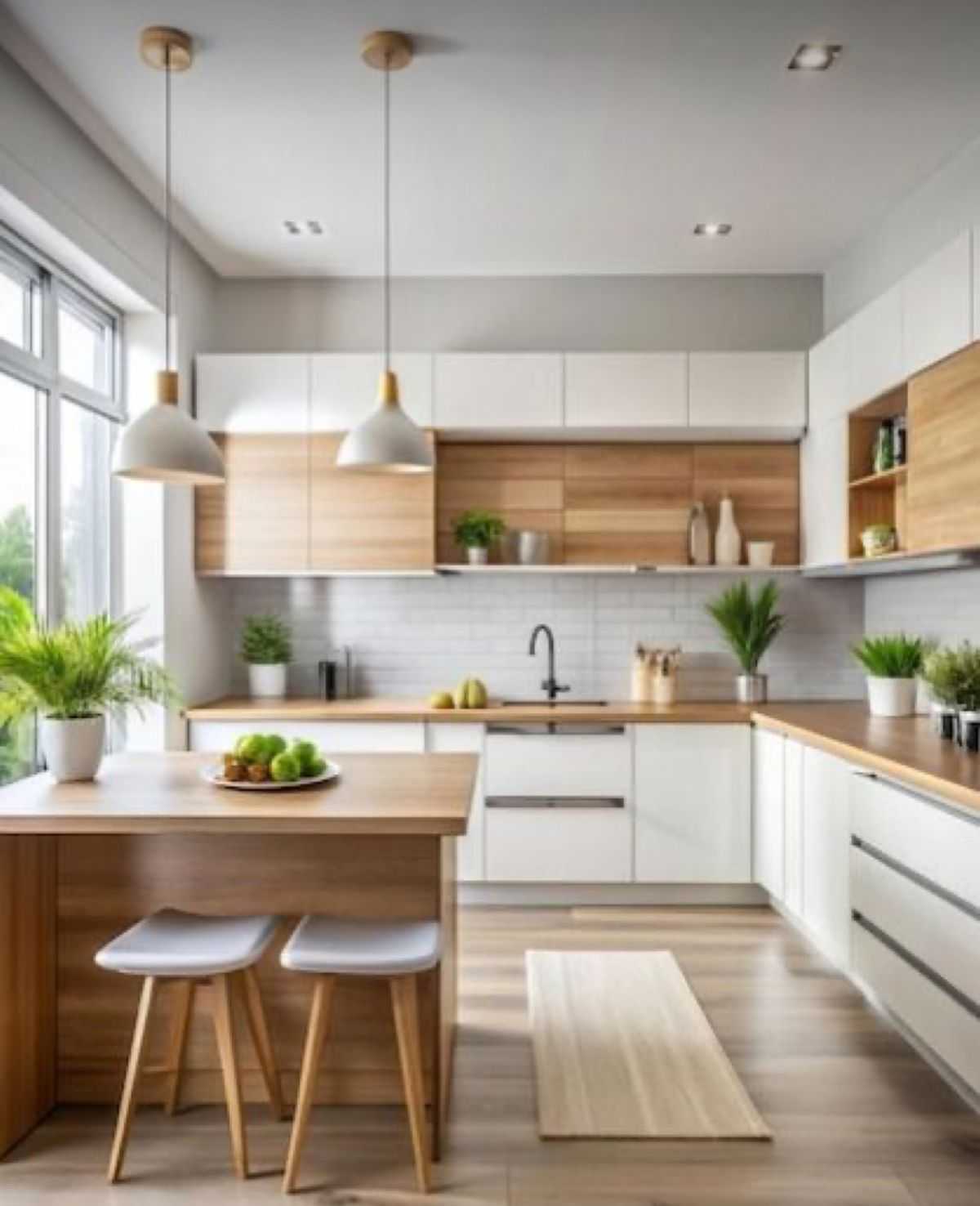
Gone are the days when all hardware, faucets and light fixtures had to match exactly. Farmhouse kitchens are embracing mixed metals—but not randomly. There’s an undercurrent of intention.
- A matte black faucet paired with aged brass cabinet pulls.
- A copper pendant light above the island, with chromed appliances beneath.
- Visible metal brackets or exposed rivets to hint at craftsmanship.
Why does this resonate? Because it mirrors the reality of farmhouse life: heirloom pieces, different finishes gathered over time, worn yet timeless. From a materials palette perspective, mixing metals adds depth and avoids the “matchy-matchy” feeling. As an interior decorator, I often suggest choosing one dominant finish (say, brass) and 1–2 accents (black or copper). That way, it feels cohesive, but rich.
This trend will appear everywhere because it bridges old and new: it suggests authenticity (aged brass) and freshness (matte black or chrome).
4. Bold Undermount Sinks and Farmhouse Apron Fronts
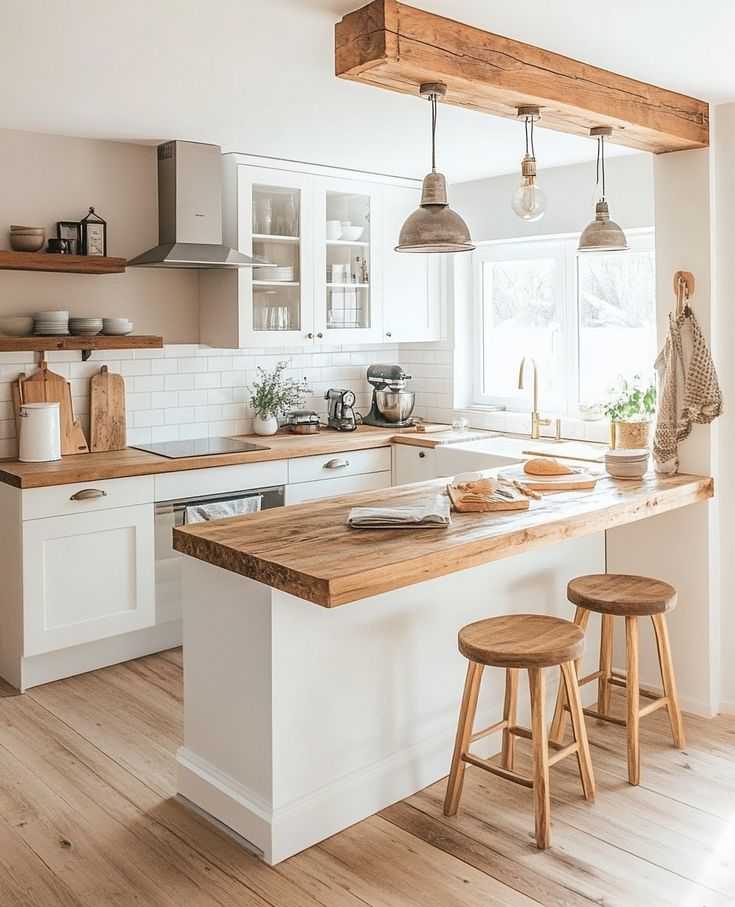
In many farmhouse kitchens, you’ll spot one bold visual anchor: the sink. And the trend is leaning into statement sinks with a strong presence.
- Large single-bowl undermount sinks in crisp white fire-clay.
- Apron-front sinks in matte black or deep navy as a dramatic counterpoint.
- Integrated drain boards or ribbed sides for practical charm.
From an architectural standpoint, the sink is often in the heart of the kitchen triangle, so making it visually strong gives the space a center of gravity. From an artistic view, the apron front introduces a structural line that draws you in.
The farmhouse apron sink itself is an icon, but the new variation—bold color, dramatic size—makes it feel fresh. Expect to see these surfaces in kitchens seeking character rather than just function.
5. Natural Materials and Imperfections
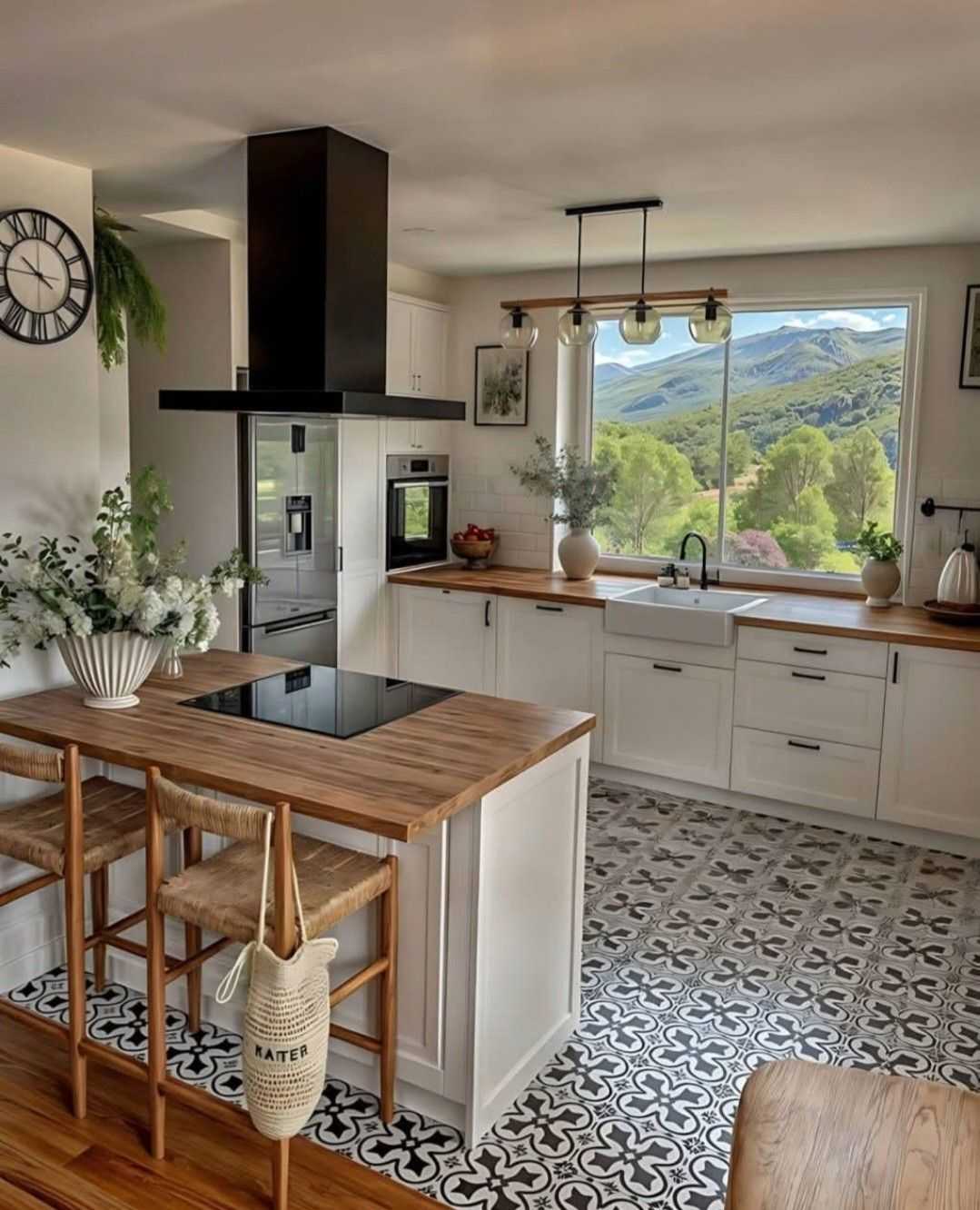
Farmhouse kitchens are always about materiality: wood, stone, hammered metals, woven textures. The current trend pushes this further by embracing imperfections.
- Live-edge wooden shelves or islands showing knots and grain.
- Reclaimed timber beams or braces on range hoods, showing wood color variation.
- Stone countertops with visible veining, tiny fissures, or filled pits.
As an architect working with builders, I’ve seen that these imperfections tell stories. The wood might have come from an old barn. The stone carries the history of the quarry. This sense of story brings depth and authenticity.
From an interior design lens, perfection can feel cold. A pristine, flawless surface can look manufactured. When you allow character—small cracks, natural color shifts, slight warping—you get warmth. Expect these materials to dominate kitchens that want to feel homey and rooted.
6. Graphic Tile Backsplashes and Patterns
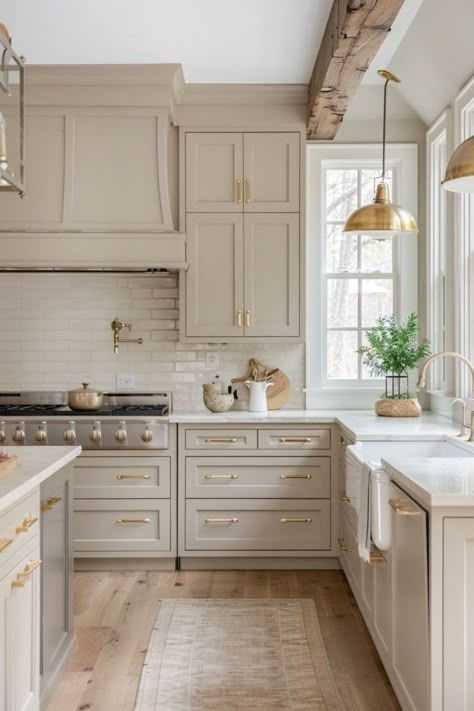
While white subway tile remains a standby, more farmhouse kitchens are turning to graphic patterns for the backsplash or floor. This introduces an element of surprise.
- Hexagonal tiles in matte charcoal or muted olive laid in a honeycomb pattern.
- Hand-painted terracotta or Moroccan-inspired tiles behind the cook-top zone.
- Chevron or herringbone patterns in soft glazed white that catch the light at an angle.
From a designer’s standpoint, this is the moment to inject personality. The rest of the kitchen may lean neutral, so the patterned tile becomes a focal point—like a piece of art. Architecturally speaking, it gives visual rhythm and can highlight functional zones (like cooking or washing areas).
This trend spreads because it’s relatively low-cost to swap tile patterns compared to redoing everything. It gives instant flair without overwhelming the farmhouse’s calm.
7. Cozy, Functional Zones & Hidden Storage
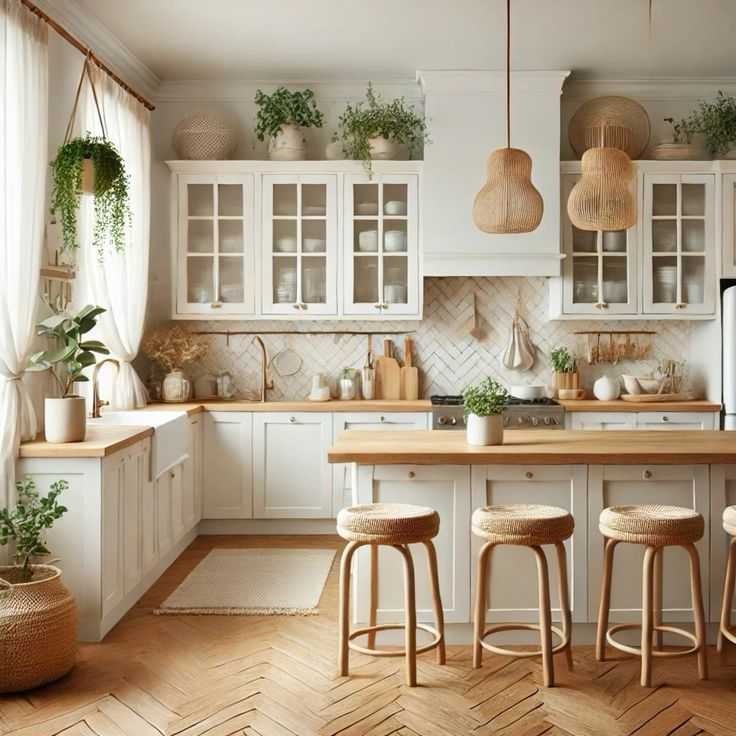
One thing that differentiates good design from great design is how usable a kitchen is. In farmhouse kitchens, the trend is toward zoned spaces and hidden functionality.
- A walk-in pantry with a sliding barn door, mixing open shelves and closed cabinetry.
- A dedicated coffee bar or baking niche tucked into a corner.
- Drawers for installing spice racks, utensil trays, and recycling bins—all seamlessly integrated.
From an architect’s perspective, zoning respects workflow: prep, cooking, cleaning, storage each have their place. From an interior decor perspective, this is about comfort and ease: you don’t want to search for things or feel cluttered.
Hidden storage (appliances behind doors, pull-out shelves) preserves the clean lines of the kitchen while delivering practicality. In a farmhouse kitchen, where design cues often refer to rustic simplicity, this layering of utility behind the scenes keeps the visible space relaxed and refined.
Bringing It All Together
When you observe a well-designed farmhouse kitchen incorporating these trends, the result is cohesive. You may see textured white cabinets, open shelves showing curated objects, mixed metals, a bold sink anchoring the space, natural materials, a graphic tile backsplash, and zones of hidden storage that keep daily tasks flowing.
As an interior designer, I always begin with three anchors: material palette (wood, stone, metal), lighting (warm, layered), and focal pieces (sink, range hood, backsplash). Then I weave in the accents: vintage finds, crafted objects, textiles. The farmhouse aesthetic thrives because it invites layering—not loud, but layered.
From an architectural angle, it’s about proportion, light and structure. High ceilings with exposed beams, large windows letting in daylight, a well-scaled island—these ensure the room doesn’t feel like a styled set, but a lived space. The design holds up under the reality of meal prep, family moments, gatherings.
As you plan your own kitchen or consider refreshing one, think of these trends not as rigid rules but as ideas you can adapt:
- Choose the white cabinet tone that reflects your light and mood.
- If you want open shelving, begin with one wall, carefully choose what you display.
- Mix metals carefully: one dominant, one accent.
- Pick a sink that feels like a centerpiece.
- Let materials bring imperfections because they bring soul.
- Use pattern judiciously—just enough to surprise, not overwhelm.
- Map out zones before you choose finishes; function comes first.
Farmhouse style was always about warmth, tradition and utility. These seven trends push those qualities into something modern, personal, enduring. Whether you’re building from scratch or just refreshing your space, you’ll find these ideas everywhere because they work: beautiful to live in, built to last, and rich in character.


No Comments