
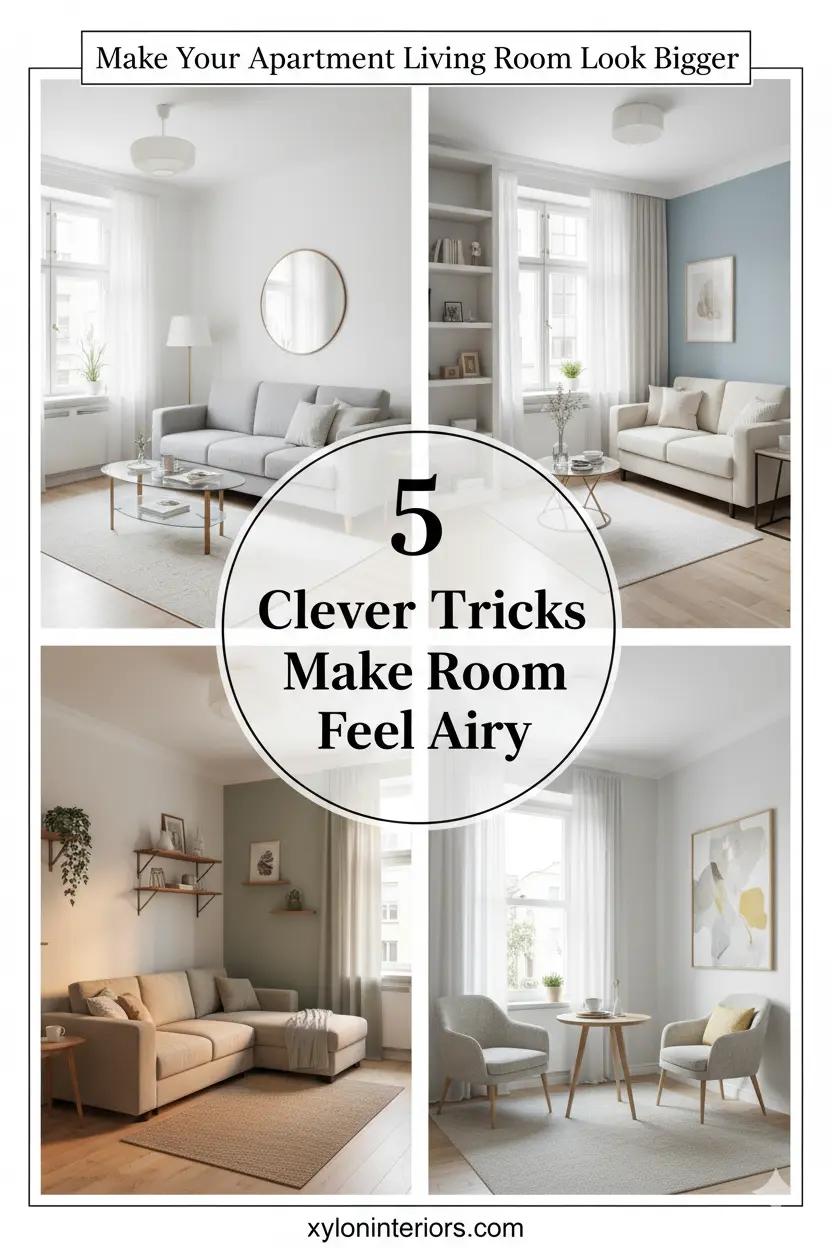
There is nothing quite as frustrating as a living room that feels like it keeps shrinking around you. One moment you are trying to fit in a work-from-home desk, the next you are wondering where the guests will sit. City apartments do not give us generous square footage, yet they are expected to perform as lounge, office, dining room, play zone, and sometimes even gym. The good news? You do not have to knock down walls to make your apartment living room look bigger. A few thoughtful shifts can fill the room with air and breathing space.
I have spent the last fifteen years helping families and renters carve out comfort in tight quarters. Every time someone says, “I finally feel like I can exhale in here,” the secret almost always comes down to the same five moves. Let’s walk through them together.
Quick Overview: The Five Moves in a Nutshell
- Let the light travel. Maximize daylight and supplement it with layered lamps so shadows do not carve up the room.
- Choose furniture that breathes. Slim legs, lower backs, and glass tops keep the floor visible and the sightline clear.
- Paint with purpose. A strategic color palette can visually push the walls apart and lift the ceiling.
- Tuck clutter out of sight. Hidden storage controls the visual noise that makes a space feel stuffed.
- Use mirrors and transparent surfaces. They bounce light, reflect space, and trick the eye into thinking the room keeps going.
Let’s break each idea down with practical, budget-friendly steps you can apply this weekend.
1. Let the Light Flow Freely

Start with the windows
Daylight instantly enlarges a room, but most apartments come with heavy blinds or bulky drapes. Swap them for sheer curtains or light cotton panels. Hang the rod as close to the ceiling as possible and extend it 6–8 inches beyond each side of the window frame. The fabric stacks off the glass, the window looks wider, and the ceiling feels higher.
Layer your lighting
Relying on a single overhead fixture drops shadows into corners, shrinking the room after sunset. Add:
- A floor lamp behind the sofa to push light upward and outward.
- Table lamps on side tables set at eye level to soften faces and walls.
- LED strip lighting under floating shelves for a subtle glow.
“Good lighting quietly erases boundaries. You do not notice the walls, you notice how comfortable you feel.” — a lesson passed to me by a senior designer during my first internship
If you rent and cannot install new wiring, choose plug-in sconces or battery-operated picture lights. They add height to the lighting plan without drilling big holes.
2. Choose Furniture that Breathes

Mind the scale
Oversized sectionals swallow precious square footage. Aim for a sofa that leaves at least 18 inches between its arms and the walls. If you love deep seating, balance it with slimmer chairs across the room.
Look for legs
Furniture that sits on tall, tapered legs shows more floor. The uninterrupted plane tricks the eye into believing the room is larger. Mid-century styles, hairpin legs, or even simple wooden blocks can do the trick.
Think multipurpose
- Nesting tables instead of a fixed coffee table give you flexibility; pull out the smaller ones for guests, tuck them away later.
- An ottoman with a tray top doubles as footrest and coffee table, then opens up for storage.
- Wall-mounted desks fold down when you need them and disappear when you do not.
Whenever possible, leave a little breathing room between furniture and walls—four inches can make the layout feel deliberate rather than cramped.
3. Paint and Palette That Pushes Walls Out

Light, but not always white
Yes, pale colors help a room read as spacious, yet stark white can sometimes flatten an apartment living room, especially one with limited natural light. Consider a soft gray-green, warm beige, or muted blush with a light reflectance value (LRV) above 60. These hues still bounce daylight but add depth.
Blend the trim
Painting baseboards, window casings, and even doors the same color as the walls erases visual boundaries. Suddenly you have one continuous surface instead of frame-within-a-frame lines chopping up the walls.
Push the ceiling up
Paint the ceiling the palest tint of your wall color. The subtle shift draws the eye upward without creating a harsh stop between walls and ceiling.
Create optical stripes
If your living room is long and narrow, paint the shorter walls a slightly darker shade to pull them forward. For a low ceiling, vertical stripes—painted or added with narrow wood lath—can elongate the height. Tape, level, patience, and a weekend are all you need. Every renter I know who has tried this said the payoff was worth the effort when it came time to make your apartment living room look bigger.
4. Master the Art of Hidden Storage

Fight clutter, not square footage
A small space feels tight mainly because every item is on display. Controlling the visual noise does wonders for perceived size.
- Baskets under open consoles. They swallow magazines, toys, or extra throws while still looking intentional.
- Slim cabinets with doors. Even a 12-inch-deep cabinet can host board games or dishware yet hug the wall.
- Floating shelves above doorways. Great spot for infrequently used books or décor while leaving floor clear.
- Window seat with flip-up lid. If your living room has a bay or just a straight window, a simple plywood bench pad can add hidden storage for shoes or seasonal pillows.
Renters often worry about drilling into walls. Use removable adhesive hooks rated for heavy weight or look for freestanding ladder shelves that lean on the wall for vertical storage without hardware.
5. Mirrors and Glass — Your Secret Allies

Mirror placement matters
Hang a large mirror directly across from a window to reproduce the view and light. In a darker corner, angle the mirror slightly toward the light source instead of hanging it flat. You gain brightness without glare.
Multiple small mirrors
Cannot commit to a big slab of glass? Create a salon wall with mismatched small mirrors. The pattern becomes art while scattering light in different directions. Keep the frames in one tone to avoid visual clutter.
Glass and acrylic furniture
A clear coffee table or acrylic side chair occupies the same footprint as its opaque cousin yet virtually disappears. If you already own a solid table, add a mirrored tray on top to bounce light upward.
The mirrored and transparent surfaces create what I call “borrowed square footage.” They give you the sense that space exists where furniture technically sits.
Pulling It All Together
When you combine these five moves—light, airy furniture, smart color, hidden storage, and reflective surfaces—you create a layered strategy that consistently works to make your apartment living room look bigger. You do not need to spend thousands or live with contractors for weeks. Most of these changes rely on intentional choices at eye level, lamp level, and floor level.
You may want to tackle them one at a time. Swap curtains first, then rearrange furniture. When you are ready for paint, test large swatches to see how light changes the hue. Add a mirror you love rather than the first one on sale. The process can be gradual and still deliver the same airy result.
One Last Encouragement
Homes are meant to serve the people living in them, not the other way around. If a step feels too complicated, skip it for now. Start with what feels doable and build momentum from there. Many readers of Xylon Interior share that the moment they removed heavy drapes or raised the curtain rod, the entire room lifted. Small wins add up quickly.
You deserve a living room where you can kick off your shoes, stretch your legs, and feel the day’s tension melt away. A few intentional tweaks will hand that feeling back to you, no renovation required.




No Comments