
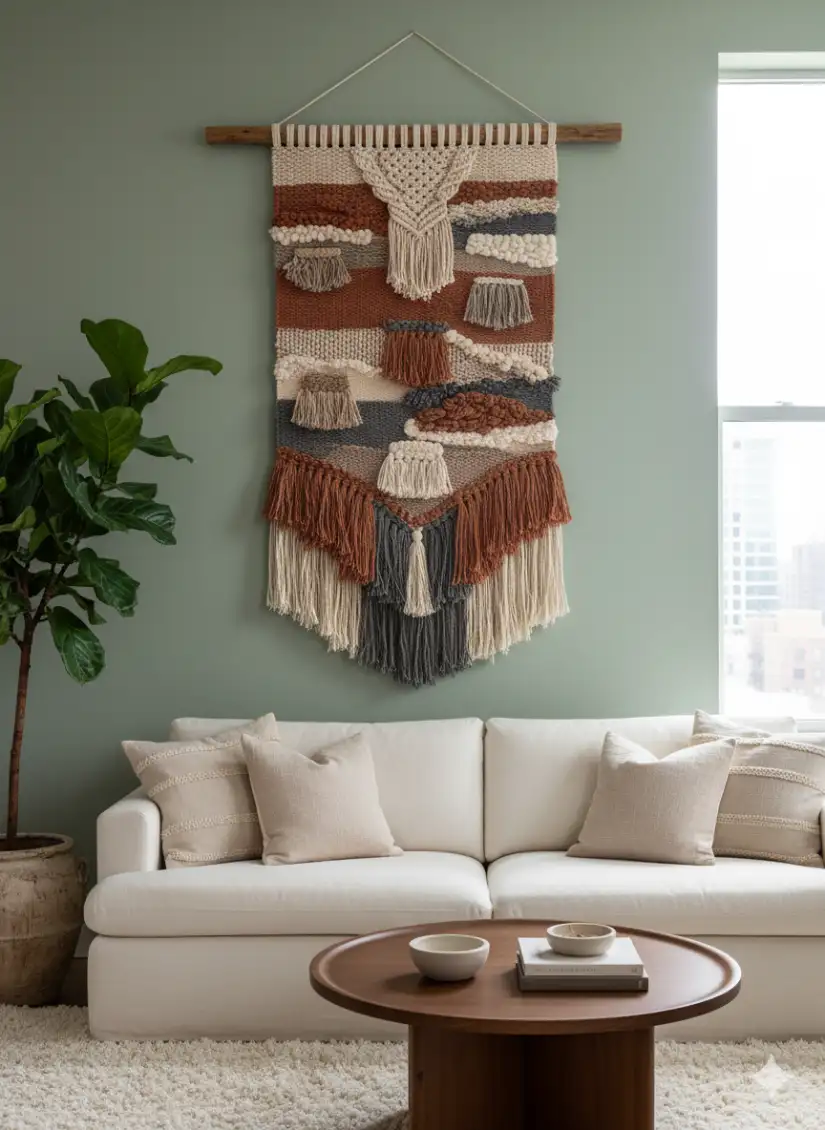
When people ask me how to make their living room feel more “finished,” I usually point them straight to the walls. Artistic wall concepts don’t just add decoration; they shape how the whole room feels the moment someone walks in. And honestly, most homeowners underestimate how much potential those big blank surfaces have.
This list goes through a mix of ideas I’ve used in real projects, along with a few that I always suggest when someone wants something interesting but still livable. Think of it as a menu of options you can actually picture in your own home, nothing overly complicated or impossible to pull off.
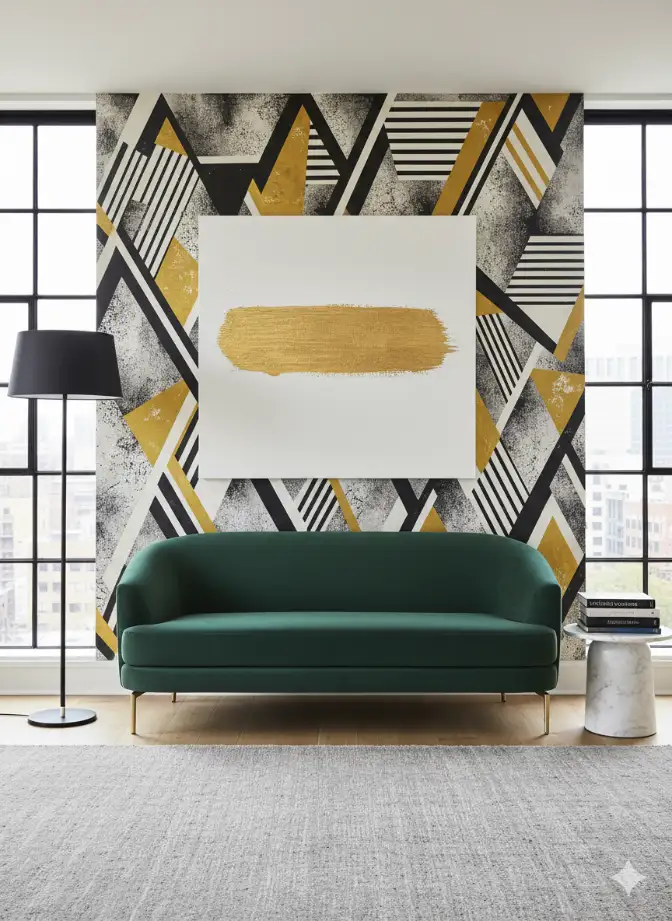
1. Using oversized canvas art to anchor the entire living room

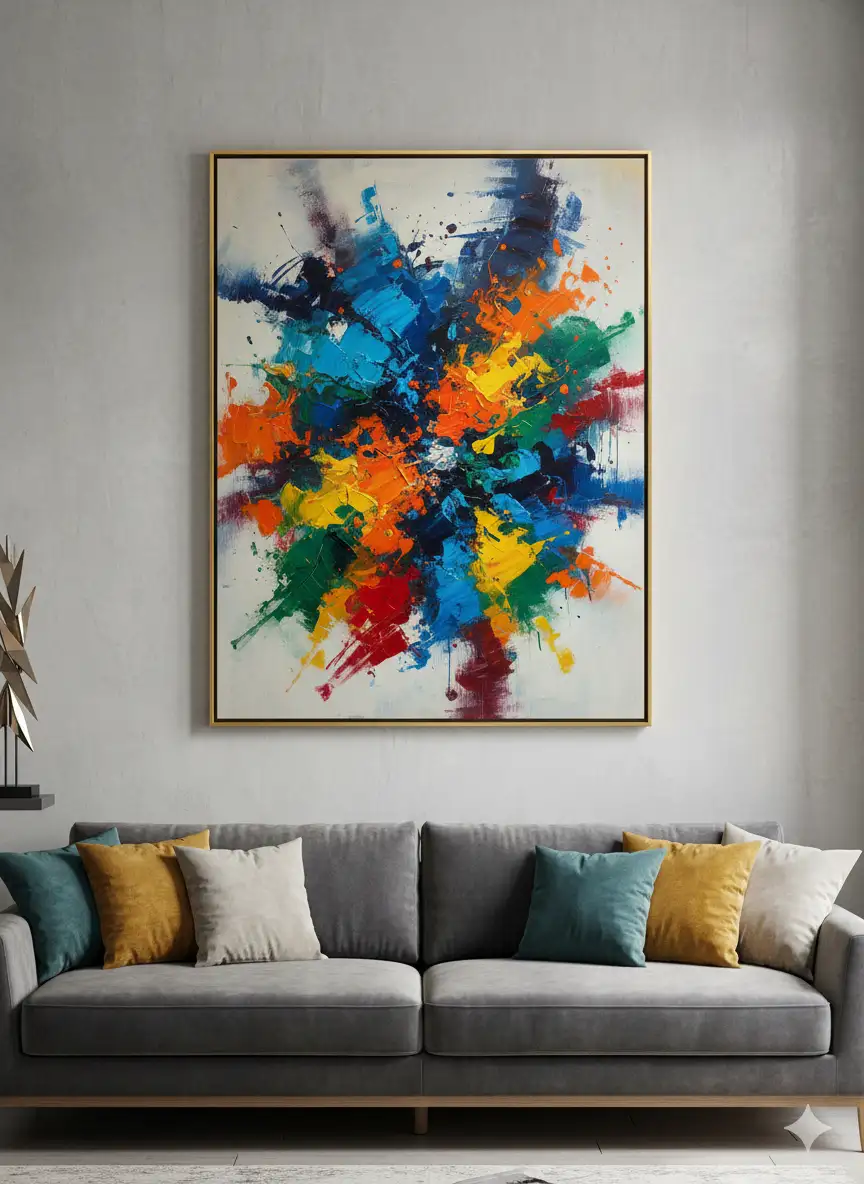
I’ve used oversized canvas pieces in a lot of spaces where the wall felt too large to break up with smaller frames. A single big piece has a calm, grounding effect, especially if your furniture layout is already busy. You don’t need anything overly dramatic, just something with color or texture that works with your sofa and rug. If the room has neutral tones, try one bold piece to pull everything together. And if you’re worried about commitment, a stretched canvas is lightweight and easy to swap later. It’s one of those simple moves that changes the whole room without much effort.
2. Letting a bold, textured accent wall become the room’s quiet showpiece

A textured accent wall can do a lot of heavy lifting without being loud. I’ve used things like brushed plaster, soft concrete finishes, or even rougher textures when the space needed a bit of grit. The trick is choosing a tone that feels a step richer than your main wall color. It’s subtle but noticeable. This works especially well behind a sofa or on the wall you see first when you walk in. If you’re trying it for the first time, start with a muted clay or gray-green; they tend to behave well in most lighting.
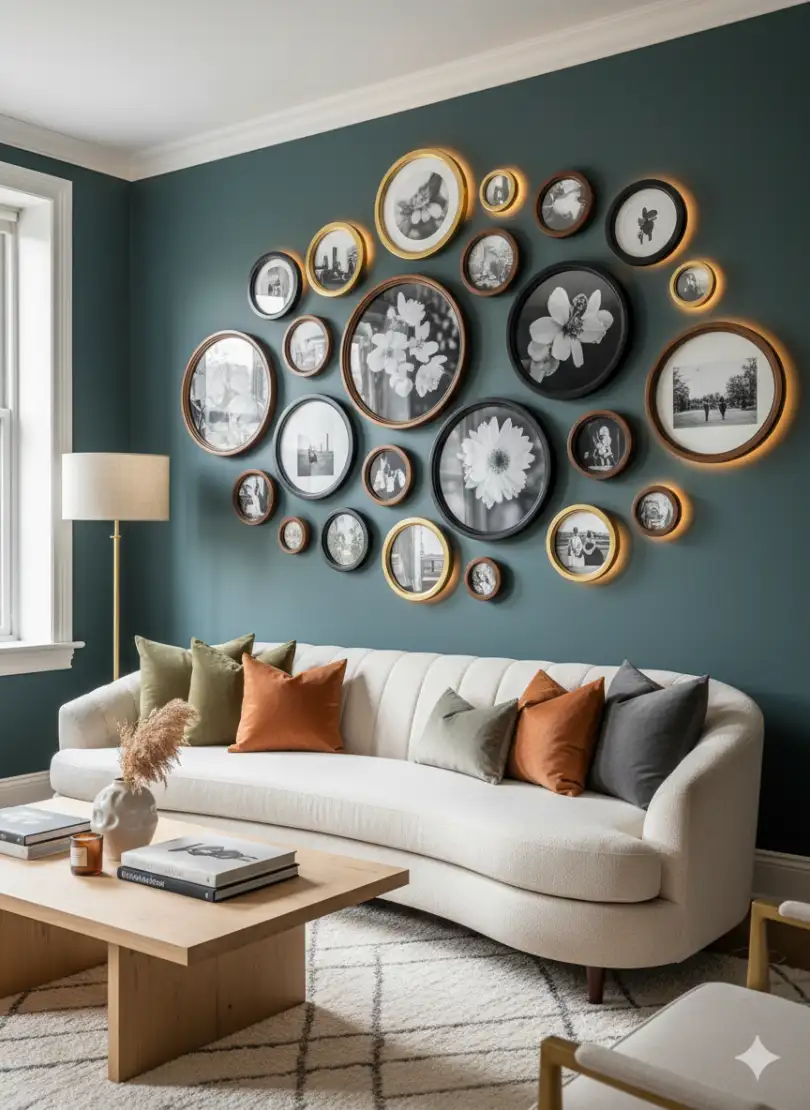
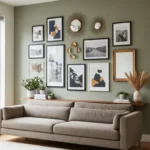
3. Creating a gallery wall that mixes old family pieces with modern prints

Gallery walls don’t have to look overly curated. In fact, the best ones feel like they grew naturally over time. I like mixing family photos with random art prints, sketches, or even small souvenirs someone kept tucked away. Using similar frame tones helps everything feel connected, even if the pieces are totally different styles. Lay everything out on the floor before hanging so you can play with spacing. And don’t worry if it’s not perfectly symmetrical, slightly uneven layouts feel more personal.
4. Bringing in a large sculptural wall piece for depth and shadow

Sculptural wall art is great when you want something interesting but not busy. I’ve used ceramic disks, carved wood panels, or metal pieces that cast interesting shadows as the light changes during the day. They work well on big blank walls that need presence but not a lot of color. Just make sure whatever you choose isn’t too heavy; some of those pieces need proper wall anchors. And if you have directional lighting, even better; it makes the textures stand out.
5. Using wood slat paneling to warm up a blank wall
Wood slat panels have been popping up everywhere, and honestly, they deserve the attention. They instantly add warmth and structure without looking bulky. I’ve put them behind TVs, along entry walls, and in living rooms that felt a bit too “new build.” Oak or walnut slats both look great, depending on the room’s palette. Just keep the spacing consistent and let the natural grain do the work. Even a single vertical strip can make the wall feel more intentional.
6. Playing with plaster or limewash for a soft, lived-in texture

Limewash is one of those finishes that looks fancy but feels surprisingly relaxed once it’s up. It gives the wall a cloudy, hand-touched texture that photographs never fully capture. I usually recommend it for rooms that need a bit of warmth without adding more decor. It’s especially nice in soft neutrals, warm beige, dove gray, and muted blues, all work well. If you try it yourself, don’t stress about perfection; the unevenness is what makes it charming.
7. Adding floating ledges to rotate art without committing to a layout

Art ledges are my go-to when someone likes to switch things up a lot. They’re basically long floating shelves made for leaning frames, and they look great even with just a few pieces. You can layer frames, add small sculptures, or tuck in plants for color. The best part is being able to change the arrangement whenever you feel like it. Suppose your sofa wall is tricky to decorate. In that case, ledges make it easier because you don’t have to measure and re-measure nail placements.
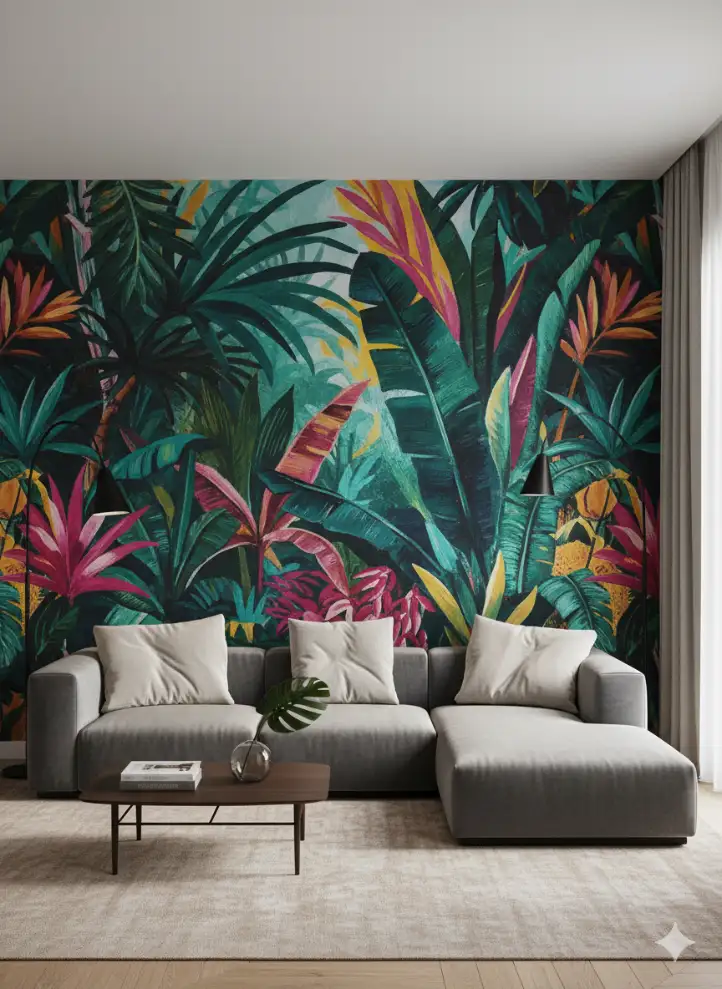
8. Trying a full-wall mural that feels more like a backdrop than a statement

Murals don’t need to look like a scene or a giant painting. Some of the nicest ones I’ve seen are soft, abstract designs that feel more like a textured wash. They tend to work best on a wall without too much furniture blocking it. I’ve used murals in living rooms where the homeowners wanted something artistic but calm, nothing they’d get tired of. If you pick a design with earthy tones or a watercolor-like fade, it becomes more of a mood than a focal point.
9. Installing picture frame molding for a classic but relaxed look

Picture frame molding brings a bit of structure to walls that feel plain, especially in newer homes that lack architectural detail. I often paint the molding the same color as the wall, so it blends in without feeling formal. It gives the wall just enough texture to make the artwork look more purposeful. If you’re handy, you can DIY it with simple trim pieces from the hardware store. Keep the shapes simple; large squares or rectangles tend to look the most timeless.
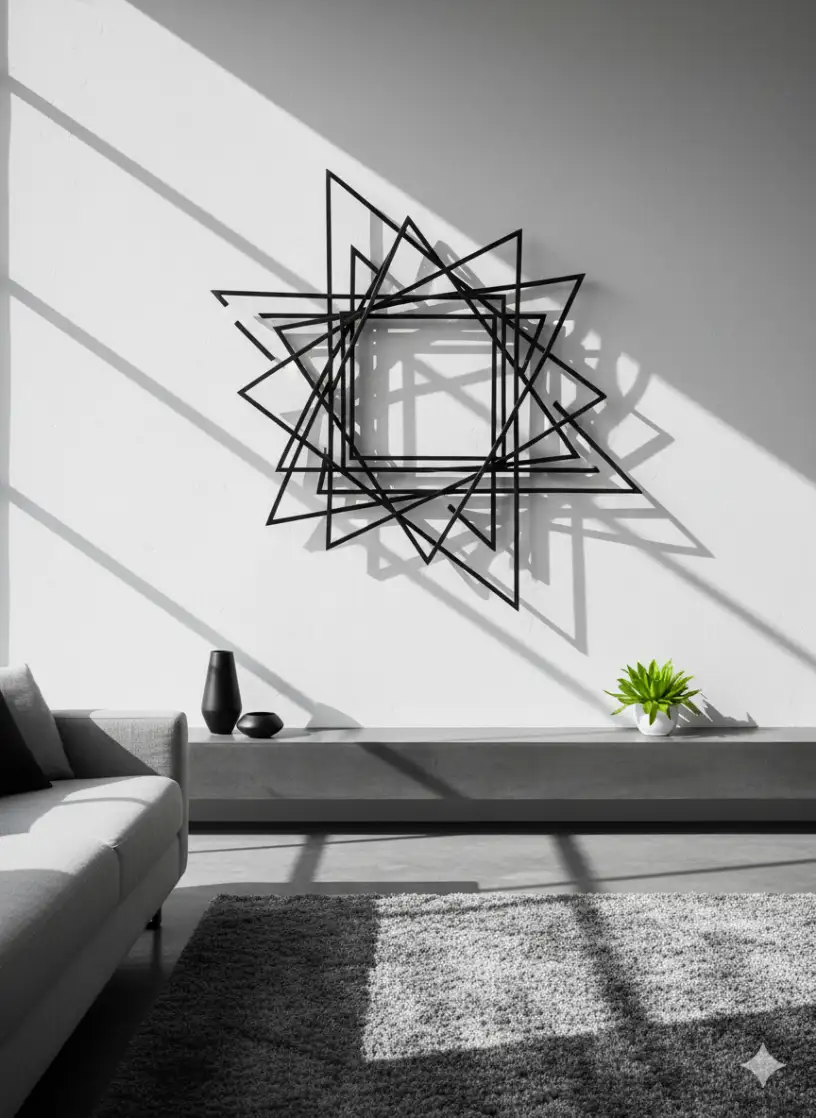
10. Using metal artwork or thin iron frameworks for an industrial edge

Metal pieces work well when the room needs a bit of contrast or something that balances softer textures like fabric sofas or boucle chairs. I’ve used thin iron grids, abstract metal shapes, or simple black wire pieces to add a grounded, architectural touch. They’re great on walls with lighter paint colors because the shapes stand out clearly. Just make sure the metal tone matches other details in the room; black hardware, light fixtures, or window frames help tie it all together.
11. Mixing fabric panels or tapestries to soften the room acoustically
Fabric pieces are surprisingly helpful in living rooms that feel echoey or too open. A textile on the wall absorbs sound and adds a softer layer visually. I’ve used linen panels, woven textiles, and even old rugs with interesting patterns. They bring a relaxed, cozy quality without adding clutter. If you have a long, hard-surfaced room, this is worth trying. Just keep the fabric secure so it hangs flat and doesn’t sag over time.
12. Designing a built-in bookshelf wall that doubles as decor

A built-in bookshelf instantly turns the wall into something functional and interesting. I’ve seen homeowners fill them with a mix of books, art, and little personal objects, which always ends up looking more curated than they expect. It’s a good solution for families because the shelves naturally evolve over time. If you’re planning one, don’t be afraid to vary the shelf heights; you want room for taller items like vases or framed prints. Lighting inside the shelves is a nice bonus if the budget allows.
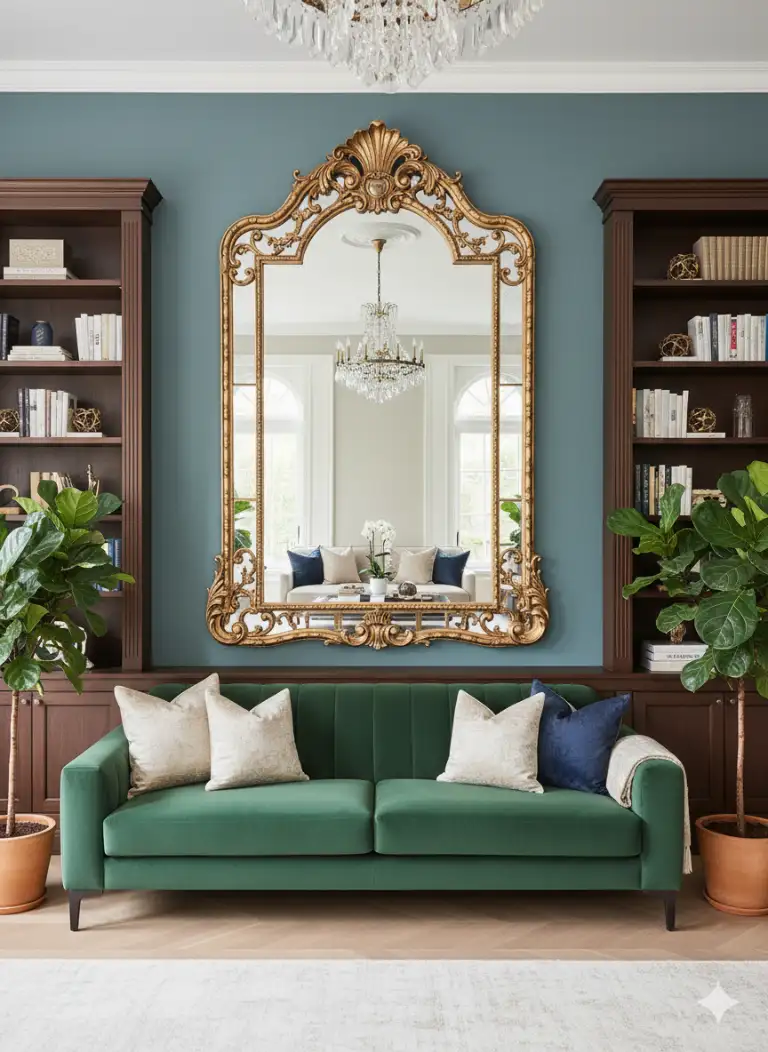
13. Hanging an oversized mirror to bring in light and dimension
Large mirrors are great for living rooms that feel a little tight or dark. I often place them opposite windows to bounce light around. A simple wood or thin metal frame keeps it from feeling too glam unless that’s the look you want. Leaning a big mirror against the wall works too, especially if you prefer something casual. Just keep in mind what the mirror will reflect, you want it to bounce back something you like looking at.
14. Using woven baskets or handmade pieces for a natural, grounded feel

Woven wall pieces add warmth without much effort. I’ve hung sets of baskets in different sizes or used one oversized woven piece as a focal point. The natural texture works well with wood flooring, neutral sofas, and greenery. It’s also a nice option if you want something lightweight and easy to rearrange. If you’re styling multiple baskets, start with the largest piece and build outward so the grouping feels balanced.
15. Mounting plants or a vertical garden for a softer, greener focal point

Plants on the wall instantly make a room feel alive. I’ve used narrow wall-mounted planters or simple brackets that hold pots securely. This works especially well in living rooms that get decent natural light but don’t have floor space for bigger plants. Choose varieties that drape a little, pothos, ferns, and trailing philodendrons, because they soften the edges of the wall. Just make sure the planters have a way to catch excess water so you’re not dealing with drips.
16. Adding a tiled or stone-clad feature wall behind the sofa

A stone or tile wall brings texture that’s different from anything paint can provide. I’ve used stacked stone, subtle limestone tiles, and even smooth terrazzo panels. They create a solid backdrop for the seating area without feeling busy. This idea works best when the other walls stay simple, so the stone becomes the room’s quiet focus. If you’re choosing tile, look for something with a matte finish; it tends to feel warmer and less harsh.
17. Trying a color-blocked wall in two soft, earthy tones

Color-blocking can be fun without being overwhelming. I’ve done horizontal blocks that mimic wainscoting or vertical blocks that make a low ceiling feel taller. Soft earthy tones, like clay with beige or muted olive with cream, tend to look the most natural. The edges don’t have to be super sharp; sometimes a slightly feathered line feels more inviting. It’s an easy way to get color into the room without fully committing to one shade.
18. Using wall sconces as decorative objects, not just lighting
I love using sconces as part of the wall decor, especially on either side of a sofa or over a reading corner. The right sconce adds warmth and a bit of shape to the wall, even when it’s off. I often choose fixtures with interesting shades, linen, metal, or glass, to tie in with the room’s textures. Hardwiring is nice, but plug-in versions work just fine if you don’t want to open the wall. Just keep the scale in mind so they don’t crowd the furniture.
19. Incorporating a long, low picture shelf with layered frames

A long picture shelf instantly makes the wall feel curated, even if you only place a few pieces on it. I’ve used this approach in homes where the owners like to collect prints but don’t want to hang everything permanently. Layering frames of different heights keeps the shelf from looking too stiff. You can mix in small objects, candles, a plant, or a small sculpture to break things up. It’s flexible, low-commitment, and works with almost any style of living room.
20. Mounting a group of small sculptural objects for a quiet artistic moment
I like using small sculptural pieces when a wall needs something interesting but doesn’t have the space for a big artwork. These might be ceramic shapes, carved wood objects, or even a set of handmade pieces you collected over the years. When they’re grouped together thoughtfully, they create a kind of mini installation that feels personal. Keep the spacing tight so the arrangement reads as one idea rather than scattered items. It works especially well near a reading chair or on a short wall that usually gets ignored.
Xylon Interiors – Redefining the Art of Interior Living
21. Bringing in reclaimed wood art or patchwork planks
Reclaimed wood adds a warmth you can’t really fake. I’ve used panels made from old floorboards, barn wood, or mixed leftover planks from renovation projects. The imperfections, knots, dents, and uneven tones give the wall a cozy, lived-in look. It pairs nicely with simple furniture and soft textiles, especially in rooms that feel a little too “new.” If you’re making a panel yourself, keep the planks in a simple pattern so the wood grain becomes the main focus.
22. Using thin shelves to display pottery or sentimental pieces
Shallow shelves are a great way to show objects you actually care about, small bowls, handmade vases, and travel finds. I’ve added these to a lot of living rooms where the homeowners wanted something meaningful but not cluttered. The shelves don’t need to be deep; a few inches is usually enough. Try mixing a couple of ceramics with something unexpected, like an old book or a tiny framed sketch. Just leave some breathing room so everything doesn’t feel squeezed together.
23. Hanging a large textile or rug as a wall feature
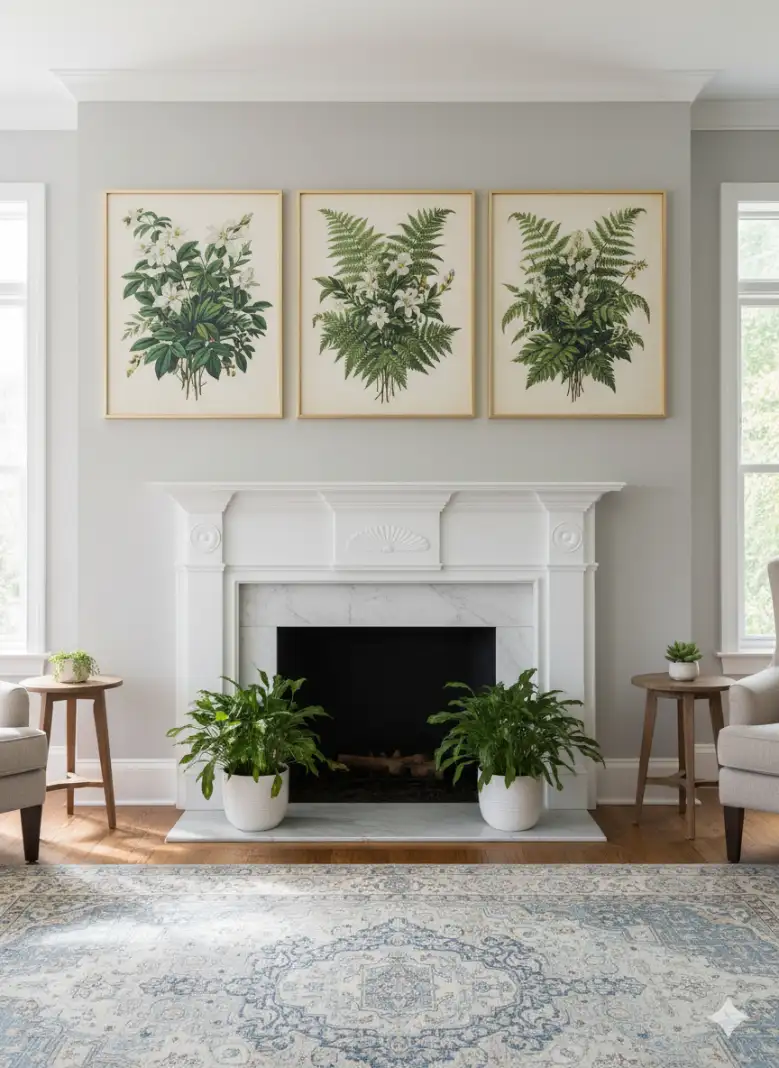
Textiles on the wall can make a room feel much more relaxed. I’ve hung flat-weave rugs, vintage blankets, and even modern woven pieces in spaces that needed warmth but couldn’t handle more furniture. The fabric adds color and texture without feeling heavy. It’s especially helpful in rooms with lots of straight lines or hard surfaces. Use a sturdy rod or hanger so the textile stays flat and doesn’t warp over time.
24. Trying geometric painted shapes for something playful but not loud
Sometimes a wall needs a bit of personality, and painted shapes are a low-pressure way to try something creative. I’ve done soft arches behind console tables and simple rectangular blocks to frame a seating area. Neutral or earthy tones keep things grounded, while still giving the room a little spark. The nice thing is you can paint over it if you ever get tired of the shape. Just sketch the outline lightly first so you know exactly where it will sit with your furniture.
25. Using vintage maps or architectural drawings as oversized wall art

Old maps and architectural sketches have a quiet charm that fits well in most living rooms. I’ve framed large-scale versions for clients who wanted something interesting but not too colorful. The neutral tones make them easy to pair with existing furniture. Look for pieces with a bit of aging or patina; they feel more authentic. A simple black or wood frame keeps the focus on the details of the drawing rather than the frame itself.
26. Designing a media wall that blends the TV into the decor

A TV wall doesn’t have to be the big black rectangle that steals the show. I usually frame the TV with built-ins, shelves, or dark-toned paint so it blends in a bit more. This makes the wall feel intentional rather than utilitarian. You can also place art or objects around the TV to soften its presence. The key is balancing the practical side, wiring, ventilation, and viewing height, with the aesthetic stuff. When it’s done right, the TV just becomes part of the bigger picture.
27. Installing a narrow ledge for leaning art instead of hanging it

Narrow ledges are perfect when you want a laid-back, layered look without committing to nails everywhere. I often use them in long hall-like living rooms or above sofas where hanging pieces feel too rigid. Leaning art gives you freedom to swap things out whenever you feel like it. Keep taller pieces in the back and shorter ones upfront so the arrangement feels natural. It’s one of those “easy wins” that always looks more intentional than people expect.
28. Mounting acoustic panels that look like modern art
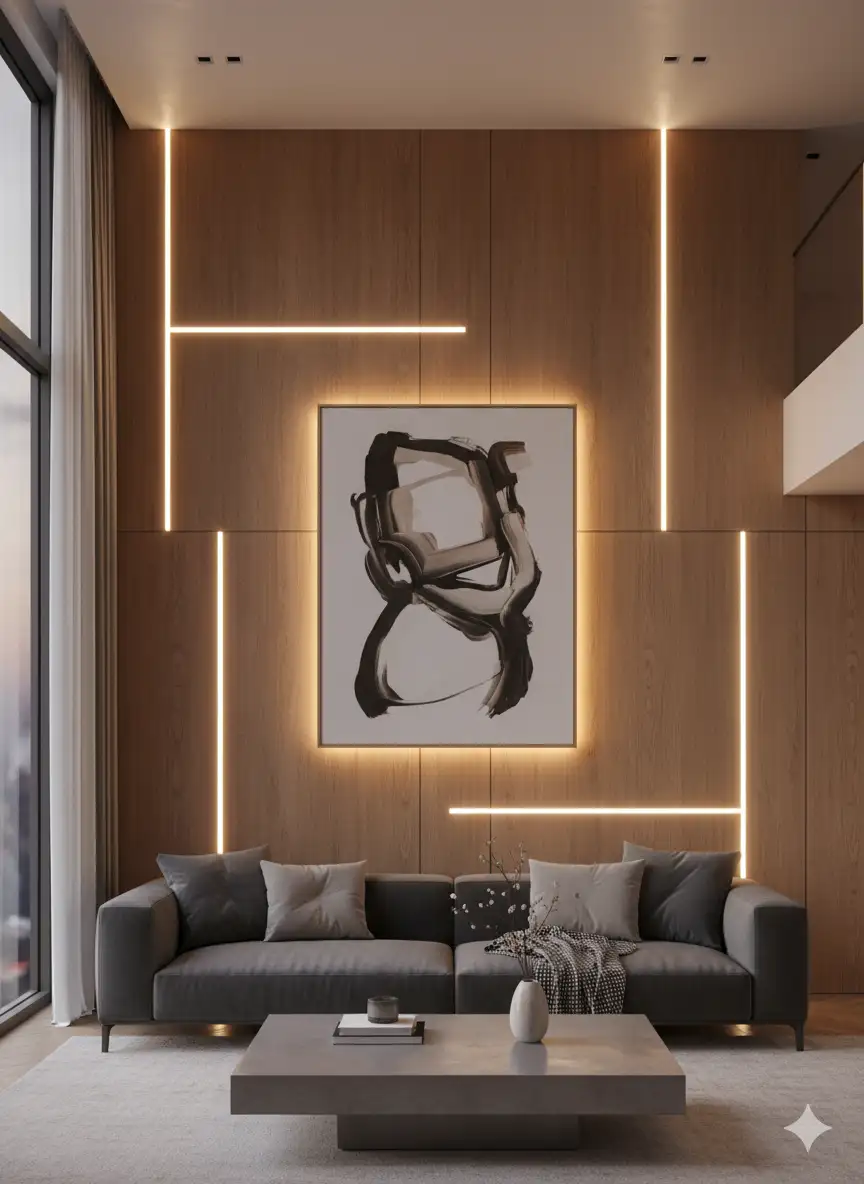
Acoustic panels don’t have to look technical. I’ve used fabric-wrapped panels and geometric designs that double as modern art while actually improving the sound in the room. This is especially helpful in spaces with high ceilings or lots of hard surfaces where echoes are an issue. Stick to muted colors or tones that match your furniture to keep the panels from standing out too much. Once they’re up, most people don’t even realize they’re functional; they just see interesting shapes.
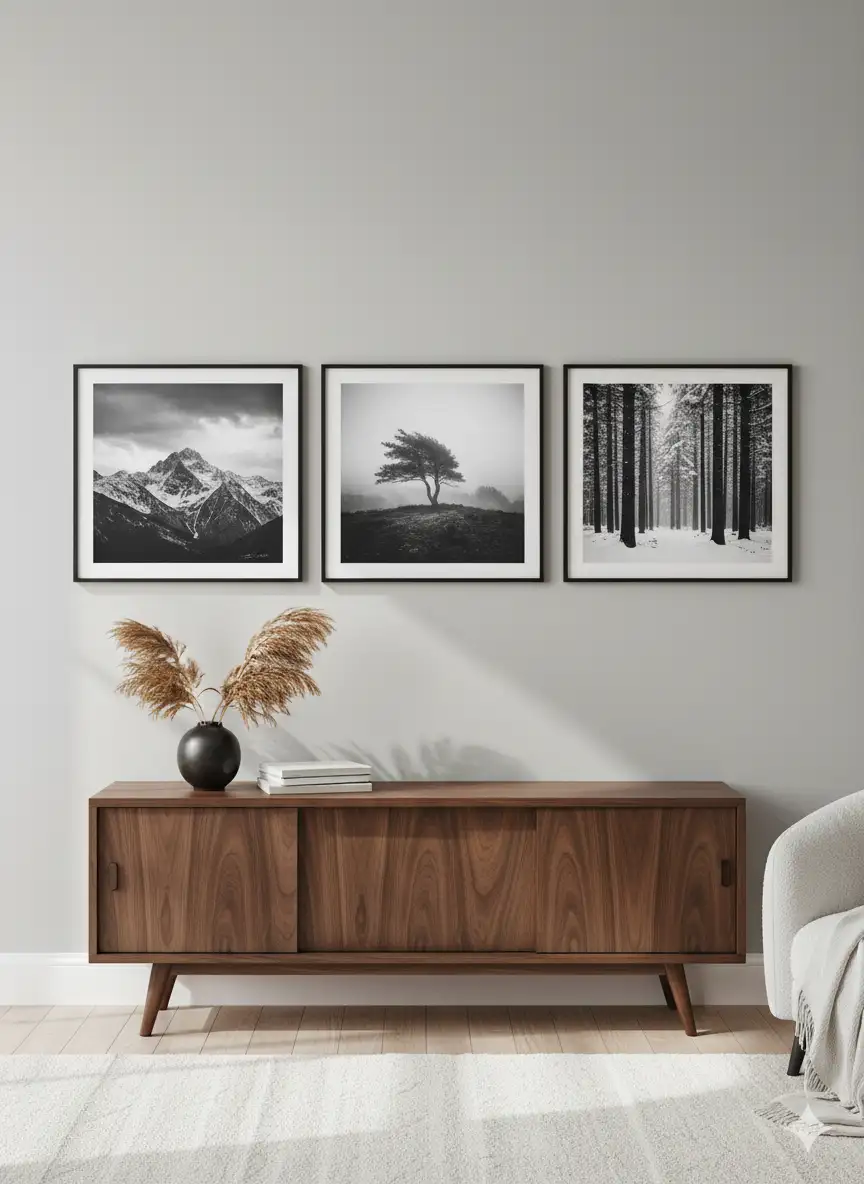
29. Trying a monochrome art arrangement for a calm, cohesive look

Monochrome artworks work well when you want the wall to feel calm but still designed. I’ve done arrangements of black-and-white sketches, sepia prints, or soft-toned abstract pieces. Because the colors match, you can play more with size and shape without the wall feeling chaotic. This is nice in rooms where the furniture already brings in a lot of color or pattern. Matching frames aren’t required, but keeping them in the same tone helps everything sit together.
30. Decorating with macrame or knotted fiber art

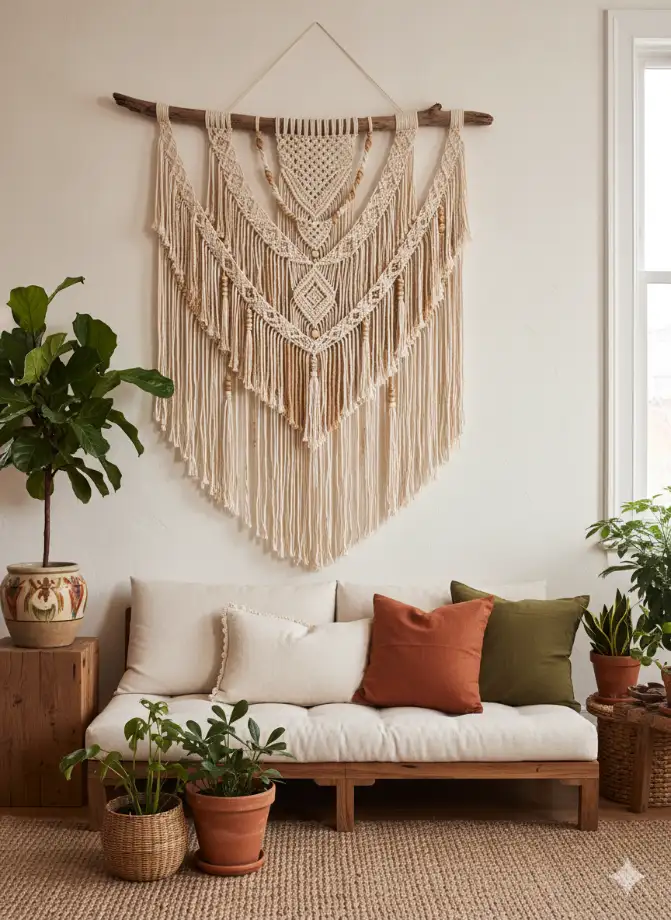
Macrame has made a big comeback, but I pick pieces that look simple and textural rather than overly intricate. They add a handmade feel that softens modern spaces. I’ve hung them in living rooms that needed warmth but not more heavy furniture or art. Look for natural fibers and neutral tones so the piece feels timeless. And make sure it hangs at a comfortable height, too high and it can look disconnected from the rest of the room.
31. Using frameless art pieces for a more contemporary feel

Frameless art gives the wall a cleaner, almost gallery-like look. I’ve used it in rooms that lean modern or minimal, especially when the homeowner wants the artwork itself to be the focus. The edges feel lighter and less fussy than framed pieces. Canvases, acrylic prints, or mounted photographs all work well. Just pay attention to scale, since there’s no frame, the art can appear slightly smaller than it is.
32. Turning a structural column or bump-out into a mini art wall
Most people ignore awkward columns or bump-outs, but they are great spots for small art. I’ve turned narrow structural columns into little gallery moments using slim vertical pieces or a tall series of matching frames. Because it’s a smaller surface, you don’t need much to make it feel intentional. This is a good trick when the main walls already feel full or if you want to draw attention away from less attractive architectural elements.
33. Using a row of small, framed black-and-white photos
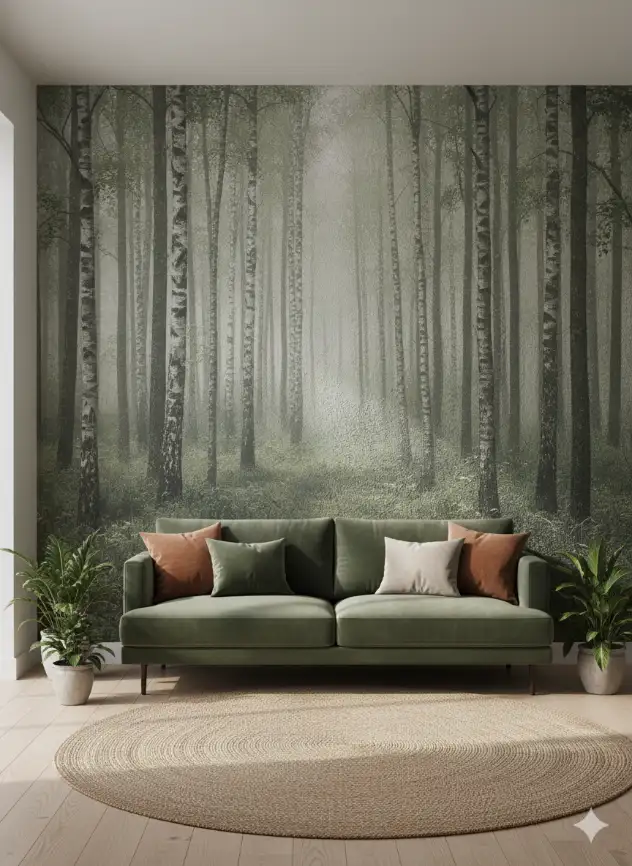
A simple row of black-and-white photos always looks clean and timeless. I often use this in hall-like parts of living rooms or along a narrow wall. The trick is keeping the frames the same size and spacing them evenly so the line feels purposeful. The subject matter can be anything, family, travel, or old snapshots, because the consistent color palette ties it all together. It’s an easy project, but it always feels thoughtful.
34. Adding subtle wall decals or stenciling for texture without commitment
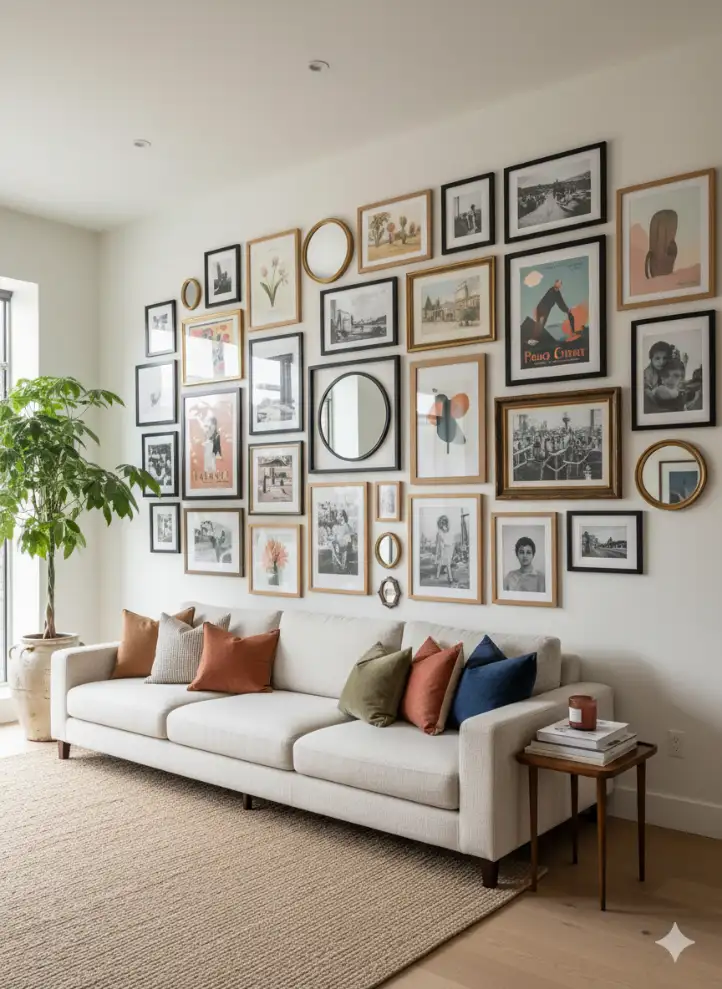
Decals and stencils get a bad reputation, but when used sparingly, they can add a hint of interest without overwhelming the room. I’ve used small botanical decals in kids’ spaces and geometric stencils in living rooms that needed just a little something. Stick to soft tones so the pattern doesn’t fight the rest of your decor. This is also a good choice if you rent and can’t make big changes. A little goes a long way here.
35. Using shelves with integrated lighting to highlight objects

Shelves with built-in lighting can make even the simplest objects look special. I’ve installed these in living rooms where the homeowners wanted a clean display without clutter. The soft light draws attention to pottery, books, or sculptures without feeling overdone. You don’t need to fill every shelf; leave some space so the wall doesn’t feel too full. Warm LED strips usually look the most natural and flattering.
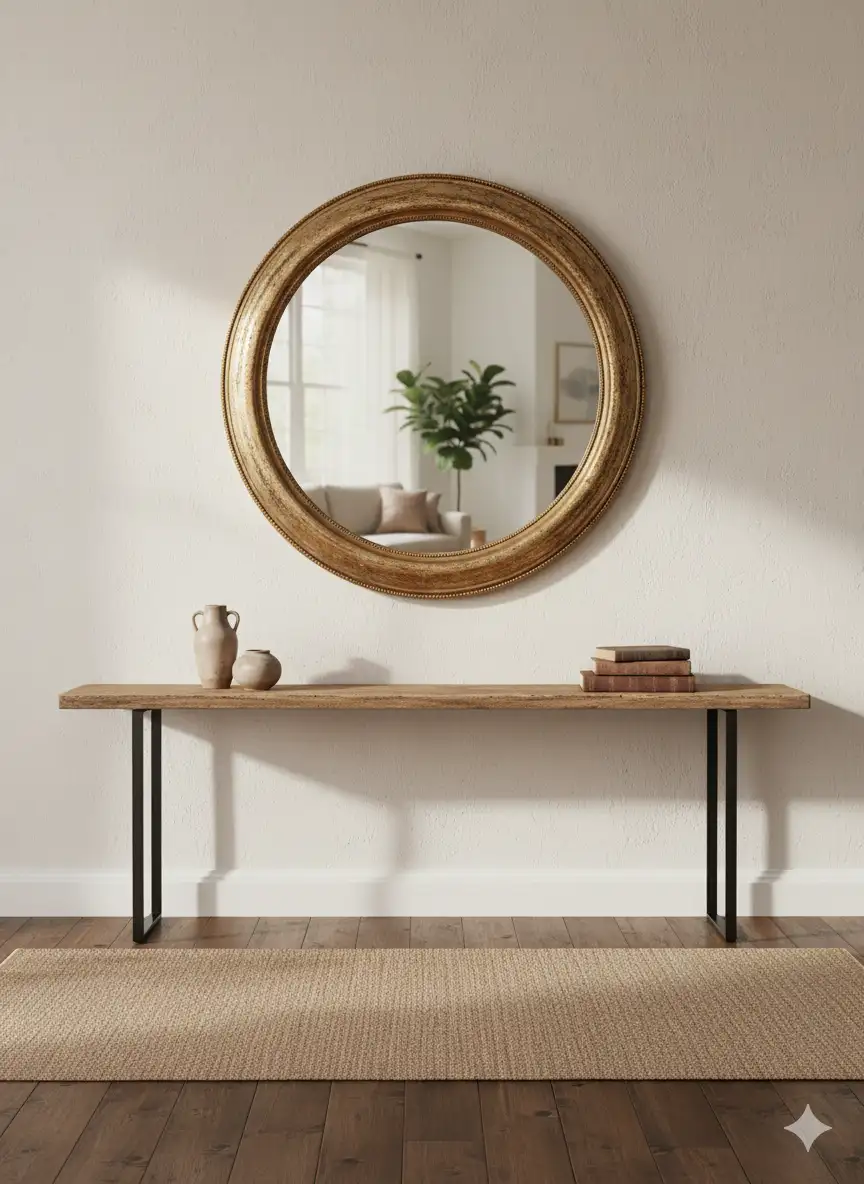
36. Hanging circular or irregular-shaped art for contrast
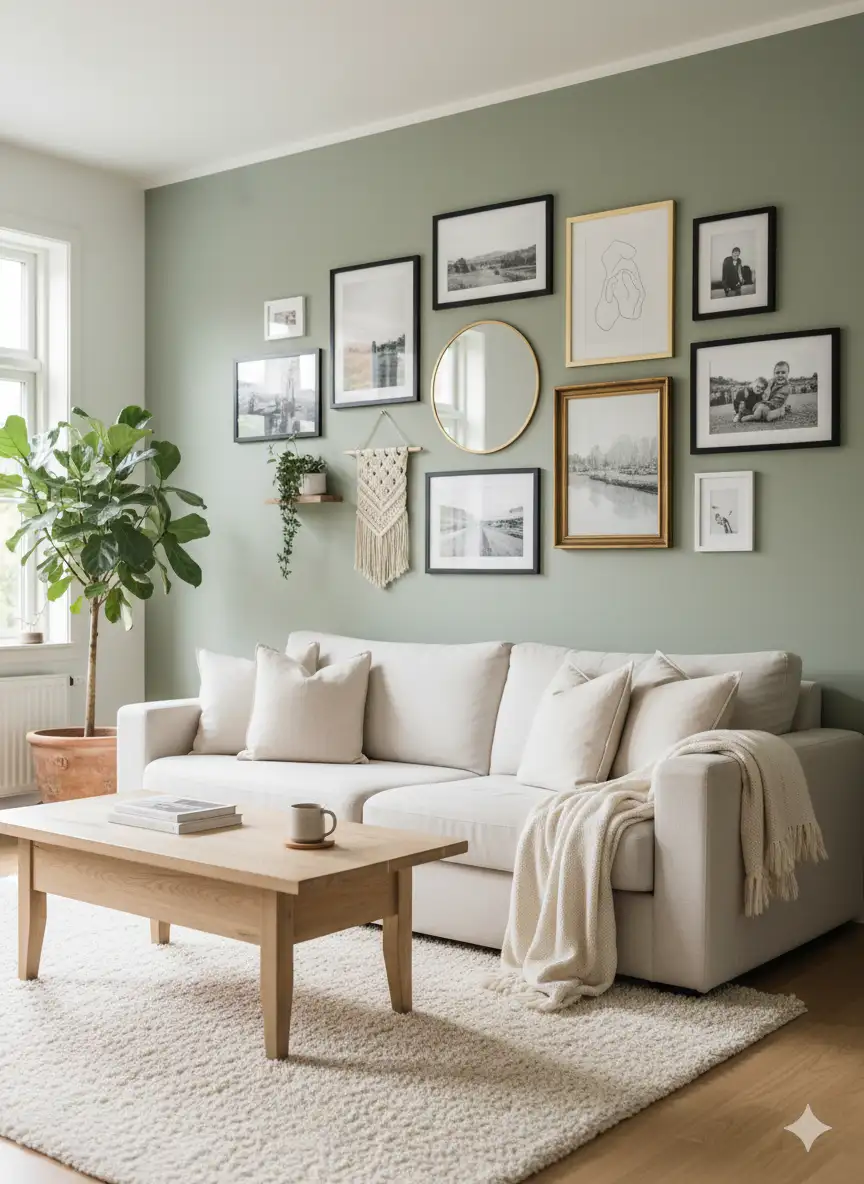
Round or organic-shaped pieces break up all the straight lines that living rooms tend to have. I’ve used round mirrors, oval canvases, and soft-edged sculptures to add a little movement to the wall. They’re especially nice over consoles or between windows where rectangular art can feel too predictable. When choosing a piece, look for something with a texture you like, since the shape is already doing part of the work. It’s a simple way to shift the room’s energy without much effort.
37. Creating a mixed-material wall, wood, metal, and soft paint tones together
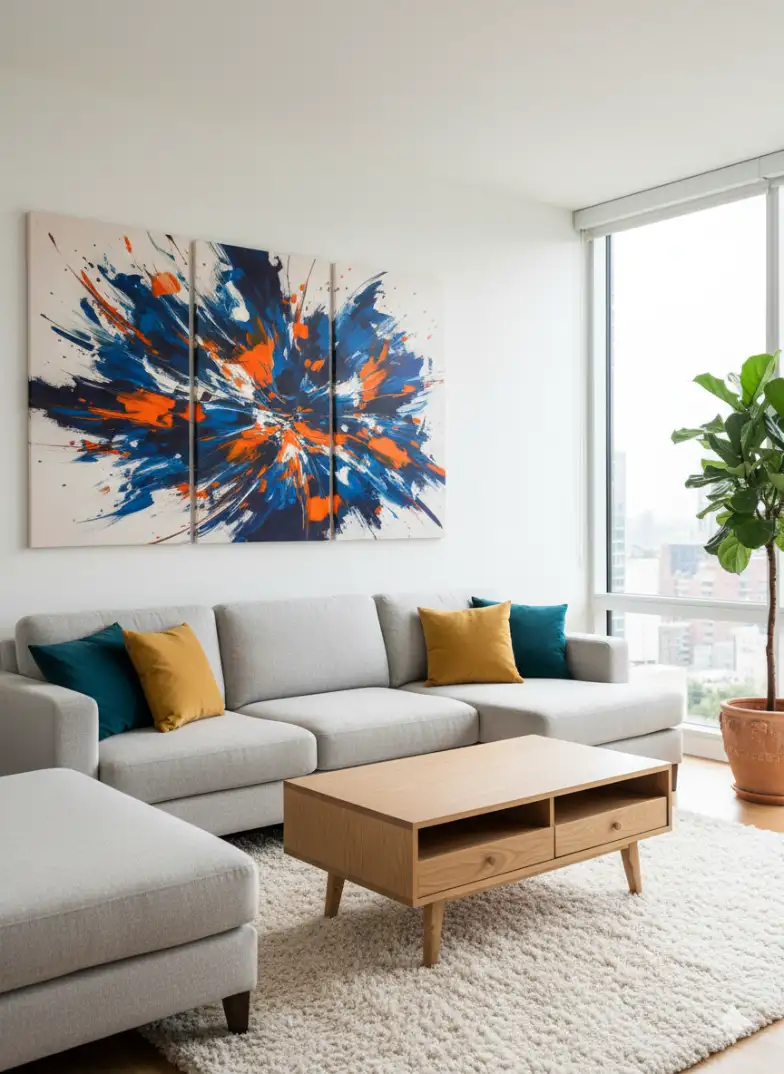
Mixed-material walls work well in rooms that feel too flat or one-note. I’ve combined wood panels with painted sections and thin metal strips to create quiet patterns that break up the space. The goal isn’t to make it busy; it’s to add subtle layers that you notice slowly. Keep the colors soft so the materials play nicely together. This is a good approach if you like a more customized look without going fully decorative or ornate.
Conclusion
Decorating the walls in a living room doesn’t have to be complicated. Sometimes one thoughtful change is enough to shift the whole mood of the space. Whether you go big with something sculptural or keep things simple with art ledges or textiles, the key is choosing ideas that feel comfortable to live with. Try one or two that speak to you and see how the room evolves from there.



No Comments