

An awkward coffee bar layout can easily disrupt the comfort and flow of a home, especially in spaces where every square foot matters. Yet this often overlooked corner plays a meaningful role in daily routines, offering a moment of pause, warmth, and familiarity. In farmhouse interiors, coffee bars are not just functional stations but emotional anchors that bring comfort through texture, tone, and thoughtful arrangement. When designed well, even the most challenging layout can feel intentional, cozy, and visually balanced. Farmhouse style excels at solving these issues by relying on natural materials, soft color palettes, and practical organization. As an interior design strategist, I focus on solutions that enhance function without sacrificing warmth. This guide shares farmhouse coffee bar decor ideas that transform difficult layouts into inviting spaces that feel connected to the home and effortless to use every day.
What This Post Covers
- Practical layout solutions for small or poorly placed coffee bar spaces
- Design techniques that add warmth and farmhouse character
- Ways to improve function without overcrowding the area
- Styling ideas that visually balance awkward proportions
- Smart decor choices that feel cohesive and intentional
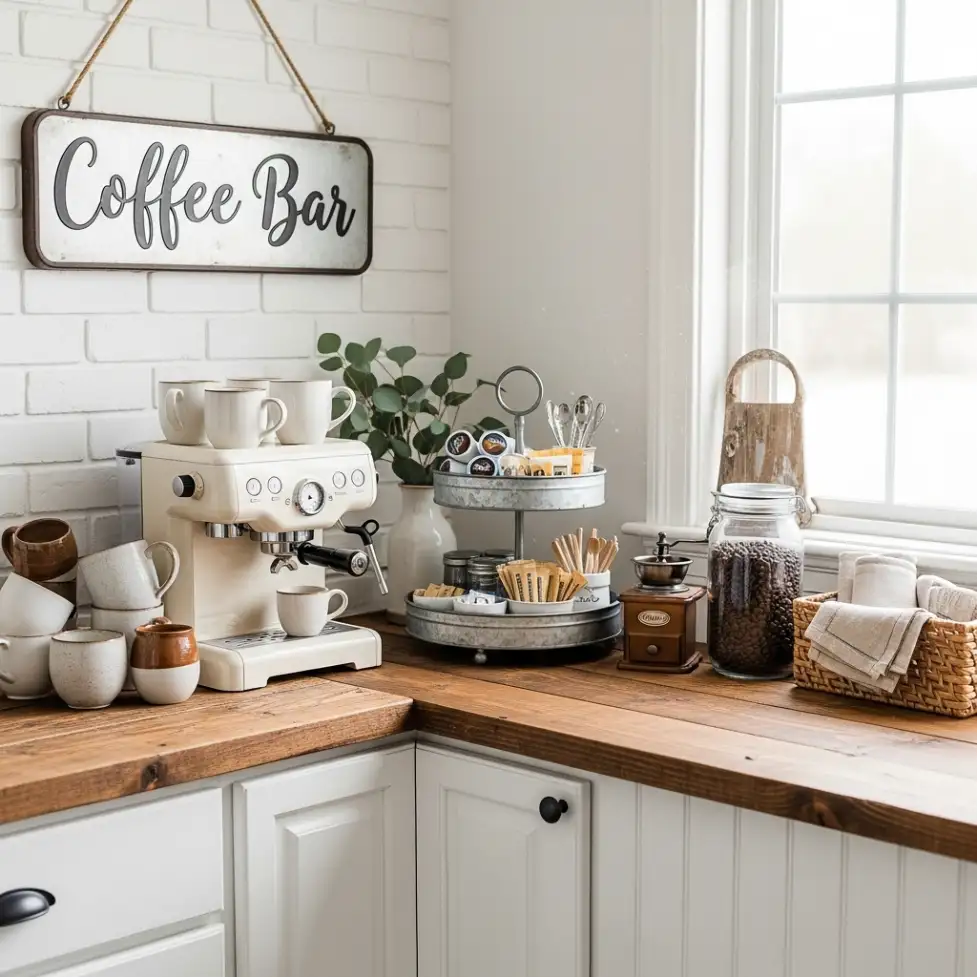
1. Corner Placement With Built-In Visual Balance
Using a corner location helps awkward coffee bar layouts feel more natural and contained. Corners provide two anchoring walls, which visually frame the coffee bar and reduce the feeling of floating furniture. In farmhouse interiors, corner coffee bars work well with wood shelving, soft-painted cabinetry, and warm countertops. This layout improves function by keeping appliances tucked in while leaving a clear workspace. Light neutral wall tones prevent the corner from feeling heavy, while wood textures add warmth. Proper corner placement also allows the coffee bar to feel intentional rather than like an afterthought, especially in open kitchens or dining areas where flow matters.
2. Vertical Shelving To Maximize Wall Height
Vertical shelving is a powerful solution for coffee bars placed in narrow or cramped areas. By drawing the eye upward, the layout feels taller and more open. Open wood shelves with visible brackets support farmhouse character while offering accessible storage. This approach improves function by keeping mugs, jars, and accessories within reach without crowding the counter. Lighter wood tones or painted shelves prevent visual heaviness. Vertical organization also balances awkward proportions by shifting focus away from limited floor space, creating a cozy but breathable design that feels intentional and visually grounded.
3. Slim Console Tables For Tight Spaces
Slim console tables are ideal for awkward coffee bar layouts where depth is limited. These narrow profiles fit easily along hallways, dining room walls, or kitchen edges without disrupting circulation. In farmhouse design, a console with turned legs or soft wood finishes adds charm and warmth. The reduced depth still allows space for a coffee maker, tray, and minimal styling. Lower shelves provide storage baskets for supplies while keeping the footprint light. This solution improves both function and flow, turning unused wall space into a purposeful coffee station without overwhelming the room.
4. Floating Countertops For Open Floor Plans
Floating countertops help awkward layouts blend seamlessly into open floor plans. Without bulky base cabinets, the coffee bar feels lighter and less intrusive. Wood countertops with visible grain enhance farmhouse warmth while maintaining simplicity. Floating designs allow for flexible stool placement or open storage beneath, improving function without visual clutter. Neutral wall colors keep the area cohesive with surrounding spaces. This approach works especially well in homes where the coffee bar shares space with dining or living areas, ensuring the layout feels connected rather than awkwardly inserted.
5. Cabinet Color Contrast To Define The Zone
Using cabinet color contrast helps define a coffee bar in an otherwise awkward layout. A slightly deeper or warmer tone differentiates the space without isolating it. In farmhouse interiors, muted greens, soft grays, or warm creams work well against neutral walls. This visual separation makes the coffee bar feel purposeful and balanced. Color contrast also helps mask unusual proportions by giving the eye a clear focal point. Functionally, defined cabinetry keeps supplies organized while visually grounding the coffee bar within the larger room layout.
6. Repurposed Furniture For Flexible Placement
Repurposed furniture offers flexibility when standard cabinetry does not fit awkward layouts. A vintage sideboard or small hutch brings farmhouse character while adapting easily to unique dimensions. Wood finishes and simple detailing enhance warmth and texture. This approach improves function by providing storage and counter space without requiring custom installation. Repurposed pieces also soften architectural challenges by introducing familiar shapes and materials. Their standalone nature allows the coffee bar to feel intentional even in transitional spaces like entryways or dining room corners.
7. Layered Lighting For Depth And Comfort
Layered lighting helps awkward coffee bar layouts feel inviting and well-balanced. Wall sconces, small lamps, or under-shelf lighting add warmth and dimension. Soft lighting reduces harsh shadows that often highlight layout flaws. In farmhouse design, warm-toned bulbs paired with simple fixtures enhance comfort. Lighting also improves function by making the space practical during early mornings or evenings. By layering light sources, the coffee bar feels cozy and purposeful rather than tucked away or poorly placed.
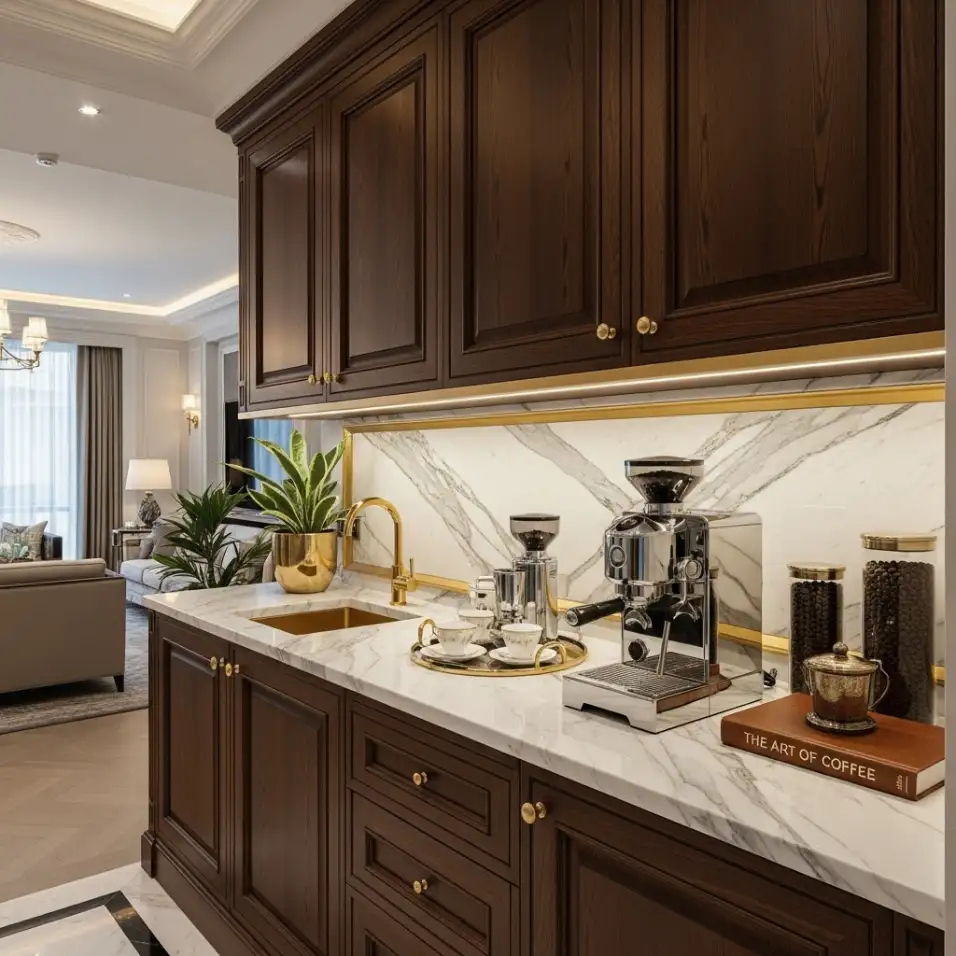
8. Open Shelving To Reduce Visual Weight
Open shelving reduces visual weight in coffee bars placed in tight or uneven spaces. Closed cabinetry can feel bulky, while open shelves create openness and flow. Farmhouse style embraces open storage with wood shelves and simple supports. This layout improves function by keeping essentials visible and accessible. Light colored ceramics and glassware prevent overcrowding. Open shelving also helps awkward layouts feel less confined, making the coffee bar appear lighter and more integrated into the surrounding space.
9. Built-In Nooks For Unused Wall Space
Built-in nooks transform unused wall recesses into functional coffee bars. These spaces often feel awkward when left empty, but custom shelving and counters bring purpose. Wood finishes and soft paint colors add farmhouse warmth. Built-ins improve function by offering tailored storage that fits the space exactly. This approach reduces wasted space and creates a seamless look that feels intentional. A well-designed nook makes the coffee bar feel like part of the architecture rather than an added element.
10. Rolling Carts For Layout Flexibility
Rolling carts offer flexibility for awkward coffee bar layouts that need adaptability. These movable pieces allow homeowners to adjust placement as needed. In farmhouse interiors, wood and metal carts add texture and warmth. The mobility improves function by allowing the coffee bar to shift between the kitchen, dining, or living areas. Shelves and drawers provide storage while keeping the design light. Rolling carts are especially useful in small homes where fixed layouts feel restrictive.
11. Minimal Styling To Avoid Overcrowding
Minimal styling helps awkward layouts feel calm and balanced. Overdecorating can exaggerate tight or uneven spaces. Farmhouse design favors simplicity with a few well-chosen accessories. Neutral ceramics, wood trays, and subtle greenery add warmth without clutter. This approach improves function by keeping surfaces clear for daily use. Minimal styling also allows architectural features and materials to shine, making the coffee bar feel intentional rather than forced into the layout.
12. Symmetry Through Accessories And Placement
Symmetry creates visual balance in coffee bars with uneven surroundings. Matching shelves, paired jars, or evenly spaced decor help correct awkward proportions. In farmhouse interiors, symmetry paired with natural materials feels relaxed yet structured. This improves function by organizing items logically. Balanced placement also guides the eye, making the space feel calmer and more cohesive. Even in irregular layouts, symmetrical styling can create a sense of order and comfort.
13. Neutral Backdrops To Blend Surroundings
Neutral backdrops help awkward coffee bar layouts blend seamlessly into their surroundings. Soft whites, warm beiges, or light grays reduce visual contrast and distraction. These tones support farmhouse warmth while allowing wood and accessories to stand out. A neutral backdrop improves function by creating a calm environment that feels easy to use daily. It also minimizes the impact of unusual angles or placements, helping the coffee bar feel like a natural extension of the room.
14. Compact Appliances For Scale Control
Compact appliances help maintain proper scale in awkward layouts. Oversized machines can overwhelm limited space. Smaller coffee makers and slim grinders support a balanced look. In farmhouse settings, pairing compact appliances with wood accents softens their appearance. This improves function by preserving counter space for prep and styling. Proper scale ensures the coffee bar feels comfortable and proportionate, even in narrow or shallow areas.
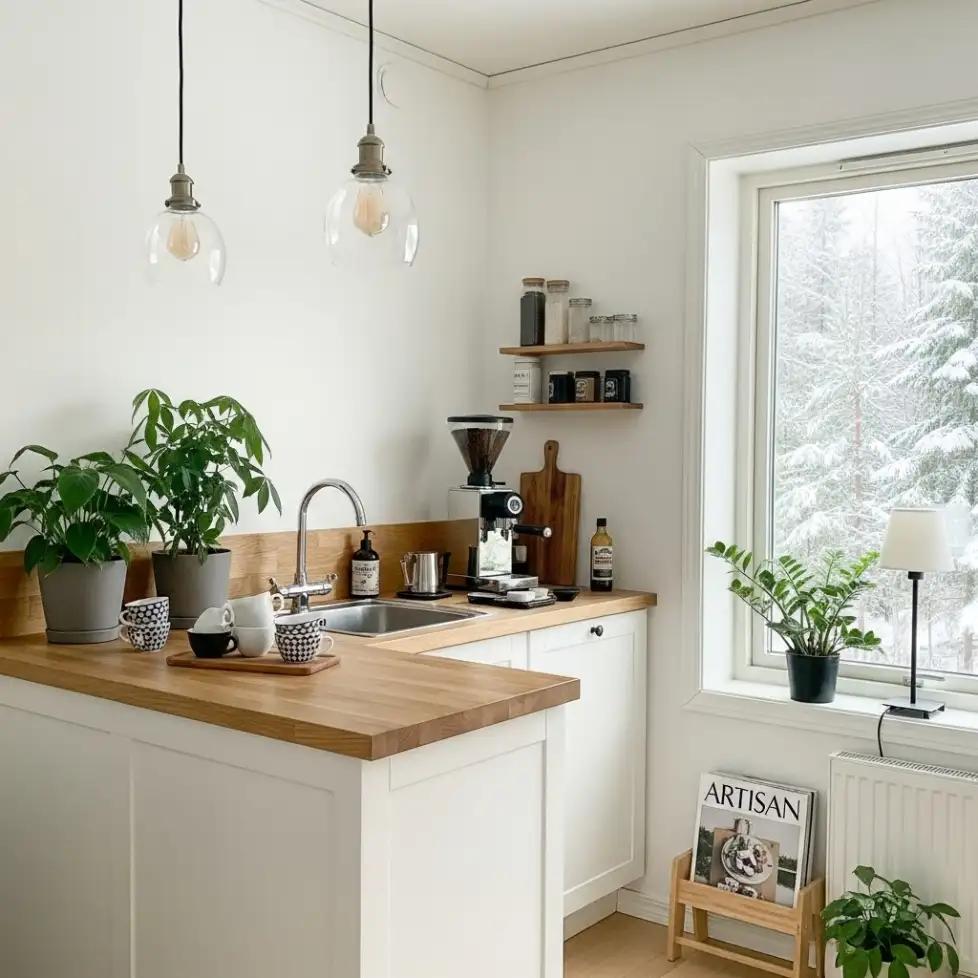
15. Wall-Mounted Storage To Free Counters
Wall-mounted storage frees valuable counter space in awkward coffee bar layouts. Hooks, rails, or mounted shelves keep mugs and tools accessible. Farmhouse interiors embrace wall storage with wood and metal combinations. This improves function by reducing clutter and increasing efficiency. Wall-mounted elements also add vertical interest, helping balance tight layouts. Keeping counters clear enhances usability while maintaining a warm, inviting look.
16. Integrated Tray Styling For Organization
Tray styling brings order to awkward coffee bar surfaces. A wood or metal tray groups essentials into one defined zone. This creates visual structure and prevents clutter from spreading. Farmhouse materials add warmth and texture. Trays improve function by keeping daily items easy to access while maintaining cleanliness. This simple solution helps awkward layouts feel intentional and well-organized without requiring structural changes.
17. Soft Textures For Visual Comfort
Soft textures add comfort to coffee bars in challenging spaces. Linen runners, woven baskets, or ceramic finishes soften hard surfaces. In farmhouse design, texture is key to warmth. These elements improve function by adding storage or surface protection while enhancing comfort. Soft textures also reduce the starkness of tight layouts, making the space feel more inviting and less rigid.
18. Balanced Proportions With Decor Height
Balancing decor height corrects awkward visual proportions. Mixing tall and low elements creates rhythm and flow. In farmhouse coffee bars, pairing taller canisters with lower trays works well. This approach improves function by organizing items logically. Proper height balance prevents the space from feeling top-heavy or sparse, helping awkward layouts feel visually comfortable and cohesive.
19. Defined Zones Within Shared Spaces
Defining zones helps coffee bars coexist within shared areas. Rugs, lighting, or cabinetry finishes subtly separate the coffee bar from surrounding functions. Farmhouse style uses texture and tone rather than harsh division. Defined zones improve function by clarifying purpose and reducing visual confusion. This approach ensures the coffee bar feels intentional even when space is shared with dining or living areas.
20. Warm Metal Accents For Subtle Contrast
Warm metal accents add contrast without overwhelming awkward layouts. Brushed brass or aged bronze complements farmhouse wood tones. These materials add depth and visual interest. Metal accents improve function through durable hardware and fixtures. Subtle contrast helps define the coffee bar while maintaining a cohesive, warm aesthetic that feels comfortable and refined.
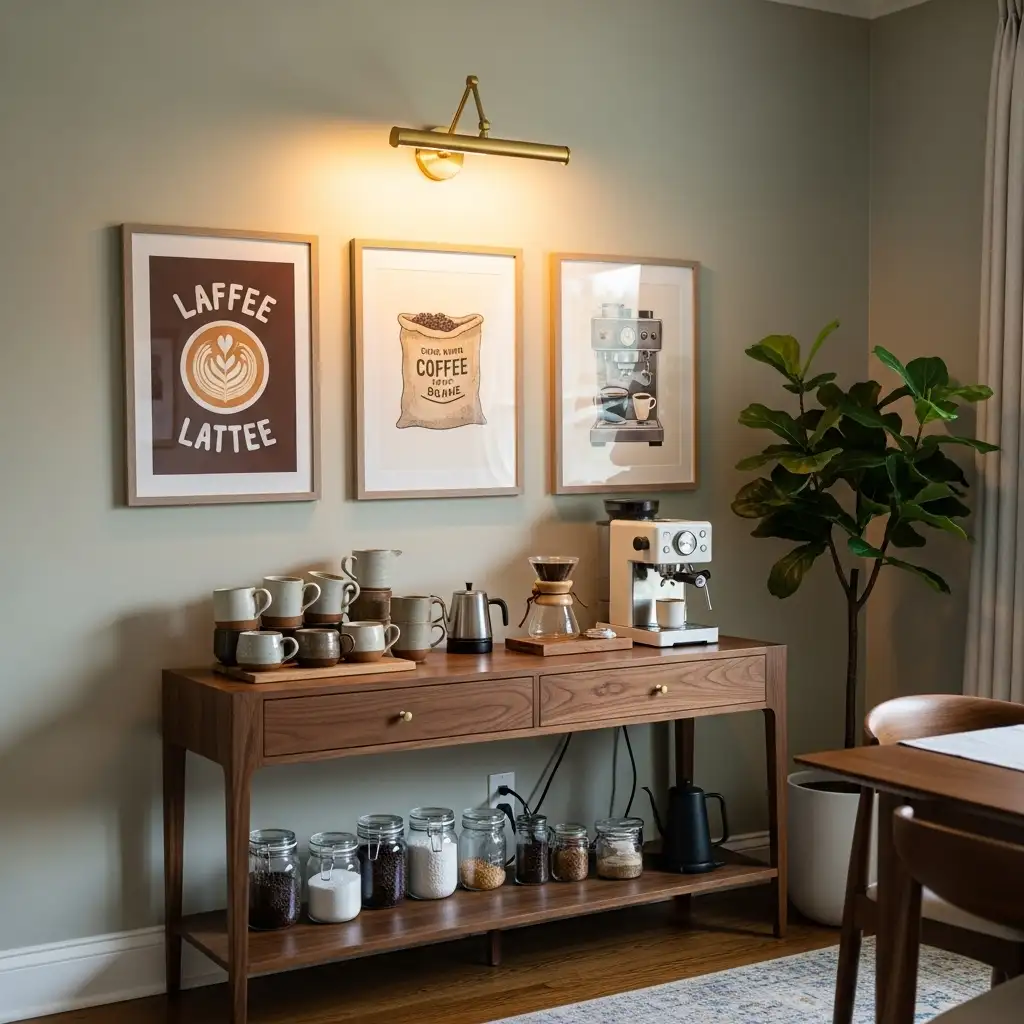
21. Simple Backsplashes For Visual Anchoring
A simple backsplash anchors awkward coffee bar layouts. Neutral tile or beadboard adds texture without visual noise. Farmhouse backsplashes enhance warmth and protect walls. This improves function while creating a clear boundary for the coffee bar. A defined backsplash helps unusual placements feel purposeful and visually complete.
22. Consistent Color Palette For Flow
A consistent color palette helps awkward coffee bars blend smoothly into the home. Repeating tones from nearby spaces creates continuity. Farmhouse palettes often include warm neutrals and natural wood. Consistency improves function by reducing visual distraction. A cohesive palette makes even difficult layouts feel calm, balanced, and thoughtfully designed.
23. Hidden Storage For Visual Simplicity
Hidden storage keeps awkward layouts visually simple. Cabinets or baskets conceal supplies while maintaining easy access. Farmhouse interiors benefit from concealed storage paired with open elements. This improves function by reducing clutter and preserving a cozy atmosphere. Hidden storage allows the coffee bar to feel clean and intentional without sacrificing practicality.
24. Artwork To Create A Focal Point
Artwork creates a focal point that distracts from layout challenges. Farmhouse art with soft imagery or typography adds personality. This improves warmth and visual balance. A focal point guides the eye and gives the coffee bar purpose within the room. Artwork also enhances emotional connection, making the space feel personal and inviting.
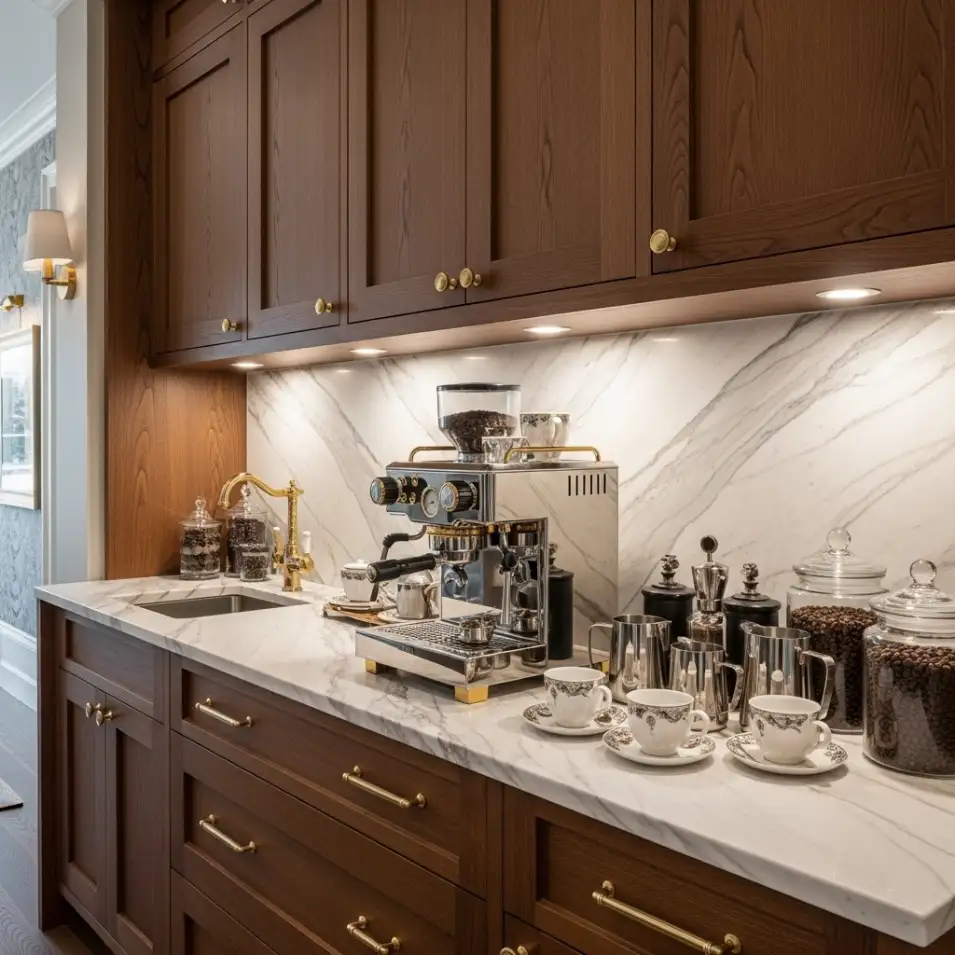
25. Repetition Of Materials For Cohesion
Repeating materials creates cohesion in awkward layouts. Using the same wood, metal, or color tones throughout the coffee bar ties elements together. Farmhouse design relies on repetition for comfort and familiarity. This improves function by simplifying choices and enhancing flow. Cohesive materials help awkward spaces feel intentional, balanced, and complete.
Conclusion
Awkward coffee bar layouts do not have to feel limiting or frustrating. With thoughtful design choices, they can become some of the most inviting spaces in the home. By focusing on warmth, function, and balance, farmhouse style offers practical solutions that feel comfortable and timeless. These farmhouse coffee bar decor ideas demonstrate how materials, layout adjustments, and intentional styling work together to improve daily use while enhancing visual harmony. Whether the space is narrow, shared, or oddly placed, smart design can transform it into a cozy retreat. Save this guide and revisit it as inspiration when refining your home, knowing that even the most challenging layouts can feel welcoming and beautifully resolved.

No Comments