
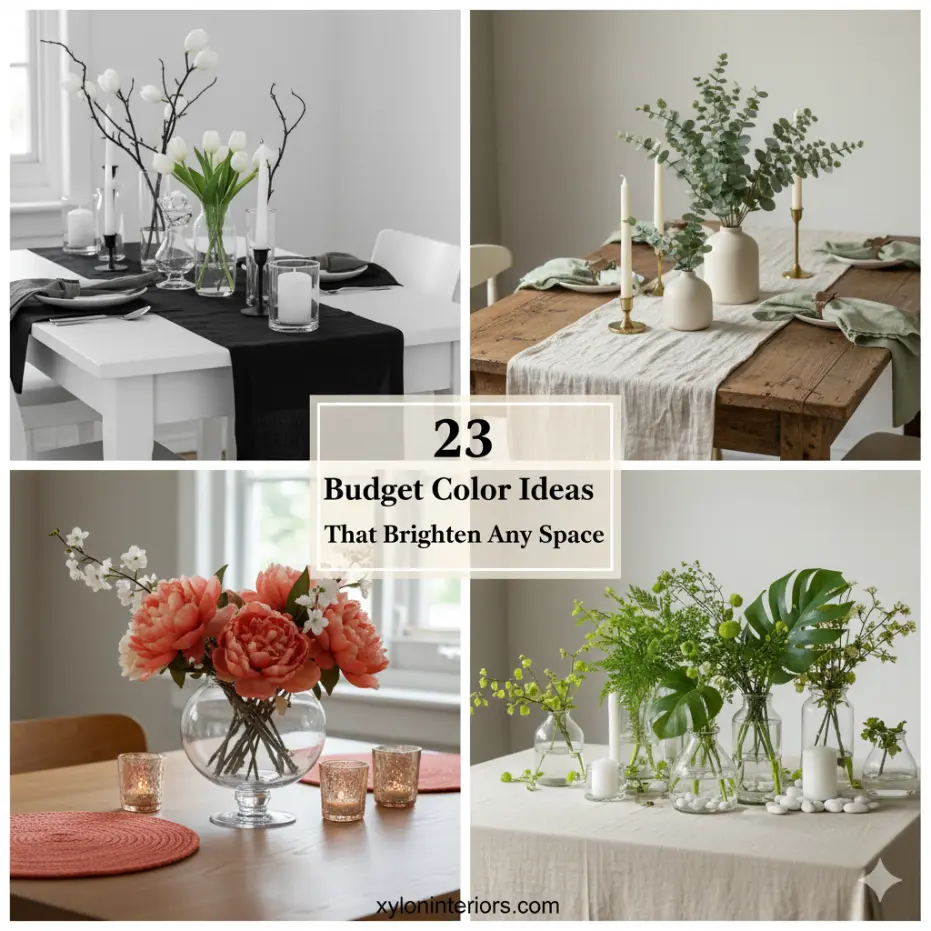
Some homes feel a little “gray” without actually being painted gray. The walls might be beige, the sofa is neutral, the curtains are safe, and one day you look around and think, “Why does everything feel a bit dull?”
Color is usually the missing piece, but adding it can feel expensive and risky. Paint, new furniture, big art pieces... it all adds up, and it’s easy to worry you’ll regret a bold choice.
You do not need a big budget or a full makeover to brighten a space. A few low-cost, thoughtful color changes can completely shift how a room feels. And yes, that includes super affordable tricks like Dollar Tree cheap spring centerpieces, thrifted finds, and small DIY projects you can do in an afternoon.
This guide walks you through 23 practical, real-life color ideas that actually work in busy homes with kids, pets, and real clutter. No perfect model houses here. Just doable steps that make your rooms look lighter, happier, and more “you,” without draining your bank account.
“Color doesn’t have to be loud to be life-giving. It just needs to feel like you.”
Quick Overview: 23 Budget Color Ideas
Here’s a simple roadmap before we dive into the details. These ideas layer together well, so you can start small and build over time:
- Living room & entry:
- 1. Swap in colorful pillow covers
- 2. Add an affordable throw blanket in a happy tone
- 3. Create a small color “moment” at the entry
- 4. Use plants and plant pots as color
- 5. Paint or wrap a single accent piece
- Dining table & centerpieces:
- 6. Layer colorful table linens
- 7. Create Dollar Tree cheap spring centerpieces
- 8. Use fruit and vegetables as temporary décor
- 9. Mix old glassware and jars for color
- Kitchen & coffee bar:
- 10. Colorful canisters and containers
- 11. Display your prettiest dishes
- 12. Add color with tea towels and rugs
- 13. Create a mini coffee station with a color palette
- Bedroom & bathroom:
- 14. Choose one accent color for bedding layers
- 15. Swap or paint bedside accessories
- 16. Use shower curtains and towels as color blocks
- 17. Add low-cost art in calm, soft tones
- Walls, art & lighting:
- 18. Try a small-scale paint project
- 19. Hang colorful, budget-friendly art
- 20. Change lamp shades and bulbs
- Seasonal & flexible color:
- 21. Create a “color bin” for rotating accents
- 22. Seasonal stems and greenery on a budget
- 23. Color through scent, texture, and tiny details
Let’s go room by room and talk about how you can actually pull these ideas off in a real home, with a real budget.
Living Room & Entry: Easy Color Swaps That Change the Mood
1. Swap in colorful pillow covers, not new pillows
If you do only one color change in your living room, make it your throw pillows. New furniture is expensive; new pillow covers are not.
Instead of buying whole pillows, look for:
- Inexpensive pillow covers online or in discount stores
- Neutral bases for your main pillows (white, beige, gray)
- Bold or soft color covers you can zip on and off by season
For a bright but not chaotic look, try this simple formula:
- 2 neutral pillows (cream, tan, light gray)
- 2 pillows in your main accent color (like soft blue, sage, or mustard)
- 1 patterned pillow that uses that same accent color plus a second color
You get a pulled-together look without needing to know anything technical about color theory.
2. Add a throw blanket in a happy tone
A throw blanket on the sofa or armchair is like adding a scarf to an outfit. It does more than it should for the overall look.
Look for:
- One throw that feels a tiny bit “too bright” in the store. At home it usually looks just right.
- Affordable options in cotton or lightweight knits so you can use it year-round.
Drape it:
- Over the back of the sofa, falling toward the seat
- Over the arm of a chair with a little casual fold
- Inside a basket, spilling out to show the color
Work with what you already own. If your room is mostly brown and beige, a terracotta throw can warm everything up, while a soft blue or green one can cool and freshen the space.
3. Create a small color “moment” in your entry
Your entry is the first and last thing you see each day. It is a great place for a quick, inexpensive color lift.
Even if all you have is a tiny console table or a narrow shelf, you can pull together:
- A small bowl in a cheerful color for keys
- A simple candle or jar with colored glass
- One small framed print or photo that includes your chosen accent color
If you want something more playful, tape up a few cut-out paint chips in your chosen colors and see how they look during different times of day. It costs nothing and still gives a little visual energy.
4. Use plants and pots as color instead of more “stuff”
Green is one of the easiest ways to brighten a space. It goes with almost any other color, and the plants themselves make a room feel alive.
You do not need fancy plants. A few simple, low-maintenance ones are enough:
- Pothos or philodendron that can trail across a shelf
- Snake plant in a corner for height
- Small succulents on a coffee table or side table
For inexpensive color:
- Wrap old pots with twine, fabric, or scrap wrapping paper
- Spray paint basic terracotta pots in soft colors like sage or warm white
- Use colorful bowls or mugs as temporary plant containers (with a saucer underneath)
The mix of green leaves and colored pots can do as much for a room as art or new furniture, honestly.
5. Paint or wrap a single small accent piece
Instead of painting a whole wall, start smaller. Pick one item in your living room that you are a little bored with:
- A dated picture frame
- A tray on your coffee table
- A wooden side table that has seen better days
Then:
- Lightly sand if needed
- Use leftover paint or a sample pot in a fresh color
- Or wrap it in contact paper with a subtle pattern or color
Even a small painted tray in a soft sky blue or a warm clay color on your coffee table can make the room feel more intentional and cheerful.
Dining Table & Centerpieces: Color Without the Cost
6. Layer colorful table linens (even if you rarely host)
You don’t need a big dinner party to enjoy a pretty table. A simple table runner or placemats can add a surprising amount of color to a dining room or eat-in kitchen.
Ideas that stay within a budget:
- Use a length of inexpensive fabric or even a curtain panel as a runner.
- Look for cloth napkins on clearance in a favorite color, then mix them with neutral ones.
- Fold a throw blanket in half and use it crosswise as a runner for more casual color.
If your room is dark, try lighter linens like ivory, pale blue, or soft blush. If your walls are very light, a deeper color runner like forest green or navy grounds the space and makes it feel cozy.
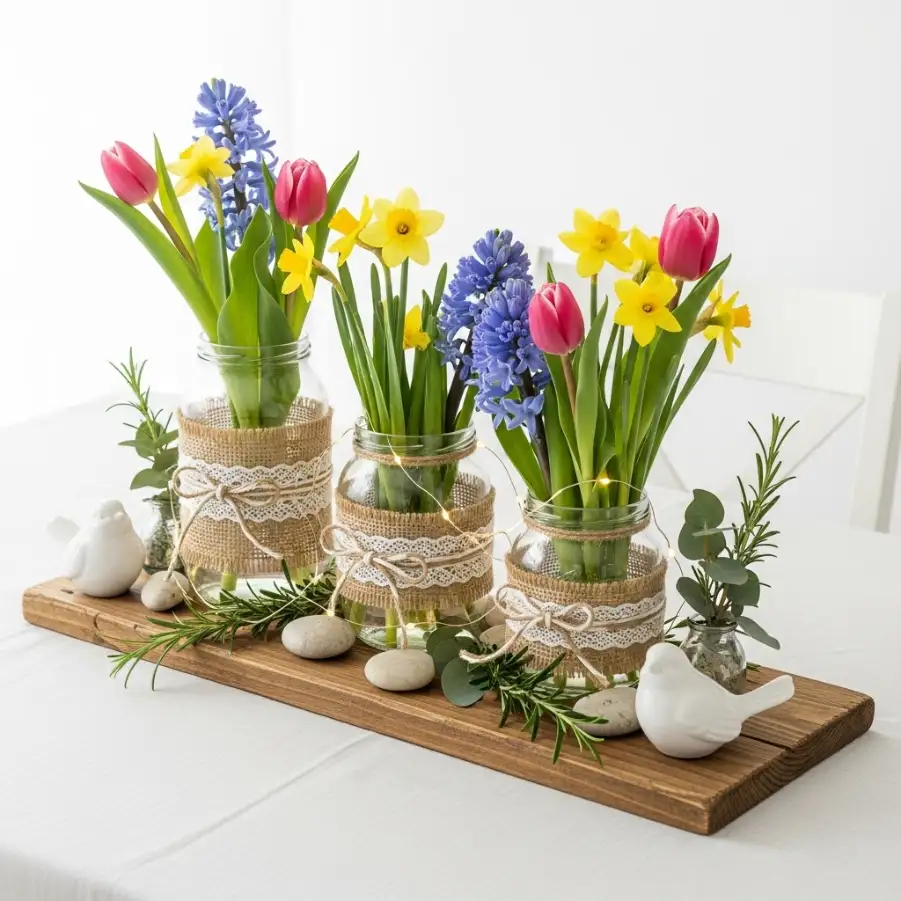
7. Create Dollar Tree cheap spring centerpieces that look high-end
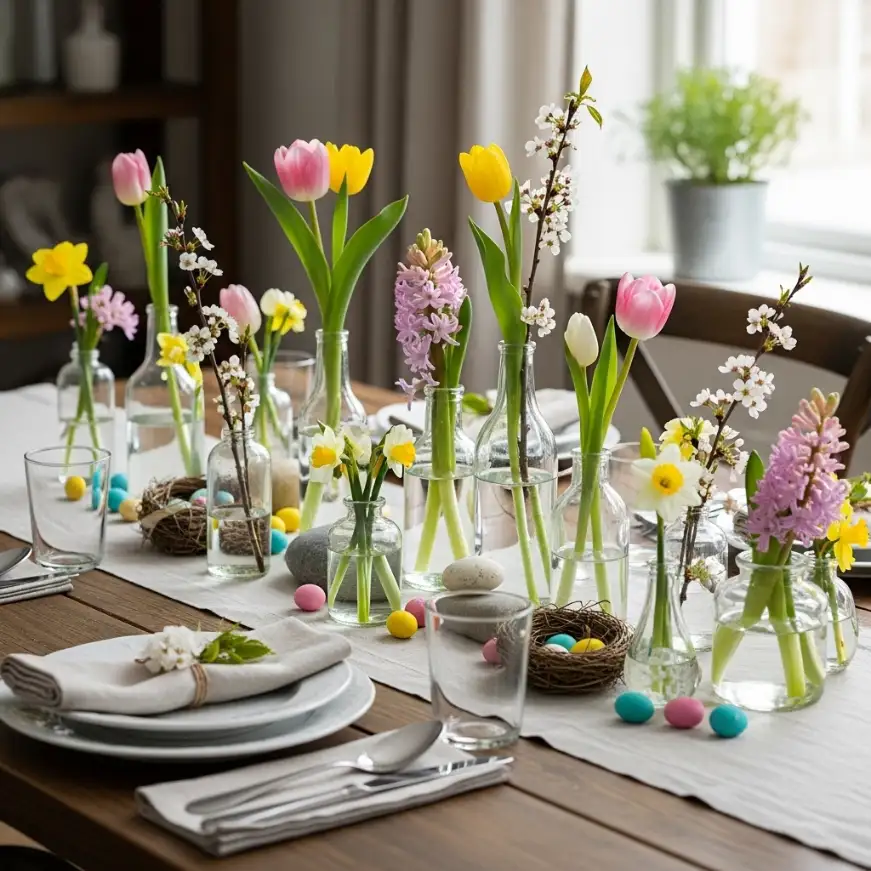
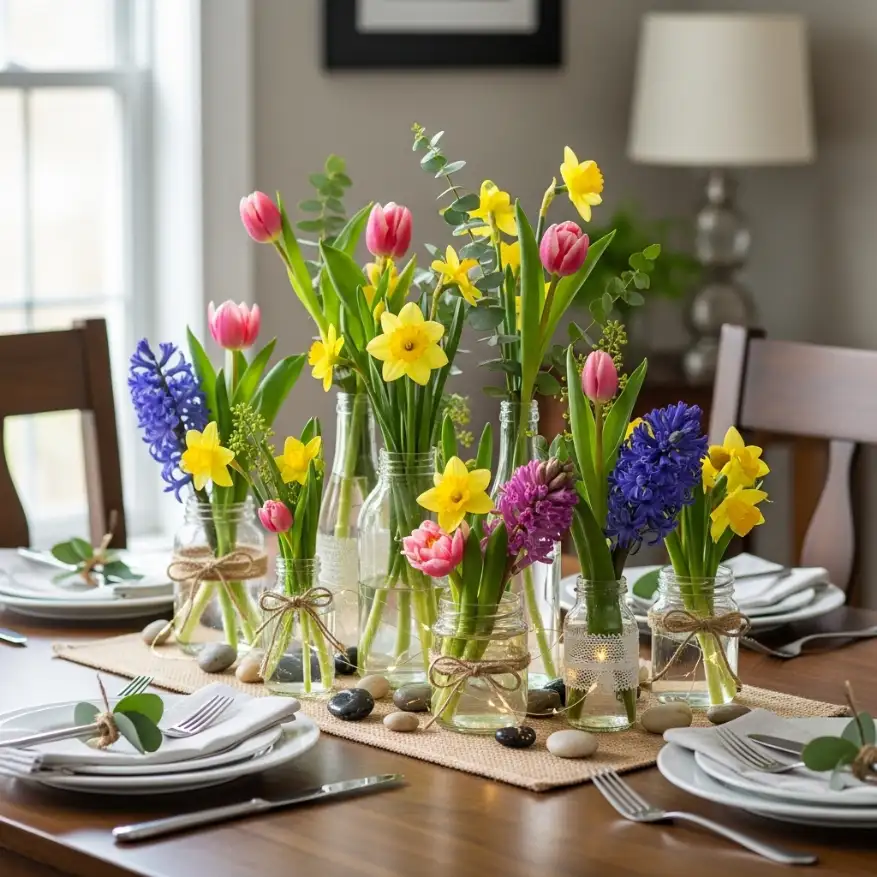
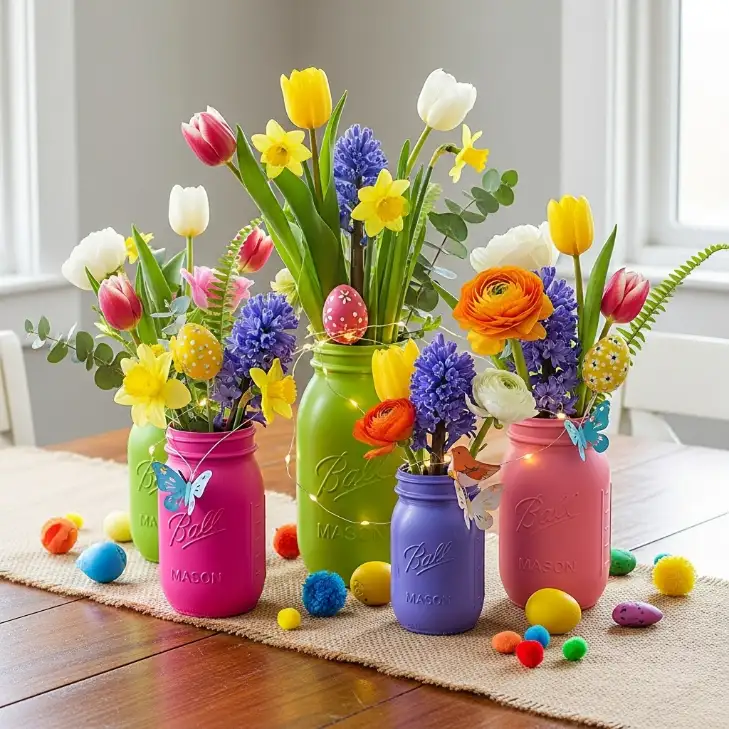
Spring is the easiest season to experiment with color because the expectations are lower. Everything is supposed to feel light, simple, and a bit playful. This is where Dollar Tree cheap spring centerpieces really shine.
The trick is not to use everything you find. Pick a simple color story and stick with it. Here are a few easy combinations:
- Soft & airy: white + pale green + a little blush pink
- Fresh & happy: yellow + white + light gray
- Calm & coastal: soft blue + white + sand/tan
Then at Dollar Tree or any similar budget store, look for:
- One simple glass vase or a plain white ceramic one
- Faux stems in just 1 or 2 types (like white tulips and greenery)
- Ribbon in your main accent color
- Glass stones, moss, or small rocks to fill the bottom
A basic, pretty spring centerpiece recipe:
- Place a small piece of floral foam at the bottom of the vase (optional but helpful).
- Fill the base with a bit of moss or stones for texture and stability.
- Cut your faux stems down so they sit just a bit taller than the vase, not towering above.
- Add greenery first, then tuck in your flowers.
- Tie a ribbon around the vase in your accent color.
Keep it simple. A single arrangement looks much more expensive than a bunch of different pieces scattered everywhere. These Dollar Tree cheap spring centerpieces work on:
- The dining table
- The kitchen island
- A coffee bar shelf
- The entry console table
You can even make two identical ones and place them on either side of your TV for a soft, balanced look.
8. Use fruit and vegetables as temporary color décor
If you are on a strict budget, decor that you can eat is never a bad idea. Fresh fruit adds real color and freshness without extra clutter.
Try:
- A simple bowl of lemons on the table for a pop of yellow
- Green apples in a white or clear bowl on the island
- Oranges and limes mixed together in a clear vase
If you like the look but worry about waste, choose fruit your family already eats regularly. You are not decorating, you are just storing it in a prettier way.
9. Mix old glassware and jars for a colorful glow
You do not need fancy candle holders. Old sauce jars, thrifted glass bottles, and second-hand vases can all become color pieces with a little creativity.
Here is how:
- Remove labels from glass jars with warm soapy water.
- Add a bit of colored water (a drop of food coloring) for a see-through tint.
- Group 3 to 5 jars of varying heights in the center of the table.
- Pop in a few simple stems or even plain branches from your yard.
When natural light hits those colored jars, it gives your dining area a soft, pretty glow that feels more expensive than it is.
Kitchen & Coffee Bar: Everyday Color You Actually Use
10. Colorful canisters and containers on the counter
If your kitchen feels cold or flat, check your counters. Are they all metal, white, and wood? A small amount of color goes a long way in this space.
Look around for containers you already have:
- A colored mixing bowl
- A pretty mug
- A thrifted tin or jar
Turn them into:
- Utensil holders
- Coffee pod storage
- Snack jars
Aim for just 2 or 3 accent colors in the whole kitchen so it doesn’t feel busy. For example: white, wood tones, and soft green. Or black, white, and mustard.
11. Display your prettiest dishes instead of hiding them
Open shelving and glass cabinet doors are not just for styled homes. You can do a version of that on a small scale.
If you have:
- Colorful mugs
- Patterned dessert plates
- Vintage bowls from a family member
Pull them forward and stack, hang, or lean them where you can see them daily:
- On a small shelf near the stove
- On a tray by the coffee maker
- Behind a glass cabinet door
When you focus your colorful pieces in one or two spots, the kitchen starts to look designed instead of random.
12. Add color with tea towels and small rugs
Textiles in a kitchen wear out quickly, which actually works in your favor. They are meant to be replaced regularly, so this is a guilt-free spot to bring in color.
Choose:
- 2 or 3 tea towels in the same color family
- A small runner or mat at the sink in a coordinating tone
If your cabinets are dark, light towels and rugs help brighten the room. If your cabinets are white, a deeper rug (like navy, rust, or olive) gives some visual weight so things don’t feel sterile.
13. Create a mini coffee station with a color theme
You do not need a big area for this. Just one corner of the counter will do.
Basic setup:
- Coffee maker or kettle
- A small tray or cutting board as a base
- 1 or 2 colorful mugs you love
- A small jar with sugar, spoons, or stir sticks
To tie it into your home’s color story, repeat one of your living room colors here. If you are using sage green in the living room pillows, maybe use a sage-colored mug or sugar jar here. Repeating colors in different rooms makes your whole home feel more intentional without spending very much.
Bedroom & Bathroom: Calm Color That Still Feels Bright
14. Choose one accent color for your bed layers
Bedrooms often default to all white or all gray because people want calm spaces. Calm is good, but flat can feel a little lifeless.
Pick just one accent color that feels restful to you:
- Soft blue or denim blue
- Muted green
- Warm clay/terracotta
- Dusty rose
Then bring that color in through:
- One throw blanket or quilt folded at the foot of the bed
- Two pillow shams or one lumbar pillow
- A small piece of art above the bed that echoes that color
You don’t need a full matching set. Focus on layering what you already have with just one or two new pieces in your chosen tone.
15. Swap or paint bedside accessories
Nightstands collect a lot of random items: books, chargers, cups, maybe a rogue hair tie or two. Clearing them off and adding a bit of considered color makes a big impact.
Quick refresh ideas:
- Paint or spray paint a small picture frame in your accent color.
- Replace a dated lamp shade with a fresh white or light-colored one.
- Use a small colorful dish or coaster to hold jewelry or a glass of water.
You do not have to buy everything at once. Even one small color change per nightstand is enough to start shifting the mood.
16. Use shower curtains and towels as color blocks
In bathrooms, two things dominate the view: the shower curtain and the towels. That is where to focus your color budget.
If you rent and can’t change tile or fixtures, let your textiles do the heavy lifting:
- Choose a shower curtain in a simple pattern with 2 or 3 colors.
- Pull one color from that curtain and buy 2 bath towels in that shade.
- Add a small hand towel and a bath mat in either the same color or a lighter version of it.
For very small, dark bathrooms, aim for lighter curtains with gentle color. Heavy patterns can make the room feel even smaller.
17. Add low-cost art in soft, soothing tones
Art does not need to be expensive or fancy to have an effect. It just needs to work with your room’s colors and feel restful to look at.
Ideas that cost very little:
- Frame pages from an old calendar if the images fit your vibe.
- Print free downloadable art at home in muted colors.
- Use simple line drawings or black-and-white photos, then place them in colored frames.
Hang art at eye level so it feels connected to you, not floating too high. In bedrooms, pieces above the headboard or across from the bed tend to make the biggest difference.
Walls, Art & Lighting: Color That Shapes the Whole Room
18. Try a small-scale paint project instead of a full wall
If painting feels overwhelming, start tiny. A quart of paint or even a few sample pots can go surprisingly far.
Low-commitment paint ideas:
- Paint the inside of a shallow bookcase a soft color.
- Create a simple “color block” rectangle behind hooks in your entry.
- Paint just the lower half of a wall in a kids’ room for a playful, grounded feel.
Stick to colors that are a bit dusty or softened rather than neon or very intense. They are easier to live with long term, especially in rentals or shared spaces.
19. Hang colorful, budget-friendly art with intention
Instead of aiming for a big gallery wall, start with a “mini collection.” Three pieces grouped together can feel more calming and intentional.
You can:
- Mix one colorful print with two more neutral ones.
- Repeat the same color at least twice in that group.
- Use similar frames (all white, all wood, or all black) to keep it cohesive.
When you hang art above a sofa or bench, aim for the bottom of the lowest frame to be about 8 to 10 inches above the furniture. Too high and the wall looks disconnected from the room.
20. Change lamp shades and bulbs for warmer color
Color isn’t just about objects; light itself has a color. Harsh, bright white bulbs can make a space feel cold even if you have warm tones everywhere.
In living areas and bedrooms, try:
- Warm white bulbs labeled around 2700K–3000K.
- Lamp shades in light, natural fabrics like linen or cotton.
If you have a dark corner, even a cheap floor lamp with a warm bulb can feel like adding sunlight. That glow helps all your other colors look their best.
Seasonal & Flexible Color: Change Things Without Rebuying
21. Create a “color bin” for rotating accents
If you love changing things seasonally, a simple storage system keeps it from becoming overwhelming or expensive.
Use one medium storage bin (or even a sturdy shopping bag) labeled “Color Accents,” and store:
- Off-season pillow covers
- Small vases or candle holders
- Seasonal stems and faux greenery
- A couple of table runners or napkins
Then:
- In spring, pull out lighter colors like soft greens, blues, or pastels.
- In fall, swap in deeper tones like rust, mustard, or forest green.
You are not starting from scratch every season. You are just trading a few “color notes” in and out so your home feels fresh but still familiar.
22. Seasonal stems and greenery on a budget
Faux flowers have come a long way, but you still need to be a little picky to avoid the very plastic look. Luckily, when your budget is tight, places with low-cost stems make it easy to test what you like.
Look for:
- Greenery that looks a bit matte, not too shiny.
- Flowers in simpler shapes: tulips, ranunculus, small blossoms.
- Branches or stems in one or two colors only.
Those Dollar Tree cheap spring centerpieces you made for the dining table? Move them to a dresser when the season changes, and just tuck in new stems or greenery. Change the ribbon color and you have a whole new look without rebuying everything.
23. Color through scent, texture, and tiny details
Some colors feel “strong” even when the shade itself is soft. That is usually because of texture, contrast, or the emotions a certain item brings up.
You can play with this in quiet, low-cost ways:
- Scent: Citrus candles feel sunny, even in a neutral room. Herbal scents like eucalyptus feel fresh and green.
- Texture: Woven baskets add warm tan tones. Velvet cushions deepen color. Light cotton throws soften it.
- Details: A small bookmark in a bright color on the coffee table. A bright pen holder at your desk. A colored soap dispenser by the sink.
All these small elements add up. You might not notice each one individually, but together they shift how the room feels when you walk in.
Bringing It All Together
You do not have to fix everything at once. In fact, it is better if you do not. Color is personal, and it takes a little time to see what really makes you feel good in your own home.
Here is a gentle way to start:
- Pick just one room that bothers you the most.
- Choose one or two main accent colors you like wearing or seeing in nature.
- Try two or three small changes from this list:
- New pillow covers
- A Dollar Tree cheap spring centerpiece for your table
- A bright throw or a few new tea towels
- Live with those changes for a week. Notice how they feel in morning light, afternoon, and at night.
If something feels “too much,” that is fine. Scale it back. If it feels not bright enough, add one more layer: a plant, a small print, or a accent-colored bowl. Color is not permanent or precious. It is something you get to play with.
Home should feel like a soft place to land, not a project you are constantly failing at. Tiny, affordable choices count. A $3 faux flower stem in a thrifted vase can brighten a tired day more than a perfectly styled but distant inspiration photo.
If you ever feel stuck, explore ideas, inspiration, and practical tips from places like Xylon Interior, then come back to your own rooms and choose only what fits your life and budget.
“Start small, start where you are, and let your home grow into color at your pace.”
You deserve to open your front door and feel even a little bit lighter. One pillow, one centerpiece, one soft lamp at a time is more than enough to begin.



No Comments