

When you imagine a kitchen that feels fresh, welcoming, and timeless, chances are your mental image involves white cabinets. As an interior designer and architecture enthusiast, I’m constantly drawn to how white cabinetry serves not only as a design anchor but also as a versatile canvas for the rest of the kitchen. Below, I’ll walk you through 18 thoughtfully curated ideas — with no robotic tone, just honest reflections — to help you envision how white cabinets can transform your space into something luminous and lived-in.
1. Layer Different Whites

Instead of choosing exactly one “white,” play with subtle variations: a crisp bright white for the upper cabinets, a warmer off-white for the lower ones or for built-in shelving, and perhaps a touch of grey-white in your backsplash. It’s these subtle shifts that prevent a space from feeling too flat. According to one source: “The whites I like have creamier undertones, so they don’t feel stark.”
This layered approach adds depth — your kitchen will feel more tailored than “painted in one go.”
2. Keep It Clean and Classic
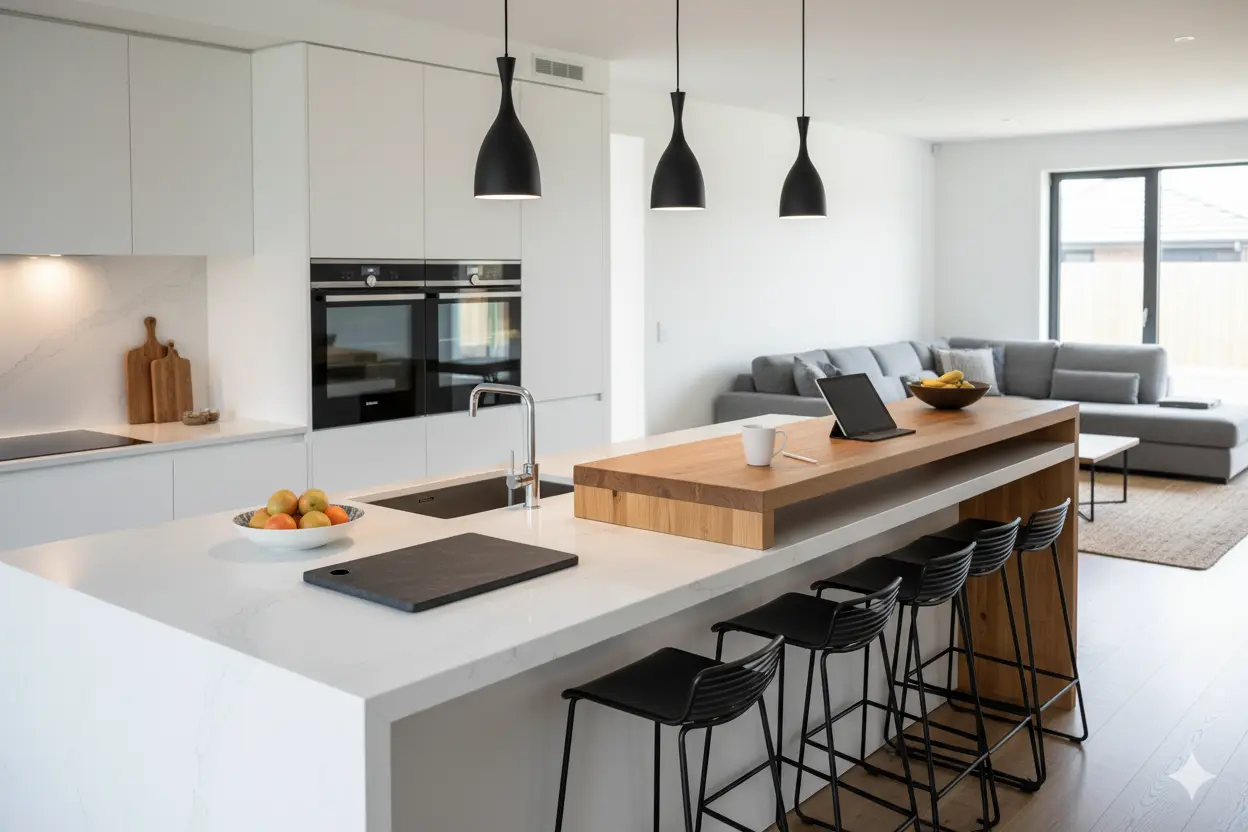
There’s something truly timeless about white shaker-style cabinets. The simplicity of the door profile keeps things refined, and the white finish ensures the kitchen remains bright and airy. This kind of choice is rational: it adapts to changing accessories, hardware styles and even layout tweaks. Classic equals longevity.
3. Add Eye-Catching Hardware

White cabinetry offers a clean backdrop for hardware to shine. Want something subtle? Choose satin nickel or brushed chrome. Craving a statement? Go for matte black, brass or even aged bronze. These small touches make a big difference. Pairing white cabinets with black hardware, for example, gives modern crispness; with brass it tilts luxurious.
4. Introduce Warm Wood Accents
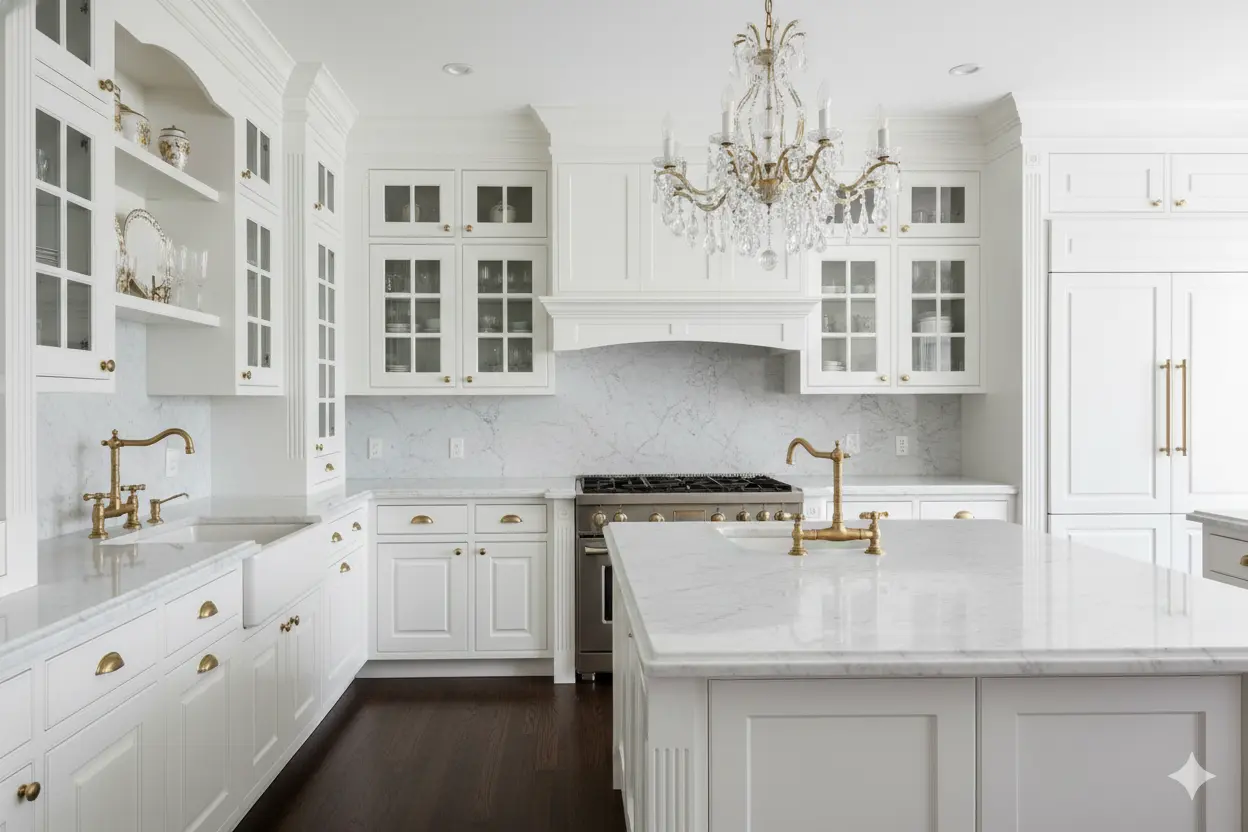
A pure white kitchen can run the risk of feeling cold — unless balanced with warmer materials. Wood works beautifully here: think walnut or oak flooring, a wood-wrapped island or open shelving. The result: the bright white lifts the space, the wood grounds it. Designers frequently embed this duo for its timeless appeal.
5. Two-Tone Cabinetry (White + Another Finish)

White cabinets don’t need to dominate the whole room. A clever trick is to mix white with another finish — maybe white on top, wood on bottom; or white for the perimeter, a bold colour or dark tone for the island. This creates visual interest and defines zones. One trend report noted this style remains strong.
6. Pair with a Bold Countertop or Backsplash
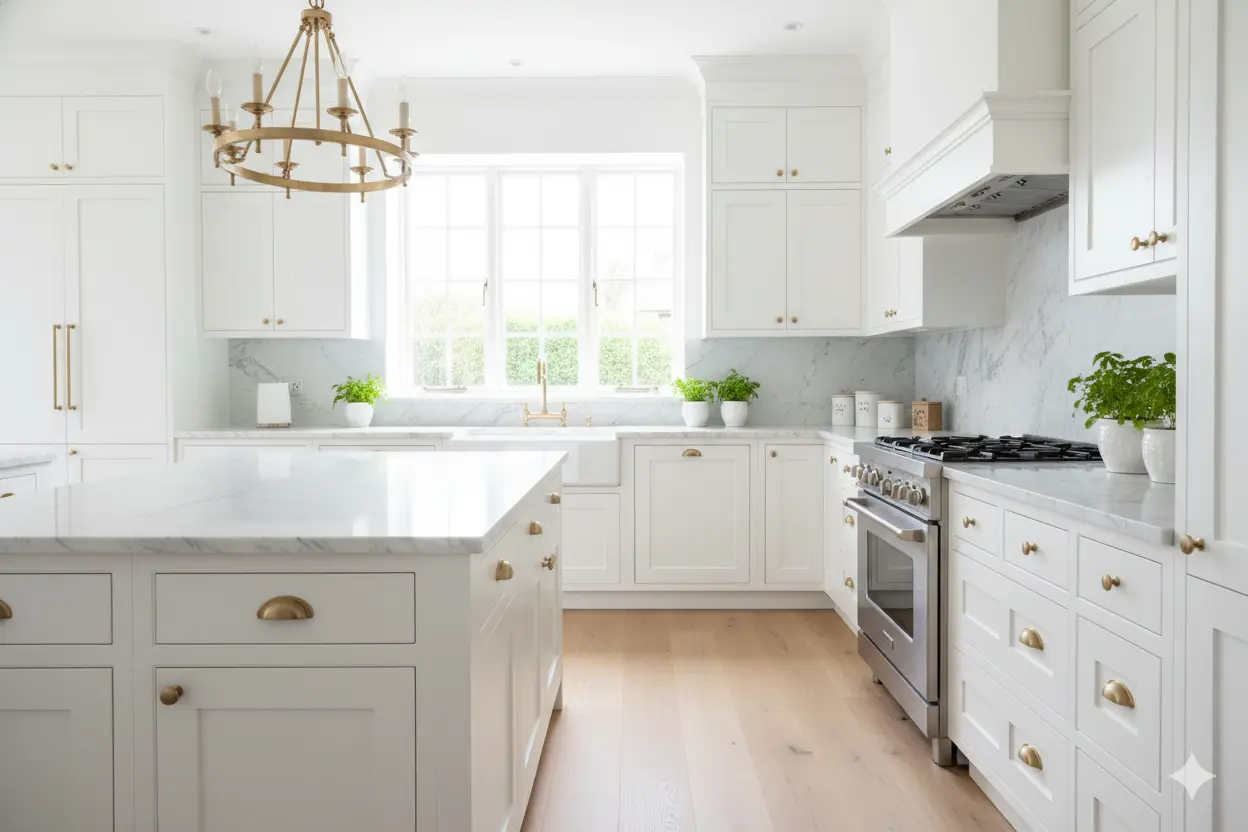
White cabinetry gives you freedom to go bold elsewhere. A black countertop creates a striking contrast. Marble with pronounced veining brings subtle luxury. Or choose a coloured tile backsplash to add personality. The key: let the white calm the visual field so the accent surfaces shine.
7. Glass-Front White Cabinets for Open Display

White glass-front cabinetry gives a lighter, airy feel. It’s particularly effective for upper cabinets or a section of your kitchen where you want to display openness. The white frame keeps the look unified; the glass breaks monotony.
8. Matte Finishes and Modern Hardware

If your home is more modern than classic, consider white cabinets with a matte finish and minimal hardware. Flat-panel doors, integrated pulls, clean lines — the white keeps it fresh; the finish keeps it grounded. As one source noted for 2025: “matte surfaces … stand out” in cabinet design.
9. Warm White vs. Cool White: Choose Your Undertone
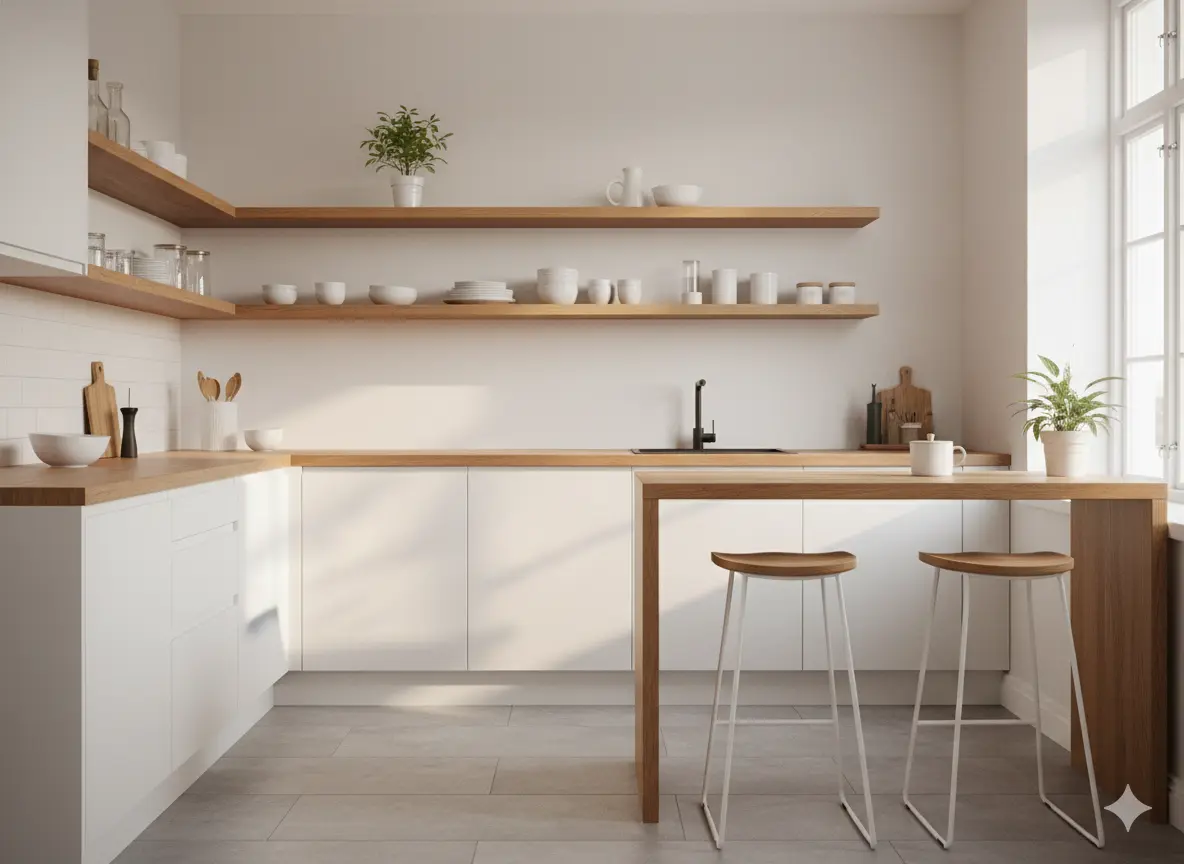
Bright white kitchen featuring wooden floating shelves, oak bar stools, and natural wood tones that add warmth to the modern space.
All whites are not equal. A warm white (with cream or beige undertones) creates a softer, more inviting feel. A cool white (with blue or grey undertones) feels crisp and clean. The final choice should respond to your lighting, flooring, and materials. According to an interior designer quoted on the topic: “If you want a kitchen that will last a lifetime, white is a classic colour that will always be in style”.
10. White Cabinets in Small Kitchens
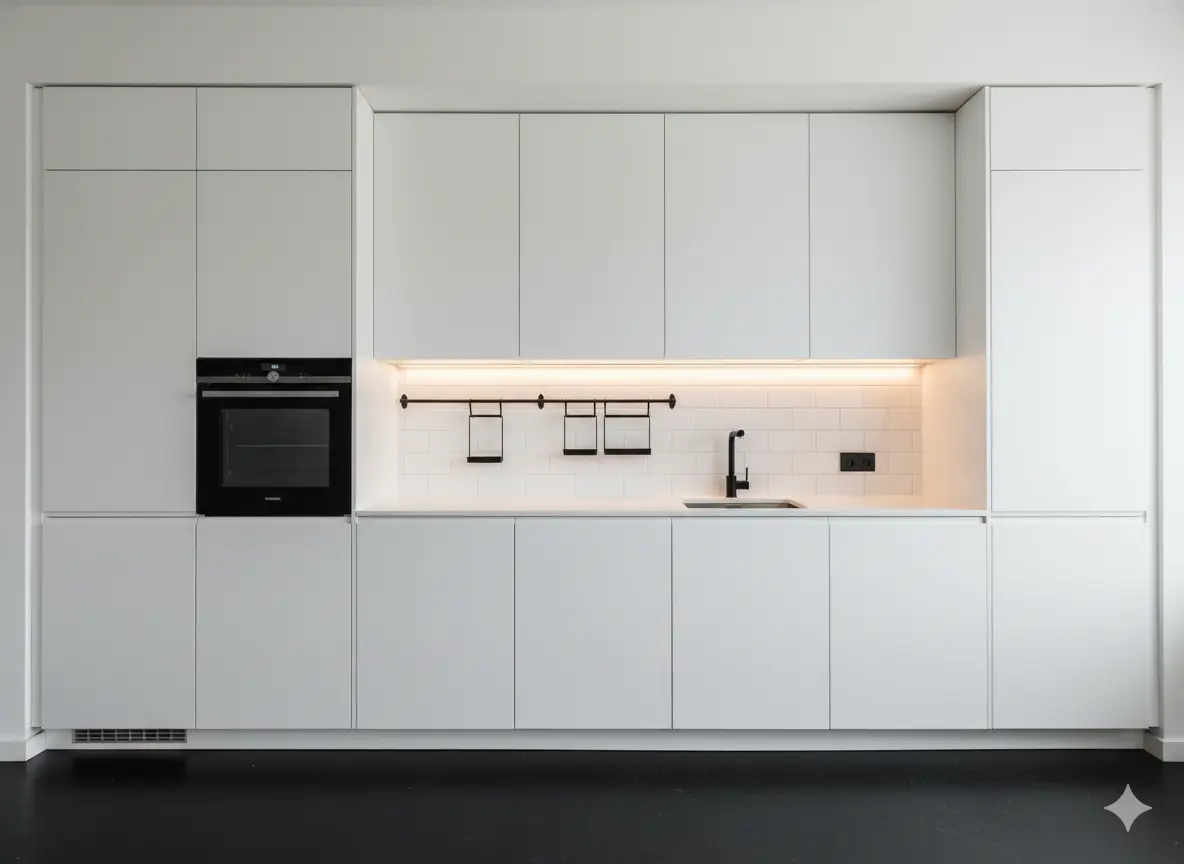
Modern minimalist white kitchen with handleless cabinets, marble countertops, and soft under-cabinet lighting for a clean, seamless look.
If your kitchen is tight on space, white cabinets can be a smart move. They reflect light, give the illusion of space and help the room feel larger. But while white is forgiving, clutter shows more easily — so keep surfaces clear and integrate smart storage. A source on small white kitchens emphasised: white makes spaces look larger.
11. Combine with Warm Flooring for Balance
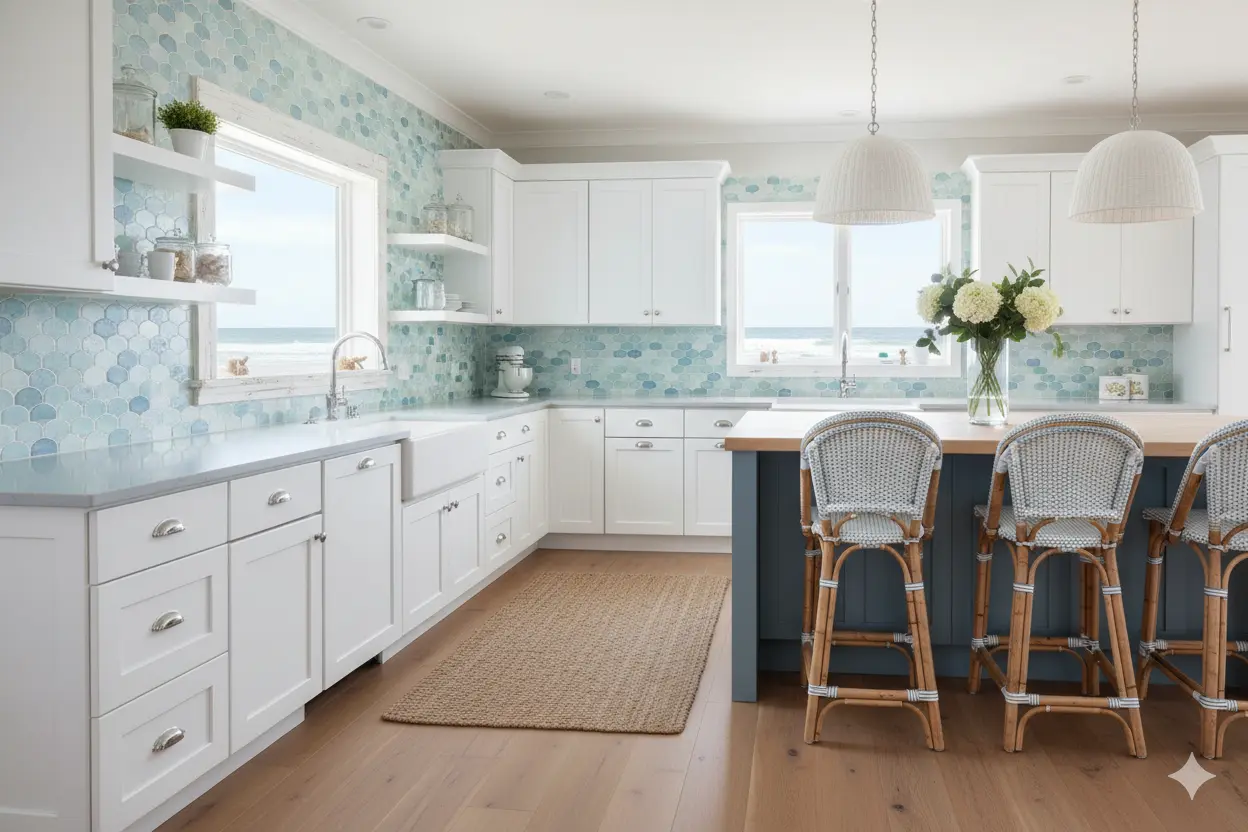
White cabinets paired with wood or warm-toned flooring create a rich contrast without losing lightness. The warm floor anchors the room, while the white upper masses keep it airy. Design guides on white kitchens consistently mention this strategy.
12. Add Personality with Hardware Colours
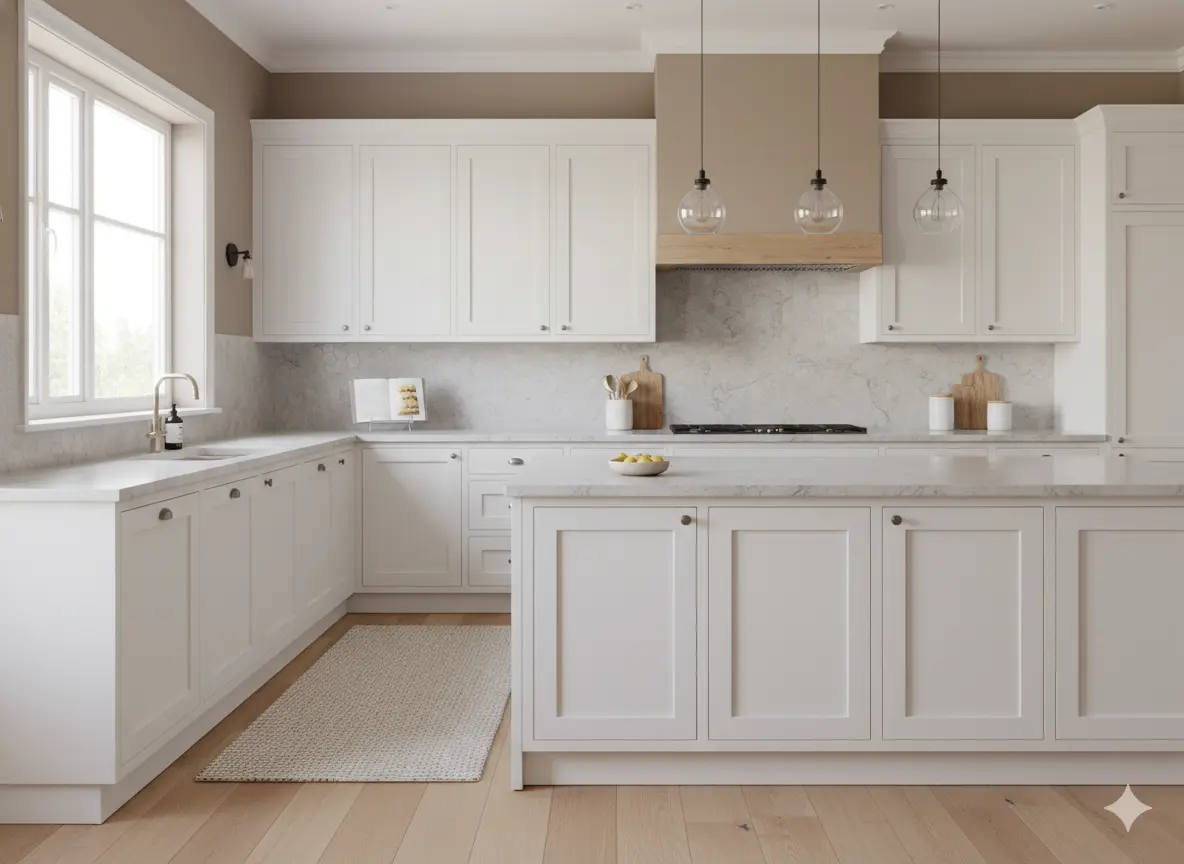
Elegant white kitchen with beige backsplash, light gray countertops, and taupe walls creating a soft and cozy modern atmosphere.
We touched on hardware earlier, but I want to emphasise how big a statement it can make:
- Black hardware on white = sharp contrast, modern edge
- Brass/Gold on white = luxe, elegant
- Bronze or aged metal = vintage charm
- Even if you keep cabinets simple, hardware gives you personality without overwhelming.
13. Mix White Cabinets with Open Shelving
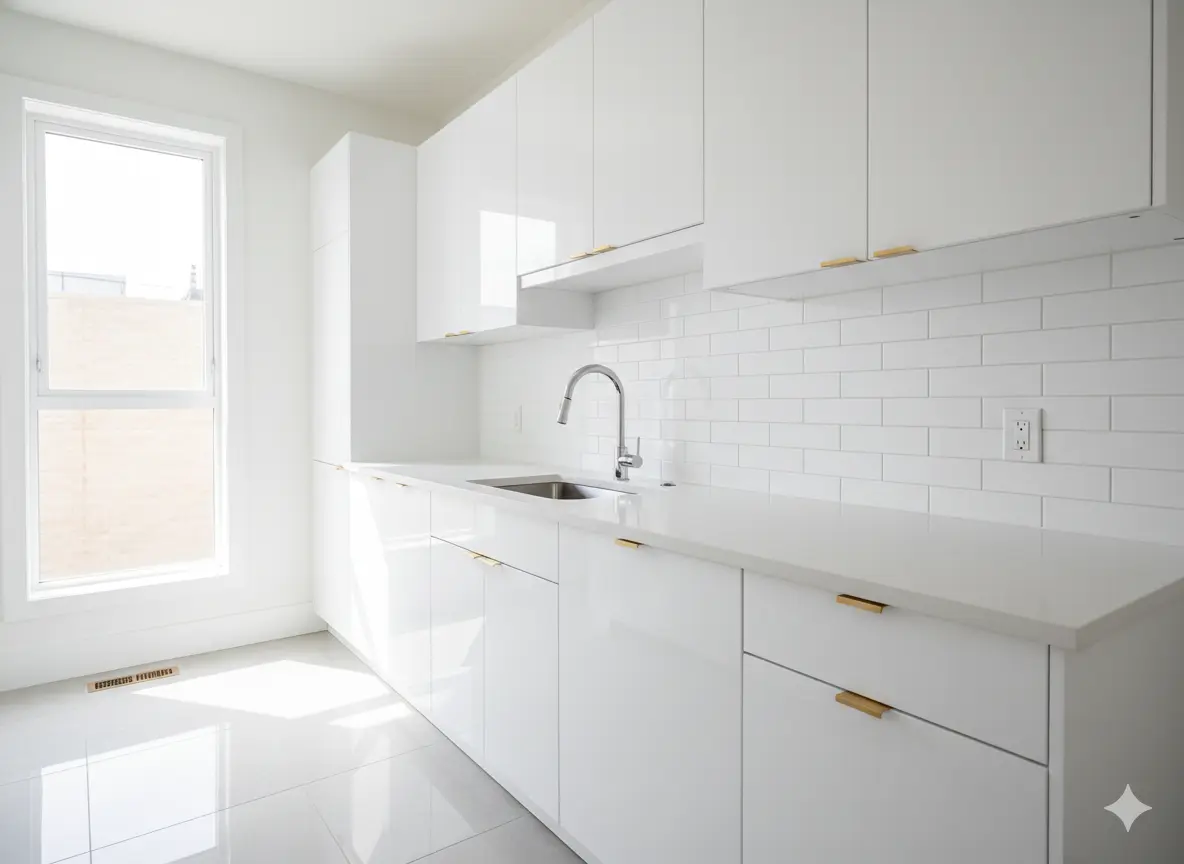
White cabinetry with a touch of open shelving (perhaps wood or metal) keeps the space light and gives you display options. It avoids the “everything behind doors” look and can soften the overall feel. Use white cabinets for function & storage; use shelves for display and visual interest.
14. White Cabinets + Dark Island or Hood for Drama
If you want drama but not overwhelm, keep the bulk of cabinetry white, then introduce a dark element — a charcoal or navy island, or a dark hood above the stove. The white around it keeps the space bright; the dark centre draws the eye and grounds the layout. It’s a sophisticated balance.
15. Use White Cabinets for a Farmhouse Look
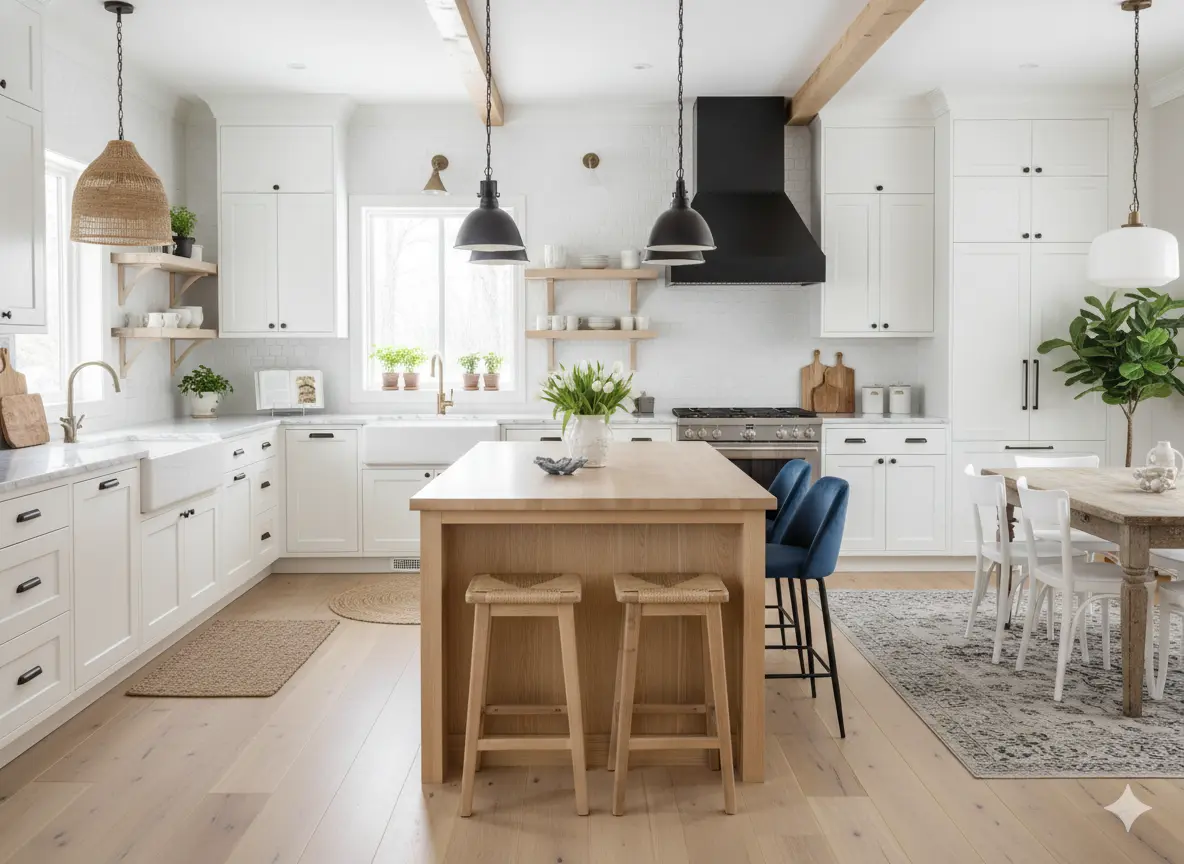
Bright all-white kitchen with shaker cabinets, marble countertops, and subway tile backsplash creating a clean, timeless look.
For farmhouse or cottage-style design, white cabinetry is often foundational. Combine with butcher-block counters, distressed wood beams, or vintage pendant lights. The white gives freshness; the rustic elements give character. It feels lived-in rather than showroom.
16. Keep it Crisp with White-on-White Accessories
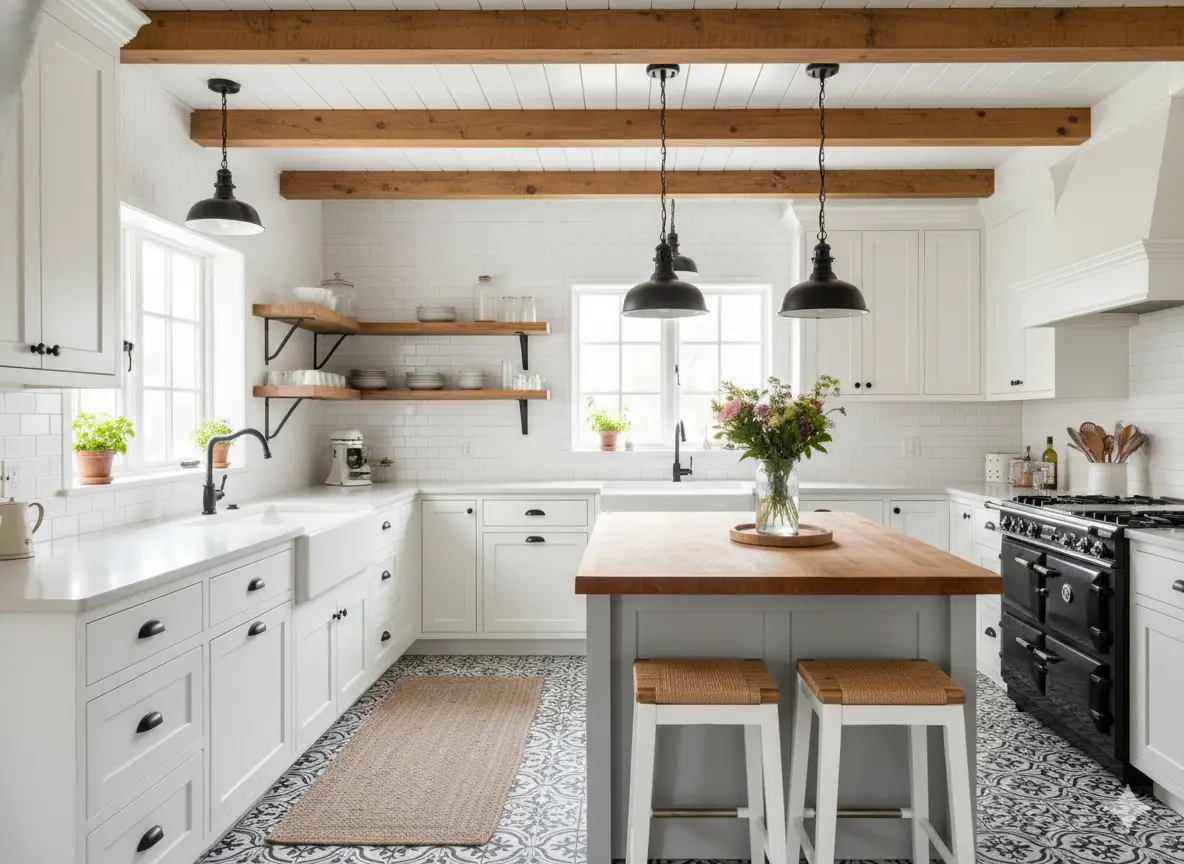
Charming white farmhouse kitchen with shaker cabinets, apron-front sink, rustic wood beams, and vintage-inspired fixtures.
If you lean minimal, go for white cabinets, white countertops and a white backsplash. Texture becomes your best friend here (subtle veining, tile patterns, lighting). This style is clean, calm and visually expansive. One design article remarked that “an all-white theme equals a creative carte blanche.”
17. Layer in Textures to Avoid Sterility
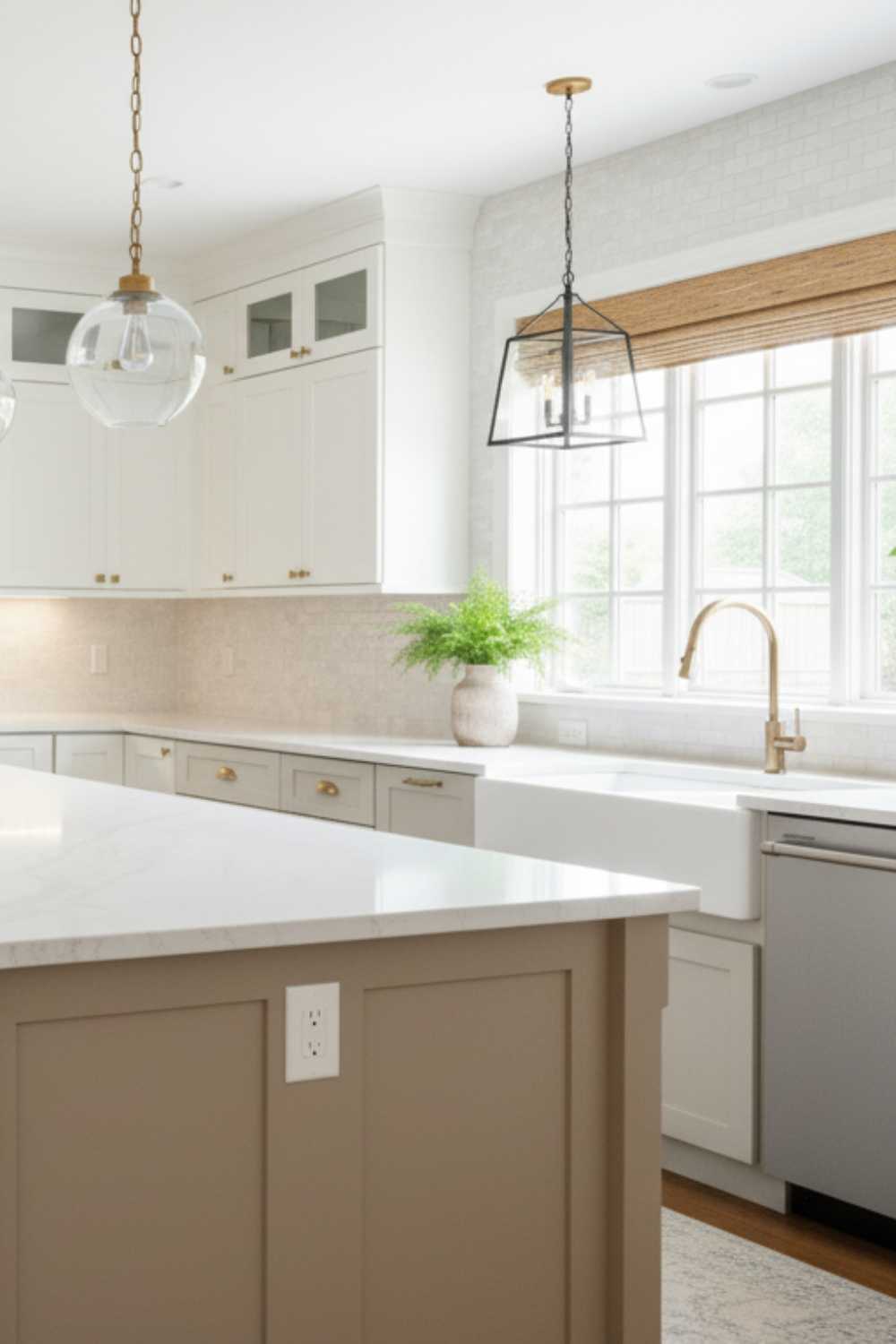
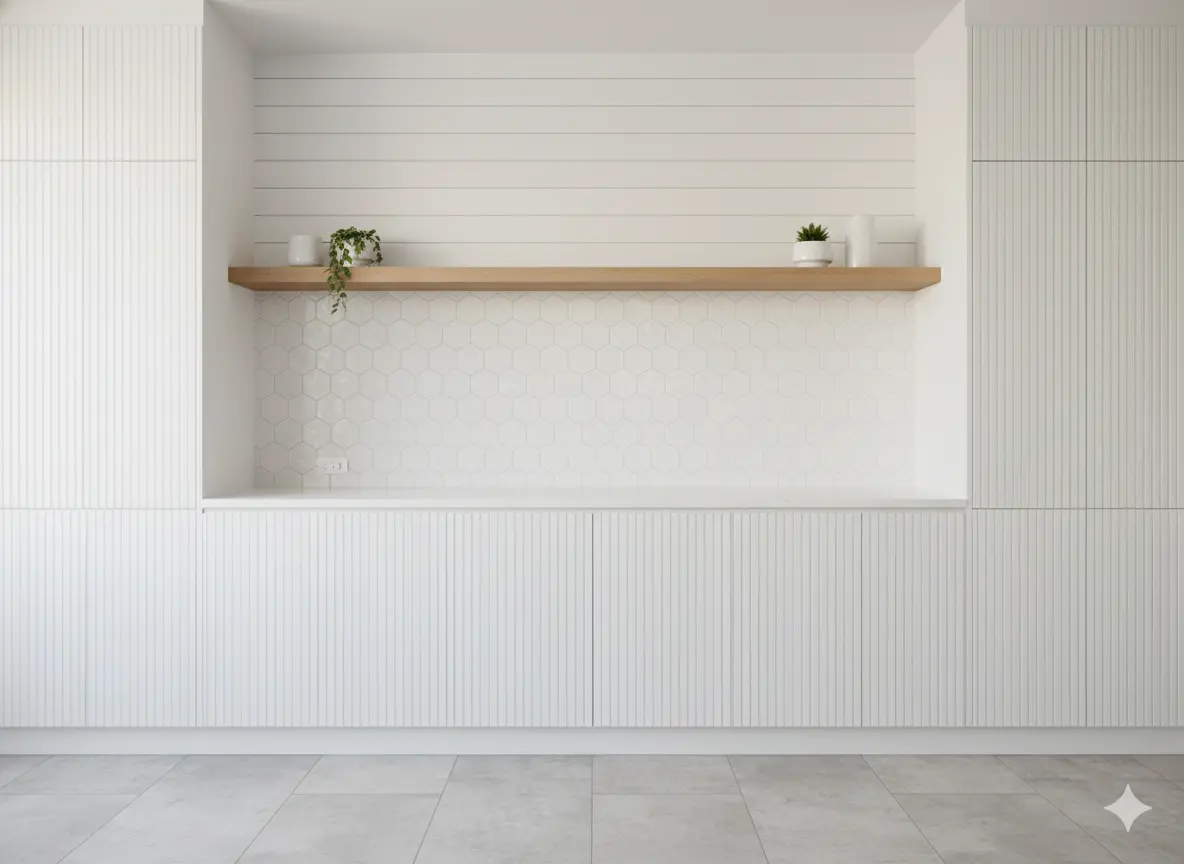
White can sometimes feel too “cold” if everything is the same surface. Introduce texture — a herringbone tile backsplash, fluted cabinet fronts, wood beams, tactile lighting. These tactile elements save the white space from feeling flat or sterile.
18. Consider Maintenance and Durability
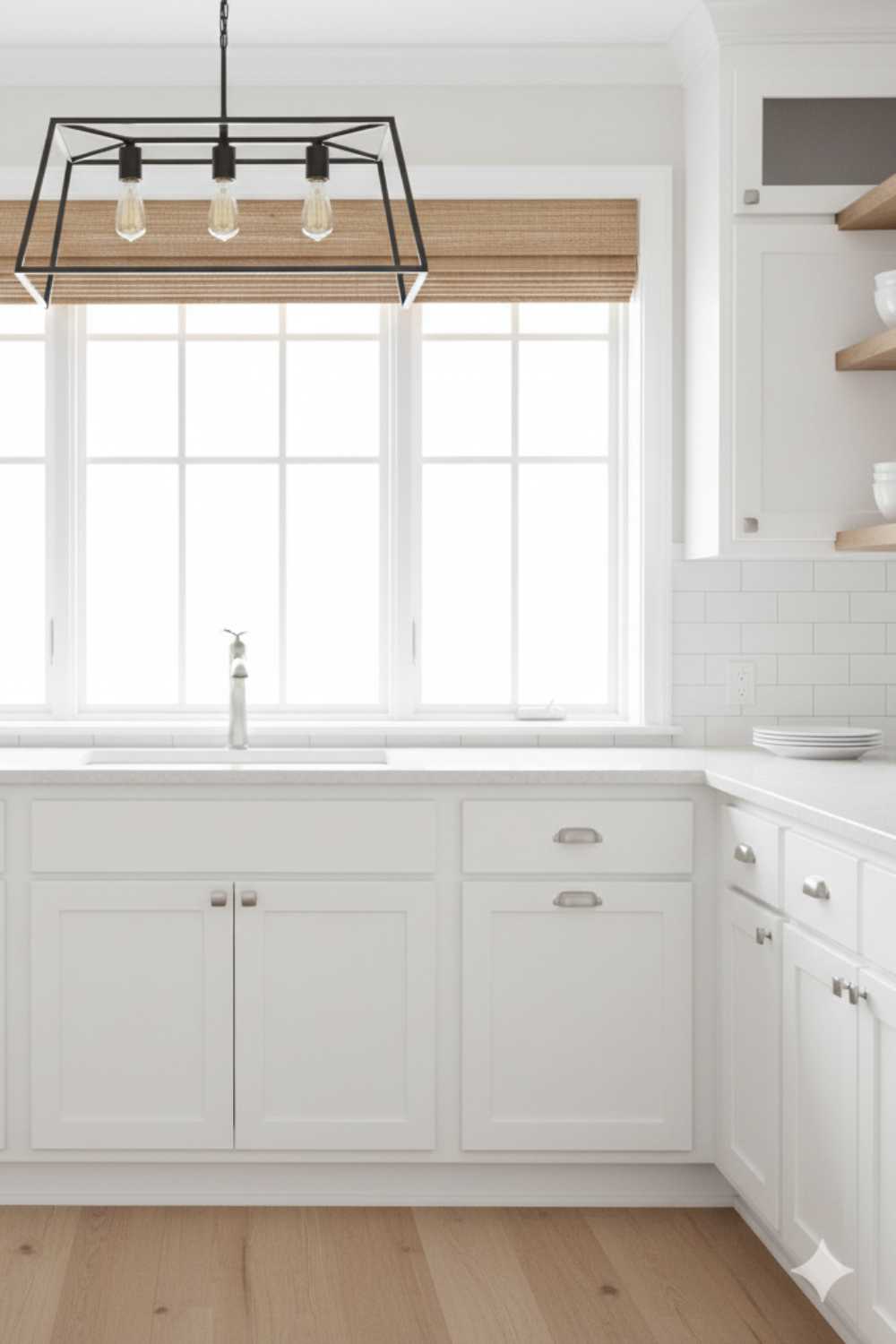
White shows everything — fingerprints, spills, dust. Choosing a durable finish (for example, semi-gloss or satin) and planning for cleaning will be key. But the payoff is clear: brightness, openness and versatility. One blog reminds us: “White kitchen cabinets provide a timeless, versatile design … They help brighten the space, making it feel larger and more open.”
Conclusion
Choosing white cabinets is more than picking a colour — it’s defining the tone of your kitchen. Will it be airy and serene, warm and rustic, sleek and minimal? White gives you the blank canvas. From there, you layer in materials, hardware, textures and angles that speak to your style.
No matter your size of your kitchen, no matter your style era or layout quirks, white cabinetry remains a reliable route to brightness, flexibility and long-term appeal.


No Comments