
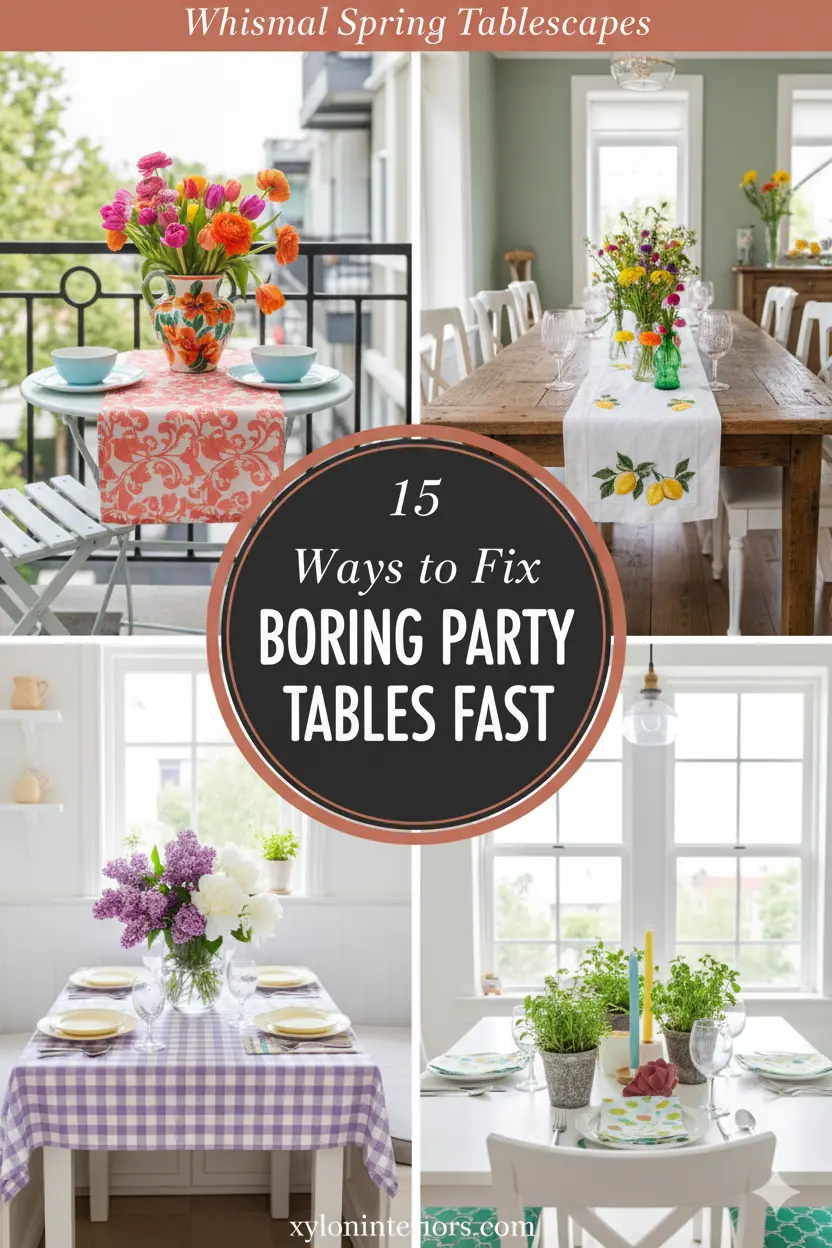
You know that moment right before guests arrive, when you step back and look at the food table and think, “Huh. That looks… fine”? Not terrible, not amazing, just a little flat and slightly depressing for something that’s supposed to feel like a celebration.
Especially in spring, when everything outside is blooming, a dull table can make the whole gathering feel tired. The good news is, you do not need fancy dishes or a giant budget to fix it. Most “boring” party tables are just missing a few simple things: color, height, texture, and a bit of playfulness.
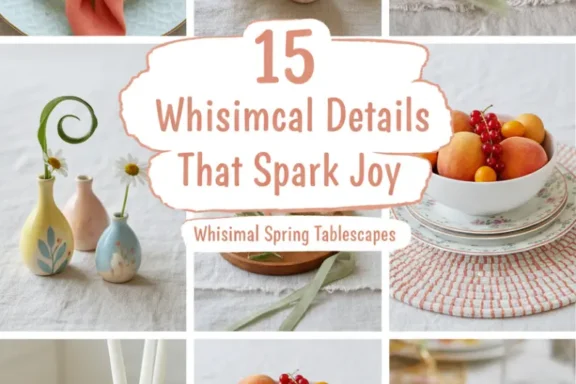
This is where whimsical spring tablescapes come in. Think soft colors, tiny surprises, simple flowers, and layers that make guests want to linger a little longer. You can pull most of it together from your kitchen cabinets, your linen closet, and maybe a quick walk in your backyard.
I’ll walk you through 15 realistic ideas to wake up a sleepy buffet, dining table, coffee table, or kitchen island. These are all tricks I’ve used in real homes with kids, pets, and limited storage. Nothing precious, nothing perfect, just simple ways to make your table feel special without making yourself crazy.
Quick Overview: 15 Fast Fixes for Boring Party Tables
Before we dive into details, here is a quick snapshot of the ideas we’ll cover. Most of these work beautifully together, so think of this as a mix-and-match list:
- 1. Build a simple layered base with linens (even if you “don’t have tablecloths”).
- 2. Add height and levels so the food and decor don’t sit in a flat line.
- 3. Bring in real greenery and flowers, even if it’s just snipped branches.
- 4. Use color in a planned way instead of random bits everywhere.
- 5. Create a playful centerpiece that actually starts conversations.
- 6. Upgrade plain plates and napkins with tiny, easy details.
- 7. Style drinks like a mini beverage station instead of a jug on the counter.
- 8. Use everyday glass jars and bottles for candlelight and flowers.
- 9. Add something unexpected that nods to the season or occasion.
- 10. Group food and decor in zones so the table makes visual sense.
- 11. Borrow from other rooms: books, baskets, stools, scarves.
- 12. Play with patterns and textures, even if you’re a “neutrals person.”
- 13. Make tiny personal touches for guests without a huge DIY project.
- 14. Let lighting do half the work for you.
- 15. Have a 10‑minute emergency plan for last‑minute parties.
We’ll keep circling back to one idea: how to turn a regular setup into whimsical spring tablescapes that feel light, fun, and not overly styled.
1. Start With a Layered Base (Even If You Don’t Own a “Real” Tablecloth)
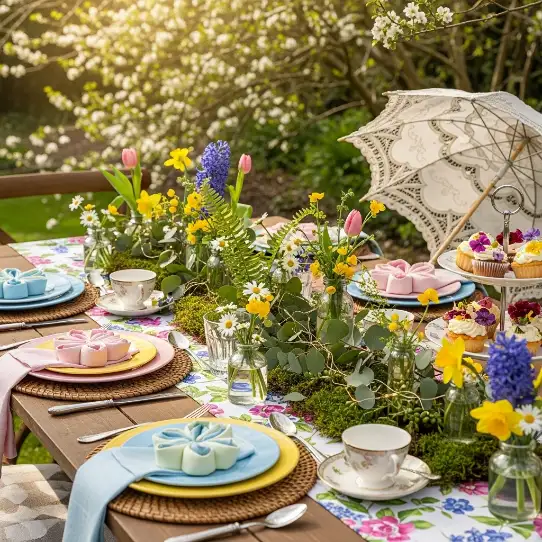
A bare table rarely looks party‑ready on its own. The fastest way to fix a boring table is to give it a soft, layered base. That first layer sets the mood: cozy and casual, light and airy, or bright and cheerful.
Use what you already have
You do not need a formal tablecloth. Look around your home for:
- A clean flat bedsheet in white or a soft color
- A linen or cotton curtain panel
- A lightweight throw blanket or large scarf
- A length of fabric you once bought and never used
Fold or drape it across the table and let it hang casually. A few natural wrinkles are fine. In spring, pale greens, buttery yellow, soft pink, and warm whites read fresh without feeling childish.
Add a second layer for depth
To give your table a more designed look, add one more layer:
- A runner going down the center
- Two shorter runners placed across the table like wide placemats
- A smaller cloth set at an angle on top of the first layer
You could also lay a strip of brown kraft paper or white butcher paper down the center. It looks casual and gives you a place to write food names, little doodles, or a simple quote like:
Gather where the flowers are.
That one extra fabric or paper layer instantly makes the table feel intentional instead of last‑minute.
2. Add Height So Everything Isn’t Sitting in a Flat Line
A big reason tables feel boring is that everything is the same height. Think of a buffet where the trays, bowls, and platters all sit flat. Your eye just glides across without stopping.
To create whimsical spring tablescapes, we want a little rhythm: low, medium, high, then low again. This makes food and decor look more generous and more interesting.
Simple ways to add levels
Try a few of these:
- Turn a sturdy bowl upside down under a platter to lift it.
- Stack two cutting boards on one side and one on the other.
- Use a short stool or crate under the tablecloth to raise a group of dishes.
- Place a cake stand or a large inverted mixing bowl in the center.
If you are worried about wobbly plates, put a non‑slip mat, a piece of felt, or even a folded paper towel between the layers.
Use height for decor too
Do not forget your decorations. A tall jug of branches, a lantern, or a grouping of candlesticks punctuates the table and makes it feel like more than just “where the food lives.”
Just keep one rule in mind: guests should be able to see each other across the table. Keep tall pieces narrow or move them to the ends once people sit down.
3. Bring In Real Greenery and Simple Flowers
Spring party tables almost beg for something living on them. It does not have to be a giant flower arrangement. Even a few small clippings can completely change the mood.
Use what nature gives you
Walk outside with scissors and look for:
- Green branches from shrubs or trees
- Herbs like rosemary, mint, or thyme in pots or garden beds
- Clover, wildflowers, or small blooms from your yard
Lay a simple stem across each napkin, or tuck small sprigs into jars. No perfect arranging skills required.
Spread small vases, not one big one
Instead of one giant bouquet, try several tiny ones:
- Use mismatched bud vases, juice glasses, or narrow jars.
- Place a single flower in each and scatter them along the runner.
- Mix in plain greenery for filler.
This feels looser and more whimsical, like you picked flowers along a path and dropped them where they landed.
When in doubt, add more green. It hides the effort and shows the season.
4. Use Color With a Plan, Not at Random
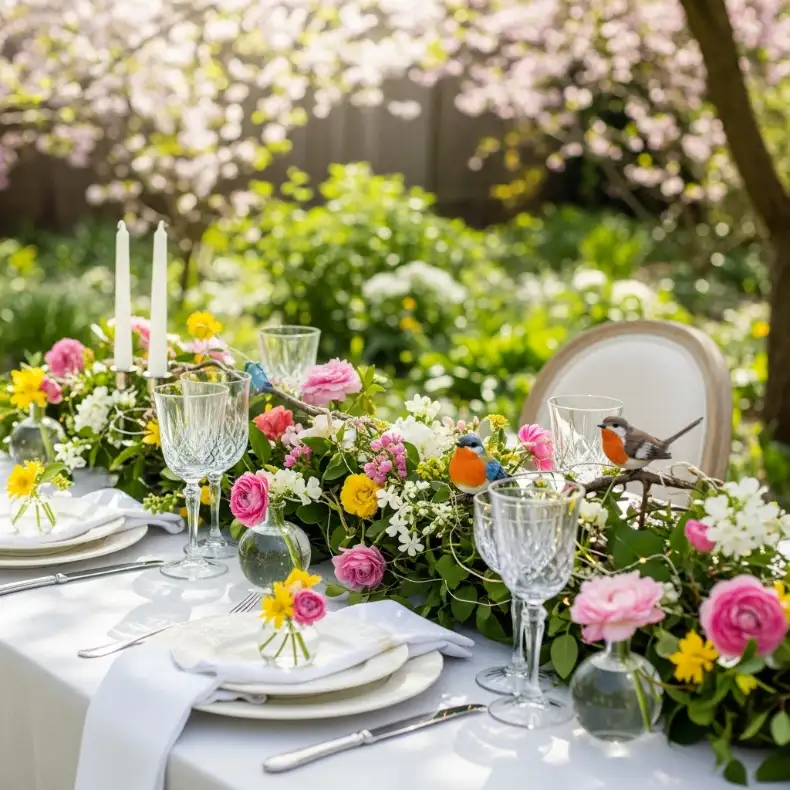
A lot of party tables feel boring because they are either all one flat color or a jumble of every color at once. For spring, a small color plan is your best friend.
Pick a soft color story
Choose 2 to 3 main colors and stick to them:
- Soft pink, white, and leafy green
- Butter yellow, white, and natural wood
- Lavender, sage, and linen beige
- Sky blue, white, and warm gold
Then let everything else be neutral: clear glass, white plates, wood boards, wicker baskets. This helps your table look pulled together even if the actual items are random mix‑and‑match pieces.
Repeat your colors on purpose
Once you choose your colors, repeat them three times across the table:
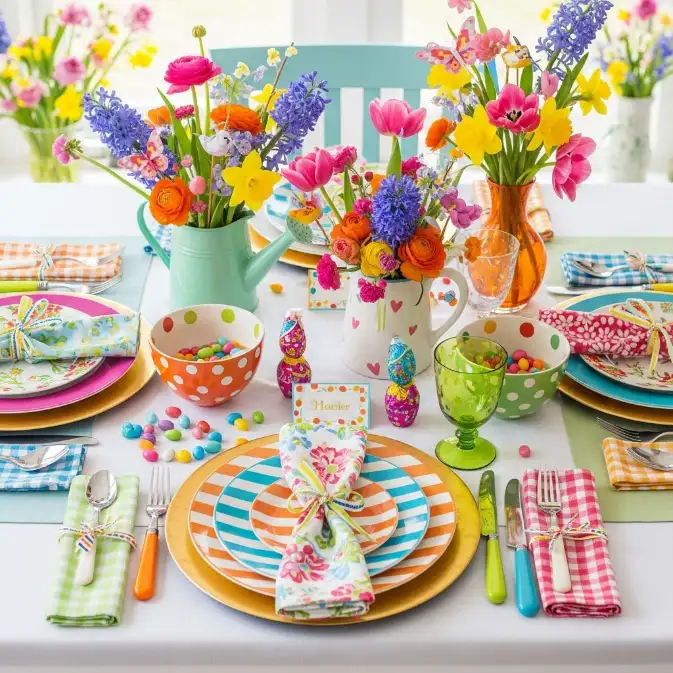
- Pink napkins, pink tulips, pink macarons
- Yellow candles, lemon slices in the water, yellow ribbon on favors
The repetition gives that “designed” feeling, but you are simply reusing the same couple of colors in different ways.
5. Build a Playful Centerpiece That Tells a Little Story
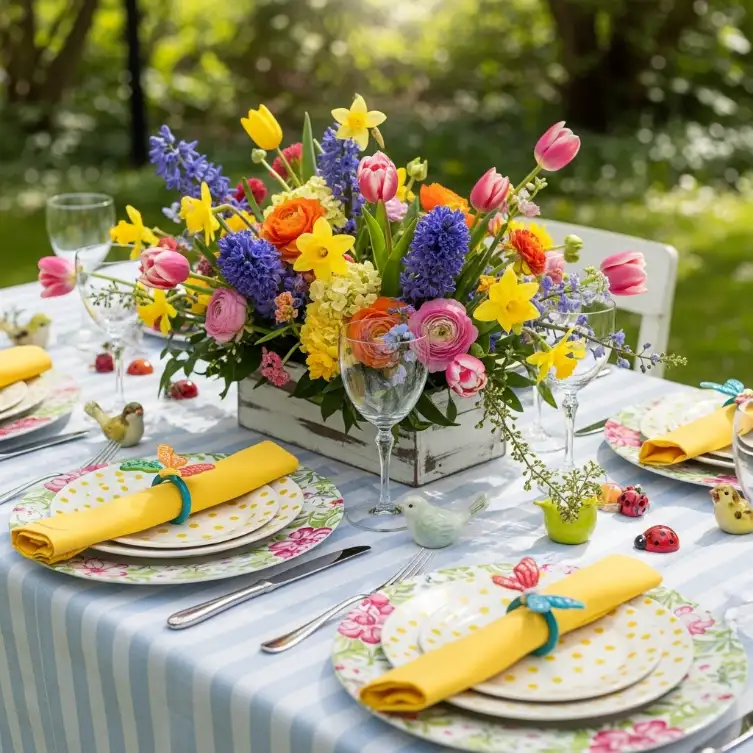
A centerpiece does not have to be stiff or formal. In fact, for whimsical spring tablescapes, it works better if it looks slightly relaxed, like it just grew there.
Think of a tiny spring moment
Ask yourself: what little spring scene could this table hint at?
- A picnic under flowering trees
- A garden waking up after winter
- Morning coffee in a meadow
- A bird’s nest tucked in a hedge
Then pull items that hint at that idea:
- Small ceramic birds
- A little nest filled with quail eggs (real or decorative)
- Mini terracotta pots with moss or herbs
- Lanterns and wood slices for a picnic vibe
Combine these with your greenery or flowers and keep the arrangement loose. It should feel like a story, not a museum display.
Use a tray or board as your “stage”
Place your centerpiece items on a tray, cutting board, or shallow basket. This does two things:
- Makes it easy to move if you need space for food.
- Keeps smaller items from looking like clutter scattered everywhere.
For a coffee table or sideboard, a portable centerpiece is especially handy. Guests can move it without feeling like they are rearranging your whole room.
6. Dress Up Plain Plates and Napkins with Tiny Details
White plates and basic napkins are not a problem. They are actually a great neutral base. They just need a little help to feel special.
Simple napkin tricks
Try one or two of these:
- Fold napkins simply and tuck them under the plate for a clean look.
- Roll napkins and tie with string, twine, or ribbon.
- Slip a small flower, herb sprig, or feather under the tie.
- Place a napkin diagonally so the corner hangs prettily over the table edge.
Cloth napkins are lovely, but high‑quality paper in a soft color can still look elevated if you fold them neatly and add a small detail.
Give plates a soft landing
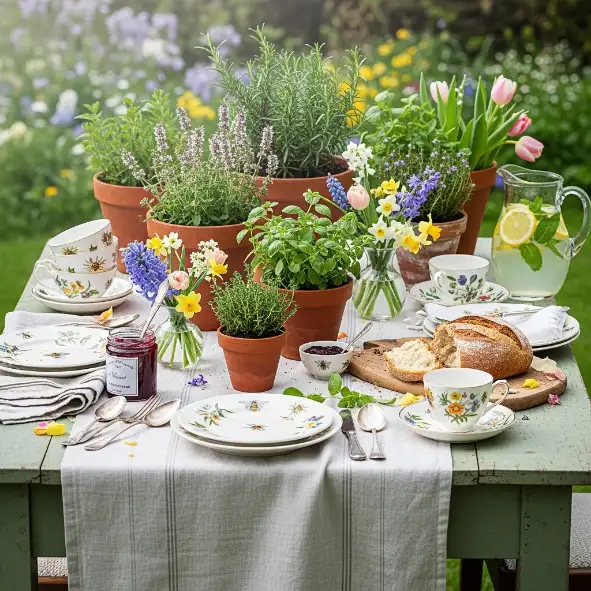
If you don’t own chargers, use:
- Woven placemats
- Thin wood boards for the ends of the table
- Layered paper doilies under dessert plates
- Brown paper squares with torn edges
That little “frame” under the plate gives more presence to every place setting, especially on a dining table where guests will sit for a while.
7. Turn Drinks into a Mini Beverage Station
A lonely pitcher at the end of the counter feels like an afterthought. Styling your drinks as a small station instantly makes the table feel intentional and festive.
Gather drinks together
Pick one surface: a corner of your buffet, the kitchen island, or even a small bar cart or console in the living room. Then:
- Place pitchers or drink dispensers at one end.
- Line up glasses or cups nearby.
- Add a small bowl of sliced citrus or berries for garnish.
- Set napkins and a dish for used stir sticks or spoons.
If you have space, a tray under the glasses collects any drips and keeps things tidy.
Dress up simple drinks
For spring, you can make even regular water look pretty:
- Add lemon, cucumber, or berries to a clear pitcher.
- Clip a bit of mint in a small jar next to the drinks.
- Use mismatched glass bottles or jars for a casual, charming look.
On coffee tables or side tables, a small tray with a carafe of water, a couple of glasses, and a tiny flower arrangement feels welcoming and thoughtful.
8. Use Everyday Glass Jars and Bottles for Candles & Flowers
You do not need special vases or candleholders to create the glow and sparkle that makes spring tables feel magical at night.
Save and reuse simple glass
Clean and remove labels from:
- Jam jars
- Olive jars
- Small sauce bottles
- Single‑serve juice or milk bottles
These can all become:
- Vases for single stems
- Tea light holders
- Mini terrariums with moss or pebbles
Scatter, don’t line up perfectly
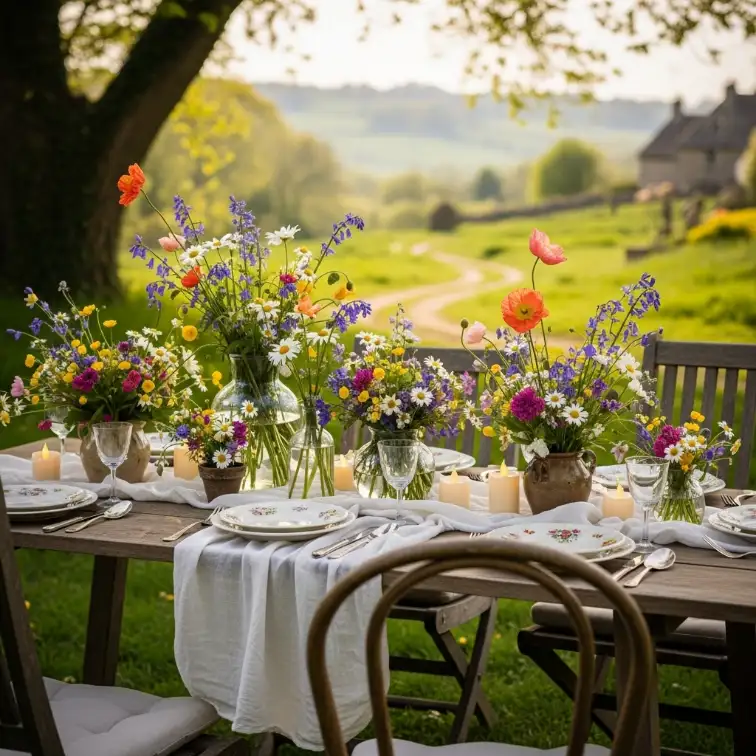
Part of the charm of whimsical spring tablescapes is a slightly imperfect, found look. Instead of a strict row, cluster jars in small groups of 3 or 5:
- One with a candle
- One with a flower
- One empty, just catching the light
Vary the heights a little. Some can sit on coasters, small books, or tiny wood slices. The reflections add depth without feeling fussy.
9. Add One Unexpected Seasonal Element
A single surprising detail can make people smile and say, “Oh, that’s cute,” as they sit down. That is the kind of warmth you want your table to have.
Ideas for spring‑specific touches
Try one of these simple additions:
- Small nests filled with tiny eggs on the buffet or at each place.
- Mini watering cans used as vases.
- Seed packets tucked into napkin rings or laid at each place as favors.
- Little ceramic bunnies or birds peeking out from greenery.
- Pressed flower place cards, even if it’s just a sticker on simple cardstock.
The key is not to overdo it. One or two “oh, look at that” moments are enough. You are trying to create delight, not clutter.
10. Create Zones So Guests Aren’t Confused
A common problem with party tables is that everything feels tossed together: drinks mixed with desserts next to napkins and a stray candle. Visually, it reads as noise.
Divide the table into clear sections
Even on a small buffet or kitchen island, you can break things into zones:
- Zone 1: Plates, cutlery, napkins
- Zone 2: Main dishes
- Zone 3: Sides and salads
- Zone 4: Desserts or sweets
- Zone 5: Drinks (if on the same surface)
Use decor to gently frame each area: a little cluster of jars and flowers near the dessert, or a higher focal piece at the center of the mains.
Let the layout guide people
Think about how you want guests to move:
- Start with plates and napkins at the beginning.
- Place the main food in the middle.
- Put cutlery and condiments toward the end so they don’t cause a traffic jam.
- Drinks either before everything or on a separate station.
A clear flow not only helps the party run smoother, it also makes the table feel calm instead of chaotic.
11. Borrow Decor from Other Rooms
You probably own more “decor” than you think. A lot of it is just living in other rooms, waiting for a party invite.
Look around your home for table helpers
Walk through your living room, bedroom, and entryway with your table in mind. Consider borrowing:
- Pretty coffee table books (stack 2 or 3 as a riser).
- Small accent lamps for soft lighting on a sideboard.
- Wicker baskets or trays to corral napkins or bread.
- Ceramic bowls used as candy or nut dishes.
- Decorative boxes or lidded jars as part of the centerpiece.
On a side table or console in the living room, a basket layered with a cloth napkin, stacked plates, and a vase of flowers can act as an overflow station for dessert or coffee.
Use furniture as height and extra surface
If you are short on table space:
- Use a small stool as a pedestal for a cake or punch bowl.
- Pull a bench against the wall and style it as a low drink station.
- Let your TV console hold snacks in the living room, styled with a runner and a plant.
It does not have to be perfect. In real homes, using what you have creatively looks warm and welcoming, not “makeshift.”
12. Play With Patterns and Textures, Even If You Like Neutrals
A neutral table can still easily slip into “boring” if everything is the same flat texture. The trick is to layer quiet patterns and textures so the table looks soft and rich without screaming for attention.
Mix, but keep the palette calm
Try a mix like:
- Plain white plates
- A linen‑look tablecloth
- Woven placemats or a rattan tray
- Striped or gingham napkins in a subtle color
- Ceramic and wood serving pieces
In spring, small floral or botanical patterns work beautifully, especially on napkins, runners, or dessert plates.
Use texture to make budget pieces feel higher‑end
If most of your tableware is simple, bring in:
- A chunky knit throw used as a bench cover.
- Burlap or linen strips as rustic runners.
- Wooden cutting boards under white platters.
- Wicker or seagrass baskets for bread and chips.
Guests notice how the table feels under their hands. Texture is a quiet way to add luxury, even when the pieces are inexpensive.
13. Add Small, Personal Touches for Guests
People remember how they felt at your gathering more than what was on the menu. Tiny, personal details go a long way in making a simple party feel thoughtful.
Keep it easy but meaningful
You do not need a full crafting afternoon. Try one of these:
- Write guests’ names on plain tags and tie around napkins.
- Place a single wrapped cookie or small chocolate at each place.
- Print a short seasonal quote and slip under clear plates.
- Use a small herb pot or flower as both place marker and take‑home favor.
Something as simple as, Welcome, I’m so glad you’re here
written on kraft paper along the table edge can soften the whole mood.
Let kids help create whimsy
If you have children around, invite them in:
- Have them draw little spring doodles on the paper runner.
- Ask them to write name tags in their own handwriting.
- Let them arrange a few jars with flowers.
Imperfect details add charm. A spring table is allowed to feel a little playful and handmade.
14. Use Lighting to Instantly Change the Mood
Lighting is one of the easiest ways to take a table from “weekday dinner” to “special gathering,” especially for evening parties.
Soften the overhead lights
Overhead fixtures can be harsh. Instead:
- Dim the main light if possible.
- Turn on nearby lamps in the living room or dining room.
- Add a small lamp or two on the buffet or sideboard.
Warm bulbs (not bright white) are kinder to faces and make all your spring colors look richer.
Add gentle sparkle
Around your table, try:
- Tea lights in safe glass holders clustered along the runner.
- A simple string of fairy lights woven around jars and greenery.
- Candles in varying heights at the ends of the table.
If kids or pets make open flame stressful, go for good‑quality battery candles or fairy lights in jars. The glow is what makes it feel cozy, not the actual fire.
15. Create a 10‑Minute “Emergency” Spring Table Plan
Sometimes people text, “We’ll be there in an hour,” and you look at your dining table covered in mail and keys. Having a mental checklist for quick styling saves a lot of stress.
Your fast fix formula
For a last‑minute table, try this step‑by‑step:
- Clear everything off the table and wipe it down.
- Throw on a neutral cloth, sheet, or runner.
- Add a cutting board or tray in the center as a base.
- Grab a small vase, jar, or pitcher and fill with any greenery or flowers you can find.
- Cluster 3 jars or candles around the centerpiece.
- Stack plates at one end, napkins and cutlery in a jar or basket.
- Place one simple seasonal touch (bowl of lemons, nest, herb pot).
This gives you a calm, pretty stage for whatever food you have on hand, whether it is a big cooked meal or just store‑bought snacks and a few spring desserts.
Keep a small stash ready
If you entertain often, it can help to keep one box or basket with:
- A neutral table runner
- A string of fairy lights
- Tea light holders or jars
- A pack of nicer paper napkins
- Simple tags and twine
These basics can turn any regular dinner into something that feels just a bit festive, especially in spring when you add fresh greenery or flowers from outside.
Bringing It All Together: Real Homes, Real Tables
You do not need a picture‑perfect house to create whimsical spring tablescapes. You just need a few thoughtful choices:
- Some kind of soft layer under everything
- A little height and a little glow
- Greenery or flowers, even tiny ones
- A simple color story
- One or two playful, seasonal touches
The rest can be very normal: your everyday plates, a few mismatched glasses, a well‑loved cutting board. In real life, what guests notice is how relaxed the space feels and whether they sense that you thought about them when you set things up.
If all of this feels like a lot, start small. Maybe next time you host, you just:
- Add a runner and a sprig of green on each napkin.
- Collect a few jars for candles.
- Choose one color to repeat.
That alone will make your table feel different. Once that becomes comfortable, you can play with centerpieces, borrowed decor, and little seasonal surprises.
If you ever feel stuck or need fresh ideas, browsing places like Xylon Interior can help you see how others mix simple pieces into warm, inviting setups that still work for everyday living. Just remember, inspiration is a guide, not a rule book. Your table only has to work for the people actually sitting around it.
At the end of the day, your guests are coming for you, not your centerpiece. A few thoughtful touches, a relaxed atmosphere, and something tasty on the table will always matter more than perfect styling. Let your spring table be a little whimsical, a little lived‑in, and fully yours.



No Comments