
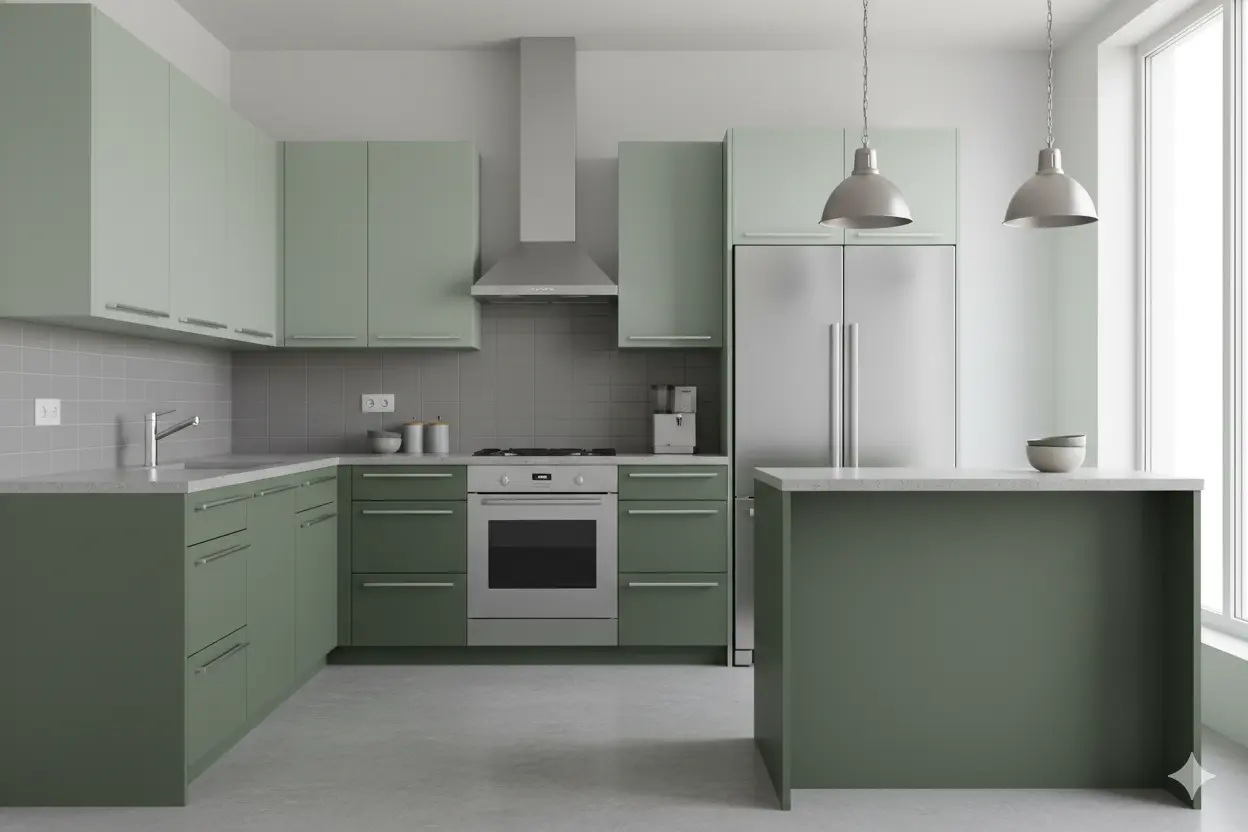
When you walk into a kitchen and feel a sense of calm, groundedness and natural warmth, you know you’re in the right space. The cabinet colour plays a huge role in setting that tone. That’s why the gentle, muted tone of sage green has become such a compelling choice for kitchen cabinetry. It evokes nature, whispers of wellness, yet stands firm on design. In this blog, we explore 15 distinct ways to use sage green cabinets—whether you’re doing a full renovation or simply refreshing your kitchen’s character.
Sage green isn’t the loud, in-your-face hue. It’s introspective. The way architects and interior designers think: colour is not just decoration, it frames how you live in a space. Sage green offers a palette that doesn’t demand attention—it invites calm, invites lingering. Let’s dive into ideas.
1. Classic Shaker Cabinets in Sage Green

The Shaker-style door—with its simple frame and flat centre panel—is a timeless choice. When painted in sage green, it merges tradition and freshness. Use sage green on all cabinets (upper + lower) for a cohesive look, or just on the lower run to anchor the kitchen in colour while keeping the uppers in white or cream to lift the space. The texture of the door adds depth; the colour adds softness.
Pair this with warm brass hardware and light wood flooring for a heritage feel. Or go modern with matte black pulls and crisp white quartz counters. The idea: let the sage green carry the personality, keep structural lines clean, and let other materials moderate.
2. Two-Tone Cabinets: Sage Green Meets Neutrals
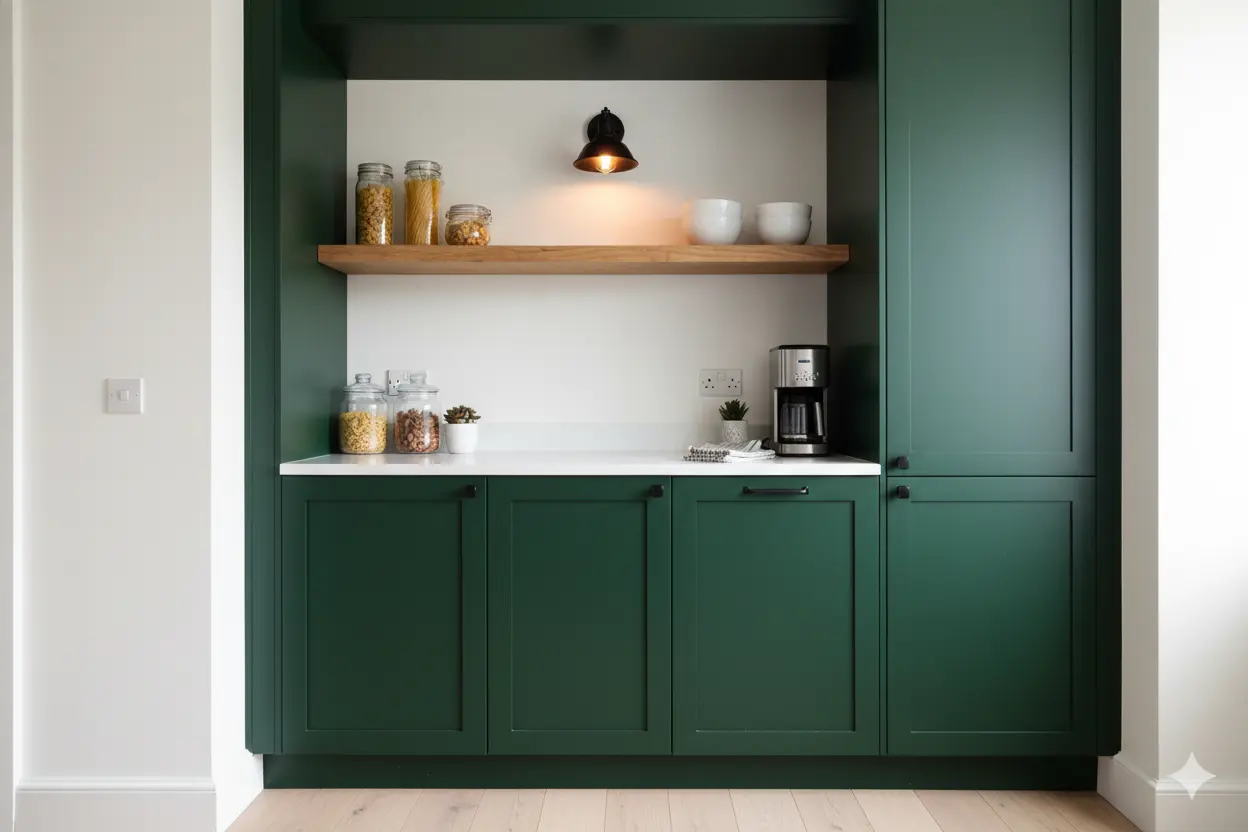
Rather than all cabinets in sage green, try splitting the colour. For example: base cabinets in sage green, uppers in off-white or cream (or even very light grey). This two-tone approach brings groundedness from the green and lightness from the neutral. It also visually lowers the base and allows the upper to recede, making the room feel taller.
Or invert: uppers in sage green, island in cream. It depends on your kitchen layout and ceiling height. The trick is balance. The warm nature of sage green plays beautifully against muted neutrals rather than stark whites if you want a softer effect.
3. Sage Green Kitchen Island as Statement Piece
If you hesitate to colour all your cabinetry, dedicate the island to sage green. This makes it the focal point and allows the surrounding cabinetry to remain neutral. The island becomes a design “hero” without dominating. In an open-plan space, this works especially well: the island anchors colour into the room, while the rest supports circulation and storage quietly.
Be mindful of island height, seating, lighting. A pendant above the island with a brass or copper finish will complement the sage green and draw the eye. Use bar-high stools in a natural material (wood, leather) so the texture complements the look.
4. Sage Green with Warm Wood Accents

Interior designers often talk about “bringing the outside in.” Sage green already does that via colour; combining it with natural wood accentuates the organic feel. For example: sage green cabinets paired with light white-oak open shelving, butcher-block countertop or wooden flooring. The wood warms the scheme and prevents the green from becoming too cool.
You could also consider walnut or darker wood for contrast—this gives the green a bit of drama. But too many wood tones can compete. Please choose one or two wood finishes and tie them across the space (flooring, shelving, stool legs) so the entire flow feels intentional.
5. Sage Green & Brass / Warm Metallic Hardware
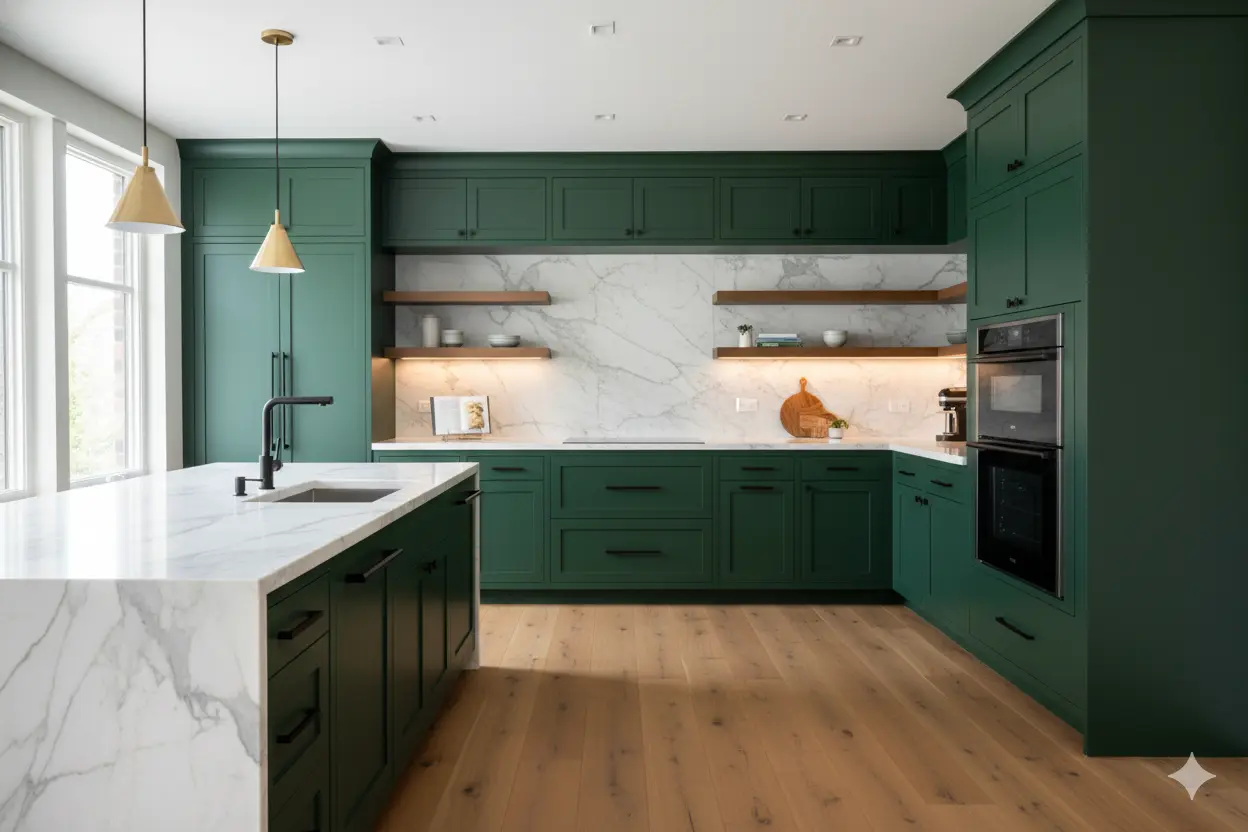
Hardware is small but mighty. On sage green cabinetry, brass, unlacquered brass or antique brass pulls and taps bring a vintage warmth. They help the green look richer and the space feel purposely designed. On the other hand, matte black hardware gives a more modern edge and high contrast. Designers note that sage green hides day-to-day wear better than bright white and, in many lights, adapts gracefully. Choose your metallic finish early in the project so other fixtures (tap, pendant lights, hood finish) coordinate. A mismatch can make the green look uncertain. With warm finishes, it’s easier: green, brass, and wood form a harmonious triad.
6. Sage Green & White Marble/Quartz Countertops

When you select sage green cabinets, the countertop surface becomes critical. A white or off-white marble with subtle grey veining or a creamy quartz can lift the green and keep the space bright. Designers emphasise: the right stone tone will harmonise with sage’s grey/green undertones. Avoid overly warm or yellow-toned stones unless you want the green to read more yellow. If your green has more grey-blue undertones, pick a stone with cooler veining. The cabinetry remains the star; the stone supports it.
7. Sage Green with Open Shelving & Textural Details
 Full walls of closed cabinetry painted sage green look polished. But for a lighter feel, consider replacing some upper cabinets with open shelving (in wood or painted in the same sage). This offers airiness and gives you styling opportunities.
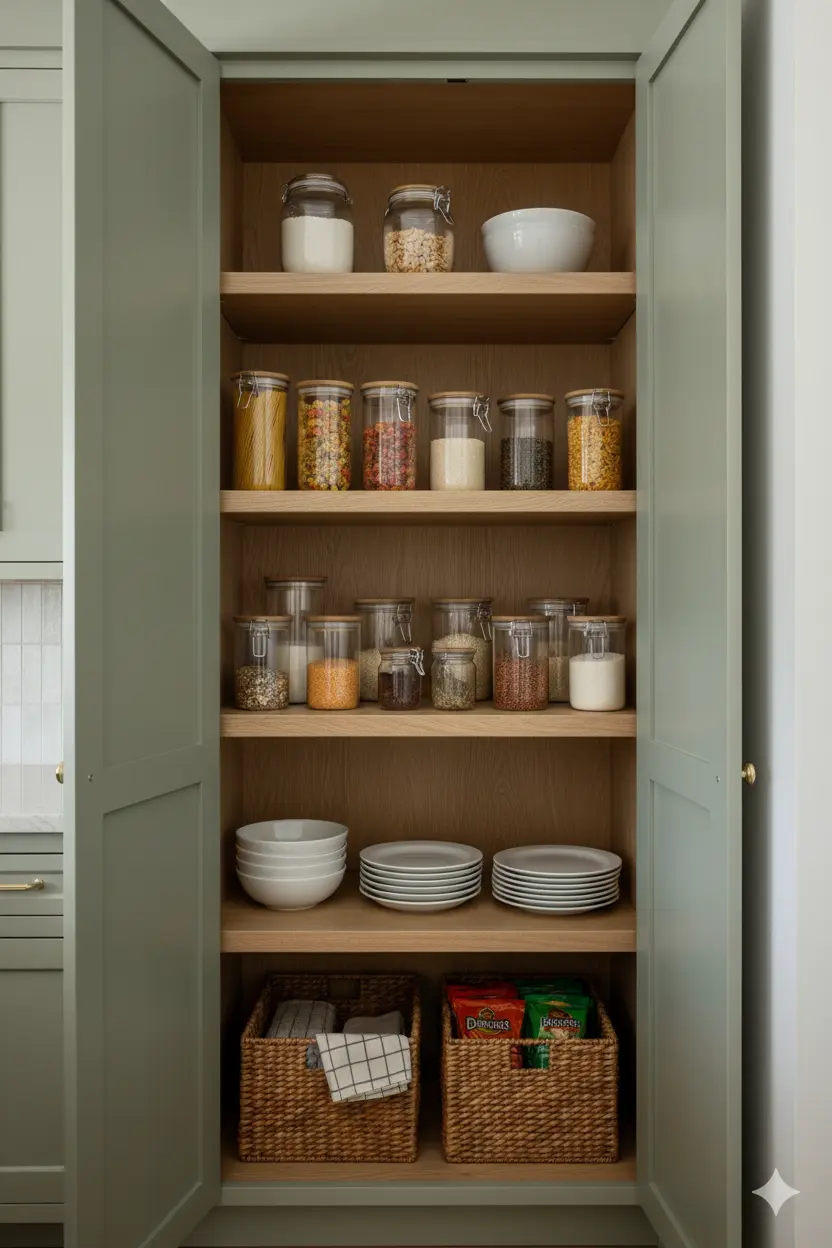
Display ceramic bowls, artisan glassware, and plants. The green backdrop softens the colours of your objects and keeps everything feeling curated yet homey. Textures—woven baskets, linen tea towels, wood bread boards—enhance the tactile appeal. Designers say styling is the “final flourish”.
8. Sage Green in Small Kitchens
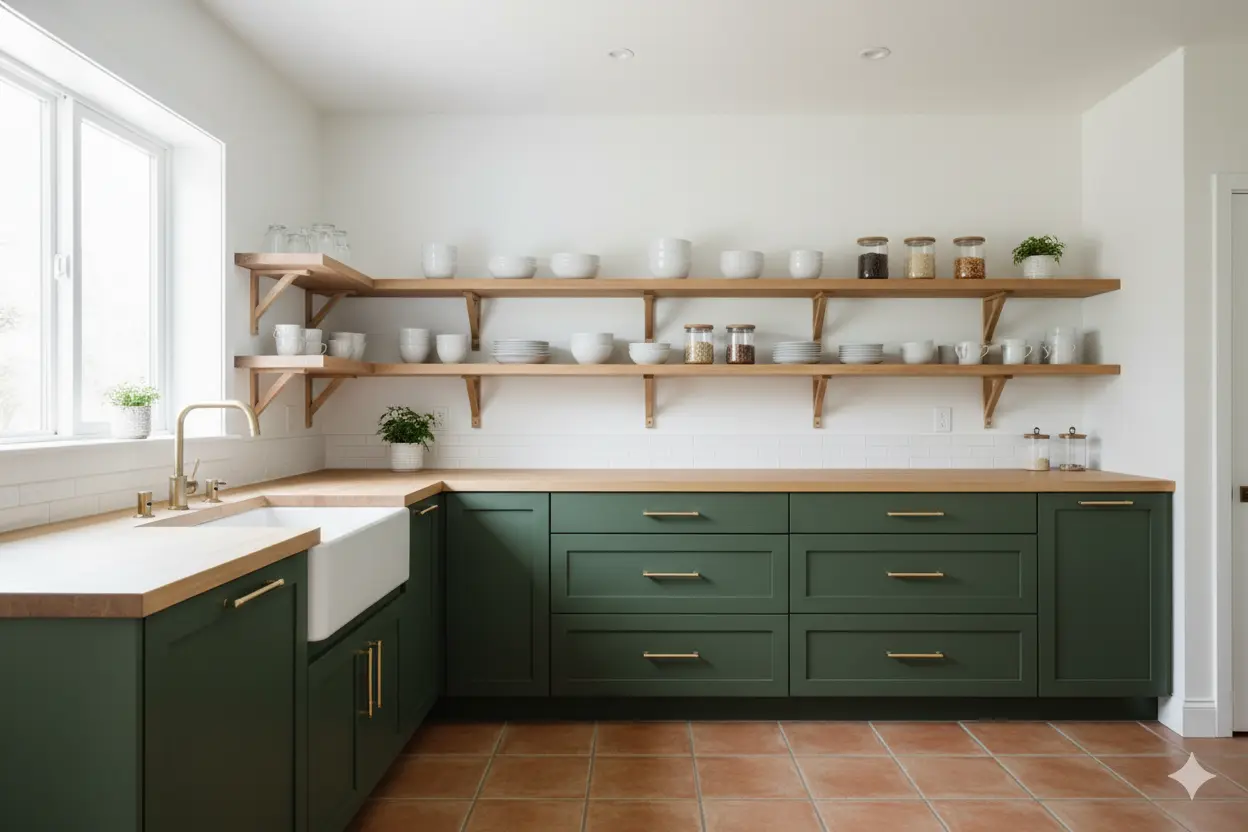
In a small kitchen, you might worry that colour will make the space feel tight. But sage green actually works very well: its muted nature means it doesn’t overwhelm, while offering more character than plain white. Pair with light flooring, a tall ceiling, and plenty of light (natural or artificial). The key is keeping contrast moderate.
Example: paint the lower run in sage green, the upper cabinets in white, and ensure a bright backsplash to reflect light. If you want the entire cabinetry in sage, minimise other strong colours and keep hardware subtle. Balanced colour, light surfaces, and smart layout = a small kitchen that breathes.
9. Rustic / Farmhouse Sage Green Kitchen
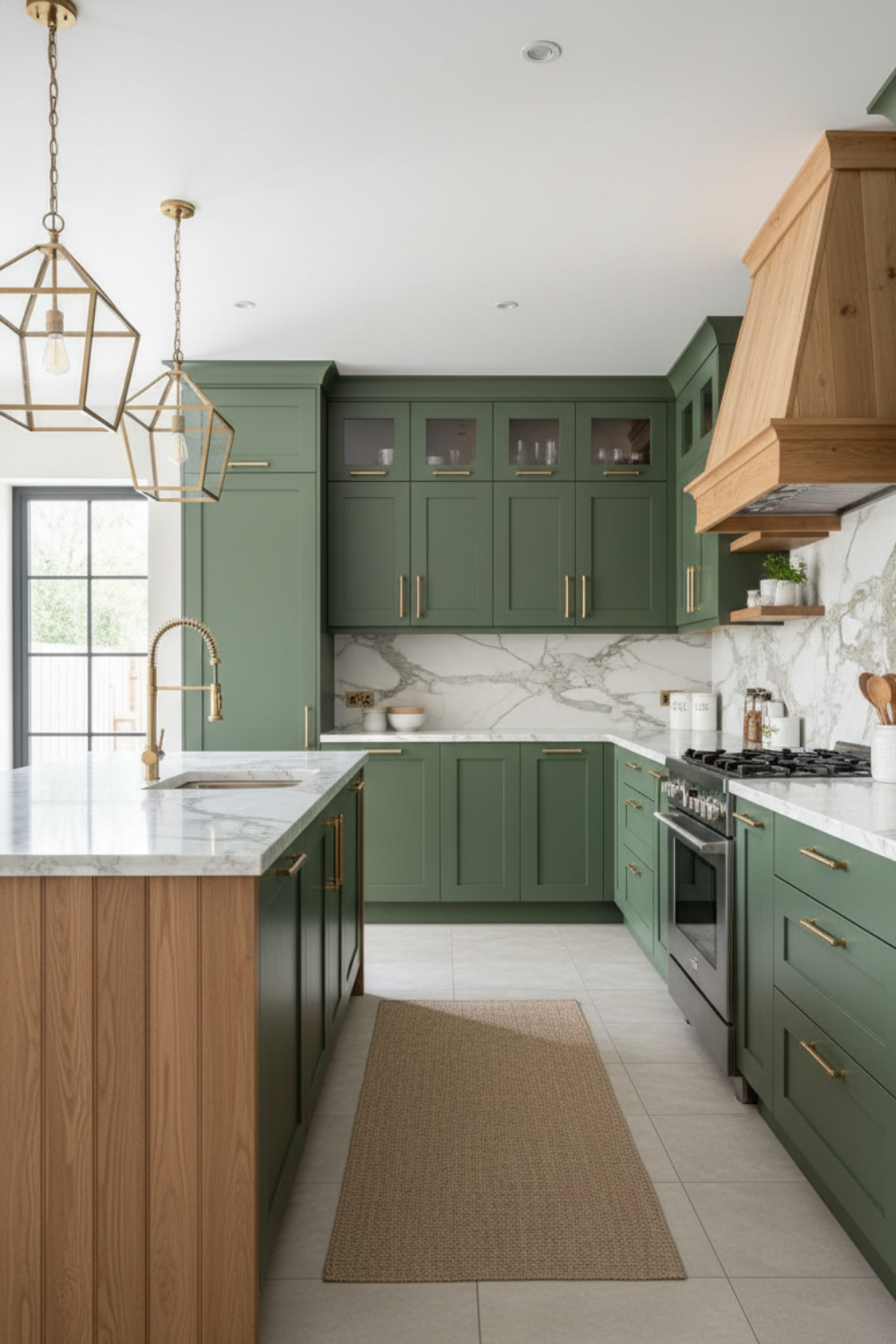
If your home leans cottage, farmhouse or country style, sage green cabinets are a perfect fit. Choose shaker-style doors, maybe bead-board panelling, and mix the green with warm oak or pine countertops, vintage-looking ceramics, and brass fixtures. Consider a slightly more muted, greyish sage for historic charm.
In such a space, allowing imperfections (hand-wired pendants, visible joinery, open hooks) helps. The green reads as collected rather than showroom-new. Wood floor boards, large farmhouse sink, textured walls—these all complement the sage green and create a lived-in but elevated kitchen.
10. Modern / Minimal Sage Green Kitchen
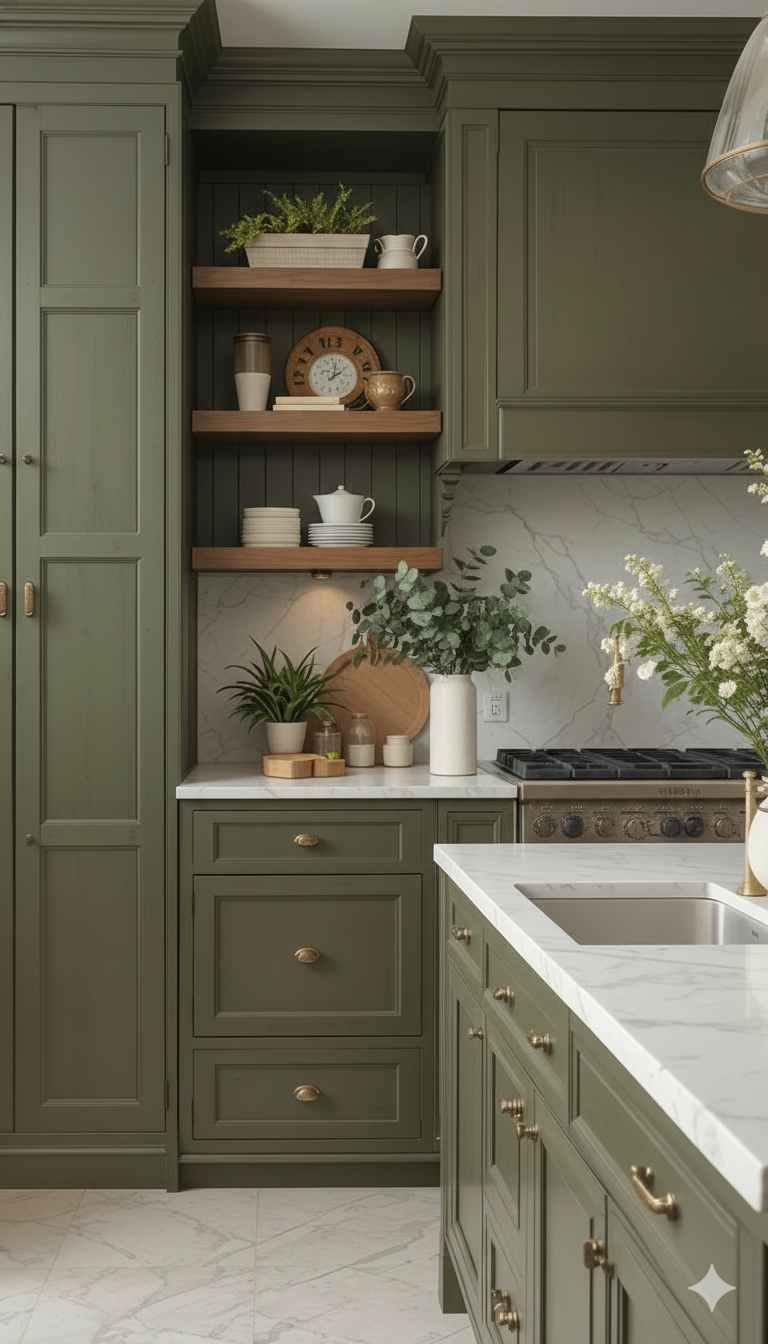
If your style is clean, minimal and modern, sage green can still work beautifully. Go for flat-panel (handleless or integrated pull) cabinetry in a matte finish, colour the entire run in sage, and keep everything else minimal: slim hardware, thin shadow lines, splashback in a single material, minimal ornamentation.
Use concrete, stainless or black accents to ground the room. The green becomes the colour anchor rather than a decorative detail. It’s sophisticated without being fussy. Designers note green is versatile—“it can look coastal or urban, rustic or contemporary.”
11. Sage Green with Bold Accents
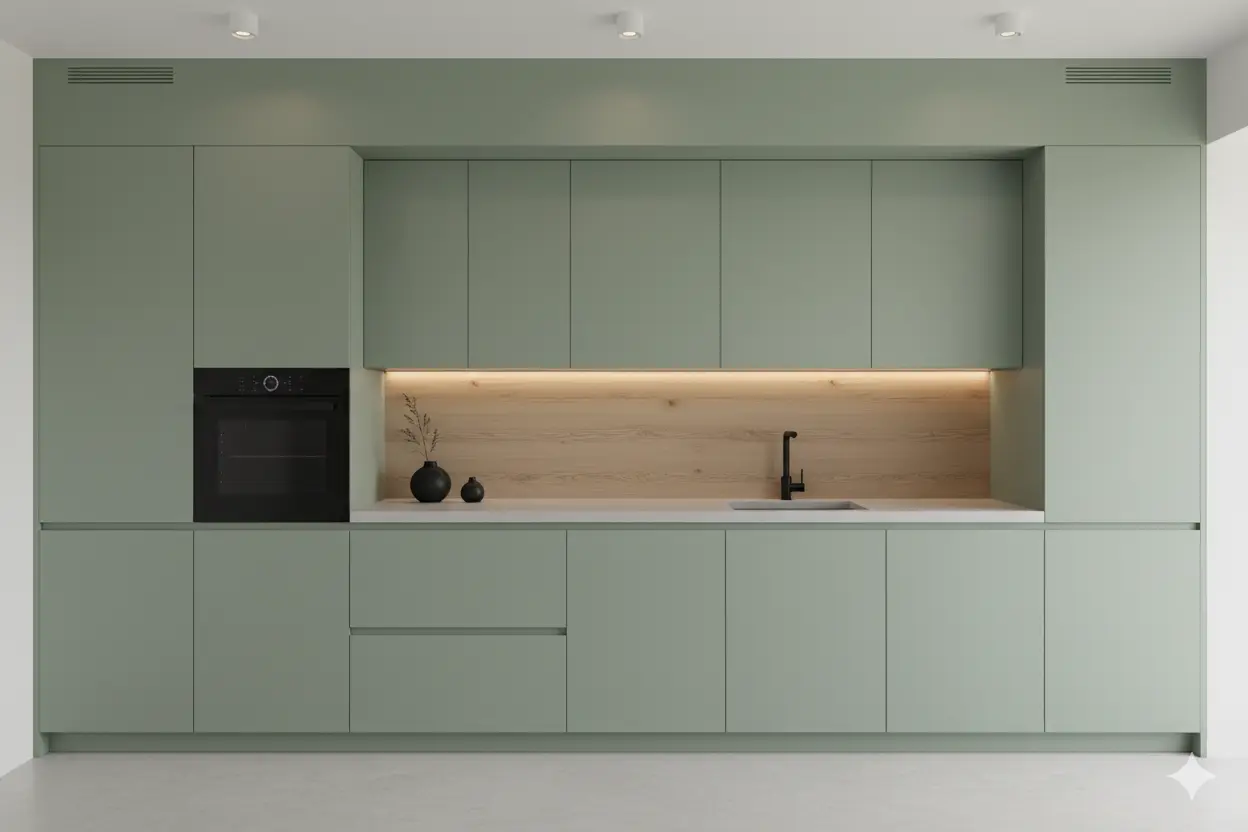
If you’re comfortable with colour, then pair sage green cabinetry with a bold accent: for example, terracotta tiles, a deep navy island countertop, or black appliances. In a whole-room design, the sage cabinet acts as a medium colour—not so neutral as beige, but not as loud as emerald. With this anchor, you can bring in pops.
One idea: sage cabinets, matte black range hood, terracotta floor tiles, and brass hardware. The combination reads intentional and layered. The sage brings calm; the accents bring personality.
12. Two-Shade Green Design

Rather than mixing sage with a completely different colour, consider a subtle two-shade green combination: cabinets in sage, island or lower run in a slightly deeper green. This helps create dimension and hierarchy while staying within a unified palette. Designers highlight this approach in green kitchen ideas.
It’s important to pick greens that are close in warmth/coolness so the palette feels cohesive. One shade could lean slightly greyer, the other slightly bluer. Then texture—wood, stone, metal—does the rest of the work.
13. Sage Green Against Dark Floors or Tiles

Sage green cabinets don’t always need a light floor. Pairing them with a dramatic dark floor (charcoal tile, rich walnut wood, patterned encaustic) anchors the room and gives the cabinetry more presence. The contrast elevates the green so the room doesn’t feel pastel.
Just keep the rest of the surfaces light or mid-tone so the overall effect isn’t too heavy. The dark floor becomes the base, the green becomes the middle ground, and lighter elements like the backsplash or ceiling keep things lifted.
14. Texture Mix: Sage Green + Smoked Glass / Ribbed Doors

To add visual interest beyond colour, integrate texture into the cabinetry: sage green doors with smoked glass upper panels, ribbed or fluted door fronts, or mixed finishes (matte + satin). This idea adds architectural nuance.
In an open plan space, this kind of detail helps the cabinetry read less like flat blocks of colour and more like crafted furniture. Light plays across ribbed surfaces, and the green tone takes on subtle shifts. Designers emphasise that texture is a key component in colour design.
15. Longevity: Designing Sage Green to Stand the Test of Time

Finally, one of the smartest things you can do when choosing a strong cabinet colour is to plan for longevity. While sage green is currently very popular and many designers believe it has staying power. Let your selection reflect your personal style—not just the trend of the moment.
Here are a few considerations:
- Choose a shade of sage green with a neutral undertone (neither too cool blue nor too yellow-green) so it adapts.
- Use modular cabinetry where possible so future door fronts can be replaced if the colour palette changes.
- Make all the permanent surfaces (flooring, major appliances/hood) more neutral. Let the cabinetry bring character.
- Avoid overly decorative elements tied to a niche style; keep lines clean so your kitchen can evolve.
- Consider resale: green can differentiate your home, but may feel specific; however, muted tones like sage are more universally appealing than bold green.
When you design with care, your sage green kitchen will feel fresh today and still meaningful in years to come.
Conclusion
Sage green kitchen cabinets are not a gimmick—they’re a thoughtful design choice. They deliver colour without loudness, personality without chaos, calm without blandness. Whether your home is historic or new build, rustic or ultra-modern, there is a way to integrate sage green cabinetry that resonates.
From classic shaker to handleless modern, from farmhouse charm to high-contrast sophistication, the palette is flexible. The key as a designer is to consider the full story: colour, material, lighting, hardware, layout, texture. When you get that right, the cabinetry doesn’t just exist—it anchors the space, frames your daily life, and invites lingering moments in the kitchen.


No Comments