
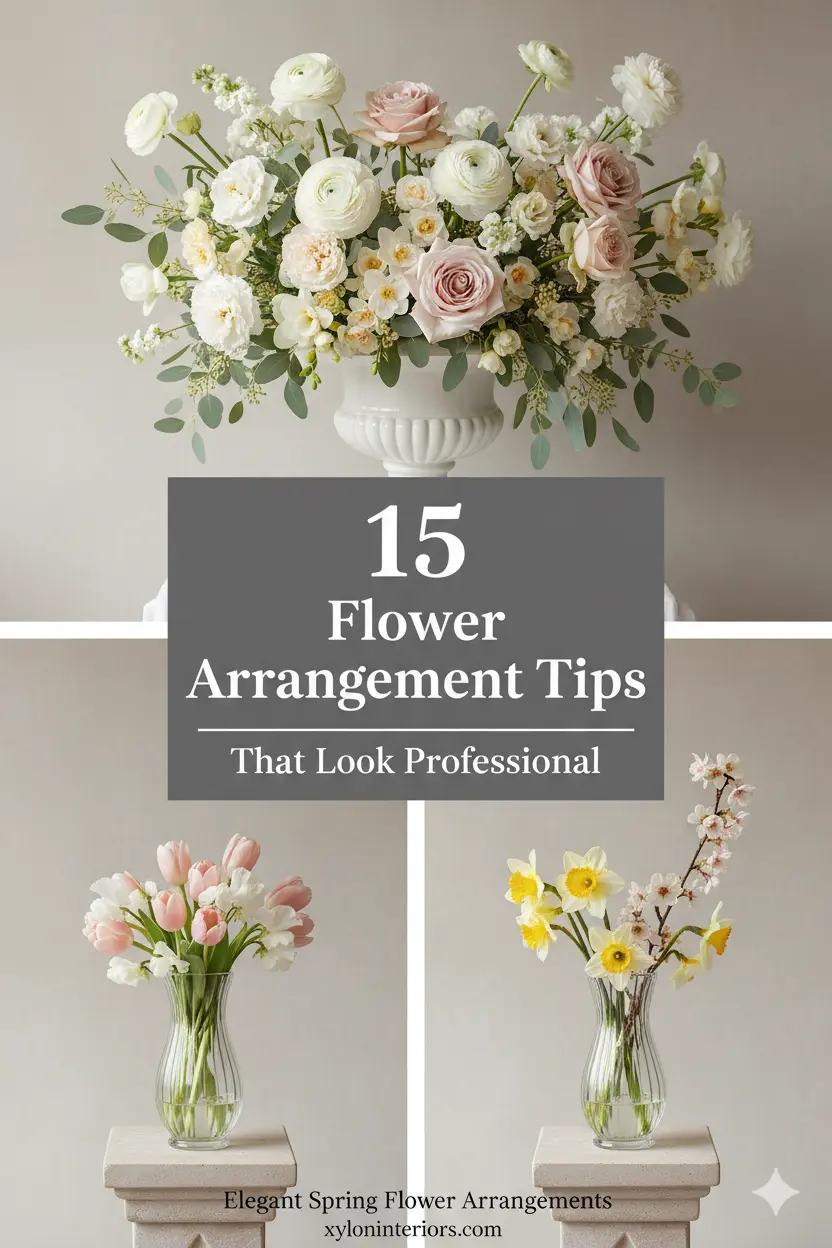
There is a special kind of magic that happens when you walk into a room and see a beautiful vase of flowers waiting on the table. The space suddenly feels softer, more welcoming, a little more “finished.” But if you have ever brought home a bunch of tulips or grocery store roses and plopped them into a vase only to feel disappointed, you are not alone.
Most of us want those elegant spring flower arrangements you see in magazines, but real life gets in the way. You might have:
- A few random supermarket bouquets that never look quite right together
- Only one or two decent vases, and they never seem to suit the flowers
- Limited time, a modest budget, and a home that has to function for kids, pets, and everyday chaos
The good news: you do not need a florist’s studio or designer budget. You just need some practical tricks that professionals quietly rely on, and a realistic way to fit them into your home life.
In this guide, we will walk through 15 tried-and-true tips to make your arrangements look pulled together, intentional, and elegant, especially for spring. Think easy, unfussy, and livable. These are techniques I use in real homes with real families, not just styled photos.
You are not trying to impress a camera. You are trying to create a moment of beauty you can actually live with.
Quick Overview: 15 Tips For Elegant Spring Flower Arrangements
Here is a quick snapshot of what we will cover before we dive into each idea:
- Start with a color story, not the flowers
- Choose the right vase for the room and the flowers
- Use the “one and a half times” height rule
- Build a simple greenery foundation
- Stick to one focus flower for a cleaner look
- Layer in supporting flowers for texture
- Use odd numbers to avoid stiff, formal shapes
- Shape your arrangement from all sides
- Cut stems smarter, not shorter
- Use grid or tape tricks for better structure
- Match the arrangement style to the room’s energy
- Use everyday containers for a relaxed spring feel
- Style smaller “micro arrangements” in overlooked spots
- Care for flowers so they last longer (without babying them)
- Let your arrangements evolve instead of tossing everything at once
Now let us walk through how to actually do each of these in a real home, with real schedules and budgets.
1. Start With A Color Story, Not The Flowers
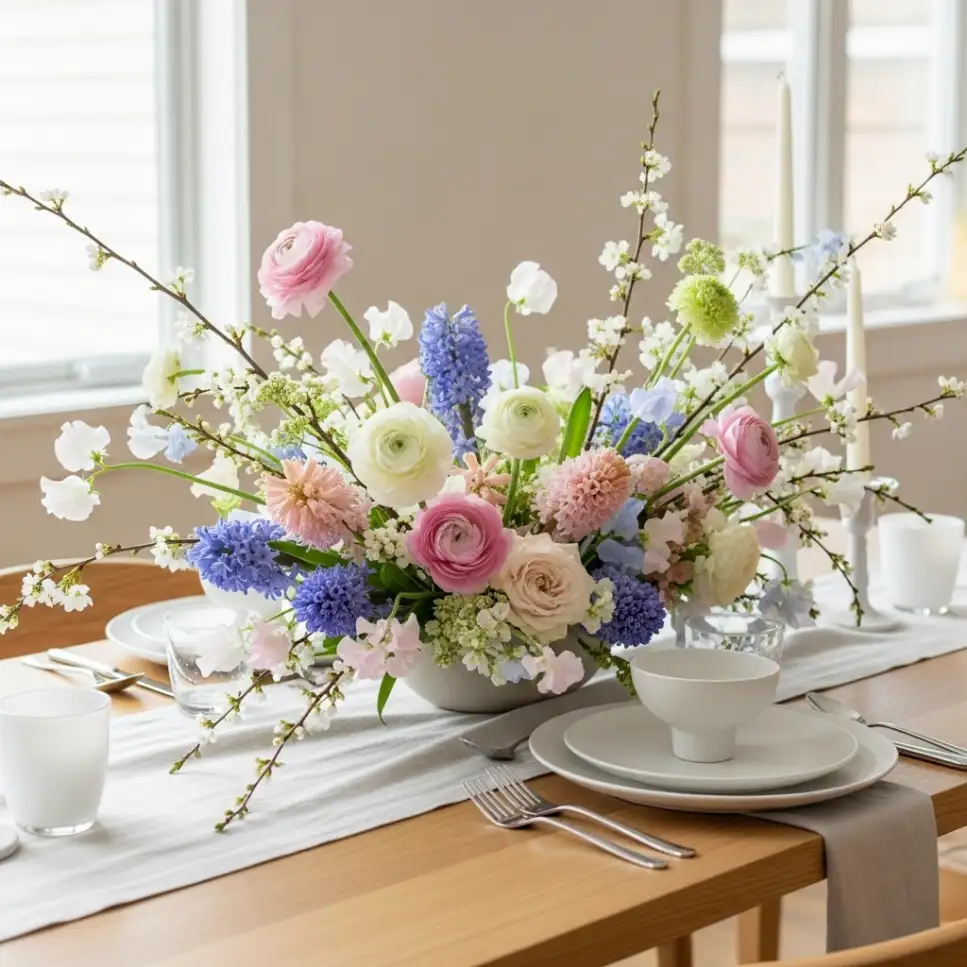
This is the biggest shift between “random bouquet in a vase” and elegant spring flower arrangements that look intentional. Before you think about tulips vs roses, decide what colors would actually flatter your room.
Look At The Room First
Stand in the space you want to decorate and notice:
- The main color of the largest surfaces: sofa, rug, bedspread, or cabinetry
- The accent colors already in the room: pillows, art, throws, dishes
- The mood: soft and calm, bright and energetic, or cozy and earthy
From there, pick a simple color story for your flowers. Two or three colors are usually enough.
Easy Spring Color Recipes
- Soft, neutral living room: White, pale peach, soft green
- Modern kitchen: Crisp white, sunny yellow, a touch of lime green
- Cozy farmhouse dining: Cream, blush pink, dusty lavender
- Entryway with dark furniture: Deep plum, ivory, and soft greenery
When you shop, use your color story as your filter. Skip flowers that don’t fit, even if they are pretty. This one decision instantly makes your arrangements look more pulled together and professional, because everything works with the room instead of competing with it.
2. Choose The Right Vase For The Room And The Flowers
The vase matters just as much as the blooms. A gorgeous bouquet can look awkward in the wrong container. Think of the vase as the outfit, and the flowers as the jewelry.
Match The Vase To The Location
Ask: where will this arrangement actually live?
- Dining table: Low to medium height so people can see over it. A wide bowl, short cylinder, or footed compote works well.
- Coffee table: Short and wide, so it does not block the TV or conversation. Think large pottery mug, small jug, or squat glass vase.
- Kitchen island: Taller vases are fine here. A simple glass cylinder or tall ceramic pitcher can be beautiful.
- Entryway console: Medium height with some presence, since it is one of the first things you see. A classic ceramic vase is a safe choice.
- Bedroom nightstand: Small and low, so you don’t feel crowded. A small bud vase or tiny jar is perfect.
Match The Vase To The Flower Type
- Tulips: They like support. Go for a narrower neck or a shorter, slightly tapered vase.
- Roses: They are flexible. They work in classic vases, pitchers, and even mason jars if you keep them trimmed.
- Branchy stems (like flowering cherry or forsythia): Use a heavy, stable vase with a wider opening, so they can spread naturally.
- Delicate wildflower mixes: Use vintage bottles, jam jars, or small bud vases grouped together.
You do not need fancy designer pieces. A clear glass vase from the supermarket, a thrifted jug, or a simple kitchen pitcher can all look quietly elegant when the proportions are right.
3. Use The “One And A Half Times” Height Rule
This is a simple florist guideline that keeps arrangements from looking too stubby or too top-heavy.
As a general rule:
The total height of your arrangement should be about one and a half times the height of your vase.
If your vase is 8 inches tall, aim for your tallest flowers to be around 12 inches above the table. This is not a strict law, just a helpful guide.
Adjust For Different Rooms
- Dining table: Err a little shorter so no one is talking around a jungle of stems.
- Console or sideboard: You can go taller here, as long as it doesn’t block artwork or a mirror.
- Kitchen counter under cabinets: Watch cabinet height. You want the arrangement to feel generous but not squashed.
If in doubt, step back a few feet and look at the whole picture. You will usually know right away if the flowers look out of proportion to the vase or the surroundings.
4. Build A Simple Greenery Foundation
Professionals rarely start with the flowers. They start with a base of greenery that creates structure and shape. This gives the blooms something to lean on, and instantly makes arrangements look fuller.
Easy Greenery Options
You do not need exotic foliage. These simple choices work beautifully for elegant spring flower arrangements:
- Seeded eucalyptus or regular eucalyptus
- Ruscus or salal (often called “lemon leaf”)
- Fern fronds for a soft, airy look
- Clippings from your own yard: boxwood, olive branches, camellia leaves, even sturdy herbs like rosemary
How To Build The Base
- Fill your clean vase with fresh water.
- Strip all leaves from the bottom half of each stem, so nothing sits in the water.
- Start placing greenery at an angle, letting some pieces drape over the sides to create a relaxed shape.
- Turn the vase as you work so it looks balanced from every angle.
You want a loose, nest-like structure. Not a dense hedge. The flowers will sit in the pockets your greenery creates.
5. Stick To One Focus Flower For A Cleaner Look
One of the easiest ways to elevate your spring arrangements is to choose a single “star” flower and let it lead the show. Instead of mixing six different types from one supermarket bouquet, pick one main variety and support it with greenery and texture.
Good Focus Flowers For Spring
- Roses (classic and easy to find)
- Tulips (especially in a single color)
- Ranunculus (bouncy and romantic)
- Hydrangeas (you only need a few stems for impact)
- Daffodils (cheerful and budget-friendly)
If your focus flower is white, you can surround it with interesting greenery and maybe one small accent flower. If it is strongly colored, let it stand mostly on its own for a more sophisticated look.
This keeps the arrangement from feeling busy or chaotic, which is a common issue with mixed grocery bouquets.
6. Layer In Supporting Flowers For Texture
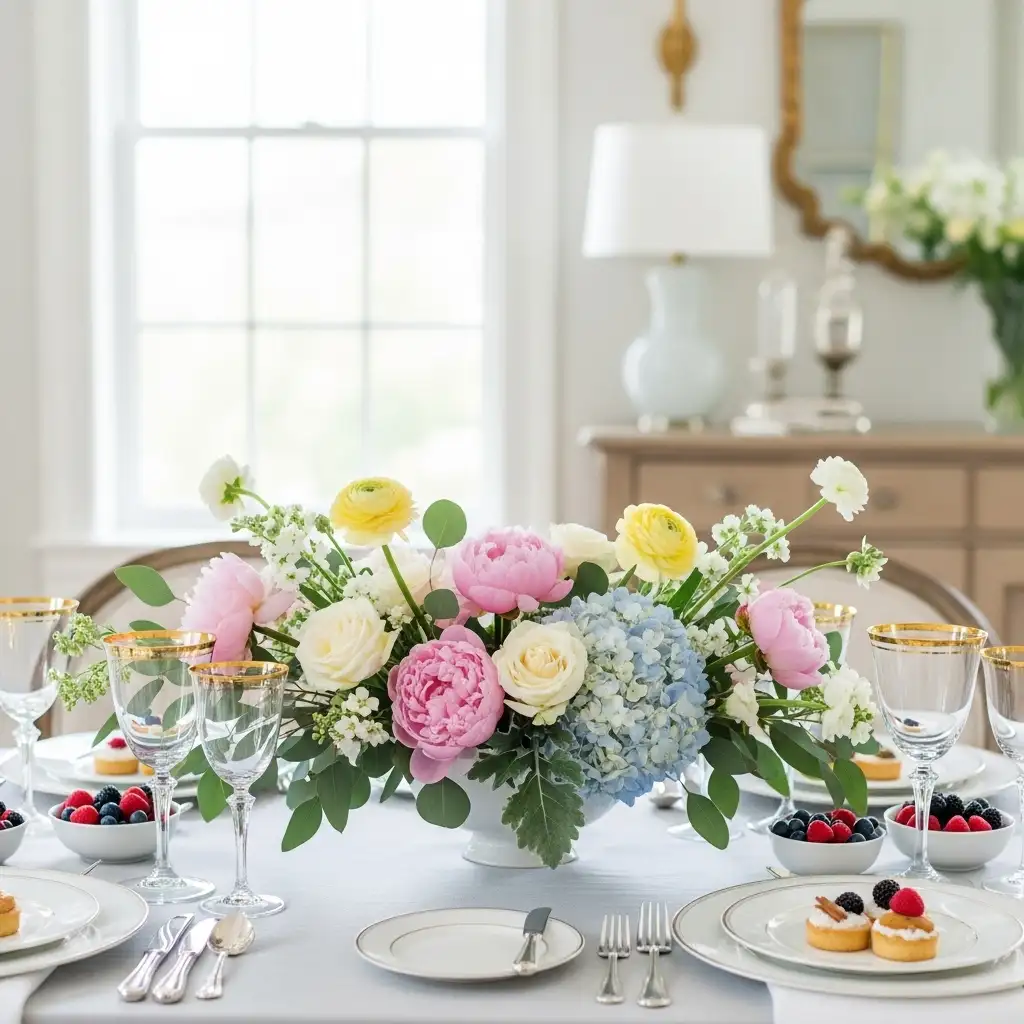
Once your main flower is chosen and you have your greenery base, add one or two “supporting” flowers. These are usually smaller or more delicate, and they add texture without stealing the spotlight.
Examples Of Pretty Spring Support Flowers
- Waxflower
- Stock (adds height and fragrance)
- Limonium or statice
- Chamomile-like daisies
- Small spray roses
- Sweet peas (if you can find them)
How To Place Them
After your main flowers are in:
- Tuck smaller flowers slightly above and between your larger blooms.
- Let a few float a little higher for a loose, garden feel.
- Use them to fill any obvious gaps or holes, but avoid stuffing every space.
Think of these like the earrings and bracelet to your main necklace. They finish the look, but you would not pile on so many that they overpower everything else.
7. Use Odd Numbers To Avoid Stiff, Formal Shapes
Flower arrangements feel more natural and less “hotel lobby” when you avoid perfect symmetry. One simple trick: use odd numbers.
For example:
- Three main roses instead of four
- Five tulips instead of six
- Seven ranunculus scattered through your greenery
You do not need to obsess over exact counts, just use odd-number clusters for your bigger blooms. This keeps the eye moving and creates that relaxed, effortless look that feels more like a garden and less like a tight ball.
8. Shape Your Arrangement From All Sides
Many people arrange flowers only from the front. That is how you end up with one side that looks great and the rest looking like the back of a stage set.
The “Turn The Vase” Habit
Place your vase in the middle of your table as you work. After every few stems, turn it a quarter turn. Look at:
- Where the tallest pieces are
- Which side feels heavy or sparse
- Whether the shape looks balanced overall
If the arrangement will sit against a wall, treat the wall side as slightly flatter, but still give it some care. You might not look at it often, but the balance matters for stability and shape.
Think In Three Simple Layers
- Low: Flowers or greenery that spill over the edge of the vase
- Medium: Your main cluster of blooms at eye level
- High: A few taller stems for height and drama
Most elegant spring flower arrangements have all three layers, even if they are subtle.
9. Cut Stems Smarter, Not Just Shorter
How you cut stems makes a huge difference in how your flowers drink and how they sit in the vase.
Three Simple Cutting Rules
- Always cut at an angle: A 45-degree cut gives more surface area for drinking and keeps the stem from sitting flat on the bottom of the vase.
- Strip leaves from the water line down: Any leaves sitting in water will rot quickly and shorten the life of your arrangement.
- Trim small amounts at a time: It is easier to take more off than to add it back. Hold the stem next to the vase as a guide.
Adjust For Different Spots In The Arrangement
Use longer stems for the center and taller bits, and shorter stems around the edges or for lower, spilling pieces. A mix of stem lengths will naturally create a softer, more professional shape.
If a flower looks stiff or too tall, take it out, trim a bit more, and slide it back into a slightly different spot. Tiny adjustments go a long way.
10. Use Simple Grid Or Tape Tricks For Better Structure
If your flowers keep flopping to one side or falling open, you might just need a bit of support inside the vase. Professionals often create a framework, and you can do a no-fuss version at home.
Two Easy Structure Tricks
- Clear tape grid
For a wide vase, run thin strips of clear tape across the top to create a loose grid. Stick the ends to the rim. Then slide stems through the little squares. This helps flowers stand where you want them. - Chicken wire ball
For more support, you can gently shape a piece of chicken wire into a ball and nestle it inside the vase. The stems thread through the gaps and stay in place. This is handy for bigger or heavier arrangements.
If you prefer not to use wire or tape, a good, dense greenery base can also create enough structure for everyday arrangements.
11. Match The Arrangement Style To The Room’s Energy
Not every room needs the same kind of arrangement. A formal bouquet in a casual kitchen can feel a bit stiff. A wild, overflowing display in a tiny bedroom might feel chaotic.
Living Room: Soft, Conversational Arrangements
In the living room, flowers usually sit on a coffee table, side table, or mantel. Aim for relaxed and low-profile.
- Coffee table: Try a low, wide arrangement with a mix of greenery and one main flower in a tight color range. Whites and greens are especially forgiving around TV glare and kid clutter.
- Side table: A small cylinder with a couple of tulips or roses and some eucalyptus is enough. It just needs to catch the eye when you sit down.
Kitchen: Fresh, Functional, And Out Of The Way
Kitchen arrangements live around constant movement, spills, and food smells. Keep them simple and easy to move.
- Island or peninsula: A single clear vase with tulips, daffodils, or simple greenery looks clean and bright. Avoid very fragrant flowers if you cook often.
- By the sink: A tiny jar with a stem or two of something cheerful. It brightens dishwashing without taking over the counter.
- Coffee station: A mini bud vase with a few tiny blooms next to your mugs or sugar jar can make the area feel styled without cluttering it.
Entryway: First Impression, Simple But Intentional
In the entry, think of your arrangement as a quiet welcome instead of a dramatic statement.
- A medium vase with a clean grouping of one flower type works well here, like all white tulips or all hydrangeas.
- Pair it with a small tray for keys and a candle or framed photo for a complete moment.
Bedroom: Gentle And Low-Key
You want calm energy in a bedroom. Go small and soft.
- A bud vase with two or three stems of something simple, like spray roses or sweet peas, is plenty.
- Try quieter colors: white, blush, soft lavender, or pale peach.
When you match the energy of the arrangement to how the room is used, the flowers feel like they belong instead of like a random decoration.
12. Use Everyday Containers For A Relaxed Spring Feel
You do not need to buy a dozen fancy vases. Some of the most charming spring arrangements I see in homes live in objects that were never meant to be vases at all.
Ideas From Around Your Home
- Ceramic water pitchers or jugs
- Short drinking glasses or stemless wine glasses
- Mismatched vintage mugs
- Glass food jars with labels removed (honey, pasta sauce, jam)
- Small teapots or creamers for tiny arrangements
If a container is not fully watertight but you love the look, you can:
- Slip a smaller glass or jar inside and hide it with greenery
- Use it for dried flowers or branches that do not need water
This approach keeps your arrangements personal and relaxed. It also fits well with budget-conscious decorating. You are styling with what you already own, which always makes a home feel more “you.”
13. Style Smaller “Micro Arrangements” In Overlooked Spots
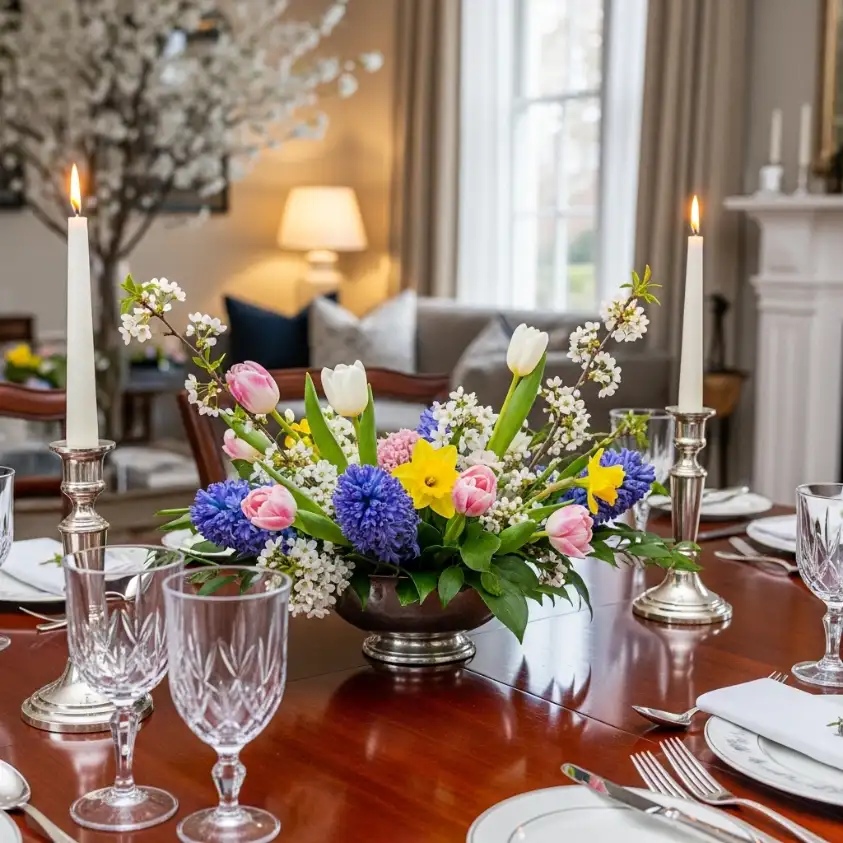
A professional-looking home often has flowers in more than one spot, but that does not mean you need big pieces everywhere. Tiny “micro arrangements” can be surprisingly impactful.
Where To Tuck Small Arrangements
- Bathroom: A small bud vase on the vanity with a single stem of something fragrant but not overwhelming.
- Kitchen window sill: Little jars lined up with a few clippings from the yard.
- Bookshelf: A tiny arrangement between stacks of books to soften all the straight lines.
- Desk: One or two stems in a slim bottle where you work, to make checklists and emails feel less heavy.
You can build these from leftover stems after you finish a main arrangement. They make your home feel thoughtfully pulled together, almost like a boutique hotel, but in a very subtle way.
14. Care For Flowers So They Last Longer (Without Babying Them)
Nothing ruins the feeling of elegant spring flower arrangements faster than cloudy water and sagging petals after two days. A few simple habits help your flowers last longer without turning you into a full-time florist.
Easy Maintenance Routine
- Change the water every 1–2 days: When you walk by with your morning coffee, take 30 seconds to refresh the water.
- Trim stems slightly when you change water: A quick quarter-inch snip at an angle keeps them drinking well.
- Keep them out of direct hot sun and away from radiators or vents: Bright indirect light is ideal for most cut flowers.
- Remove any fading blooms promptly: Dying flowers release ethylene gas, which speeds up the aging of the rest.
Flower Food & Simple Alternatives
If your bouquet comes with a packet of flower food, use it. If not, plain clean water changed often is usually enough for everyday arrangements.
You do not need complicated home remedies. A clean vase, trimmed stems, and fresh water do most of the work.
15. Let Your Arrangements Evolve Instead Of Tossing Everything
In real life, flowers rarely all fade at the same time. Instead of throwing the whole arrangement out when a few stems start to droop, let it evolve.
How To Refresh Over Time
- Remove anything clearly past its prime
Take out wilted or browning stems and toss them. Keep the healthy ones. - Downsize the vase
As your bouquet gets smaller, move the remaining flowers into a smaller container. This instantly restores a full, intentional look. - Add a few new stems
If you pass a market, pick up one small bunch of something that fits your original color story and tuck it in. You do not need a full new bouquet. - Reuse greenery and branches
Many types of greenery outlast blooms. Let them become the base for your next set of flowers.
This gentle, evolving approach keeps your home feeling alive without constant big purchases. It also gives you a chance to experiment with combinations and see what you genuinely love, not just what looks good for one weekend.
Putting It All Together In Different Rooms
Let us walk through a few realistic examples of elegant spring flower arrangements in common spaces, using the tips above.
Example 1: Neutral Living Room Coffee Table
Imagine a living room with a beige sofa, a light rug, and wood tones.
- Color story: White, soft blush, and fresh green
- Vase: Short, wide glass vase or ceramic bowl
- Flowers: White roses as the focus, blush spray roses as support, eucalyptus for greenery
- Shape: Low and full, with a few stems spilling gently over the edge
The result is calm, soft, and easy to live with. It adds life without shouting. You can still set down your remote and drinks without feeling crowded.
Example 2: Bright Kitchen Island In A Busy Family Home
Picture a white or light gray kitchen with kids coming and going.
- Color story: Yellow, white, and green
- Vase: Simple tall clear cylinder or sturdy white pitcher
- Flowers: Daffodils or yellow tulips as the main flower, with a few stems of white stock or chamomile daisies for texture, plus basic greenery
- Placement: Center of the island, easy to pick up and move for meal prep
The arrangement feels happy and bright, perfect for spring mornings, but it is straightforward to slide aside when you need the counter.
Example 3: Small, Cozy Bedroom
Think of a small room with a soft duvet, maybe a throw blanket, and one bedside table.
- Color story: Soft pink, ivory, and gentle green
- Vase: Tiny bud vase or a clean jar from the kitchen
- Flowers: Two or three stems of blush spray roses and a small eucalyptus sprig
- Placement: On the nightstand next to a lamp and your current book
It takes minutes to put together, but it makes climbing into bed feel just a bit more like a treat.
Where To Go For More Ideas And Confidence
If you enjoy this kind of practical, real-life approach to home details, places like Xylon Interior can be helpful when you want to explore more ideas, inspiration, and workable solutions for interiors that actually fit how you live, flowers included.
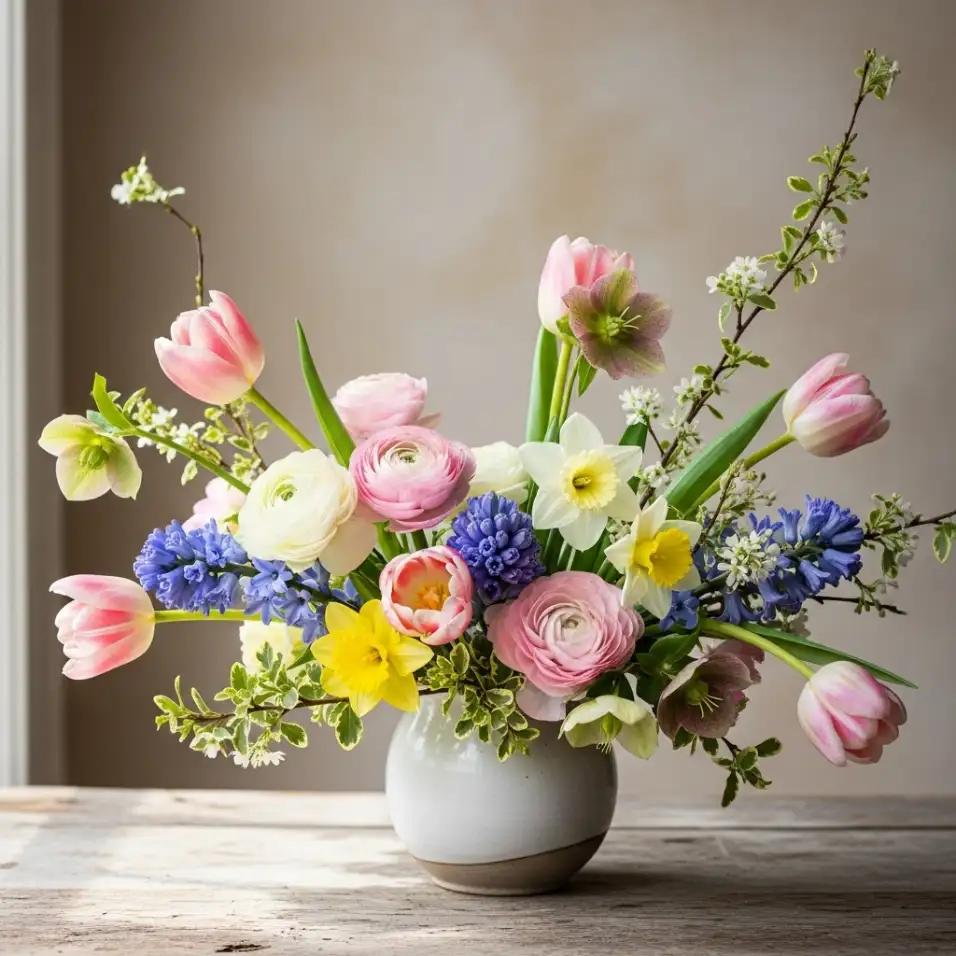
Conclusion: Start Small, But Start
Elegant spring flower arrangements are not about perfection. They are about adding small pockets of beauty to the spaces where you live your everyday life. Breakfast mess on the counter, laundry pile on the chair, toys under the coffee table, and still a vase of fresh tulips catching the light. That contrast is what makes a house feel like a home.
You do not need to master all 15 tips at once. Try one or two:
- Pick a simple color story before your next grocery run
- Rearrange a store-bought bouquet using a greenery base and a smaller vase
- Create one tiny micro arrangement from leftover stems for your bathroom or desk
Over time, these little habits will start to feel natural. You will notice which flowers you reach for again and again, which vases suit your rooms, and which corners of your home feel happier with a bit of life in them.
You deserve a home that feels cared for, not just cleaned. A few thoughtful flower stems on an ordinary day can quietly remind you that your everyday life is worth taking care of, too.



No Comments