
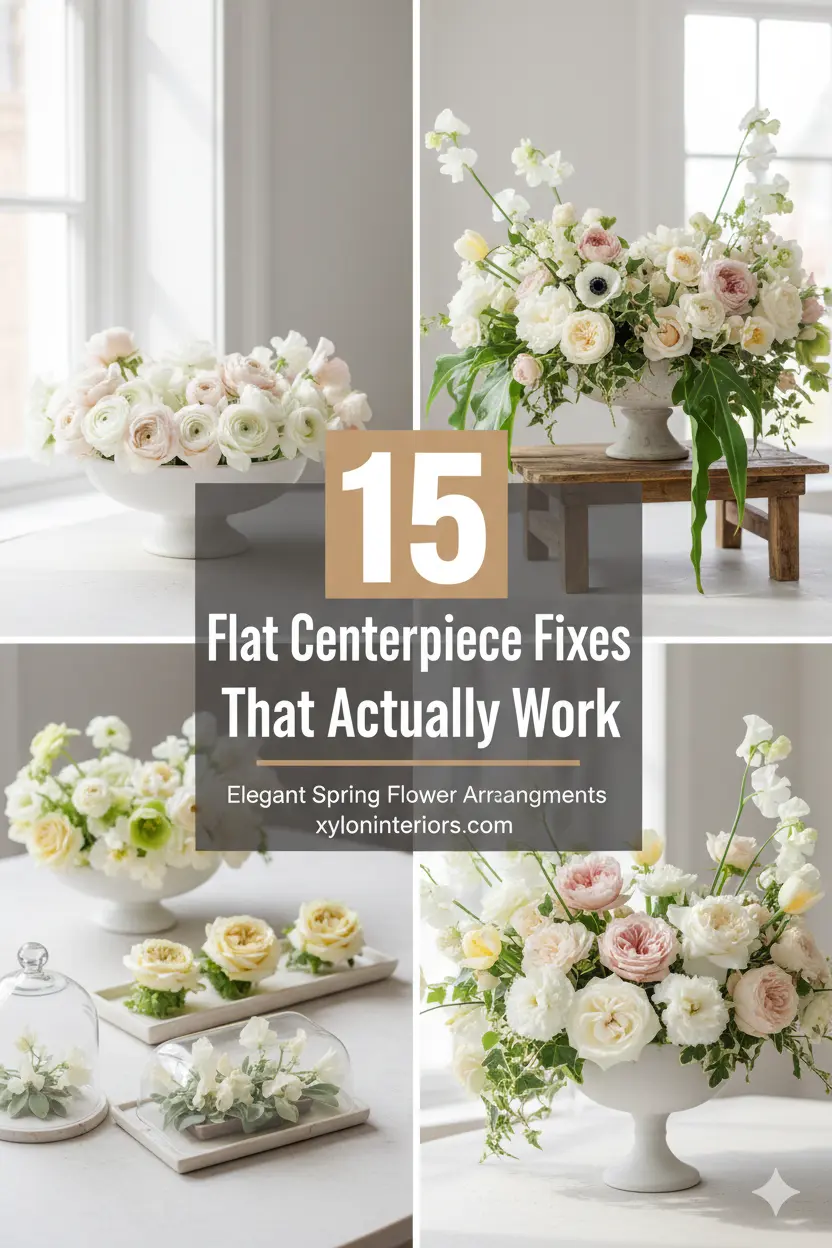
There is a very specific kind of decorating frustration that shows up in spring. You buy pretty flowers, you set them right in the middle of the table, step back and think:
“Why does this still look… flat?”
The blooms are lovely, the vase is fine, but the whole centerpiece feels a little lifeless. It doesn’t add anything to the room. It just sits there. If you’ve ever carried an arrangement from the dining table to the coffee table and back again hoping it would somehow look better in a different spot, you are not alone.
Centerpieces are tiny, but they do a lot of work. They set the mood when you walk into the room, they greet guests, and they’re in every photo whenever you entertain. When they fall flat, it can make the whole space feel unfinished, no matter how clean or styled the rest of the room is.
The good news: you don’t need fancy floristry skills, expensive flowers, or a giant table to fix this. Most “flat” centerpieces have the same problems. They’re too low, too small, too lonely, or too stiff. Once you know what to adjust, you can turn simple bunches of grocery-store blooms into elegant spring flower arrangements that actually look intentional and layered.
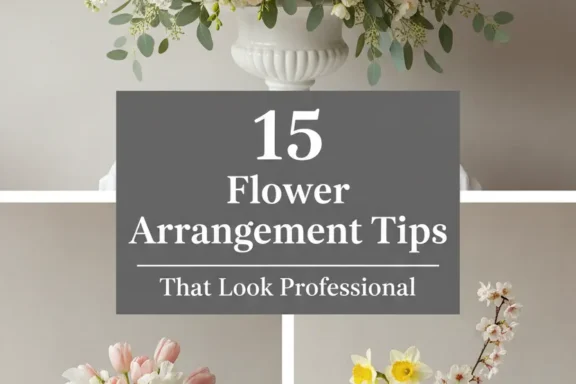
Below are 15 practical fixes you can use in real homes with real budgets. No complicated floral foam tricks. Just smart, doable tweaks for dining tables, coffee tables, kitchen islands, and even small apartment spaces.
“A good centerpiece shouldn’t shout. It should quietly make the whole room feel better.
Quick Overview: 15 Fixes For Flat Centerpieces
Before we dive into the details, here is a simple overview of what we are going to cover. These are all ways to make elegant spring flower arrangements feel fuller, more dimensional, and more at home in your everyday spaces.
- Fix 1: Add height changes, not just more flowers
- Fix 2: Use a tray to give small arrangements presence
- Fix 3: Layer greenery and filler for depth
- Fix 4: Combine candles and blooms for evening warmth
- Fix 5: Work with odd numbers and clusters
- Fix 6: Choose vases that suit your table, not the store shelf
- Fix 7: Shape your arrangement from all angles
- Fix 8: Anchor light, airy florals with something solid
- Fix 9: Stretch one bouquet into multiple mini moments
- Fix 10: Bring in branches for movement and drama
- Fix 11: Use color intentionally, not randomly
- Fix 12: Adjust scale for coffee tables, islands, and small spaces
- Fix 13: Mix real and faux the right way
- Fix 14: Create a low conversation-friendly centerpiece
- Fix 15: Keep it alive: simple maintenance that keeps arrangements looking fresh
Now let’s walk through each one with real examples you can picture in your home.
Fix 1: Add Height Changes, Not Just More Flowers
Most flat centerpieces are exactly that: flat. Everything is the same height. If your flowers are all cut to one line, the arrangement will look stiff and small, no matter how many stems you pack in.
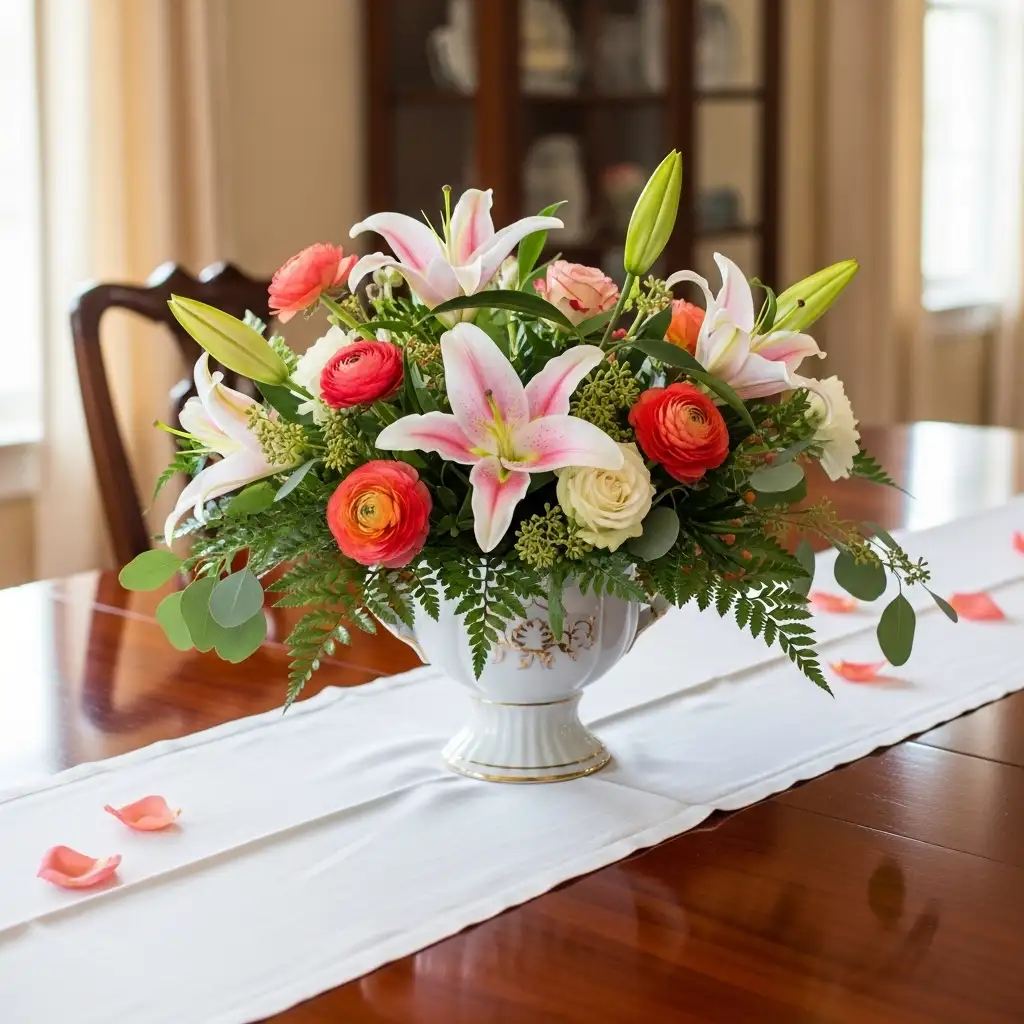
How to add height shifts the easy way
Think of elegant spring flower arrangements as having three “layers”:
- Tall stems that reach a little higher and add movement
- Medium stems that carry most of the color and fullness
- Low, trailing pieces that soften the edges and spill slightly
For example, on a dining table:
- Use tall stems like snapdragons, stock, or branches of blossoming cherry to give height.
- Fill the center with tulips, roses, or ranunculus at a medium height.
- Add low elements like ivy, eucalyptus, or small blooms that lean over the rim.
You don’t need a perfectly shaped dome. Let a few taller stems poke up and one or two pieces trail down. That simple change alone makes an arrangement feel airy and alive instead of flat and “stuck on.”
Fix 2: Use a Tray to Give Small Arrangements Presence
A single vase of flowers on a large table can look lonely, even if the flowers themselves are gorgeous. The problem isn’t the flowers. It is the scale. The table is telling your eye, “There should be more happening here.”
A tray is one of the easiest fixes for this. It frames the centerpiece and adds visual weight so the whole grouping feels intentional.
Tray ideas for different rooms
- Dining table: A simple wood or woven tray with your vase, a pair of salt and pepper shakers, and a small stack of linen napkins. Practical and pretty.
- Coffee table: A round tray with a low vase of spring flowers, a candle, and a small decorative object like a bowl or a book.
- Kitchen island: A long rectangular board with a vase of tulips, a crock of utensils, and a small bowl of lemons.
By grouping items, you create a “scene” instead of a single lonely vase. This is especially helpful in open-concept homes where things can look scattered if they are not anchored together.
Fix 3: Layer Greenery And Filler For Depth
If your centerpiece looks like a stiff ring of flowers sitting on top of a vase, it is probably missing greenery and filler. Fresh foliage is what turns a bunch of stems into a proper arrangement.
Affordable greenery that works almost anywhere
If you are working with a budget (and most of us are), you do not need expensive foliage. Look for:
- Eucalyptus (seeded, silver dollar, or baby) for that soft, romantic look
- Ruscus or salal for a classic green base
- Fern cuttings for a light, airy feel
- Clippings from your own yard: boxwood, camellia leaves, olive, or even clean magnolia leaves
Start by building a base of greenery that lightly crosses over the rim of the vase. Then tuck your main flowers in so they look like they are growing out of the foliage. Finish with a few small filler flowers such as waxflower, limonium, or baby’s breath if you like that softer, cloud-like touch.
This layering is what makes elegant spring flower arrangements feel full even when you do not have a huge amount of blooms.
Fix 4: Combine Candles And Blooms For Evening Warmth
Spring arrangements can look lovely in daylight, then sort of disappear at night when the room is darker. To keep your centerpiece from fading into the background once the sun goes down, add light.
Simple candle pairings that do not feel fussy
- Taper candles in slim holders scattered around a main floral piece on a long dining table.
- Votive or tea lights in simple glass cups flanking a low arrangement on a coffee table.
- Pillar candle with a small wreath or loose ring of greenery and blooms on an entry console.
The trick is to keep the candles low enough that they do not compete with the flowers. Your centerpiece should feel like one cohesive story: soft petals, soft light, nothing too heavy or formal unless that is your style.
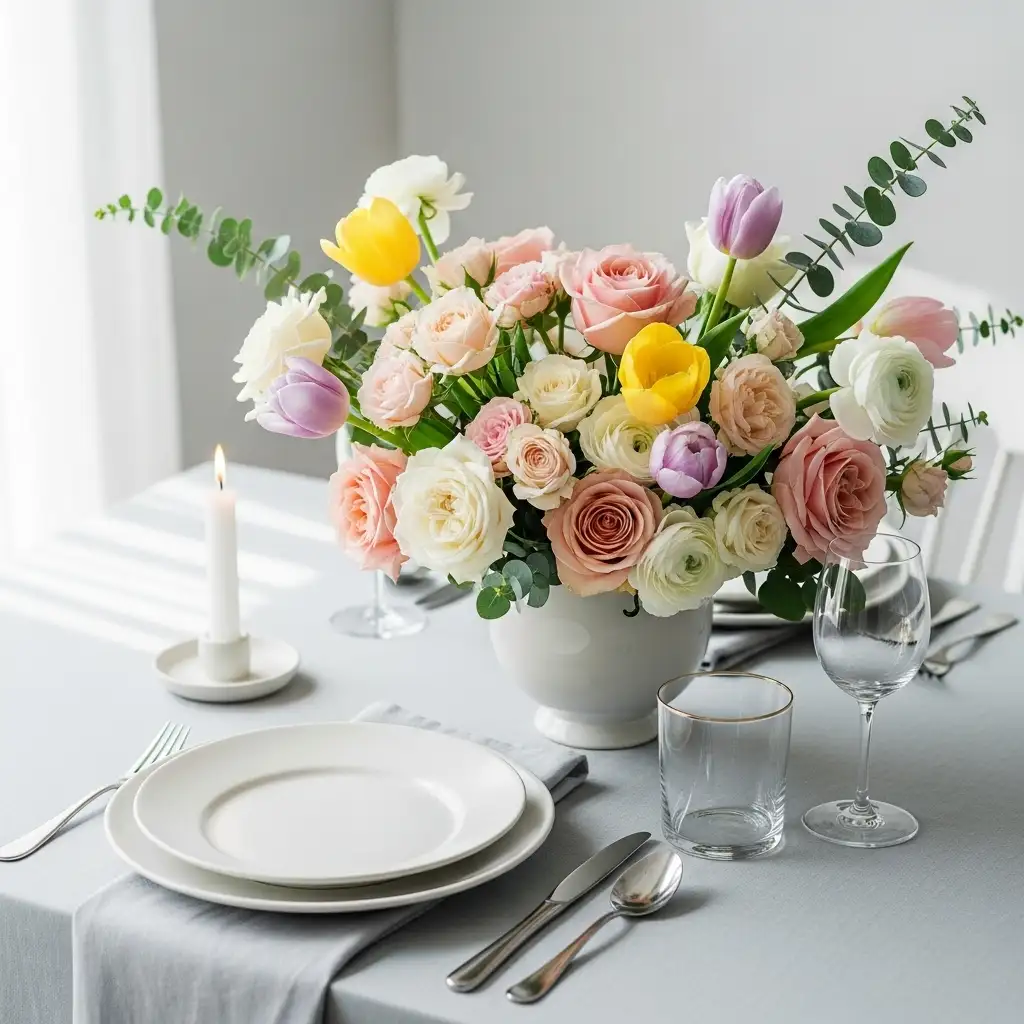
“If your centerpiece looks good only in bright daylight, it is half-finished. Give it a nighttime mood too.”
Fix 5: Work With Odd Numbers And Clusters
If you are using multiple vases or objects and the arrangement still looks strange, check your numbers. Pairings of two often feel accidental. Groups of three or five tend to look more natural and balanced.
How to cluster without clutter
For a coffee table:
- One small vase of flowers
- One candle
- One small stack of books or a decorative bowl
For a rectangular dining table:
- Three small bud vases spaced along the middle, each with a few stems of spring flowers
- Or one main arrangement in the center with one slimmer vase on each side
For a console or entry table:
- A medium vase of flowers
- A lamp
- A small dish for keys or a photo frame
The idea is not to pack the surface, but to create a balanced cluster that feels like a complete thought.
Fix 6: Choose Vases That Suit Your Table, Not The Store Shelf
Sometimes the issue isn’t your flowers at all. It is the container. A vase that looked beautiful in the store might be the wrong height or shape for your table at home.
Matching vase shape to surface
- Dining tables where people face each other: Use vases that are either low and wide, or tall and slender with a clear “view window” around eye level. You do not want people leaning around a thick glass block to talk.
- Coffee tables: Low, wide vessels or simple clear cylinders work well. Avoid anything too tall that will block the TV or feel in the way when you put your feet up.
- Kitchen islands: A medium-height vase or a grouping of two or three smaller ones. Islands see a lot of action, so you want something that looks good from all sides and can be moved easily.
- Small side tables: Short bud vases or tiny pitchers; anything tall can make the table feel tippy and crowded.
If your centerpiece looks awkward, try switching the vase before you give up on the flowers.
Fix 7: Shape Your Arrangement From All Angles
One of the most common real-life mistakes: styling flowers only from the front. You place them on the kitchen counter, fuss with the side you are looking at, and leave the back flat. On a table where people sit all around, that back side will show.
An easy method for shaping
When you arrange your flowers:
- Place the vase where it will actually live, or in the center of a table that you can walk around.
- Start with greenery, turning the vase a little after each stem so you do not create a front and a back.
- Add your largest blooms in a loose triangle as you turn.
- Fill in with medium blooms and filler while rotating the vase.
Step back and check it from seating height too, not just standing. A centerpiece that looks amazing from above can still feel flat at eye level if all the visual interest is on top.
Fix 8: Anchor Light, Airy Florals With Something Solid
Spring flowers are often delicate and airy, which is lovely. The challenge is that on a big table or dark wood surface, they can look like they are floating away. That “floaty” look reads as unfinished.
Ways to anchor an arrangement
- Use a darker or more substantial vase for very light flowers. For example, soft pink tulips in a matte ceramic vessel look more grounded than in a very thin glass cylinder on a deep walnut table.
- Add a solid accessory near the arrangement. A stack of books, a marble board, or a wooden charger under the vase gives visual weight.
- Introduce one deeper color into the flowers or foliage. For instance, mix pale blush blooms with a few deep plum ranunculus or richer greenery to keep the look from washing out.
Think of it like this: airy needs something sturdy to lean on. When they balance each other, your centerpiece looks intentional instead of weak.
Fix 9: Stretch One Bouquet Into Multiple Mini Moments
Trying to get one big, impressive arrangement out of a small grocery-store bunch is what often leads to flatness. Everything ends up crammed together but still looks skimpy. It is perfectly okay to admit you do not have enough stems to fill a large vase.
Split and spread strategy
Instead of one struggling arrangement, spread the flowers into a series of mini ones:
- Put 3 to 5 stems in a small bud vase for the dining table.
- Place 2 stems in a narrow bottle on the bathroom vanity.
- Pop a single bloom in a tiny glass on your bedside table.
Now your home has several touches of spring instead of one underwhelming centerpiece. Grouping a few of these small vases together on a tray can also mimic a fuller arrangement on a coffee table or console, especially when mixed with candles or books.
This is one of the most realistic ways to enjoy elegant spring flower arrangements on a tight budget. You are working with what you have instead of forcing it to be something else.

Fix 10: Bring In Branches For Movement And Drama
If you are tired of your arrangements looking “cute” but not striking, try adding branches. They give height, shape, and a little wildness that keeps things from feeling too perfect.
Branch ideas that work indoors
- Blossoming branches: cherry, forsythia, quince, or apple. These are amazing on kitchen islands or large dining tables.
- Simple green branches: olive, eucalyptus, or anything with small, flexible leaves.
- Cut stems from your yard: just make sure they are free from pests and rinse them first.
You can let a single tall branch rise out of the middle of a shorter arrangement, or do a minimal look with just branches in a tall vase and a few flowers clustered at the base in a separate container.
Branches help break up the “flower helmet” look that can make arrangements seem flat at the top.
Fix 11: Use Color Intentionally, Not Randomly
If your centerpiece looks busy and flat at the same time, color is often the culprit. Too many unrelated hues can muddy the whole look, especially with spring flowers, which tend to come in many bright tones.
Simple color rules that always help
- Pick a main color family (for example, pinks and whites, or yellows and creams).
- Add one accent color if you like, but keep it limited so it feels special.
- Use greenery as a neutral to calm the overall look.
In a modern neutral dining room with lots of white and wood, a centerpiece of all white tulips and soft greenery can be more elegant than a mix of four or five bright colors. In a cozy farmhouse kitchen, a mix of sunshiny yellows and soft peaches in a simple pitcher might feel perfect.
Think about what the room already has. Elegant spring flower arrangements should complete the color story in your home, not start a new one that fights with everything else.
Fix 12: Adjust Scale For Coffee Tables, Islands, And Small Spaces
The same centerpiece will not work equally well in every spot. This is where many people get discouraged. Something that looks beautiful on a large dining table might feel enormous and in the way on a tiny coffee table.
Dining table
You can go a little larger here. Just keep these guidelines in mind:
- Lengthwise, keep the centerpiece within the middle third of the table.
- Height-wise, avoid anything right at eye level. Go clearly lower or clearly higher so people can see each other.
- If you use multiple smaller arrangements, spread them so that each guest has a clear plate and glass zone.
Coffee table
You need room for feet, cups, and remotes, so be practical:
- Choose one medium or a few small low arrangements instead of a tall, central one.
- Place your flowers toward one side of the table on a tray, leaving open space for everyday use.
- Use shorter blooms, like ranunculus, anemones, or hydrangeas trimmed low.
Kitchen island
The island is part work surface, part display space. Your centerpiece should be easy to move when you are cooking:
- A medium arrangement on a cutting board or tray, so you can pick up the whole thing and shift it.
- Or a line of small bud vases that can slide to one side when needed.
Small apartments or tiny tables
Here, a single bloom can be enough. A narrow glass with one daffodil or tulip on a little bistro table can be more charming than a cramped big arrangement. Let the table breathe.
Fix 13: Mix Real And Faux The Right Way
Using a mix of real and faux flowers can save money and extend the life of your centerpiece, but it needs to be done carefully. If the fake pieces are too obvious, the whole arrangement can feel stiff and dated.
How to combine them naturally
- Use real greenery and some real blooms, then tuck in just a few high-quality faux stems in the same color family.
- Place faux elements slightly toward the back or sides, where they are seen, but not studied.
- Avoid combining very plastic-looking faux greenery with delicate real flowers; the contrast makes the artificial parts stand out.
For example, you might have a base of real eucalyptus with live tulips and ranunculus, then tuck in two or three faux open peonies that you can reuse year after year. The movement and slight imperfections of the real stems help fool the eye.
Fix 14: Create A Low Conversation-Friendly Centerpiece
There is nothing more annoying than trying to chat with someone across the table and having to weave around a giant vase. Sometimes a centerpiece looks flat because you have been afraid to keep it low, thinking that flat equals low. They are not the same thing.
Low but not boring
For a dinner party or family meals, aim for a centerpiece that sits low but has lots of texture and variation:
- Use a low bowl or compote with a flower frog or a grid of tape across the top to help hold stems at different angles.
- Let some flowers stand a bit taller while others nestle close to the rim.
- Include some trailing elements that spill gently over the edge.
This style of arrangement stays below the sightline but still feels lush and dimensional. It is perfect for a rectangular dining table or a round table where everyone is close together.
Fix 15: Keep It Alive: Simple Maintenance That Keeps Arrangements Fresh
Sometimes a centerpiece looks flat simply because it is tired. Drooping tulips and browning leaves will pull the whole room down. You do not need a florist’s maintenance schedule, but a few tiny habits make a big difference.
Everyday upkeep that actually fits real life
- Trim stems every couple of days by 1 to 2 centimeters at an angle so they can drink better.
- Change the water regularly, especially if it starts looking cloudy. Clean water instantly perks things up.
- Remove anything that is past its prime instead of letting it wilt among fresher blooms.
- Shift the arrangement if it is in direct sunlight all day. Many spring flowers prefer bright but indirect light.
If half the flowers are gone, don’t force the arrangement to limp along. Pull out what still looks fresh, trim it, and create a smaller version in a tiny vase. Sometimes a “second life” arrangement is even sweeter than the original.

Bringing It All Together In Real Rooms
To make this more concrete, it helps to picture how these fixes might work in specific spots around your home.
Dining room: casual spring dinner
Imagine a simple wooden table, a linen runner, and six chairs. For an easy, elegant spring flower arrangement as a centerpiece, you could:
- Place one wide, low bowl filled with greenery and soft white and blush flowers in the center.
- Add two slim taper candles in simple holders at either side of the bowl.
- Keep the colors quiet and let the texture of the flowers and foliage do the talking.
You’ve used height variation (short bowl, taller tapers), odd numbers, greenery, and candlelight. Nothing is fussy, but the table feels warm and ready.
Living room: everyday coffee table
On a large neutral sofa with a square coffee table, you might:
- Place a round tray in one corner of the table.
- On the tray, set a mid-height glass vase with tulips and eucalyptus, a single candle, and a small stack of coasters.
- Leave the rest of the table open for remotes, books, and feet.
Here, the tray solves the “lonely vase” problem and makes the flowers feel like part of a living scene instead of a decorative afterthought.
Kitchen: busy island
If your island is always in use, try a slim, simple solution:
- Line up three small bud vases in the middle of the island, each with just two or three stems.
- Stick to one color family, like all white daisies and greenery, so it feels clean rather than cluttered.
You can slide them aside in seconds when you need more prep space, but the island still has a gentle touch of spring when the kitchen is calm again.
The Emotional Side Of Centerpieces (That No One Talks About)
It might feel a bit dramatic to talk about the “emotional” side of flowers, but if you have ever come home to a messy house with a tired arrangement in the middle of the table, you know it matters. That one wilted vase can make the whole space feel off, even when everything else is fine.
On the flip side, a simple, fresh, modest arrangement can quietly lift your mood every time you walk by. It is not about impressing guests or matching a magazine spread. It is about letting your home feel a bit softer around the edges.
“You don’t need a perfect house to deserve pretty flowers. You just need a flat surface and a few minutes of care.”
If you ever feel stuck or overwhelmed with decorating decisions far beyond centerpieces, places like Xylon Interior can be helpful for exploring ideas at your own pace, seeing how others solve the same everyday problems, and collecting little solutions that fit your life, not just a style label.
Conclusion: Small Fixes, Real Difference
Centerpieces are tiny compared to the rest of your home, but they carry a surprising amount of feeling. When they are flat or awkward, the room can feel the same way. When they feel layered, soft, and a bit alive, everything around them seems more pulled together.
You do not need a florist’s budget or a decorator’s eye to get there. You just need a few simple habits:
- Vary the height of your stems.
- Give small arrangements presence using trays and clusters.
- Let greenery do some of the heavy lifting.
- Pay attention to scale and the way real people use each surface.
- Be kind to yourself and let arrangements evolve instead of chasing perfection.
The next time you bring home a bunch of tulips or clip branches from your yard, try one or two of these fixes. Do not worry about getting them all right at once. Simply adding a bit of height, a touch of greenery, or a tray underneath can completely change how your centerpiece feels.
Most of all, remember that elegant spring flower arrangements are not about impressing anyone. They are small, daily gifts to yourself and to the people who live in your home. Even the humblest vase of flowers, if cared for with intention, can turn a flat spot on your table into a quiet, beautiful moment in your day.




No Comments